Wire Mesh Filter Elements: Stainless Steel Cartridges, Leaves, and Strainers
Source fabricated wire mesh filter elements - filter leafs, pleated cartridges, strainer screens, basket strainers, and mesh filter bags - in 304/316 stainless steel, brass, and specialty alloys. Compare formats, retention ratings, and fabrication routes, then request a factory quote.
View SpecificationsWire Mesh Filter Element Specifications
A wire mesh filter element is defined by the media weave, retention rating, element format, material alloy, edge and seam construction, and fitting interface. State all six in the RFQ so the element matches your housing and duty exactly.
Discs, filter leafs, pleated cartridges, strainer baskets and screens, mesh filter bags, and framed screens, all fabricated from woven wire mesh
Plain, twill, plain dutch, reverse dutch, and twill dutch weave; knitted wire mesh for coalescing and bag elements
3 micron fine dutch weave up to 4760 micron coarse strainer mesh, measured per ASTM E2016
304, 316, and 316L stainless steel as standard; brass, copper, monel, and hastelloy on request
TIG welding, spot welding, epoxy sealing, folded hems, crimped edges, pleating with support mesh, and frame assembly to drawing
Woven wire cloth per ASTM E2016 and ISO 9044; test sieves per ASTM E11; food-contact builds per FDA 21 CFR Part 177 where requested
| Element format | Typical construction | Retention range | Best for and RFQ note | |
|---|---|---|---|---|
| Filter discs | Woven mesh cut to round or custom shape; welded, hemmed, epoxy, or gasket-sealed edges | 10-4000 micron | Drop-in discs for strainer housings and Y-strainers. State diameter, edge style, and housing gasket groove in the RFQ. | |
| Filter leafs | Reverse dutch or twill dutch mesh supported on a perforated plate frame with a welded header pipe | 10-125 micron | Vertical pressure leaf filters for oil, chemical, and water service. Give leaf diameter, header pipe size, and gasket detail. | |
| Pleated cartridges | Pleated woven mesh with inner and outer support mesh and end caps; sometimes combined with sintered metal | 10-200 micron | High-surface-area cartridges for process and hydraulic filtration. Specify pleat count, ID/OD, length, and end-cap style. | |
| Strainer baskets | Woven mesh or perforated metal supported in a cylindrical basket frame with lifting lugs and rim seals | 100-4000 micron | In-line basket strainers for water, oil, and process piping. Give basket ID/OD, height, flange style, and flow rate. | |
| Mesh filter bags | Woven or knitted wire mesh formed into a bag with a top ring; stainless or brass | 50-3000 micron | Bag filter housings where polymer bags cannot withstand temperature or chemical exposure. State bag size, top ring type, and micron rating. | |
| Framed screens | Woven mesh welded or crimped into round, square, or rectangular frames | 20-2000 micron | Custom air, gas, and vent screens, and OEM intake screens. Give frame material, mesh alloy, and opening dimensions. |
Media Weave Choice by Element Type
Each element format is usually paired with a small set of weaves. Match the weave to the required retention, element strength, and cleaning method.
| Element | Common weaves | Why | RFQ note | |
|---|---|---|---|---|
| Filter discs | Plain, twill, plain dutch | General straining and precision liquid filtration in flat media form | State micron rating AND mesh count; disc diameter and edge style | |
| Filter leafs | Reverse dutch, twill dutch | Back-flushable surface filtration on a supported frame | Specify the weave type and both wire diameters for true dutch construction | |
| Pleated cartridges | Plain, twill, sometimes dutch | Increased surface area for higher flow in a cartridge envelope | Give pleat count, support mesh spec, and end-cap detail | |
| Strainer baskets | Plain weave, perforated metal + mesh liner | Coarse to medium retention in a rigid basket form | State frame material and whether the basket has a perforated support liner | |
| Mesh filter bags | Plain weave, knitted mesh | Reusable metallic alternative to polymer filter bags in hot or aggressive service | State bag size number, top ring style, and alloy grade | |
| Framed screens | Plain weave, welded mesh | Air, gas, and vent screens in custom frame dimensions | Give frame material, mesh type, and edge finishing method |
Material Choice by Service
Alloy selection follows the fluid, temperature, cleaning regime, and cost constraint. Stainless steel is the default for fabricated wire mesh filter elements.
| Material | Grade | Corrosion and temperature | Typical element use | |
|---|---|---|---|---|
| 304 stainless steel | 1.4301 | Good general corrosion; 400+ °C continuous service | General industrial, water, and food-service filter elements | |
| 316 / 316L stainless steel | 1.4401 / 1.4404 | Superior chloride and acid resistance; L-grade for welding | Chemical, pharmaceutical, marine, and hygiene-critical filter elements | |
| Brass | CuZn alloys | Good in clean water and air; avoid acids and ammonia | Fuel and oil strainers, mesh filter bags, and air-breather elements | |
| Copper | C11000 and alloys | Excellent thermal conductivity; patinas in air and water | Oil coalescing elements and marine strainer baskets on request | |
| Monel / hastelloy | Ni-Cu / Ni-based | Outstanding in aggressive acids, seawater, and high temperature | Offshore, pulp, and high-temperature process filter elements |
Edge and Seam Construction
Edge treatment determines how the element seals, how it handles pressure, and whether it sheds wire strands. Match the style to housing and duty.
| Edge / seam style | Method | Best for | RFQ note | |
|---|---|---|---|---|
| Raw cut | Sheared or guillotined | Low-cost screens fitted inside frames or gaskets | Confirm acceptable edge fray and deburring level | |
| Folded hem | Edge doubled over and crimped | Discs and screens seated in channels or grooves | State hem width and fold direction | |
| Welded edge | TIG or resistance weld along the cut | High-integrity discs, leafs, and baskets | Specify weld finish and leak-test level | |
| Epoxy-sealed | Resin bead over cut wires | Food, pharma, and hygiene-critical filter elements | Confirm resin food-contact grade and temperature limit | |
| Gasket-ready | Edge bonded with a sealing gasket | Drop-in cartridges and leaf elements | State gasket material and durometer | |
| Pleated seam | Overlap and weld or crimp the pleat meet | Pleated cartridges and bag elements | Specify seam method and end-cap attachment |
Wire Mesh Filter Element RFQ Checklist
Providing these fields returns a matched element recommendation and a comparable factory quote. Incomplete specs lead to re-quotes and sample rounds.
| Field | What to state | Why it matters | |
|---|---|---|---|
| Element format | Disc, leaf, cartridge, basket, bag, or framed screen | Sets the fabrication route and tooling needed | |
| Media weave and retention | Weave type, micron rating, mesh count, and wire diameter | Defines the filtration performance and open area | |
| Material | Alloy grade for mesh, frame, and end fittings | Prevents a grade assumption that could fail in service | |
| Dimensions | Diameter, length, ID/OD, flange size, or frame dimensions | Must fit the housing; tolerance matters on drop-in elements | |
| Edge and seam | Edge style, seam method, end-cap type, gaskets | Determines sealing, handling durability, and cleanability | |
| Operating conditions | Fluid, temperature, pressure, flow rate, cleaning method | Drives alloy and construction choices | |
| Quantity and schedule | Units, annual volume, and required delivery date | Sets tooling, lead time, and per-unit pricing | |
| Certification | MTC, aperture verification, food-contact, third-party inspection | Aligns documentation and inspection before production |
Wire Mesh Filter Element Types We Source
Six common fabricated element formats cover most industrial filtration duties. Compare retention, housing fit, and cleanability before you specify.
Filter discs and strainer screens
Flat round or custom-cut mesh with welded, hemmed, epoxy, or gasket-sealed edges, dropped into strainer housings, Y-strainers, and filter caps.
Filter leaf elements
Reverse dutch or twill dutch weave mesh supported on a perforated plate frame with a header pipe, used in vertical pressure leaf filters for liquid-solid separation.
Pleated mesh cartridges
Pleated woven mesh with inner and outer support mesh and end caps, increasing surface area inside a standard cartridge envelope for higher flow rates.
Strainer baskets
Cylindrical mesh baskets - sometimes lined with perforated metal for strength - with lifting lugs and rim seals, fitted into in-line basket strainer housings.
How to Select the Right Wire Mesh Filter Element
Start from what must be removed and where the element must fit, then fix media, alloy, format, edge construction, and certification. A complete RFQ avoids re-quotes and sample iterations.
Start from the particle to remove
Coarse debris calls for plain weave strainer baskets or discs (100-4760 micron). Fine process solids need dutch weave leafs or pleated cartridges (3-100 micron). Name the micron rating you must hold.
Match the format to the housing
Discs fit caps and Y-strainers; leafs go in vertical pressure leaf vessels; cartridges go in cartridge housings; baskets go in basket strainers. Give the housing model or a drawing.
Pick the alloy for the fluid
304 for water and general duty, 316/316L for chlorides and chemicals, brass for fuels and clean oil, specialty alloys for aggressive or high-temperature service.
Choose the right weave for the job
Plain weave for general straining, twill for fine apertures on strong wire, dutch for precision liquid filtration, reverse dutch for back-flushable leaf elements.
Specify edge and seam construction
Folded hems seat in grooves; welded edges hold pressure; epoxy-sealed edges shed no wire for food and pharma duty. Match the edge to the housing gasket interface.
Consider cleanability
Back-flushable elements (reverse dutch leafs, basket strainers) last longest. Pleated cartridges with support mesh handle ultrasonic cleaning. State how you clean today.
Plan for differential pressure
Finer apertures and unsupported mesh raise pressure drop and risk collapse. State flow rate, viscosity, and allowable delta P so the element is sized, not just quoted.
Confirm open area and surface area
Flat discs have low surface area for a given footprint; pleated cartridges multiply surface area several times. Surface area decides flow capacity and cleaning intervals.
Require aperture verification
Mesh count alone does not define retention. Require an aperture verification report per lot so every element meets the stated micron rating.
Don't forget end fittings and gaskets
Leaf headers, cartridge end caps, basket lugs, and rim seals must mate with your housing. Specify gasket material, connection type, and tolerance.
Think about replacement and spare parts
Standard sizes reduce lead time and cost. Custom elements need drawings on file. State annual volume and replacement frequency for stocking recommendations.
Sample before bulk where critical
For fine retention, hygiene-critical, or high-pressure service, order a sample element first, confirm fit and performance, then lock the spec for production.
Why Buyers Choose Fabricated Wire Mesh Filter Elements
Wire mesh filter elements stay the default in process industry because they deliver precise retention in a cleanable, reusable, drop-in form that fits existing equipment.
Precise, repeatable retention
Woven wire cloth holds a tight aperture tolerance, so every filter element batch delivers the same micron rating, shift after shift.
Cleanable and reusable
Back-flush, ultrasonic, or chemical cleaning restores stainless elements for years of service - no disposable media cost and less waste.
Drop-in fit to existing housings
Fabricated to your housing dimensions, so the element replaces OE or consumable media without modification.
Withstands heat, pressure, and chemicals
Metal mesh survives high temperatures, aggressive chemicals, and steam sterilization where polymer filter media deforms or melts.
Strong in a light package
Wire carries pressure and vibration that paper and polymer media cannot, keeping the element light and compact.
Traceable, certifiable supply
Every element lot ships with material certificates, aperture verification, and labels stating weave, micron, alloy, and lot number.
Where Wire Mesh Filter Elements Are Used
Wire mesh filter elements are installed wherever cleanable, reusable metallic media must fit inside an existing housing or process line. State the housing and duty in the RFQ so the element is sized correctly.
Process filtration in chemical plants
Pleated cartridges and filter leafs in 316L stainless steel remove catalyst fines and crystals from chemical and pharmaceutical process streams.
Water and wastewater strainers
Basket strainers, Y-strainer discs, and leaf filters protect pumps, nozzles, and membranes in municipal and industrial water systems, with back-flush cleaning.
Oil, gas, and hydraulic systems
Pleated stainless cartridges and mesh filter bags clean hydraulic oil, lubricants, fuel, and process hydrocarbons where polymer media cannot withstand pressure or temperature.
Food and beverage processing
Welded-edge stainless filter discs, leaf filters, and basket strainers in 304/316L strain juices, syrups, edible oils, and process water in hygienic lines.
Air, gas, and vent filtration
Framed wire mesh screens and knitted mesh elements trap particulates in compressor intakes, vent lines, and gas ducts with low pressure drop.
OEM filter assemblies and retrofit
Custom-fabricated filter elements drop into existing housings and cartridges, replacing consumable media or upgrading worn OE mesh elements in industrial equipment.
Wire Mesh Filter Element Buying Mistakes to Avoid
Nine errors that cause bypass, early failure, or specification disputes on fabricated filter elements. Every one is avoidable at the RFQ stage.
Ordering by mesh count alone
100 mesh can be 150 micron or 74 micron depending on wire diameter. Always state the micron rating and wire diameter, not just mesh count.
Ignoring the housing dimensions
A filter element that fits loosely bypasses around the edges. Give housing ID, gasket groove size, and sealing face detail, or send a drawing.
Choosing the wrong edge style
Raw cut edges fray and shed wire into the process. Hygiene and pressure duty need welded, epoxy-sealed, or gasket-ready edges. Specify the edge, not just the mesh.
Using 304 where 316 is needed
Chlorides, acids, and welding call for 316L. A 304 element will pit and fail mid-campaign, costing far more than the alloy upgrade.
Skimping on support mesh in pleated elements
Without proper inner and outer support, pleated mesh collapses under pressure or flattens during cleaning. Confirm the support mesh spec.
Forgetting back-flush direction on leaf elements
Reverse dutch weave leafs are designed to back-flush from the clean side. Installing flow backwards blinds the element permanently. Mark the flow direction.
Not verifying the weave class
Dutch weaves vary in wire diameters and open area even at the same micron rating. Confirm the ASTM E2016 tolerance class and open area requirement.
Overlooking end-cap and fitting compatibility
A cartridge with the wrong end cap style won't seal. Give the housing model or end-cap drawing, and confirm gasket material.
Assuming standard sizes are interchangeable
Filter leaf and basket dimensions vary by manufacturer. Send the existing element or a drawing, not just a part number from another brand.
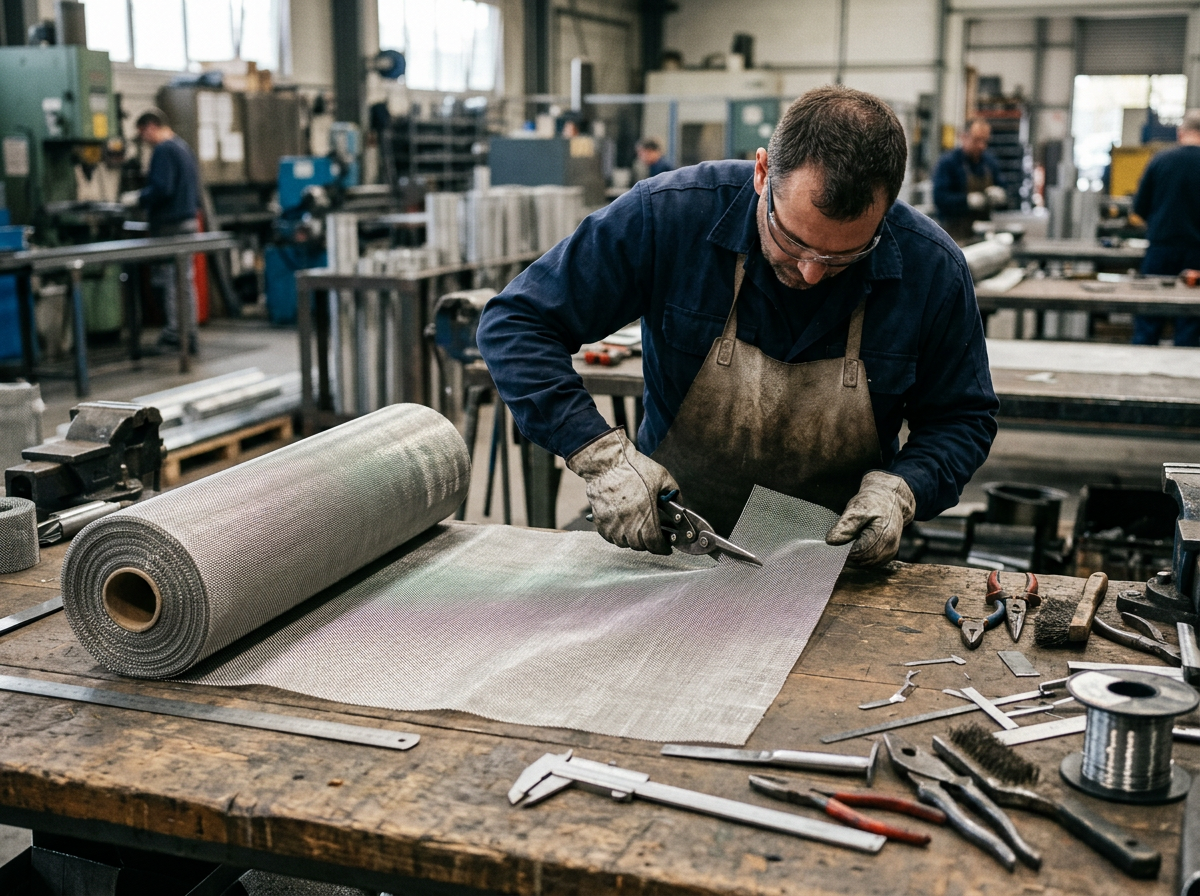
Handle, fit, seal, and clean wire mesh filter elements correctly to protect apertures, preserve sealing surfaces, and extend service life.
Installing and Servicing Wire Mesh Filter Elements
Handle with clean tools
Carry elements by the frame or end fittings, never by the mesh itself. Dents, creases, and stretched wires create bypass paths and shorten element life.
Seat and seal properly
Seat gaskets on both sides of flat elements. For cartridges and leafs, confirm end caps and header pipes are fully seated before closing the housing.
Start up with a slow ramp
Throttle inlet flow on start-up to avoid water hammer or flow surges that can collapse fine mesh or blow out gaskets.
Clean on schedule
Back-flush or clean before differential pressure doubles. Inspect for pinholes, seam damage, and gasket wear at every service interval, and replace worn elements before they bypass.
Filter Element Packing for Export
Packing keeps elements clean, protects mesh and sealing faces, and preserves traceability through transit and receiving inspection.
Individual element protection
Each filter element is individually wrapped, with mesh surfaces and sealing faces protected against scuffing, denting, and contamination.
Cartons and crating by size
Discs and small elements pack in rigid cartons; leafs, cartridges, and baskets ship in wooden crates with internal bracing to prevent movement.
Palletized for container loading
Cartons and crates pack to the container plan on pallets with corner guards and strapping for export handling.
Label by specification
Every package carries element type, micron rating, alloy, dimensions, quantity, and production lot for traceability at receiving.
Certificates on request
Material test certificates, aperture verification reports, and certificates of conformity accompany shipments when ordered; SGS, BV, or TÜV inspection is available.
Wire Mesh Filter Elements in Service
Use scenarios show how element format, weave, and alloy change by duty; they are not customer claims.
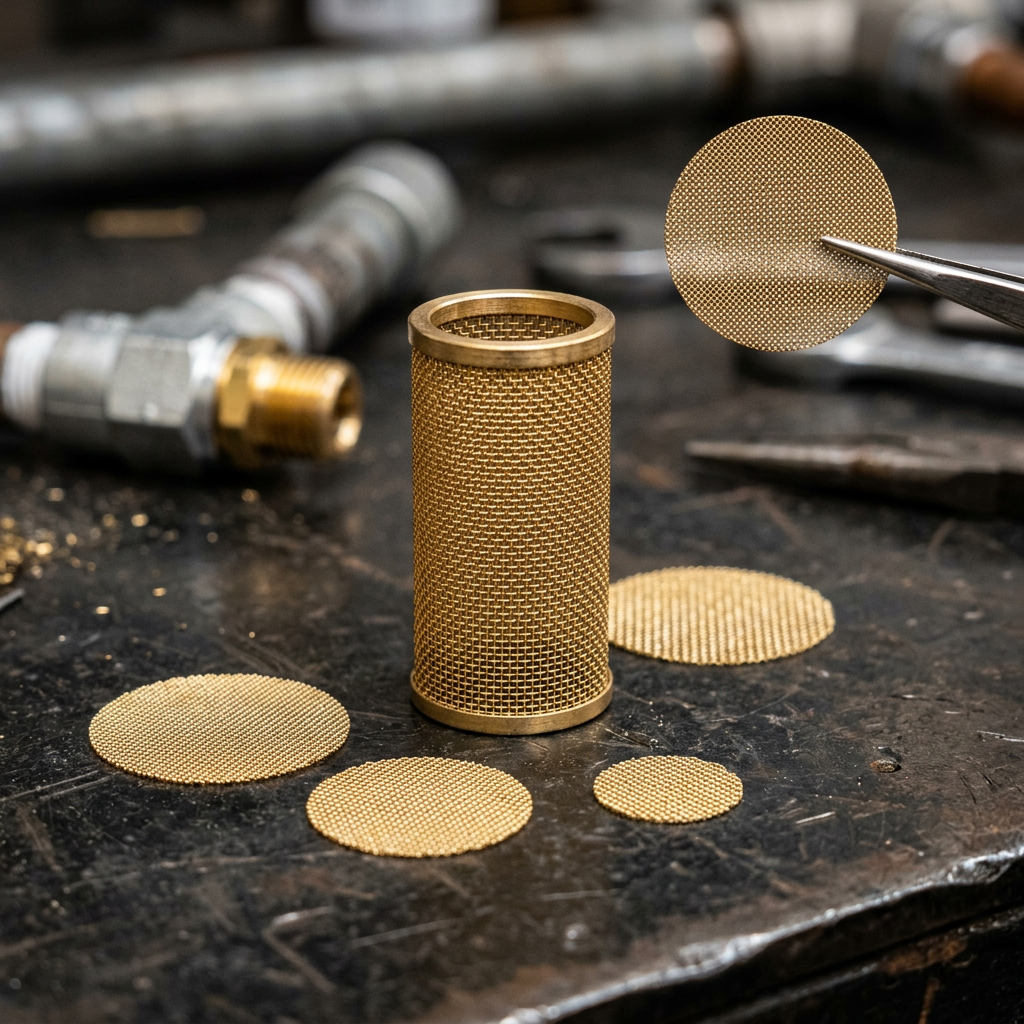
Brass strainer elements for fuel service
Brass woven mesh strainer discs and basket elements in fuel oil and diesel lines, with hemmed edges and spark-safe brass construction.
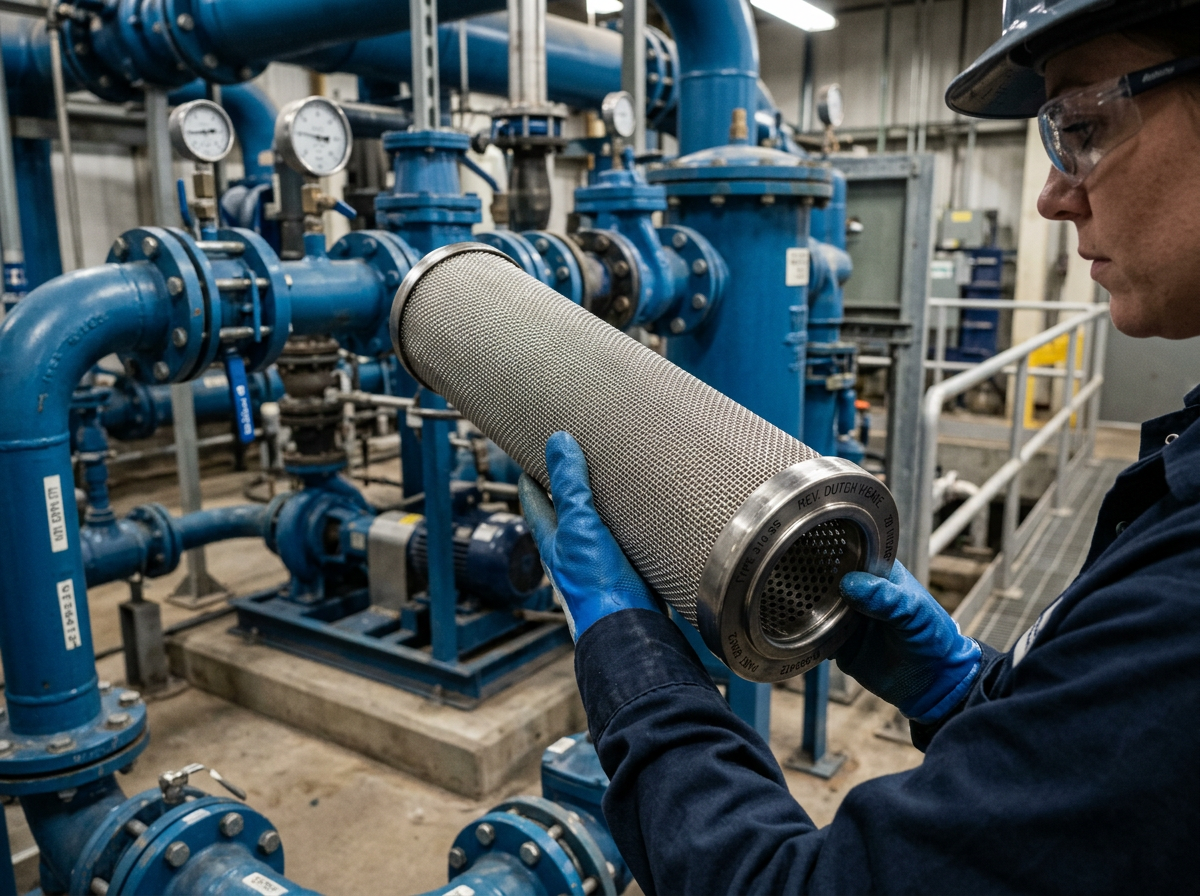
Reverse dutch leaf filter for water plant
316L stainless reverse dutch weave filter leafs in a vertical pressure leaf vessel, back-flushed automatically as differential pressure rises before membrane feed.
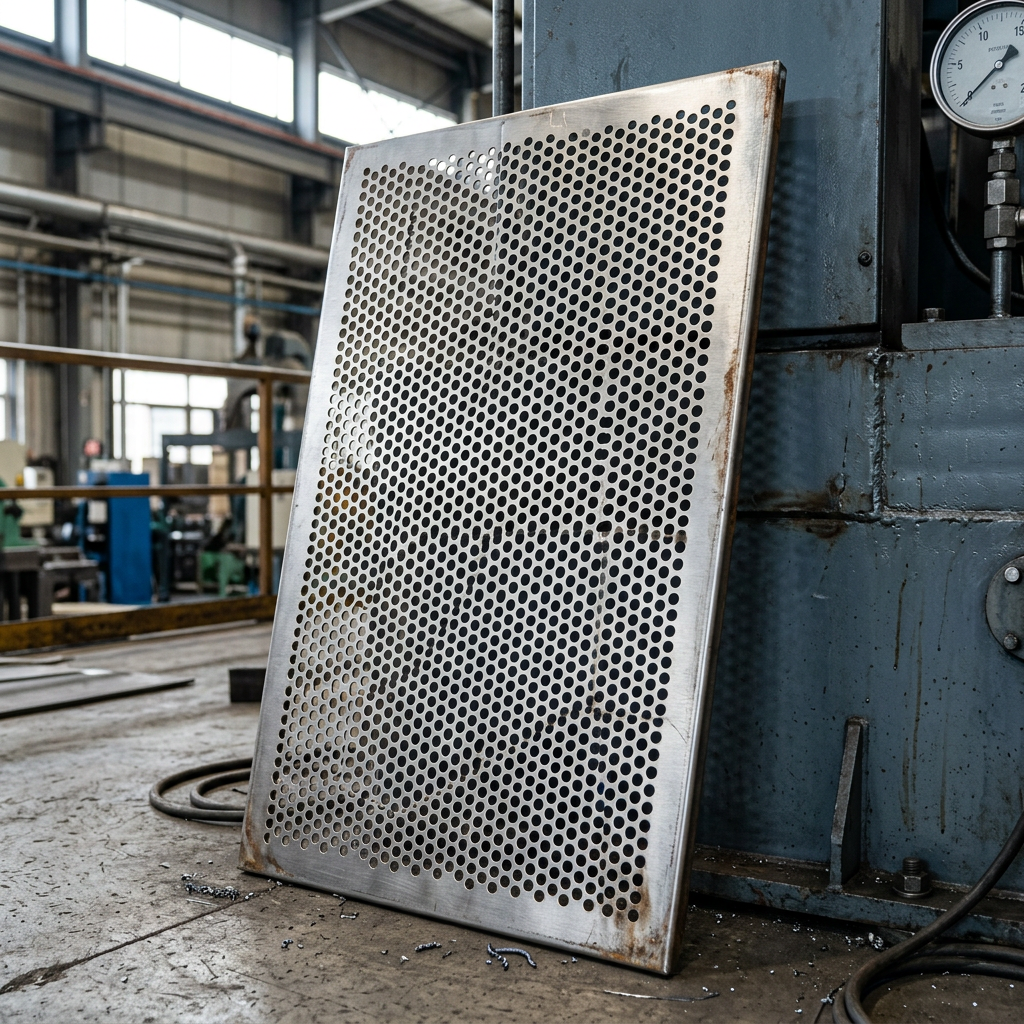
Perforated-lined basket strainer
Stainless woven mesh liner inside a perforated metal basket strainer for coarse process water duty, with lifting lugs and a rim seal for drop-in service.
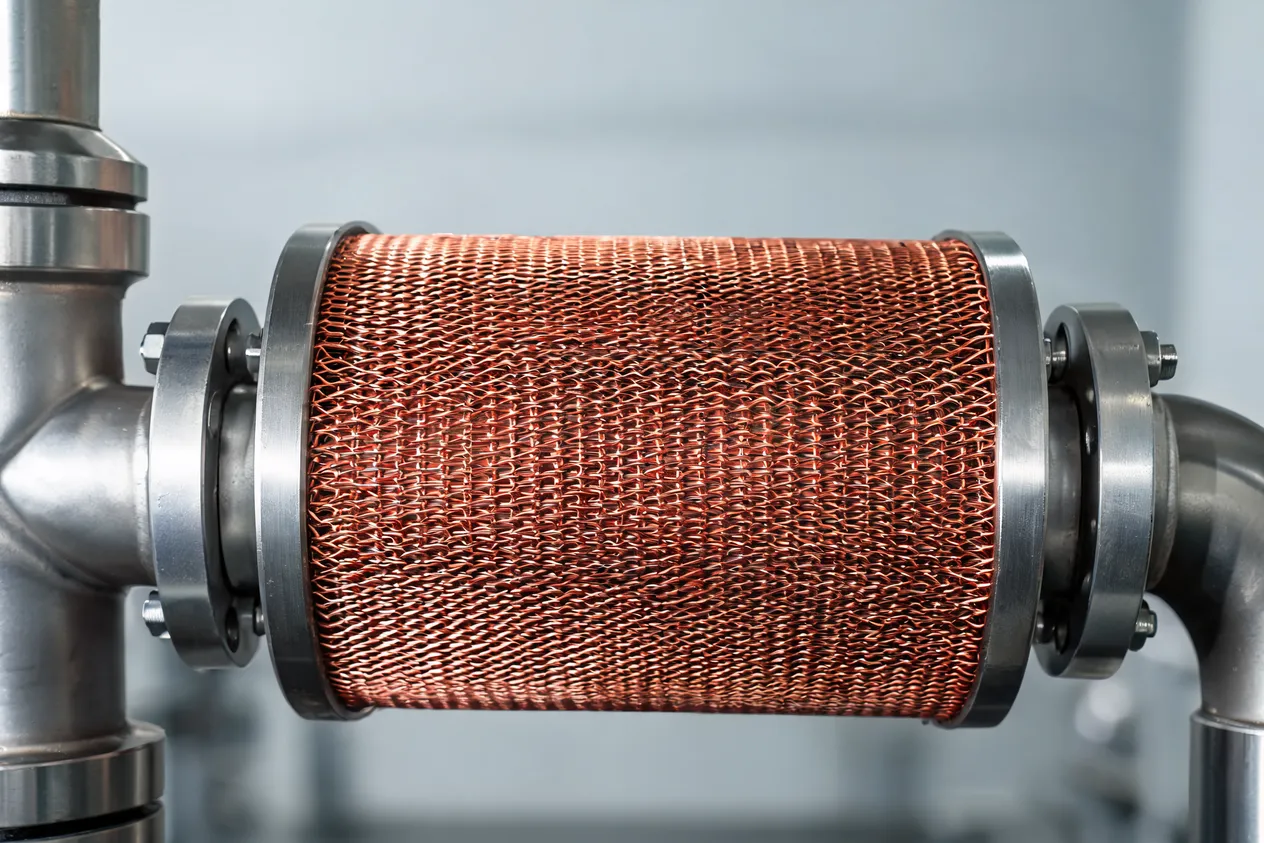
Copper mesh coalescing element
Copper and brass wire mesh elements used as coalescers and strainers in oil and gas service where thermal conductivity and non-sparking properties matter.
Wire Mesh Filter Element Sourcing Resources
Compare the woven mesh media we build filter elements from, the material grades available, and related filtration solutions. Confirm the standard edition and project requirements before ordering.
Last updated: 2026-09-20
Related pages
Reference standards
Wire Mesh Filter Elements FAQ
Common procurement questions about element formats, retention ratings, materials, and ordering fabricated wire mesh filter elements.
Still have questions about wire mesh filter elements?
Send your element format, micron rating, alloy, dimensions or housing drawing, quantity, and operating conditions. Our sourcing team replies with a specification-led review.
Request a QuoteRequest Wire Mesh Filter Element Pricing
Send element format, weave and micron rating, alloy grade, dimensions or housing drawing, quantity, application, and destination for a specification-led sourcing review. Our team replies with matched wire mesh filter element options and a factory quote.
Your details stay private. We reply with a matched factory quote — no spam.