304 stainless steel
- What to evaluate
- Evaluate against the defined screening or filtration environment, temperature and cleaning regime.
- What to confirm
- Ask for the required material evidence and validate the sample against the intended duty.
Confirm the mesh, the sample and the acceptance requirements together.
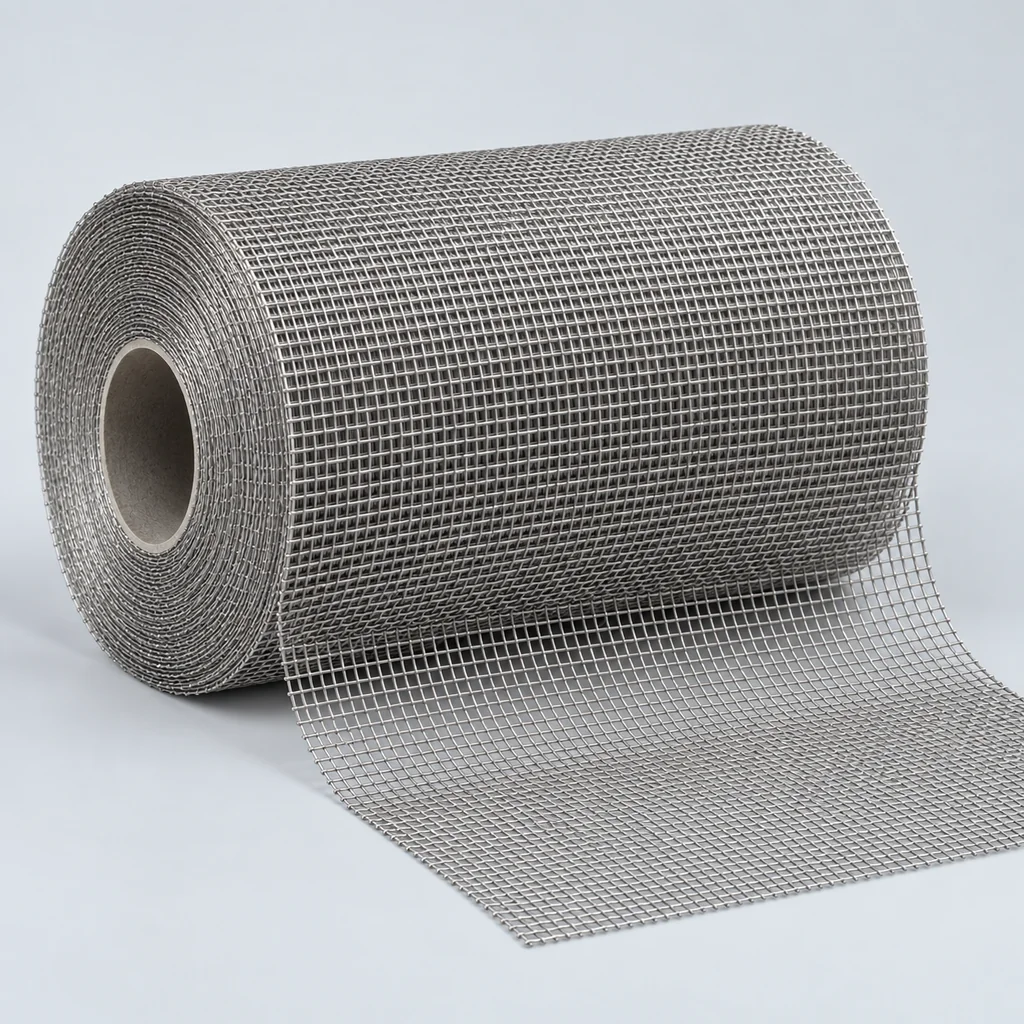
Specify mesh count, wire diameter, clear aperture and finished size for your application. Include the required sample checks and delivery documents in your RFQ.
FOB reference price from $12.00 / m². Varies by spec and quantity; final quote on inquiry.
SpecificationsMesh Count
20–325
Wire Diameter
0.035–0.4 mm
Aperture
0.043–0.87 mm
Open Area
30.1–46.9%
Material
304 Stainless Steel
Standard Specs
6
Sample
Available
Use the intended duty to define the specification. A mesh count alone does not establish service suitability or filtration performance.
State the target particle range, opening, support and finished dimensions. Confirm how the screen will be mounted and what mechanical duty it must withstand.
Describe the fluid, temperature, cleaning process and required separation duty. Geometric opening and performance in the actual process need separate verification.
Provide the drawing, finished dimensions and edge requirements. Confirm manufacturing feasibility and any sample or fit checks before agreeing the order.
Bring the specification, evidence requirements and delivery conditions into the same RFQ.
The table describes catalog options. Confirm the exact specification, quantity, availability and order-specific inspection requirements in your RFQ.
Select specifications to include in your inquiry.
| Nominal Mesh Count | Std. Wire Dia. (mm)Std. Wire Dia. (inch / Gauge) | Aperture Size (mm)Aperture Size (inch) | Ref. Open Area | Est. Weight (kg/m²)Est. Weight (lb/ft²) | |
|---|---|---|---|---|---|
| 20 Mesh | 0.400 mm0.01570" | 0.870 mm0.03430" | 46.9% | 1.60 kg/m²0.3300 lb/sq.ft | |
| 40 Mesh | 0.250 mm0.00980" | 0.385 mm0.01520" | 36.8% | 1.25 kg/m²0.2600 lb/sq.ft | |
| 80 Mesh | 0.120 mm0.00470" | 0.198 mm0.00780" | 38.8% | 0.58 kg/m²0.1200 lb/sq.ft | |
| 120 Mesh | 0.080 mm0.00310" | 0.132 mm0.00520" | 38.8% | 0.38 kg/m²0.0800 lb/sq.ft | |
| 200 Mesh | 0.050 mm0.00200" | 0.077 mm0.00300" | 36.8% | 0.25 kg/m²0.0500 lb/sq.ft | |
| 325 Mesh | 0.035 mm0.00140" | 0.043 mm0.00170" | 30.1% | 0.20 kg/m²0.0400 lb/sq.ft |
These examples use the current catalog SKU inputs for square plain-weave geometry. They explain the dimensional relationship without replacing measured openings.
| Mesh count | Wire diameter (mm) | Clear-opening calculation (mm) | Calculated opening (µm) |
|---|---|---|---|
| 20 | 0.4 | 25.4 ÷ 20 − 0.4 = 0.8700 mm | 870.0 |
| 40 | 0.25 | 25.4 ÷ 40 − 0.25 = 0.3850 mm | 385.0 |
| 80 | 0.12 | 25.4 ÷ 80 − 0.12 = 0.1975 mm | 197.5 |
| 120 | 0.08 | 25.4 ÷ 120 − 0.08 = 0.1317 mm | 131.7 |
| 200 | 0.05 | 25.4 ÷ 200 − 0.05 = 0.0770 mm | 77.0 |
| 325 | 0.035 | 25.4 ÷ 325 − 0.035 = 0.0432 mm | 43.2 |
This calculation assumes square plain-weave geometry. It is not a batch measurement, a tolerance guarantee or a verified filtration rating.
Download the Full Wire Mesh Catalog
Reference specifications and applications in the catalog; confirm order-specific requirements with your RFQ.
Use this guide to turn a request for 304 stainless steel plain weave mesh into a specification that both buyer and supplier can confirm.
Use the actual process to evaluate material suitability. Neither grade name alone establishes suitability for every chemical, cleaning cycle or food-contact use.
| Material route | What to evaluate | What to confirm |
|---|---|---|
| 304 stainless steel | Evaluate against the defined screening or filtration environment, temperature and cleaning regime. | Ask for the required material evidence and validate the sample against the intended duty. |
| 316 stainless steel | Review as an alternative when the exposure assessment indicates a different corrosion-resistance requirement. | Do not assume universal seawater or acid suitability. Confirm the specific environment and the applicable acceptance requirements. |
Choose the route that matches the information already available.
A sample result applies to the identified specimen and the checks actually performed. Agree what needs to be established for your purchase.
Record its specification, sample or batch identifier, date and connection to any material document. Keep the identity consistent across the record and photographs.
Have the inspection team confirm equipment, calibration status, measurement locations and sampling. Retain the original wire and aperture readings with corresponding photographs.
Compare the results with the approved specification and acceptance basis. Where no acceptance limits have been agreed, record the observations without presenting them as a pass.
Distinguish material references from sample results, then agree the inspection and acceptance basis for your order.
The composition shown below is material reference information, not a chemical analysis of a delivered batch. For 304 stainless steel plain weave mesh, agree which material document or test is required and how its heat or batch number will be linked to the supplied mesh.
Use this checklist to prepare the purchase specification. Confirm the applicable standard, edition, sampling method and acceptance limits for the actual order; the checklist does not assert that every catalog item has been tested.
| Inspection item | Agree before ordering | Method and sampling | Record to retain |
|---|---|---|---|
| Material and traceability | Grade, document type and link to the supplied batch | Confirm the document review or material test and its scope | Material document and matching identifiers |
| Wire diameter and aperture | Nominal values, units and permitted deviations | Agree equipment, locations, directions and number of measurements | Original readings and corresponding photographs |
| Finished dimensions and appearance | Width, length or cut size, edge and surface requirements | Agree dimension checks and visual acceptance criteria | Dimension record and product photographs |
| Packing and identification | Roll or piece format, protection, labels and delivery requirements | Confirm packing checks against the order | Packing photographs and identification record |
“Standard Specification for Industrial Woven Wire Cloth”
Reference the applicable edition and order-specific acceptance requirements. Linking the standard is not certification of a delivered batch.
“Stainless Steels for the Food Processing Industries”
Material-selection background covering grades and corrosion considerations; it is not a compliance document for this product or shipment.
Tell us which material documents, sample checks and delivery conditions your purchase needs.
For 304 stainless steel plain weave mesh, define what needs to be confirmed at each step. Actual scope, price and schedule are established for the order.
Provide a known specification or a drawing, quantity, application and delivery destination.
Review the proposed construction and agree whether sample, fit or process checks are required.
Confirm the quote, supply schedule, acceptance requirements, documents and packing.
Review the agreed inspection records and batch identification, then confirm packing and transport arrangements.
Include the finished-product requirements and delivery records in the order.
Send the mesh count, wire diameter, finished dimensions, quantity and intended duty. Include the material documents and inspection requirements so the specification, sample arrangements and order conditions can be confirmed together.