Stainless Steel Wire Mesh Supplier: 304 & 316 Grades
Source stainless steel wire mesh in 304, 316, and 316L grades. Compare woven and welded constructions, check corrosion data, and request a factory quote.
View SpecificationsStainless Steel Wire Mesh Grades and Specifications
ASTM A240 and ASTM A580 define stainless steel grades for strip and wire. State the grade, construction, mesh count, aperture, wire diameter, dimensions, and quantity in every stainless steel wire mesh RFQ.
304, 304L, 316, 316L, 310S, or 430 stainless steel per ASTM A240 and A580
Woven (plain, twill, dutch), welded, crimped, perforated, or expanded stainless steel wire mesh
2 to 500 mesh woven cloth; welded mesh openings from 1/4 inch upward
0.025 mm fine filter wire through 6 mm heavy screen wire
Rolls 1 m or 48 in wide by 30 m long, panels, discs, and cut-to-size pieces
Mill finish, pickled and passivated, or electropolished for hygienic service
| Grade | Corrosion resistance | Magnetic when annealed | Typical use and RFQ note | |
|---|---|---|---|---|
| 304 / 304L | Resists most atmospheres, fresh water, and food contact | No | The default stainless steel wire mesh grade for screens, filters, and guards. State ASTM A240 or A580. | |
| 316 / 316L | Molybdenum-alloyed; resists chlorides, brine, and many chemicals | No | Choose for coastal, marine, and process filtration. 316L suits welded frames and assemblies. | |
| 310S | Resists oxidation in continuous service up to about 1150°C | No | Furnace screens, heat treatment baskets, and high-temperature filters. | |
| 430 | Moderate; suits dry indoor and decorative service | Yes | Budget ferritic stainless steel wire mesh for cabinet inserts and interiors, not for outdoor exposure. | |
| 2205 duplex | Pitting and crevice corrosion resistance beyond 316; resists chloride stress corrosion cracking | Yes (duplex structure is partly ferritic) | Severe chloride duty such as seawater and flue gas desulfurization. State UNS S32205 in the RFQ. |
Common Stock Sizes: Woven Stainless Steel Wire Mesh
Typical stock specifications in 304 and 316, defined per ASTM E2016. Rolls are commonly 1 m or 48 in wide by 30 m long; panels and cut pieces on request. Confirm wire diameter and aperture tolerance at RFQ.
| Mesh count | Wire diameter (mm) | Aperture (mm) | Open area | Common forms | |
|---|---|---|---|---|---|
| 4 mesh | 1.20 | 5.15 | 66% | Rolls and panels | |
| 8 mesh | 0.63 | 2.55 | 64% | Rolls and panels | |
| 10 mesh | 0.64 | 1.90 | 56% | Rolls and panels | |
| 20 mesh | 0.40 | 0.87 | 47% | Rolls, panels, discs | |
| 40 mesh | 0.25 | 0.39 | 37% | Rolls, panels, discs | |
| 60 mesh | 0.19 | 0.23 | 30% | Rolls and discs | |
| 80 mesh | 0.14 | 0.18 | 31% | Rolls and discs | |
| 100 mesh | 0.11 | 0.14 | 32% | Rolls and discs | |
| 150 mesh | 0.066 | 0.10 | 37% | Rolls and discs | |
| 200 mesh | 0.055 | 0.072 | 32% | Rolls and discs |
Chemical Composition by Grade (ASTM A240, weight %)
Molybdenum is the PMI discriminator between 304 and 316. 2205 duplex also contains 0.14-0.20% nitrogen. Confirm the standard edition in the purchase order.
| Grade | Chromium (Cr) | Nickel (Ni) | Molybdenum (Mo) | Carbon (C, max) | |
|---|---|---|---|---|---|
| 304 | 18.0-20.0 | 8.0-10.5 | - | 0.08 | |
| 304L | 18.0-20.0 | 8.0-12.0 | - | 0.03 | |
| 316 | 16.0-18.0 | 10.0-14.0 | 2.0-3.0 | 0.08 | |
| 316L | 16.0-18.0 | 10.0-14.0 | 2.0-3.0 | 0.03 | |
| 310S | 24.0-26.0 | 19.0-22.0 | - | 0.08 | |
| 2205 | 22.0-23.0 | 4.5-6.5 | 3.0-3.5 | 0.03 |
Constructions We Source in Stainless Steel
One material, many constructions. Compare woven, welded, crimped, and sheet-based stainless steel wire mesh before you specify.
Stainless steel woven wire mesh
Plain, twill, and dutch weaves from 2 to 500 mesh for screening, sizing, and fine filtration.
Stainless steel welded wire mesh
Rigid fused-grid panels and rolls for machine guards, cages, fences, and reinforcement.
Crimped stainless wire mesh
Pre-crimped heavy wires lock openings under vibration for quarry screens and sizing decks.
Perforated and expanded stainless
Sheet-based openings for ventilation panels, facades, walkways, and enclosures where cloth is too flexible.
Stainless Steel Wire Mesh Products
View all products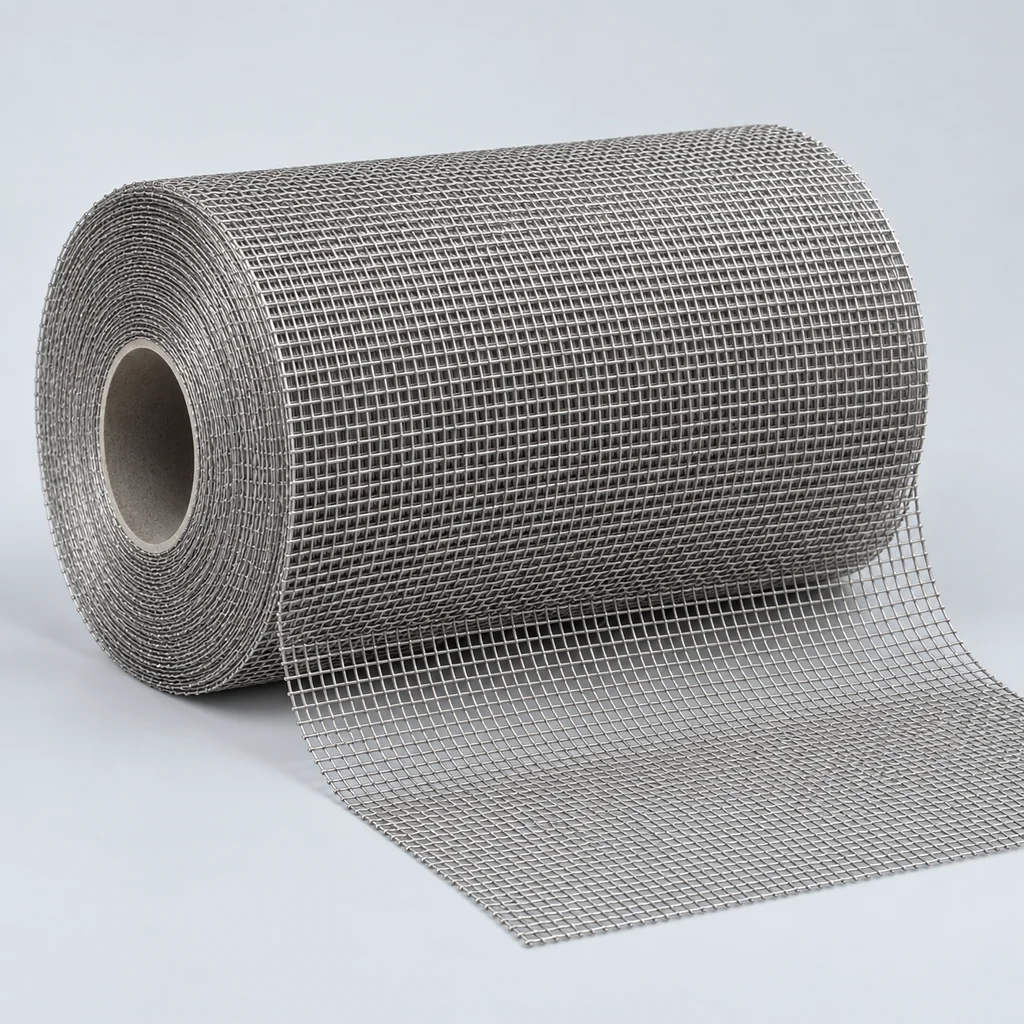
304 Stainless Steel Plain Weave Mesh
304 Stainless Steel · 20–325 mesh

Architectural Coil Drapery
Aluminum / stainless steel · mesh
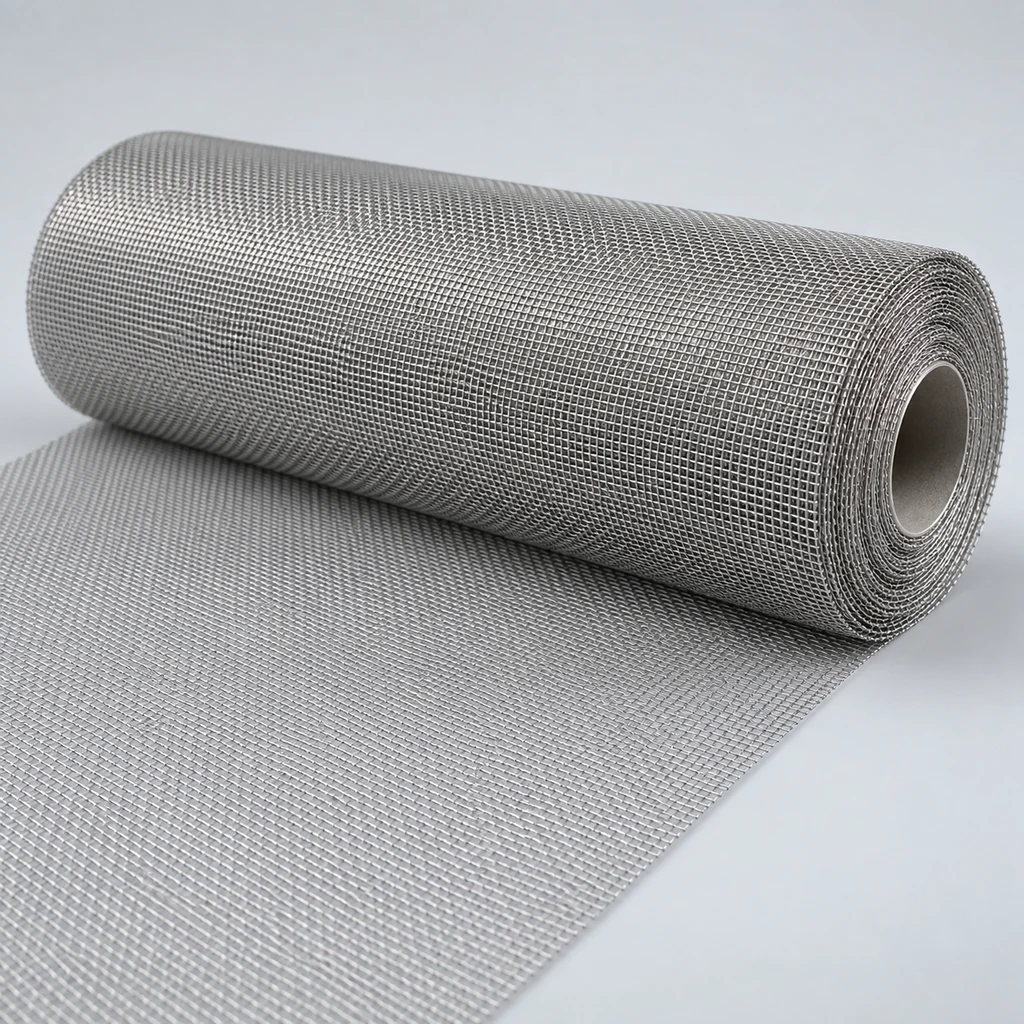
316 Stainless Steel Plain Weave Mesh
316 Stainless Steel · 100–400 mesh
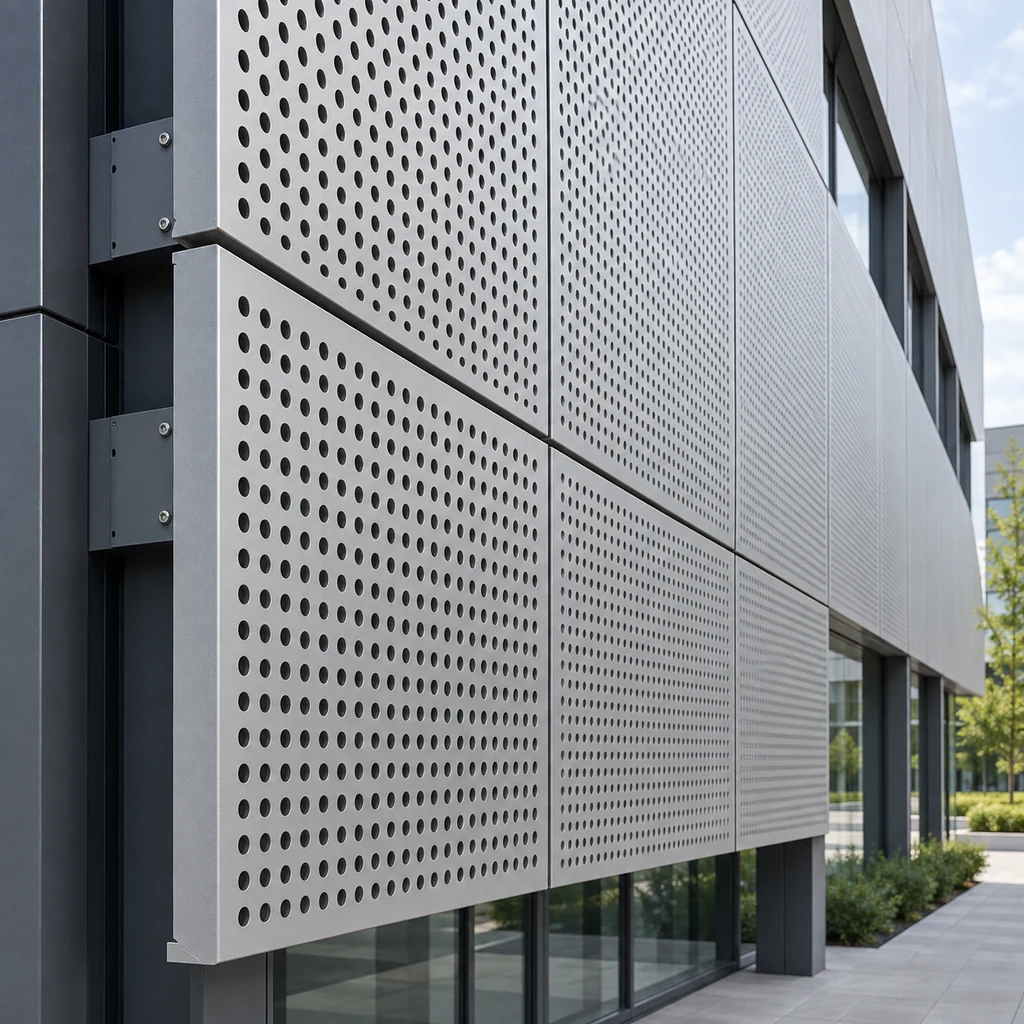
Architectural Perforated Metal
Aluminum / stainless steel · mesh
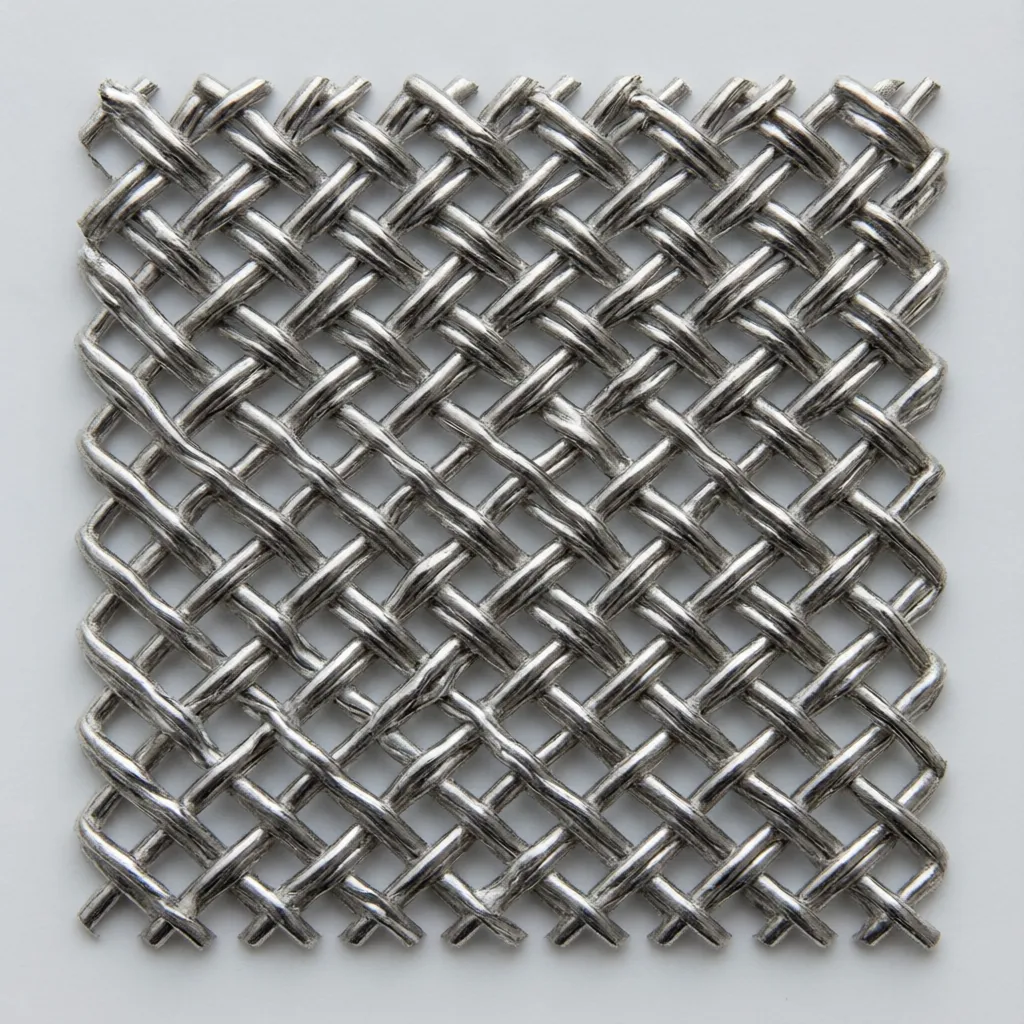
304 Stainless Steel Twill Weave Mesh
304 Stainless Steel · 20–325 mesh

Architectural Metallic Fabric
Stainless steel / brass / bronze · mesh
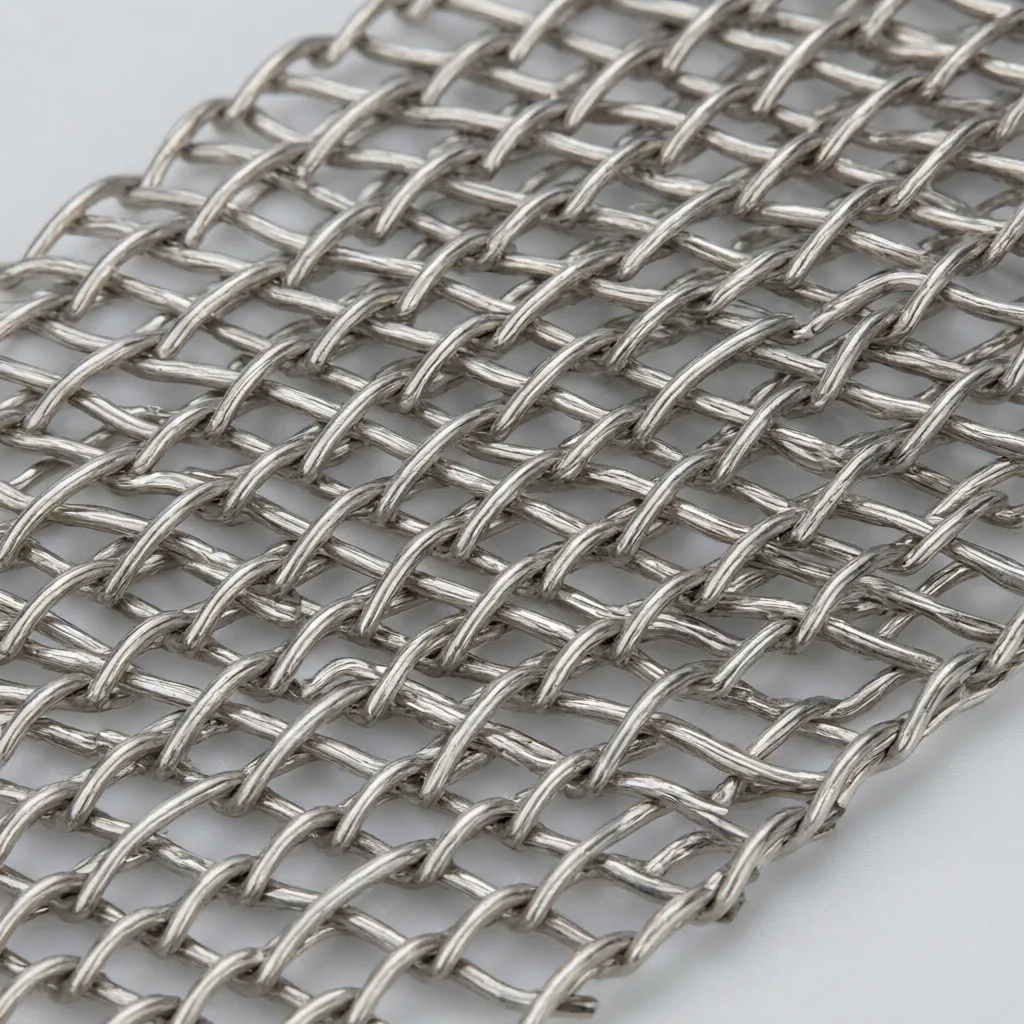
316 Stainless Steel Twill Weave Mesh
316 Stainless Steel · 100–400 mesh
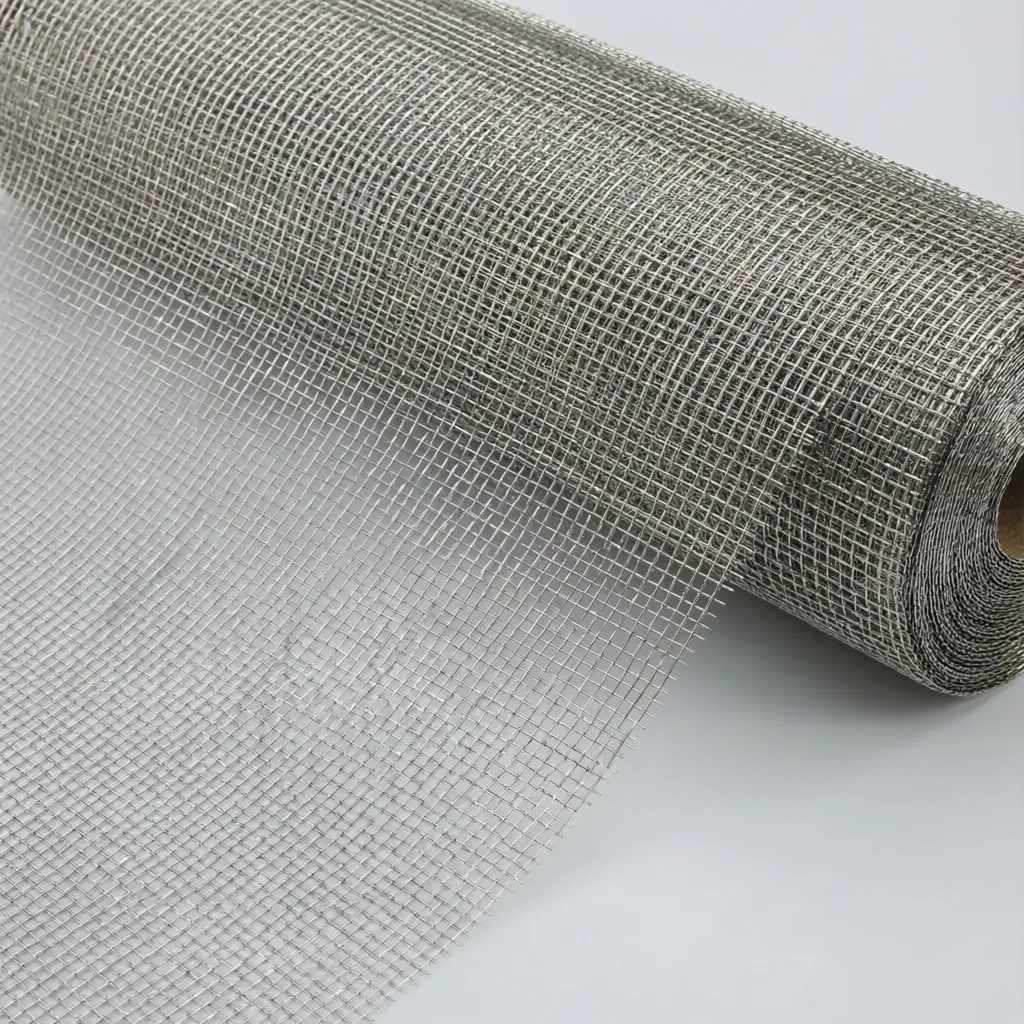
Stainless Steel Plain Dutch Weave Mesh
304 Stainless Steel · 20–325 mesh
Where Stainless Steel Wire Mesh Is Used
Choose stainless steel wire mesh when corrosion, hygiene, heat, or appearance rules out galvanized or plain steel mesh.
Filtration and straining
Filter cloth in 304 and 316 for water, oils, polymers, and process lines, from coarse straining to 5 micron dutch weave.
Food and pharmaceutical
Hygienic 304 and 316 mesh for sifting, drying trays, and screens that wash down clean.
Marine and coastal
Grade 316 cloth stands up to salt air, spray, and brine where galvanized coatings fail early.
Chemical processing
Grade-matched stainless mesh for catalyst supports, strainers, and demisting pads in corrosive service.
Architectural and decorative
Woven and perforated stainless panels for facades, ceilings, railings, and cabinet inserts.
Security and insect screen
Stainless screen for windows, vents, and guards that resists cutting and weather.
How to Select the Right Stainless Steel Wire Mesh
Start from the environment, then fix grade, construction, aperture, form, and finish. A complete RFQ avoids assumptions and re-quotes.
By corrosion environment
Indoor and food service suits 304. Coastal, brine, or chemical exposure calls for 316 stainless steel wire mesh. Dry decorative work can use 430.
Welded into an assembly?
Choose 316L or 304L when the mesh will be welded into frames; the low carbon content avoids carbide precipitation at the welds.
By construction
Woven stainless steel wire mesh suits fine apertures and flexible form. Welded mesh gives rigid structural panels. Crimped mesh locks coarse openings under vibration.
By aperture and mesh count
Define the particle size to pass or retain. State both mesh count and clear opening in millimeters to avoid ambiguity.
Rolls, panels, or cut pieces
Rolls suit continuous runs and screen fabricators. Panels, discs, and cut-to-size pieces suit filters, trays, and assemblies.
By lifecycle cost
A higher grade costs more per roll but less per year in chloride service. Share the environment and service target for a life-oriented recommendation.
Specify how the grade is verified
State in the RFQ that each bundle carries a mill heat number with an MTC, and plan a PMI or XRF check on arrival. Molybdenum content separates 316 from 304 in seconds.
When stainless is the wrong choice
For dry indoor service on a tight budget, galvanized wire mesh does the job at lower cost. Reserve stainless steel wire mesh for corrosion, hygiene, heat, or appearance requirements.
Why Buyers Choose Stainless Steel Wire Mesh
Stainless steel wire mesh costs more upfront than galvanized mesh, then pays back in service life, hygiene, and appearance.
Corrosion resistance
Chromium-rich grades form a self-repairing passive film, so the mesh resists rust with no coating at all.
Hygienic and cleanable
Smooth stainless surfaces wash down and sterilize, meeting food and pharmaceutical expectations.
Heat resistance
304 and 316 handle elevated service; 310S cloth works in furnaces up to about 1150°C.
Verified grades, no substitution
Every bundle is traceable to a mill heat number with an MTC per ASTM A240 or A580, and PMI verification is available before dispatch, so 201 never passes as 304.
Clean appearance
Mill or electropolished finishes stay bright indoors and outdoors with no painting or re-coating.
Lower lifecycle cost
Matching the grade to the environment extends changeout intervals, so downtime and replacement cost less than saving on cheaper mesh.
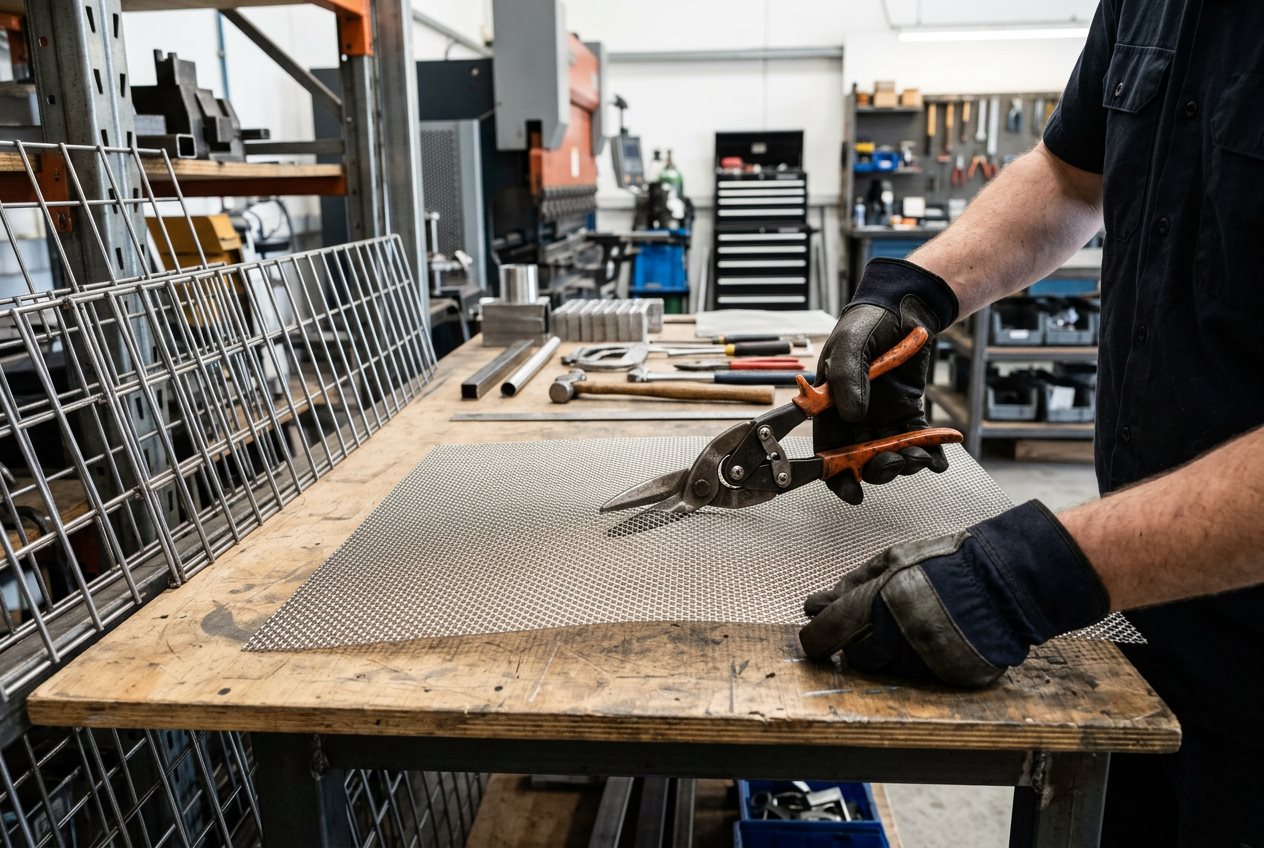
Protect the passive film. Keep stainless away from carbon steel contamination and restore the surface after welding.
Working with Stainless Steel Wire Mesh
Keep tools and benches dedicated
Carbon steel dust and shared tooling embed iron particles that rust and stain stainless steel wire mesh. Use dedicated brushes, shears, and storage.
Cut along the wire line
Cut woven cloth with shears and welded mesh between the weld rows, then deburr edges as the project requires.
Weld with matching filler
Use 308L or 316L filler on matching grades and keep heat input low to protect corrosion resistance.
Passivate after fabrication
Pickling or passivation removes free iron and weld tint so the mesh surface re-forms its protective film.
Stainless Steel Wire Mesh Packing for Export
Packing protects fine apertures, bright finishes, and grade traceability through transit and receiving inspection.
Rolls on supported cores
Fine cloth ships on sturdy cores wrapped in waterproof paper and woven bags, with protected ends.
Flat packs in wooden cases
Panels and discs pack flat in plywood cases or on pallets with edge protection.
Label by grade and heat number
Each bundle carries grade, mesh count, dimensions, quantity, and mill heat number for traceability.
Mill test certificates
MTCs per ASTM A240 or A580 accompany the shipment when requested in the RFQ.
Share destination details
State destination port, trade term, container plan, and any inspection requirements. Pre-shipment inspection by SGS, BV, or TÜV is available on request.
Stainless Steel Wire Mesh in Service
Use scenarios show how grade and construction change by duty; they are not customer claims.
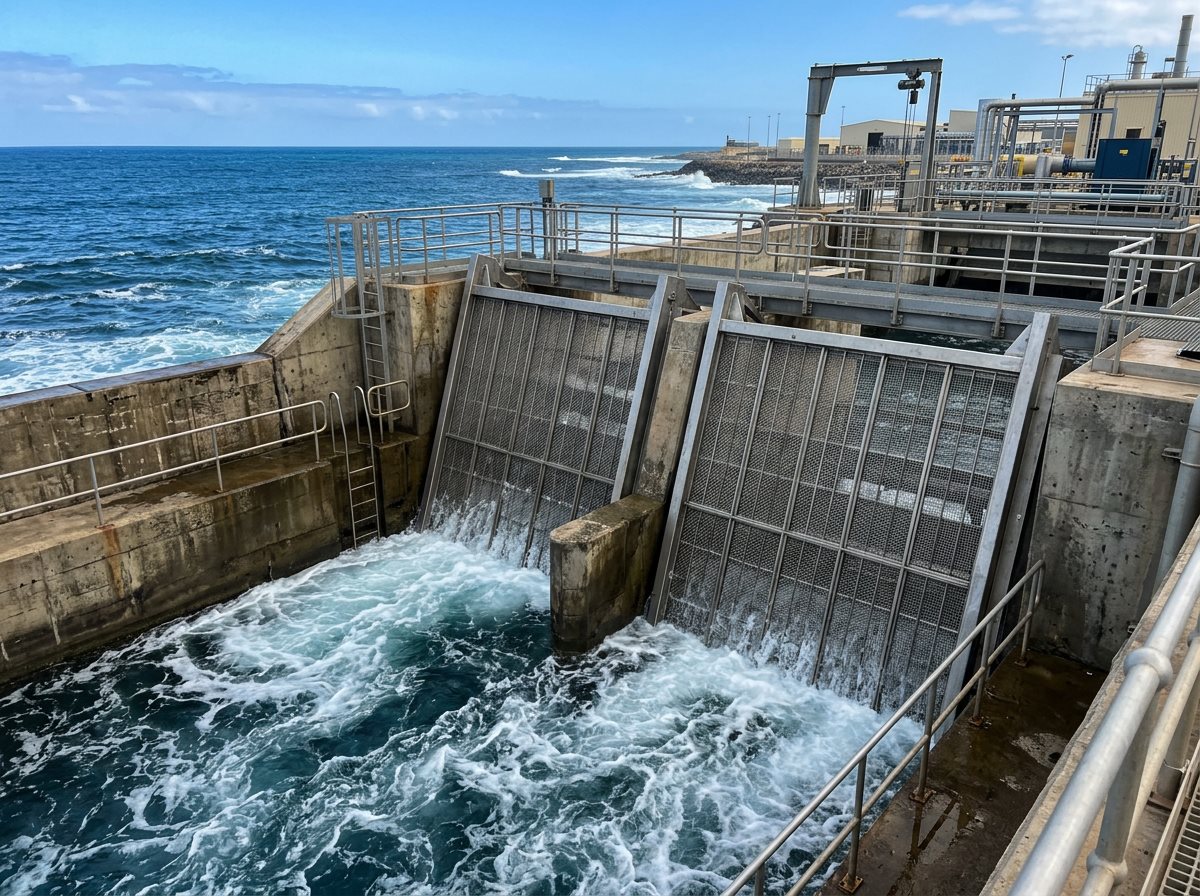
Seawater intake screening
316L strainers specified for a desalination intake, where chlorides destroy galvanized screens within months.
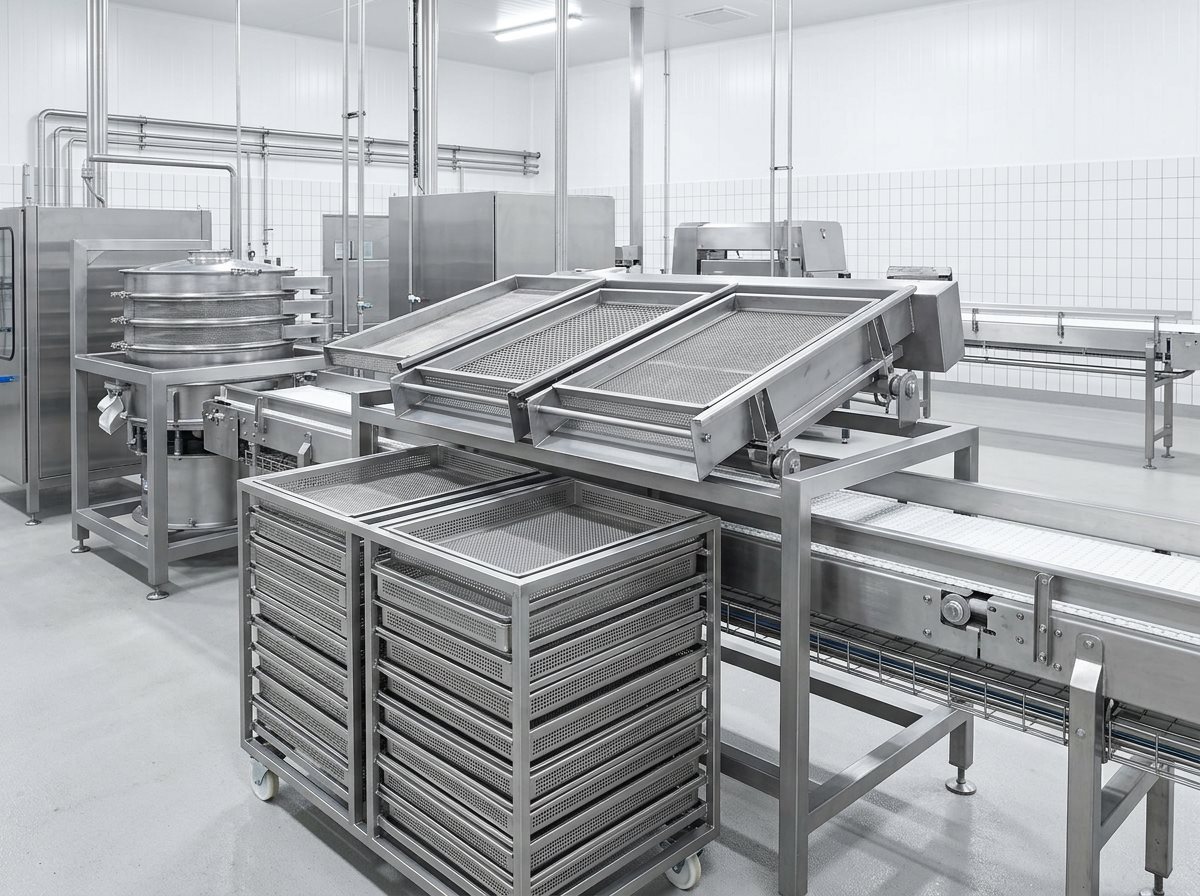
Food plant sifting line
304 woven mesh screens and drying trays selected for washdown hygiene and zero coating flakes.

Coastal facade panels
316 woven stainless panels chosen for a seafront building envelope, balancing open area and salt resistance.
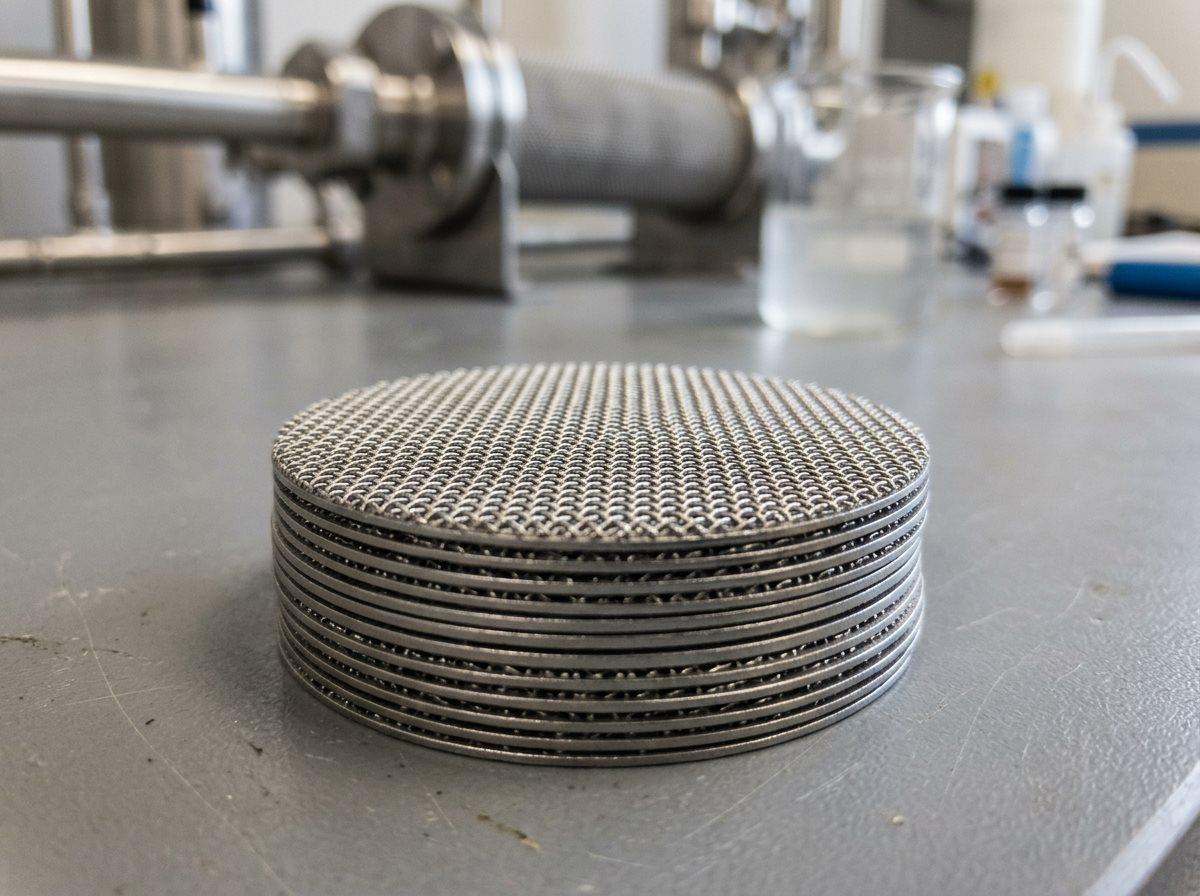
Chemical filter discs
316L dutch weave discs cut to size for polymer filtration, with MTCs verified against each heat number.
Stainless Steel Wire Mesh Sourcing Resources
Compare constructions and standards. Confirm the edition and project requirements before ordering.
Last updated: 2026-07-31
Related pages
Reference standards
Stainless Steel Wire Mesh FAQ
Common procurement questions about grades, constructions, and ordering stainless steel wire mesh.
Still have questions about stainless steel wire mesh?
Send your grade, construction, mesh count, aperture, wire diameter, and quantity. Our sourcing team replies with a specification-led review.
Request a QuoteRequest Stainless Steel Wire Mesh Pricing
Send grade, construction, mesh count, aperture, wire diameter, dimensions, quantity, application, and destination for a specification-led sourcing review.
Your details stay private. We reply with a matched factory quote — no spam.