Stainless Steel Expanded Wire Mesh: 304 & 316 Supplier
Stainless steel expanded wire mesh is a rigid sheet product made by slitting and stretching a solid 304, 316, or 316L sheet into diamond openings in a single pass - no wires, no weaving, no scrap. 304 and 316 look identical but differ sharply in chloride resistance, so specifying the right grade and form (standard raised vs flattened) matters. Compare opening sizes, strand dimensions, and sheet weights, then request a specification-led factory quote.
View SpecificationsStainless Steel Expanded Metal Mesh Specifications
Stainless steel expanded metal starts with a solid sheet of 304, 316, 316L, or 430 stainless that is simultaneously slit and stretched in a single press pass to form diamond openings with continuous strand junctions. The sheet thickness, strand width, LWD (long way of diamond), and SWD (short way of diamond) together define the mesh. No weaving, no welding of strands, no scrap waste. State grade, form, LWD x SWD, strand width, sheet thickness, panel dimensions, quantity, and finish in every RFQ.
304, 304L, 316, 316L, or 430 stainless steel per ASTM A240 and A580; 316 and 316L add molybdenum for chloride and marine resistance
Standard (raised) expanded metal with angled strands for rigidity; flattened expanded metal passed through a cold-rolling mill for a smooth sheet-like surface
LWD (long way of diamond) from 6 mm to 100 mm; SWD (short way) from 4 mm to 50 mm; state both dimensions in mm
Strand width 0.8 mm to 6.0 mm; starting sheet thickness 0.5 mm to 5.0 mm; flattened form reduces apparent thickness by approximately 10-15%
Common stock panels: 1220 x 2440 mm (4 x 8 ft) and 1200 x 3000 mm; custom lengths, widths, and cut-to-size pieces on request
Bright mill finish standard; pickled and passivated for food and hygienic service; electropolished for architectural or pharmaceutical duty
Cut-to-size panels, pre-drilled mounting holes, edge trimming, curved or formed pieces, and welded frames in 304L or 316L for ready-to-install assemblies
Select one or more specifications. Your choices will be included in the quote request.
0 specs selected
| Grade | Corrosion resistance | Magnetic when annealed | Typical use and RFQ note | |
|---|---|---|---|---|
| 304 / 304L | Resists most atmospheres, fresh water, and food contact | No | The default stainless steel expanded metal grade for screens, guards, and indoor architectural panels. State ASTM A240 or A580. | |
| 316 / 316L | Molybdenum-alloyed; resists chlorides, brine, and many chemicals | No | Choose for coastal, marine, and process duty. 316L suits welded frames and assemblies. | |
| 430 | Moderate; suits dry indoor and decorative service | Yes | Budget ferritic grade for cabinet inserts and interiors, not for outdoor or chloride exposure. | |
| 2205 duplex | Pitting and crevice corrosion resistance beyond 316; resists chloride stress corrosion cracking | Yes (partly ferritic structure) | Severe chloride duty such as seawater platforms and flue gas desulfurization. State UNS S32205 in the RFQ. |
Common Stainless Steel Expanded Metal Opening and Weight Table
Typical stock specifications for standard (raised) expanded stainless steel mesh in 304. Values are approximate; confirm exact strand dimensions, weight, and sheet size at RFQ. Weights calculated with stainless steel density 7.93 g/cm3.
| LWD x SWD (mm) | Strand width (mm) | Sheet thickness (mm) | Open area (approx.) | Weight (kg/m2, approx.) | Typical use | |
|---|---|---|---|---|---|---|
| 8 x 4 | 1.0 | 0.5 | 65% | 2.3 | Ventilation panels, fine filters, cabinet screens | |
| 12 x 6 | 1.5 | 0.8 | 68% | 4.7 | Equipment guards, decorative infill, sieve trays | |
| 16 x 8 | 2.0 | 1.0 | 68% | 7.3 | Machine guards, sunscreens, partition panels | |
| 25 x 12 | 3.0 | 1.5 | 72% | 13.2 | Facade cladding, balustrade infill, security screens | |
| 40 x 20 | 4.0 | 2.0 | 72% | 22.0 | Heavy-duty guards, grilles, loading bay screens | |
| 50 x 25 | 5.0 | 3.0 | 74% | 35.0 | Walkway treads, platform flooring, industrial mezzanines | |
| 75 x 40 | 6.0 | 4.0 | 74% | 47.0 | Heavy walkways, vehicle ramps, structural catwalks |
Standard (Raised) vs Flattened Stainless Steel Expanded Metal
The form choice changes the surface profile, thickness, and rigidity. Standard form is the default for screening and guarding; flattened is chosen when a smooth surface is required for walkways, flooring, or architectural appearance.
| Attribute | Standard (raised) expanded metal | Flattened expanded metal | |
|---|---|---|---|
| Surface profile | Angled, textured diamond strands create a raised pattern | Cold-rolled flat; smooth, sheet-like surface | |
| Effective thickness | Same as starting sheet thickness | Reduced by 10-15% of starting thickness after flattening | |
| Rigidity | Higher; raised strands add stiffness | Moderate; suitable for flat panels and formed parts | |
| Open area | Slightly larger than flattened | Slightly reduced by flattening roll pressure | |
| Weight per m2 | Standard value as specified | Approximately equal to standard (same starting sheet) | |
| Safety for walkways | Limited; raised strands can trip or snag | Preferred for walkways and platforms | |
| Best for | Screens, guards, facades where texture is acceptable or desired | Walkways, flooring, architectural panels, and applications needing a flush surface |
Stainless Steel vs Galvanized vs Aluminum Expanded Metal
Three expanded metal weight classes compared from the application inward. Weight comparison assumes the same opening and strand dimensions.
| Factor | Stainless steel (304 / 316) | Hot-dip galvanized steel | Aluminum (3003 / 5052) | |
|---|---|---|---|---|
| Weight at equal opening | Heavy; about 3x aluminum | Heavy | Lightest; about one third of steel | |
| First cost | 3-5x galvanized | Lowest | Medium | |
| Corrosion mechanism | Self-repairing passive chromium film; best in chlorides and washdown | Sacrificial zinc coating wears over time | Self-healing oxide film; no coating to fail | |
| Strength and impact resistance | Highest | High | Moderate; avoid high-impact duty | |
| Heat resistance | 304 and 316 hold strength to elevated temperature; 310S to about 1150 C | Zinc degrades above about 200 C | Temper softens above about 150 C | |
| Hygiene and washdown | Excellent; pickled or electropolished surfaces clean and sterilize | Poor; coating flakes in washdown service | Good; anodized finish cleans well | |
| Best for | Food, marine, chemical, architectural, and high-temperature environments | Fences, construction, heavy guards, and low-cost structures | Weight-sensitive facades, sunscreens, and non-magnetic duty |
Environment Compatibility for Stainless Steel Expanded Metal
Stainless expanded metal performs well in most environments but no grade is rust-proof. Use this guide to select grade and finish; the chloride concentration of the service environment is the first question to answer.
| Environment | Stainless behavior | Recommended grade and finish | |
|---|---|---|---|
| Dry and rural atmosphere | Excellent; passive film stable for decades | 304, mill finish | |
| Urban and industrial atmosphere | Very good; light surface soiling may appear | 304, mill finish or pickled | |
| Coastal and marine salt air | Good with 304; 316 resists tea-staining and pitting far better | 316 or 316L, mill or electropolished | |
| Seawater immersion and brine | 316L performs, but crevices and standing chloride deposits can pit | 316L, confirm crevice-free design and washdown | |
| Food, beverage, and pharmaceutical washdown | Excellent; passivated surface is hygienic and cleanable | 304 or 316, pickled and passivated | |
| Chloride chemicals and acids | Grade-dependent; state the chemical, concentration, and temperature | 316 or 2205 duplex, confirm with the mill | |
| Sustained heat above 400 C | 304 and 316 lose strength; 310S resists oxidation to about 1150 C | 310S if heat is the governing factor | |
| Walkway and platform flooring | Excellent with adequate gauge and support spacing | Flattened 316 or 316L, confirm load rating |
Forms and Grades We Source in Expanded Stainless Steel
Stainless steel expanded metal comes in two primary forms and three duty grades. Compare standard, flattened, heavy, and micro-expanded before you specify.
Standard (raised) stainless steel expanded metal
The as-expanded form with angled diamond strands, maximum rigidity, and a textured surface. Standard form is the default choice for screens, guards, and architectural use where surface profile is acceptable.
Flattened stainless steel expanded metal
Standard expanded mesh passed through a cold-rolling mill to flatten the strand junctions into a smooth, sheet-like surface. Flattened form is chosen for walkways, flooring, and applications where a flush surface is required.
Heavy-duty stainless steel expanded metal
Starting from 3.0 mm to 5.0 mm sheet in 304 or 316 with LWD up to 100 mm. Heavy-duty panels serve walkways, vehicle barriers, and structural platforms where load capacity drives the specification.
Micro and decorative stainless steel expanded metal
Fine-opening expanded mesh from 0.5 mm starting sheet with LWD as small as 6 mm. Micro-expanded is specified for filter support layers, fine screens, speaker grilles, and decorative applications where a tight diamond pattern is needed.
Stainless Steel Expanded Metal Products
View all products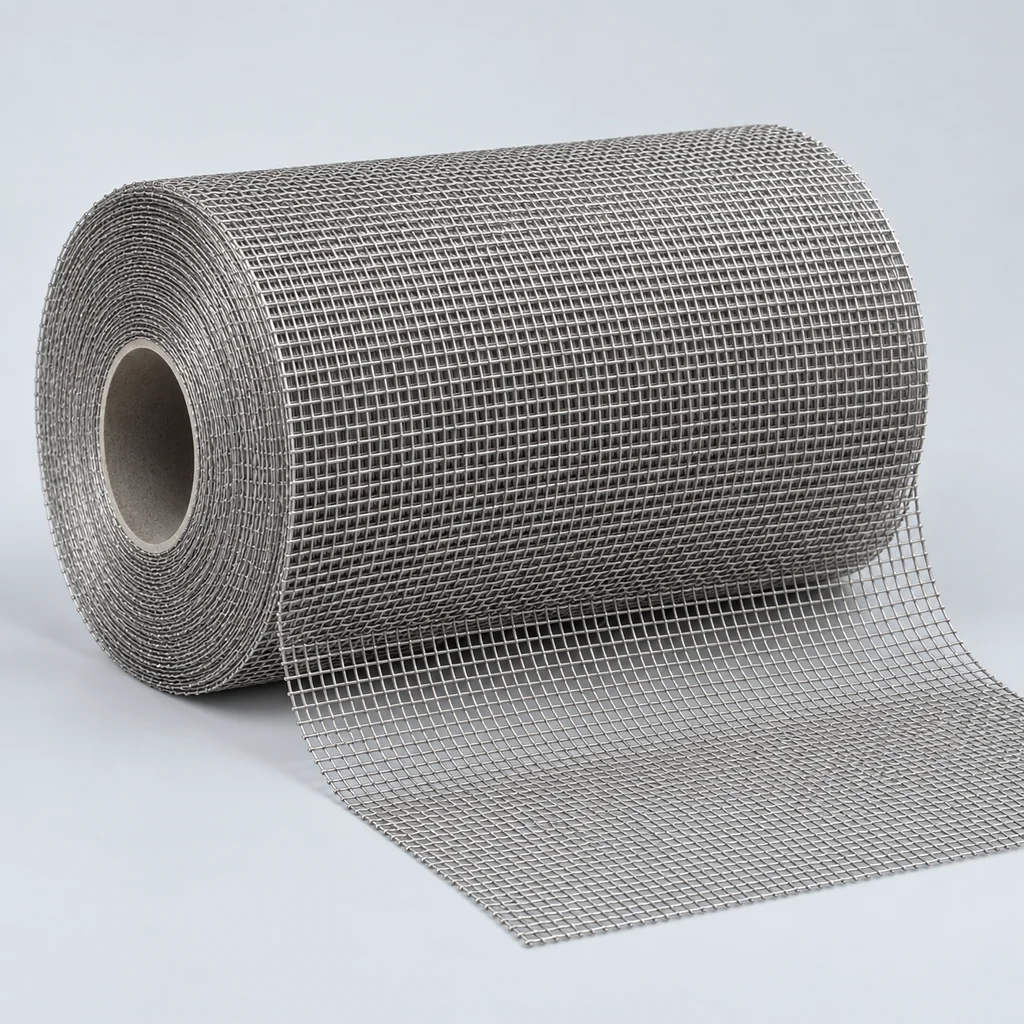
304 Stainless Steel Plain Weave Mesh
304 Stainless Steel · 20–325 mesh
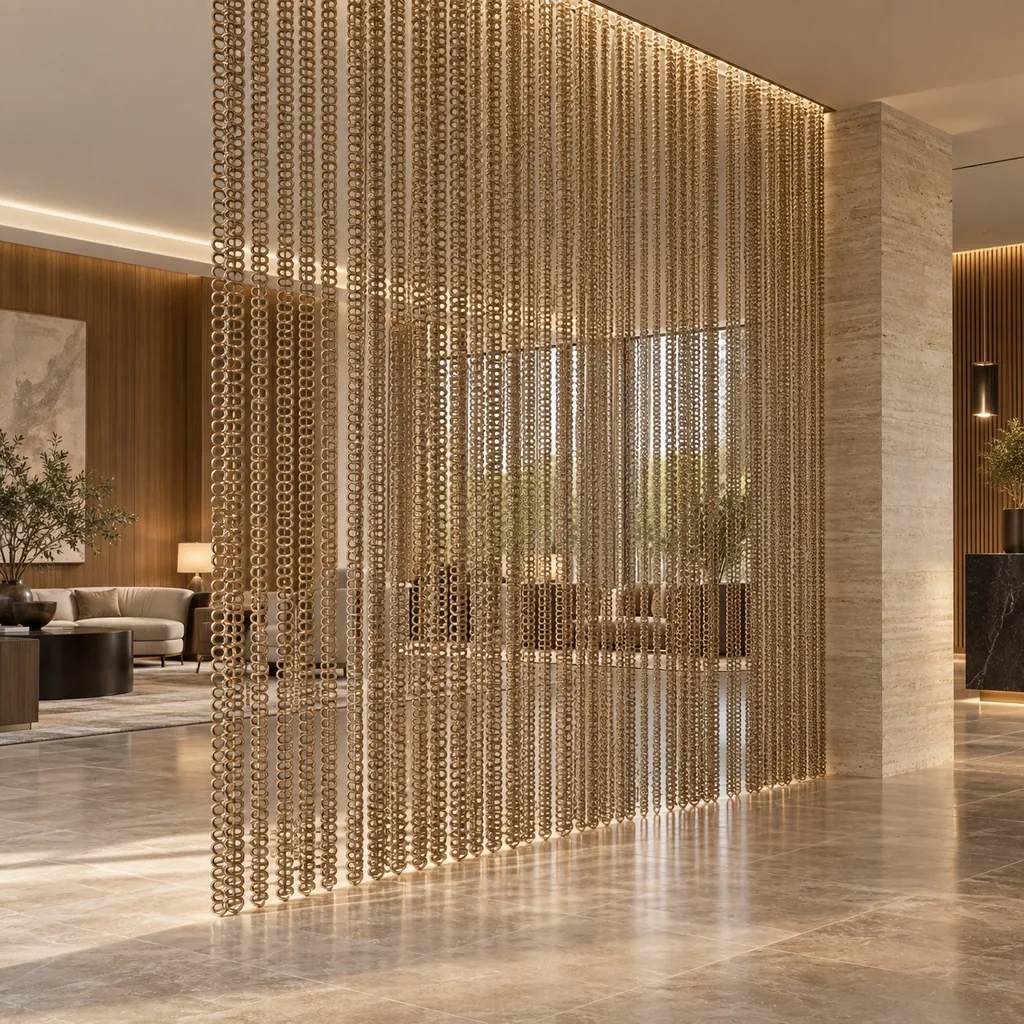
Architectural Coil Drapery
Aluminum / stainless steel · mesh
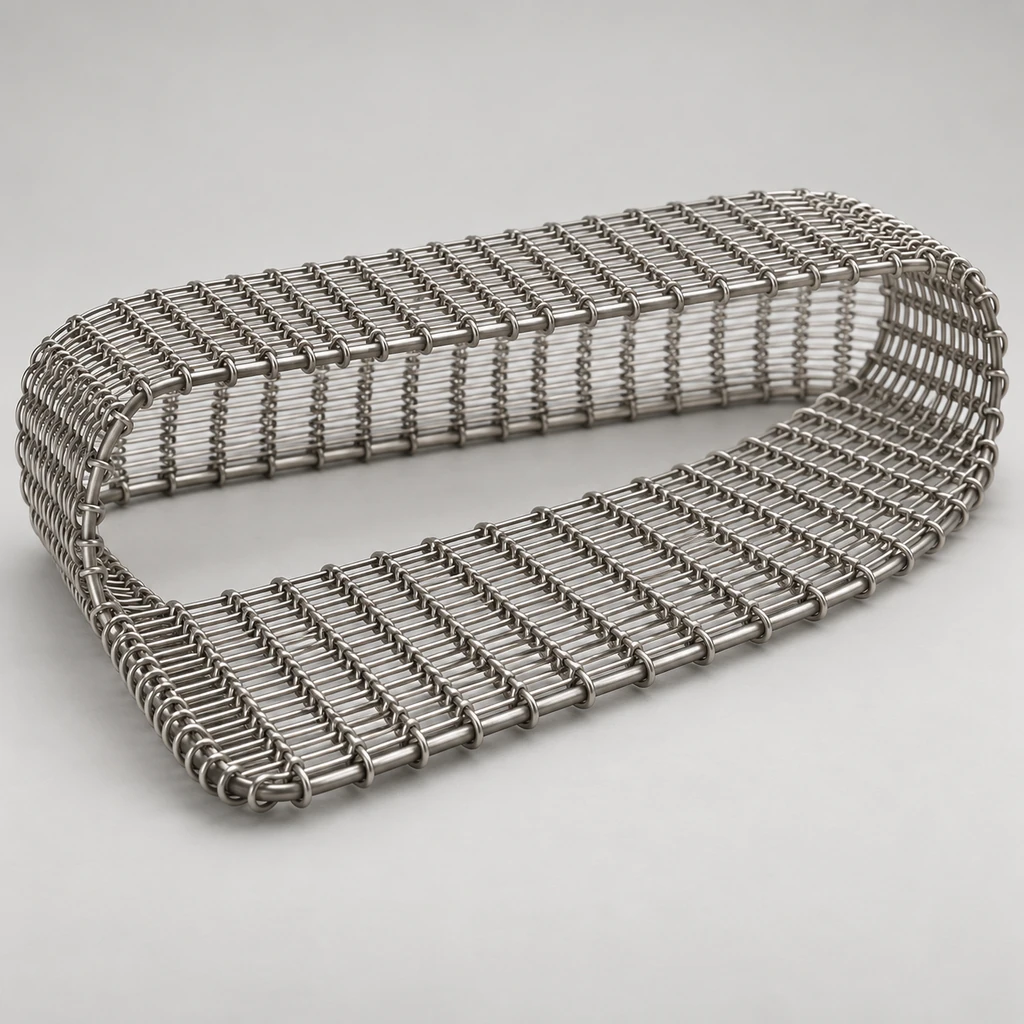
Balanced Weave Wire Mesh Conveyor Belt
Carbon steel / stainless steel · mesh
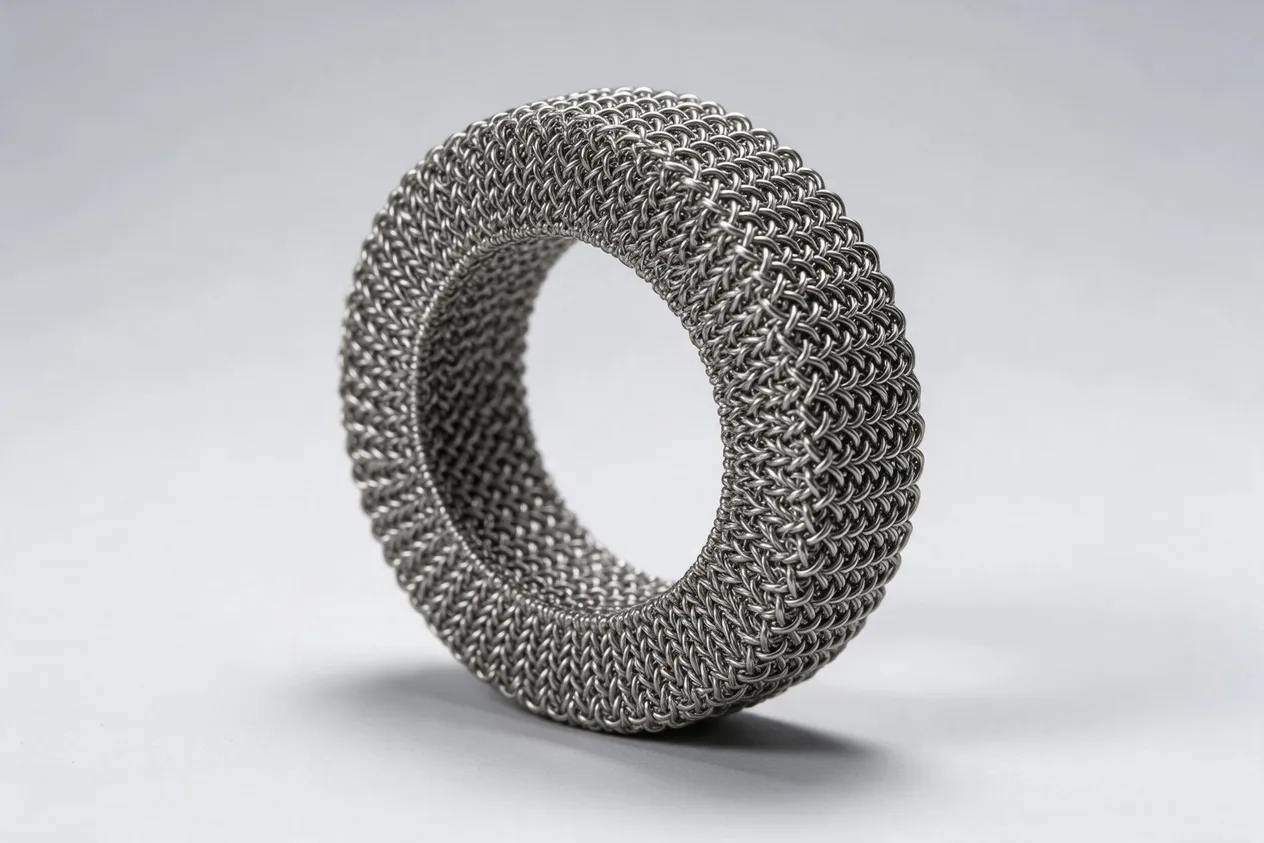
Compressed Knitted Wire Mesh Ring
304 Stainless Steel · 40–120 mesh
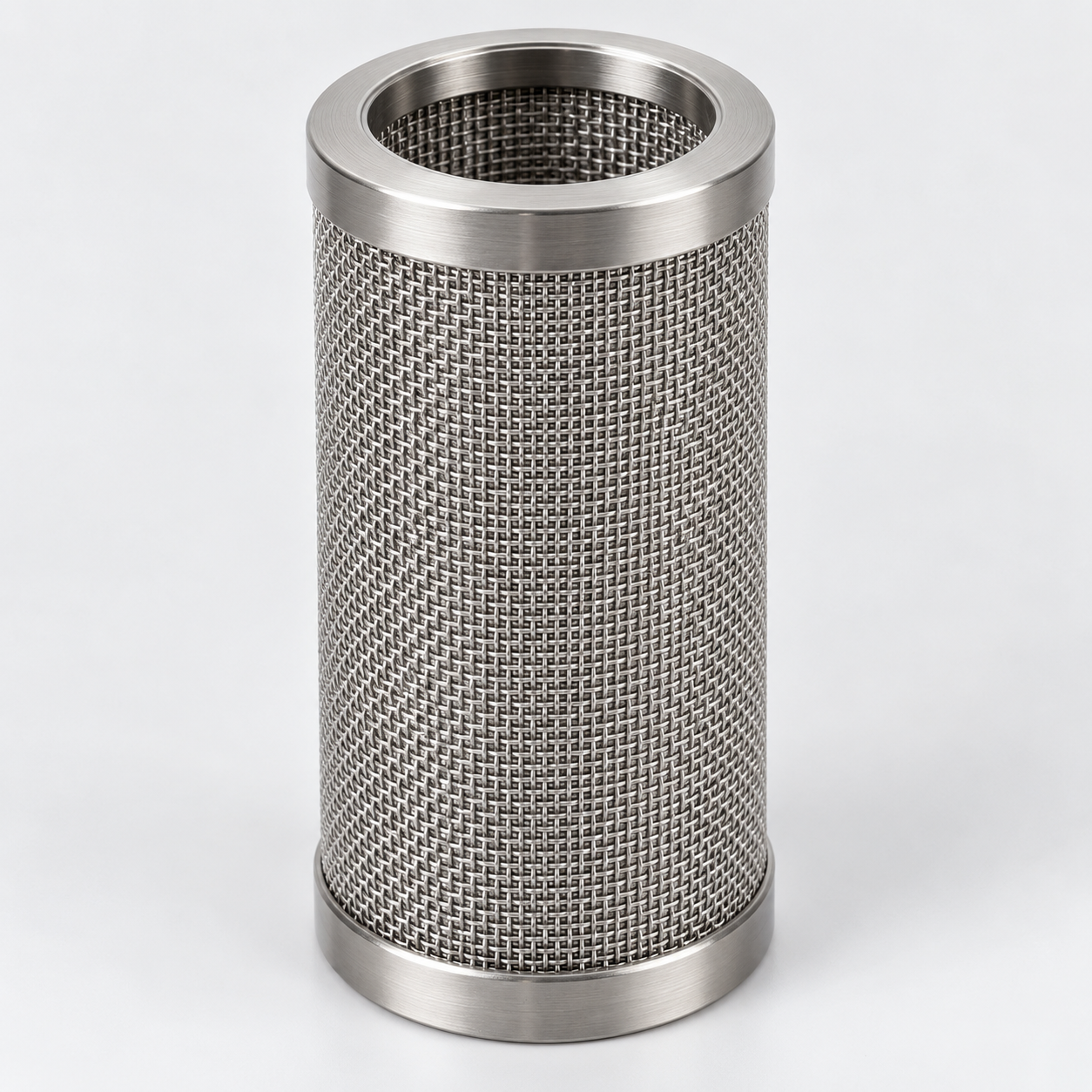
Hydraulic Wire Mesh Filter Element
Stainless steel · mesh
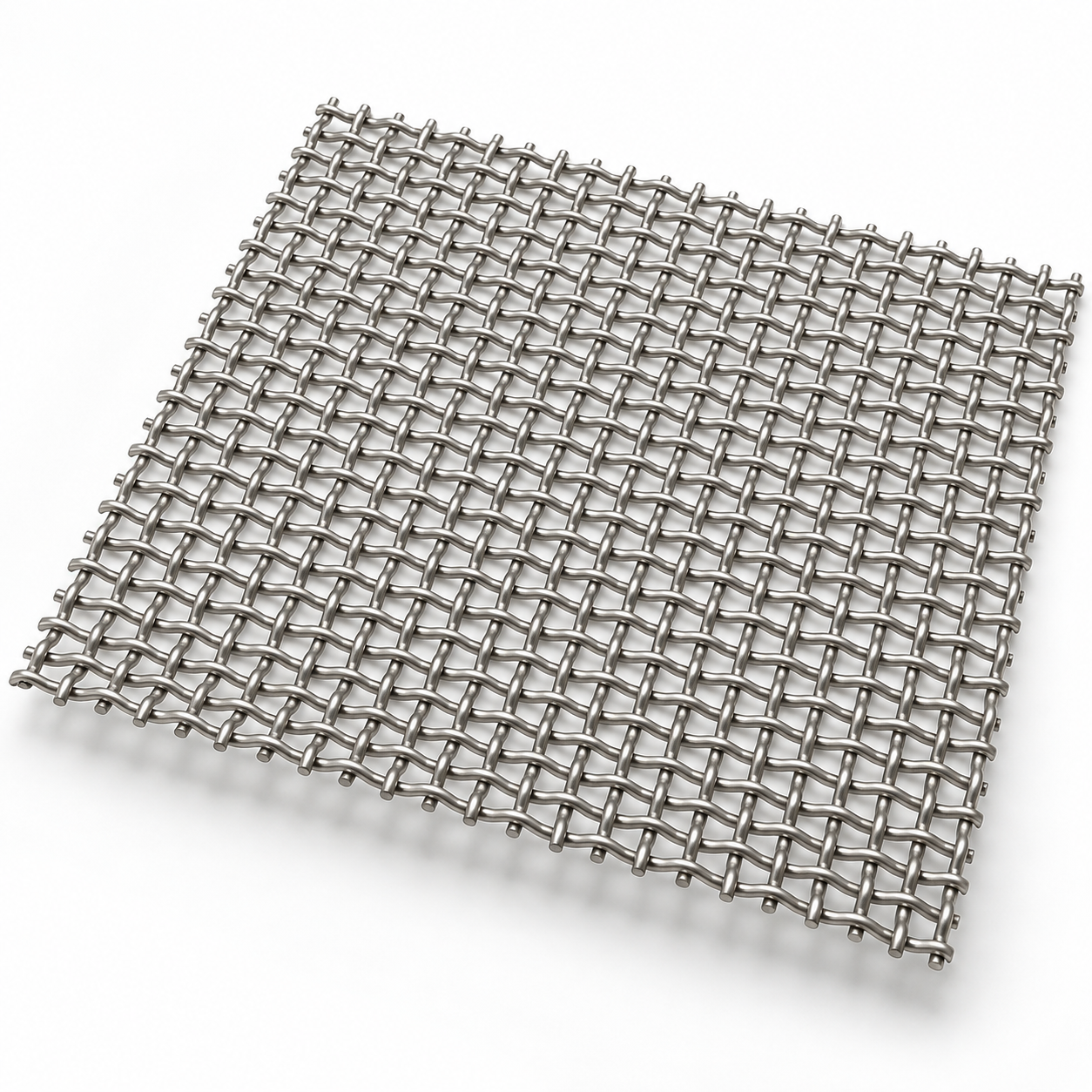
Stainless Steel Crimped Wire Mesh
304 Stainless Steel · 20–80 mesh
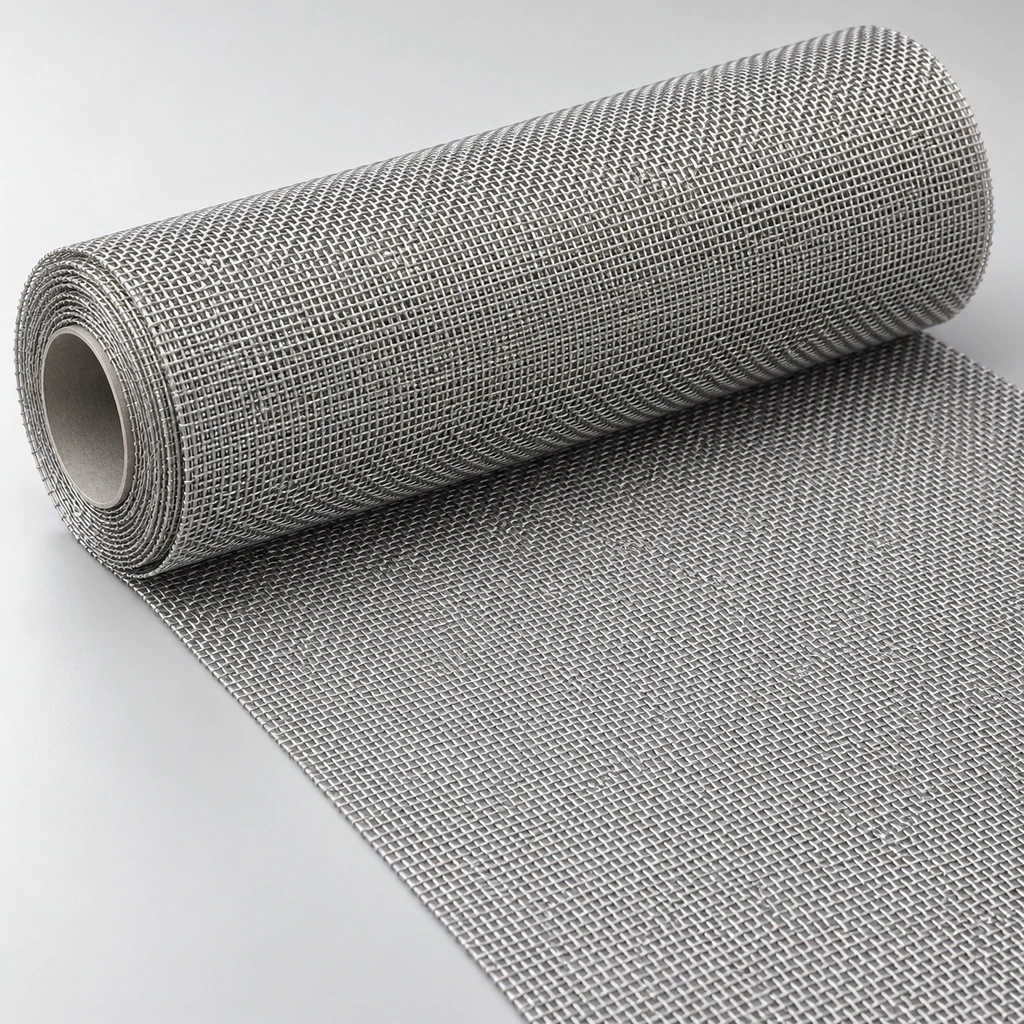
304 Stainless Steel Twill Weave Mesh
304 Stainless Steel · 20–325 mesh
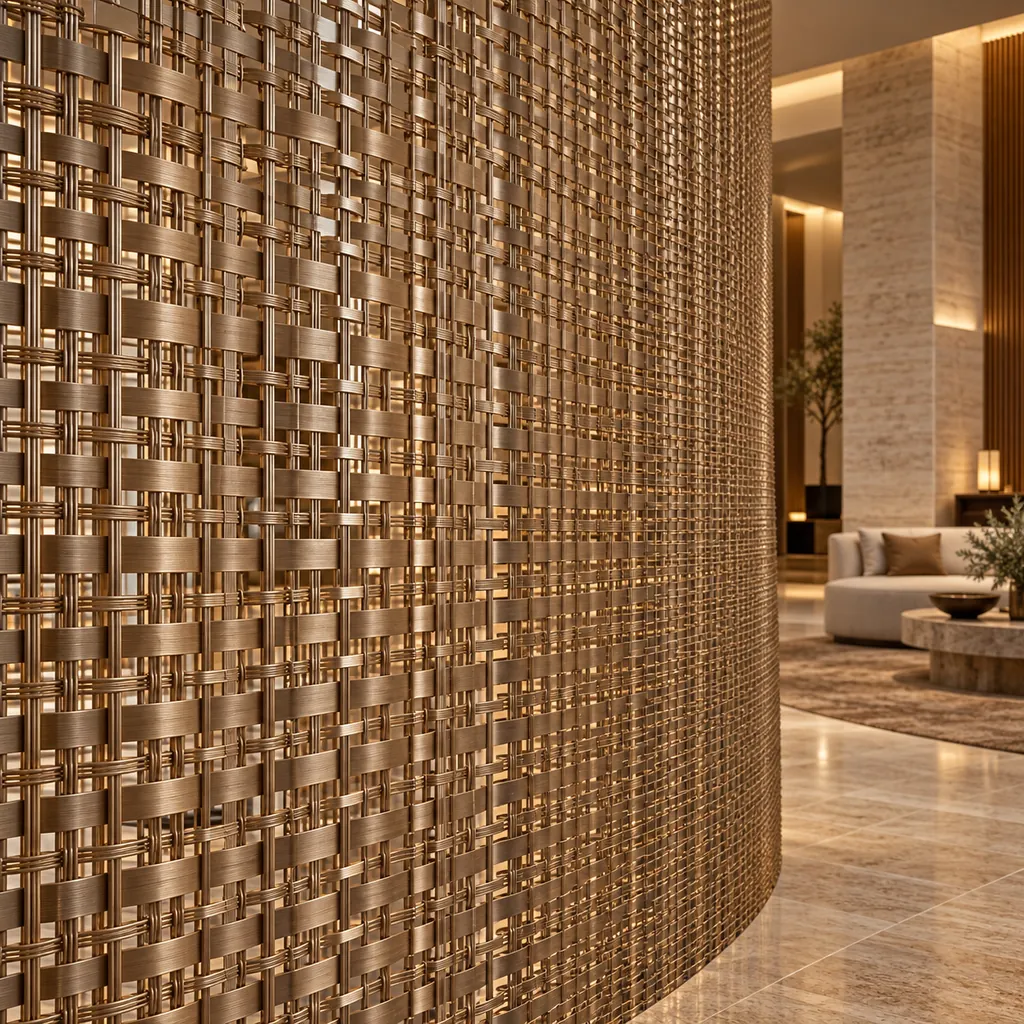
Architectural Metallic Fabric
Stainless steel / brass / bronze · mesh
Where Stainless Steel Expanded Wire Mesh Is Used
Stainless steel expanded metal is chosen where corrosion resistance, rigidity, and hygiene must hold up in washdown, coastal, or chemical service without coating maintenance.
Architectural facades and sunshades
Stainless steel expanded metal clads building facades and solar shading screens with a durable metallic mesh texture. Grade 316 with a mill or electropolished finish is the standard choice for coastal and high-exposure installations where 304 would tea-stain over time.
Food and pharmaceutical processing
Pickled and passivated 304 expanded metal forms hygienic machine guard infill, sieve trays, and drying screens in food and pharmaceutical plants. The one-piece diamond structure has no loose wires, and the passive surface washes down and sterilizes clean.
Marine and coastal structures
Grade 316 and 316L expanded metal serves walkway treads, stair infill, and equipment screens on piers, vessels, and coastal plants where salt air and spray destroy galvanized coatings within months.
Chemical processing and filtration
Grade-matched stainless expanded metal forms strainer baskets, filter support layers, and demister media in corrosive service. 316 handles chlorides and many chemicals; 2205 duplex extends performance in severe chloride duty.
Machine guards and safety enclosures
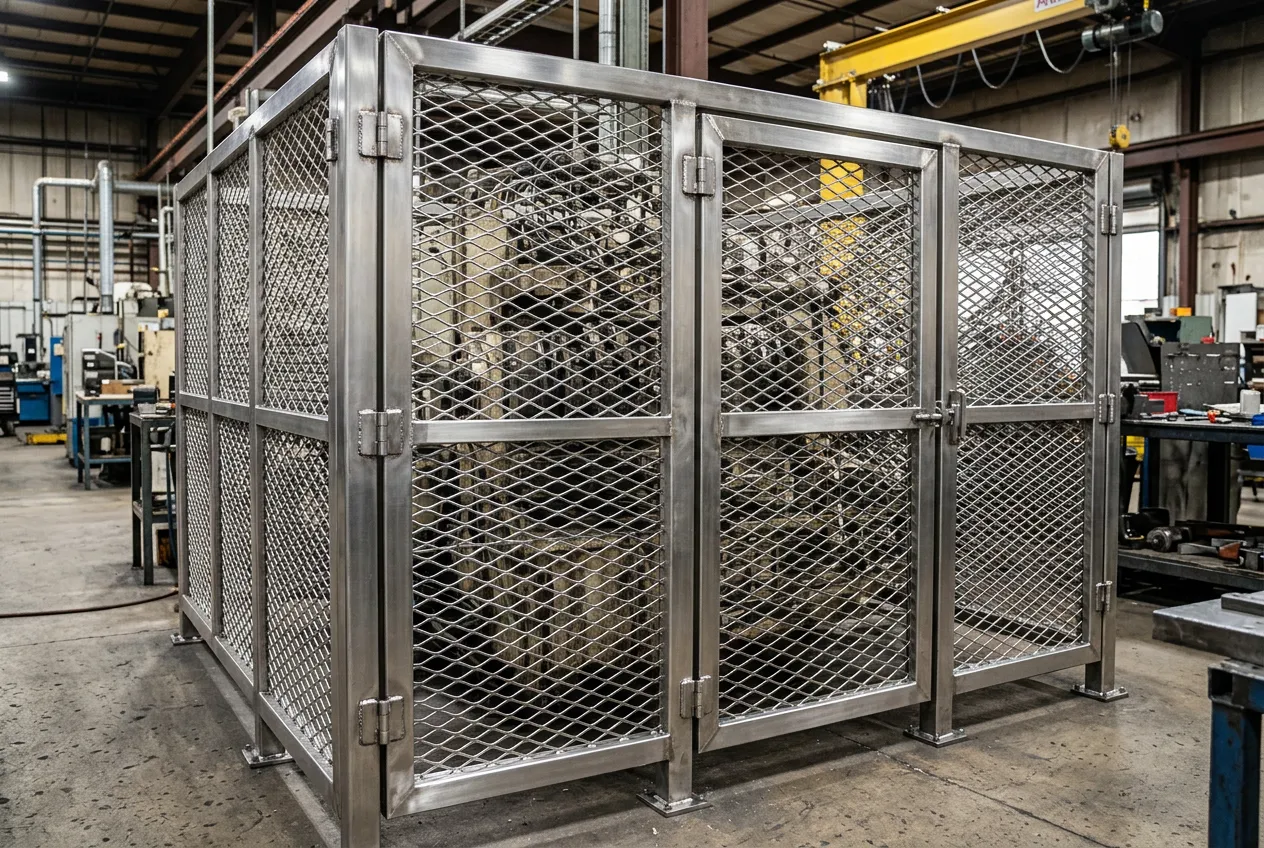
Standard (raised) 304 expanded metal forms rigid machine guards and perimeter safety enclosures. The diamond openings provide visibility and ventilation while meeting guard spacing requirements, and the welded or clipped frames stay rust-free in washdown areas.
Heavy-duty walkways and platforms
Flattened heavy-gauge 316 or 316L expanded metal forms slip-resistant walkway treads and platform flooring. The flattened surface provides safe footing while the rigid one-piece diamond structure supports pedestrian and light industrial loads without separate support bars.
How to Select the Right Stainless Steel Expanded Wire Mesh
Start from the environment, load, and surface requirements, then fix grade, form, opening size, strand dimensions, finish, and final dimensions. A complete RFQ avoids re-quotes and delays.
By corrosion environment
Indoor, food, and general service suits 304. Coastal, brine, and chemical exposure calls for 316 or 316L stainless steel expanded metal. Dry decorative work can use 430.
By form: standard or flattened
Choose standard (raised) for screens, guards, facades, and applications where rigidity matters. Choose flattened for walkways, platforms, and surfaces that must be flush.
By opening (LWD x SWD)
Define what the mesh must pass or retain. LWD is the long diagonal, SWD the short diagonal. State both in millimeters to match the diamond geometry to the screening or visual requirement.
By strand and sheet thickness
Strand width and starting sheet thickness together set the strength and weight. Heavier strand and thicker sheet resist impact and pedestrian loads; lighter material suits decorative duty.
By surface finish
Bright mill finish suits most industrial and screening duty. Specify pickled and passivated for food, pharmaceutical, or washdown service. Electropolishing adds a smooth, low-stick surface for architectural or hygienic applications.
By panel size and form
Standard 1220 x 2440 mm panels fit most jobs. Custom lengths, widths, and cut-to-size pieces avoid on-site cutting and edge finishing. Curved and formed panels are available for architectural profiles.
Confirm the grade on paper
Visual checks cannot separate 304 from 316. State the grade in the RFQ and request a mill test certificate per ASTM A240 or A580 with the shipment. A handheld PMI or XRF check on arrival confirms molybdenum content in seconds.
By lifecycle cost
316 costs more per sheet than 304 but less per year in chloride service. Match the grade to the actual environment and share the service target for a life-oriented recommendation instead of comparing first cost alone.
Stainless Steel Expanded Metal Buying Mistakes to Avoid
Nine specification errors that lead to wrong panels, delayed projects, and disputed shipments. Each one is avoidable at the RFQ stage.
Confusing expanded with perforated or woven
Expanded metal is slit-and-stretched from a single sheet; perforated is punched; woven is made from separate wires. Each has different strength, open area, and edge behavior. Do not treat them as interchangeable.
Choosing 304 for chloride environments
304 stainless steel expanded metal tea-stains and pits in coastal air, brine, and chemical washdown. 316 adds molybdenum, which sharply improves chloride resistance. Match the grade to the actual service environment, not the price.
Specifying only the sheet dimensions without LWD and SWD
Sheet size alone does not define the opening. State LWD x SWD, strand width, and starting thickness together. Two panels at the same sheet size can have completely different opening patterns.
Assuming standard and flattened have the same thickness and strength
After flattening, the apparent thickness is 10-15% less and the surface texture changes. If a smooth or walkable surface is needed, specify flattened form explicitly.
Allowing carbon steel contamination
Carbon steel dust, shared brushes, and common workbenches embed iron particles that rust and stain stainless steel expanded metal. Use dedicated tools and storage, then passivate after fabrication.
Using raised (standard) form for walkways
Standard form has raised strands that create trip hazards on walkways. Specify flattened form for any surface that will be walked on.
Overlooking strand orientation when cutting panels
Standard expanded metal has a grain direction; cutting against the grain creates loose strand ends. Specify factory-finished edges when appearance and safety matter.
Welding without matching filler and passivation
Weld 304 with 308L filler and 316 with 316L filler, keep heat input low, and pickle or passivate after welding. Untreated weld tint and carbide precipitation destroy corrosion resistance at the joint.
Accepting the lowest quote without an itemized breakdown
Two suppliers can quote very different prices for stainless steel expanded metal because one assumed 304 mill finish and the other quoted 316 electropolished. Without an itemized breakdown by grade, form, strand dimensions, opening size, finish, and quantity, you cannot compare quotes. Demand the full specification on every line.
Why Buyers Choose Stainless Steel Expanded Wire Mesh
Stainless steel expanded metal costs more upfront than galvanized mesh, then pays back in service life, hygiene, and zero maintenance.
Self-healing passive film - no coating to repaint
Stainless steel expanded metal protects itself with a chromium-rich passive film that repairs when scratched. Galvanized mesh relies on a zinc coating that chips at cut edges and wears away over time. With stainless, there is no coating schedule and no repair budget.
316 outlasts 304 where chlorides live
304 tea-stains in coastal air and washdown service. 316 and 316L add molybdenum, sharply improving resistance to chlorides, brine, and many chemicals. One grade step up can multiply service life in marine and process environments.
Welded and cut edges stay protected
Unlike coated mesh, stainless steel expanded metal does not lose protection where it is cut, drilled, or welded. Pickling and passivation after fabrication restores the passive film, so every fabricated edge keeps its corrosion resistance.
Perforated metal wastes 30-60% - expanded wastes zero
Every sheet of perforated metal produces punched-out scrap you pay for but cannot use. Expanded metal is slit-and-stretched from a solid sheet with zero waste. The entire starting sheet becomes usable mesh at lower material cost per square meter of coverage.
Woven mesh unravels at edges - expanded metal cannot
Woven wire mesh relies on individual wires crossing. Cut it at the wrong place and the weave unravels. Expanded metal is a single stretched sheet with continuous strand junctions. Cut it anywhere and the panel stays intact.
Grade traceability with MTC and PMI
Every bundle is traceable to a mill heat number with a mill test certificate per ASTM A240 or A580, and PMI verification is available before dispatch. Molybdenum content separates 316 from 304 in seconds, so 201 never passes as 304.
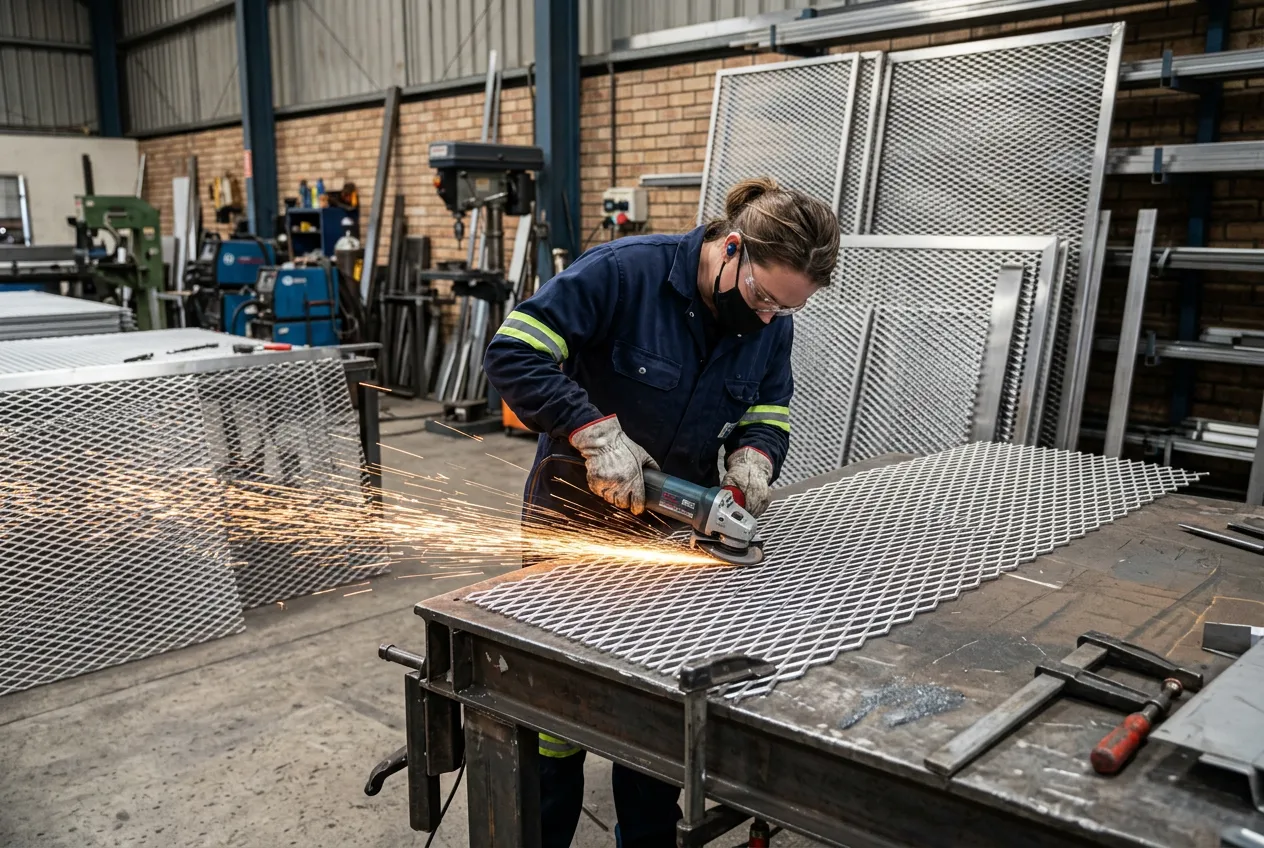
Protect the passive film. Keep stainless away from carbon steel contamination and restore the surface after welding.
Working with Stainless Steel Expanded Wire Mesh
Cut with the grain
Standard expanded metal has a grain direction parallel to the LWD. Cut along the grain with an abrasive saw, shears, or angle grinder. Cutting against the grain leaves loose strand ends that may cause snags.
Deburr cut edges
Stainless steel expanded metal edges can be sharp, especially on standard (raised) form. Deburr with a file, abrasive pad, or deburring tool. Specify factory edge finishing for panels in accessible or traffic areas.
Weld with matching filler
Use 308L filler on 304 and 316L filler on 316 expanded metal, and keep heat input low. The low-carbon fillers avoid carbide precipitation that weakens corrosion resistance at the weld.
Passivate after fabrication
Pickling or passivation removes free iron and weld tint so the mesh surface re-forms its protective film. This step matters most for food, marine, and chemical service.
Stainless Steel Expanded Metal Packing for Export
Packing protects bright stainless surfaces from marking, keeps panels flat, and preserves grade traceability through transit and site inspection.
Flat-packed on pallets
Expanded metal sheets and panels ship flat-packed on timber pallets with protective corner boards and multiple straps to prevent shifting in transit.
Interleaved protection
Where panels are stacked face-to-face, interleave paper or foam sheeting between them to prevent surface marking and abrasion during transit.
Labeled by grade, form, and opening
Each bundle carries a label stating grade, form (standard or flattened), LWD x SWD, strand width, sheet thickness, panel size, quantity, and mill heat number for traceability.
Mill test certificates on request
MTCs per ASTM A240 or A580 accompany the shipment when requested at RFQ stage. Third-party inspection by SGS, BV, or TUV is available on request.
Container loading plan
Share your container plan, port of destination, and trade term with the factory to optimize loading, reduce freight cost, and ensure safe arrival.
Stainless Steel Expanded Metal in Service
Use scenarios show how grade, form, and finish change by duty; they are not customer claims.
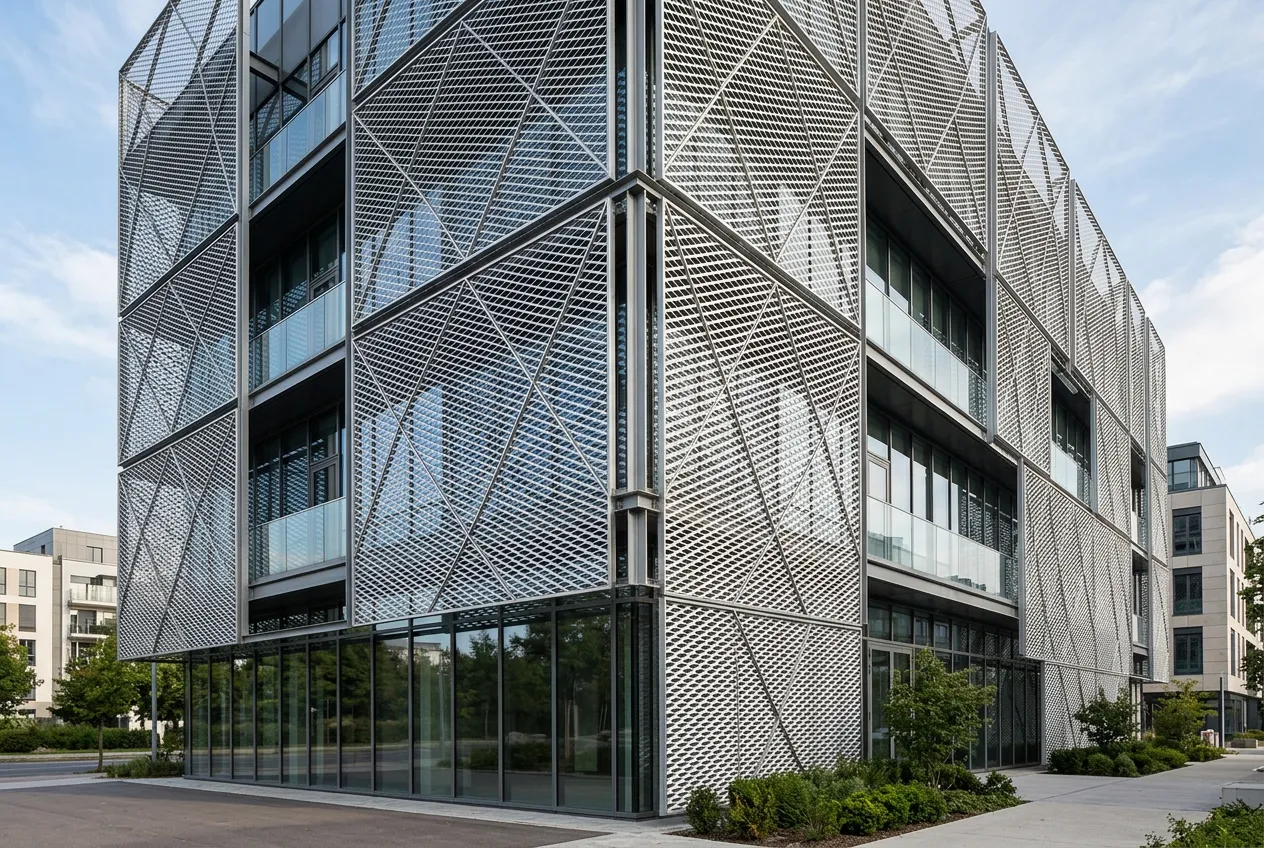
Coastal building facade cladding
Electropolished 316 expanded metal panels specified for a seafront building envelope where salt air and UV exposure ruled out 304 and any coated steel alternative.
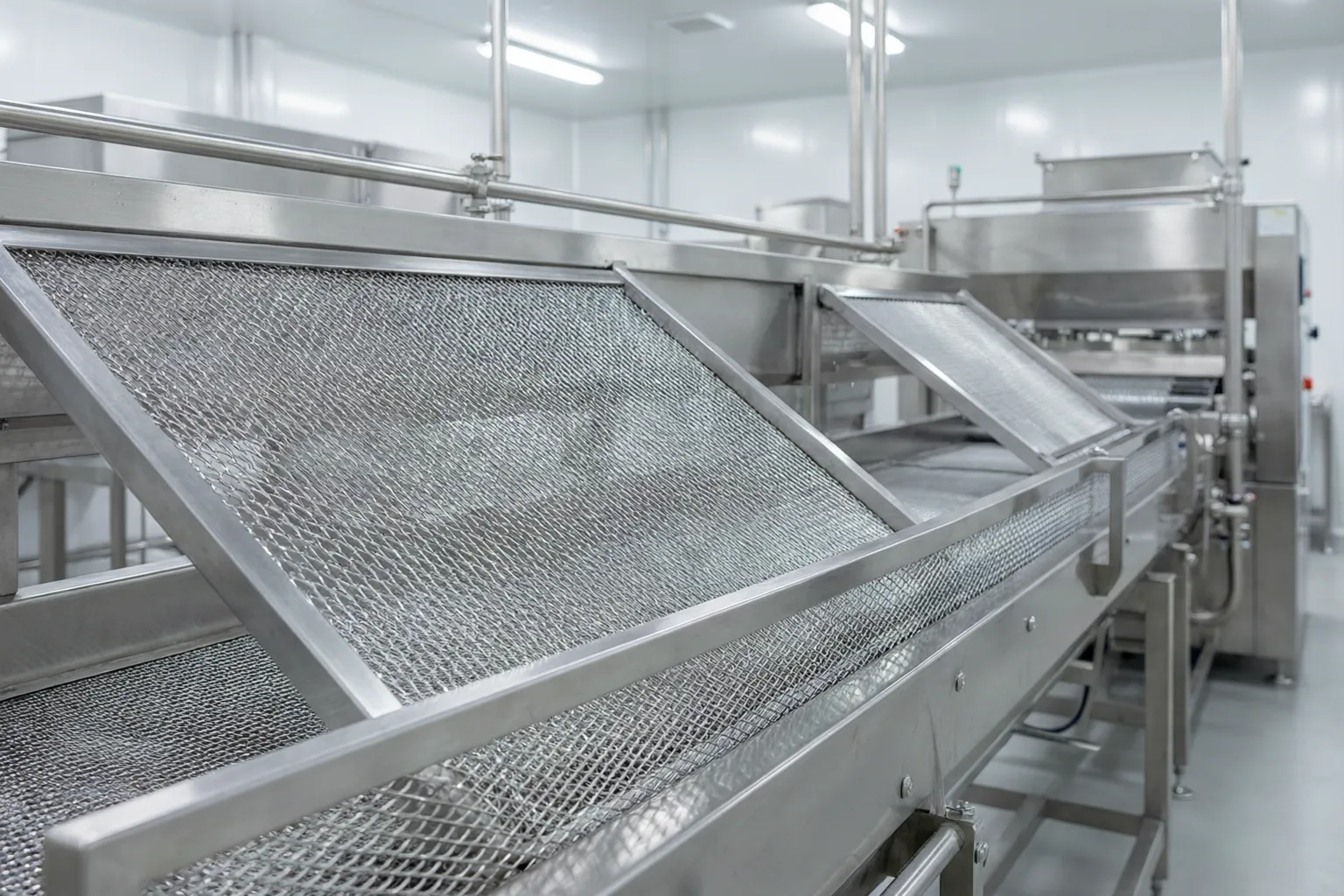
Food plant machine guard infill
Pickled and passivated 304 raised expanded metal panels fitted to machine safety guards in a beverage plant where washdown hygiene and zero coating flakes were mandatory.
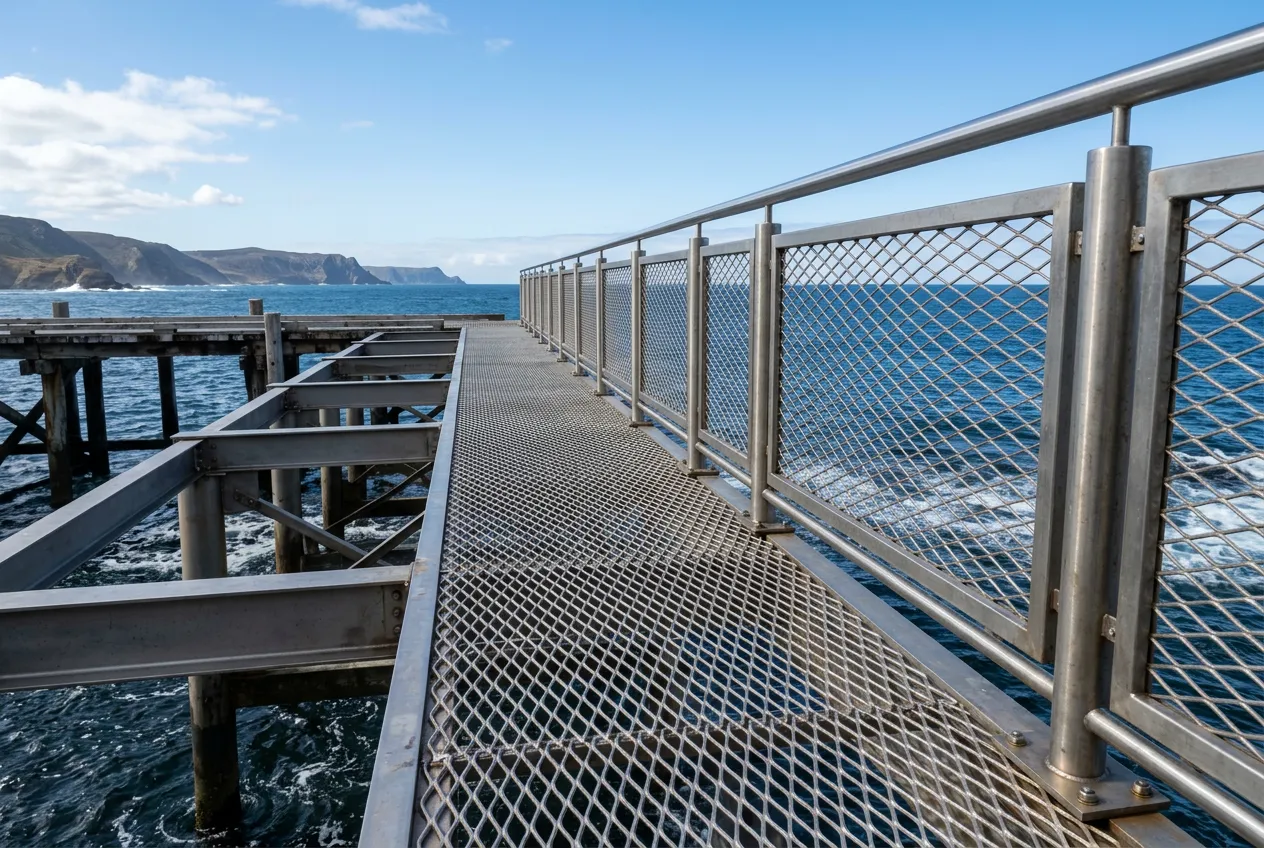
Seawater pump station walkway
Flattened heavy-gauge 316L expanded metal treads installed on a coastal pump station walkway, chosen for slip resistance and long chloride-exposed service life.
Chemical plant equipment screens
316 expanded metal screens and strainer baskets supplied for a chemical processing line, with MTCs verified against each heat number and PMI spot checks before dispatch.
Stainless Steel Expanded Metal Sourcing Resources
Compare constructions, grades, and industry standards. Confirm the edition and project requirements before ordering.
Last updated: 2026-08-27
Related pages
Reference standards
Stainless Steel Expanded Metal FAQ
Twenty procurement questions about grades, forms, specifications, and ordering stainless steel expanded metal mesh.
Still have questions about stainless steel expanded metal mesh?
Send your grade, form, opening size (LWD x SWD), strand thickness, panel dimensions, finish, and quantity. Our sourcing team replies with a specification-led review and available options.
Request a QuoteRequest Stainless Steel Expanded Metal Pricing
Send grade, form (standard or flattened), opening size (LWD x SWD), strand width or sheet thickness, panel dimensions, finish, quantity, application, and destination for a specification-led sourcing review. Our team replies with matched options and a factory quote.
Your details stay private. We reply with a matched factory quote — no spam.