Battery Mesh: Nickel, Titanium & Copper Electrode and Current Collector Mesh
Source battery mesh for electrodes and current collectors in nickel, titanium, copper, and stainless steel, in woven, expanded, perforated, and electroformed forms. Compare materials, mesh geometry, and sourcing details, then request a factory quote.
View SpecificationsBattery Mesh Specifications
Battery mesh is defined by material grade, mesh geometry, form, finish, and processing together. Mesh count alone does not define performance. For industrial woven wire cloth, ASTM E2016 and ISO 9044 provide useful terminology and tolerance references.
Nickel (N02200/N02201), titanium, copper, or stainless steel 304/316, chosen by cell chemistry, conductivity, corrosion environment, and cost
Nickel 200 (UNS N02200, 0.15% carbon max) and low-carbon Nickel 201 (UNS N02201, 0.02% carbon max, preferred above 315°C / 600°F); current catalog reference 40 and 80 mesh
Mesh count per linear inch, wire diameter, aperture, open area, and tolerance. Mesh count alone does not define the opening; state the full geometry
Woven, expanded (diamond), perforated, or electroformed; each changes thickness, rigidity, surface area, and current distribution
Slitting, cutting, tab or welding compatibility, and surface treatments such as acid washing, polishing, or RuO2 / MMO catalytic coatings for coated anodes
Material test certificates and dimensional checks per the agreed geometry; composition screening by XRF is limited where carbon content distinguishes the grade
| Material route | Typical battery role | Why it is used | RFQ note | |
|---|---|---|---|---|
| Nickel | Ni-MH / Ni-Cd positive collectors, Li-ion and supercapacitor electrode substrates | High conductivity, corrosion resistance in alkaline electrolyte, ductile and weldable | State N02200 or N02201 grade, mesh geometry, and any finish. Catalog reference: 40 and 80 mesh | |
| Titanium | Electrolysis and coated-anode substrates, corrosion-resistant collectors | Outstanding corrosion resistance in chloride and acidic media, lightweight, stable under anodic potential | Confirm grade, mesh geometry, and any MMO or RuO2 coating requirement | |
| Copper | Conductive current collectors, busbars, and low-resistance contact mesh | Highest electrical conductivity and low contact resistance | State purity (for example C11000), thickness, and any oxidation or coating concern | |
| Stainless steel (304/316) | Economical electrode supports and structural mesh in mild or alkaline duty | Strength, corrosion resistance, and lower cost at production scale | Confirm alloy, surface finish, and the electrolyte environment |
Battery Mesh Forms Compared
The form changes how the mesh behaves as an electrode or collector. Match the form to the electrode build and the current-distribution requirement.
| Form | How it is made | Structure | Typical battery use | |
|---|---|---|---|---|
| Woven mesh | Interlaced wire in plain, twill, or Dutch weave | Defined square apertures; flexible, tailorable open area | Electrode substrates and support screens where controlled opening and flexibility matter | |
| Expanded mesh | Slit-and-stretched foil or sheet | Diamond openings; thin, lightweight, stiff strands | Current collectors where low weight and low resistance are required | |
| Perforated mesh / grids | Punched or stamped sheet | Round or shaped holes; rigid, plate-like structure | Rigid electrode grids and plate-supported collectors | |
| Electroformed mesh | Electrodeposited nickel | Uniform fine pores with high precision | Precision current collectors where uniform current distribution is critical |
Nickel Mesh Geometry Reference (Catalog)
These values come from the current Pure Nickel catalog product record. They are reference points, not a stock or lead-time promise; confirm the final grade, weave, dimensions, tolerances, and quantity in the RFQ.
| Mesh count | Wire diameter (mm) | Aperture (mm) | Open area | Listed weight (kg/m²) | |
|---|---|---|---|---|---|
| 40 mesh | 0.25 | 0.385 | 36.8% | 1.25 | |
| 80 mesh | 0.12 | 0.198 | 38.8% | 0.58 |
Battery Mesh RFQ Checklist
Providing these fields lets the sourcing and factory teams evaluate a comparable requirement instead of quoting against an incomplete mesh description.
| Field | What to state | Why it matters | |
|---|---|---|---|
| Cell chemistry and duty | Li-ion, Ni-MH, Ni-Cd, supercapacitor, fuel cell, or electrolyzer; electrolyte, temperature, current loading | Drives material grade and mesh geometry together | |
| Material | Nickel 200 / N02200, Nickel 201 / N02201, titanium, copper, or stainless grade | Prevents a purity or grade assumption | |
| Geometry | Mesh count, wire diameter, aperture, open area, and tolerance | Defines electrical and mechanical behavior together | |
| Form and finish | Woven, expanded, perforated, or electroformed; surface treatment | Sets thickness, rigidity, and coating compatibility | |
| Processing | Roll or sheet, width, slitting, cutting, tab or welding detail | Determines fabricability and lead time | |
| Acceptance | MTC, dimensional checks, sample need, quantity, destination, required date | Aligns documentation, inspection, logistics, and quotation basis |
Battery Mesh Forms We Source
Four forms are available across nickel, titanium, copper, and stainless steel. Compare thickness, rigidity, and current distribution before you specify.
Woven battery mesh
Plain, twill, or Dutch woven cloth in nickel, copper, stainless, or titanium with defined square apertures; the flexible, tailorable route for electrode substrates.
Expanded battery mesh
Slit-and-stretched foil producing diamond openings; thin and lightweight, used for current collectors where low resistance per unit weight matters.
Perforated battery mesh
Punched sheet with round or shaped holes; a rigid, plate-like structure for electrode grids and plate-supported collectors.
Electroformed battery mesh
Nickel mesh made by electrodeposition with uniform fine pores and high precision, chosen where uniform current distribution is critical.
How to Select the Right Battery Mesh
Start from the cell chemistry, then fix material grade, mesh geometry, form, finish, and processing. A complete battery mesh RFQ avoids assumptions and re-quotes.
Start from the cell chemistry
Li-ion, Ni-MH, Ni-Cd, supercapacitor, fuel cell, and electrolyzer each place different demands on conductivity, corrosion resistance, and porosity. Name the chemistry first.
Choose the material grade
Nickel for alkaline cells, titanium for corrosive or chloride electrolysis, copper for maximum conductivity, stainless for economical supports.
Define mesh geometry
Mesh count, wire diameter, aperture, and open area together determine electrical and mechanical behavior; mesh count alone is not enough.
Select the form
Woven, expanded, perforated, and electroformed forms change thickness, rigidity, surface area, and current distribution. Match the form to the electrode build.
Confirm surface treatment
Acid washing, polishing, or catalytic coatings such as RuO2 or MMO change electrochemical behavior and are specified for coated anodes.
Plan processing
Slitting, cutting, tab welding, and roll versus sheet supply affect yield, lead time, and assembly fit.
State duty and qualification
Electrolyte, temperature, current loading, and any qualification tests keep the RFQ comparable and prevent re-quotes.
Give quantity and destination
Quantity, destination port, and trade terms let the factory price material, processing, and freight accurately.
Why Buyers Choose Battery Mesh
Battery mesh earns its place in electrode assemblies for verifiable reasons: it conducts, it supports active material, and it can be matched to the electrochemistry.
Conductive electrode support
Metal mesh conducts current across the electrode while supporting active material, reducing internal resistance and improving current distribution.
Corrosion-matched routes
Nickel, titanium, copper, and stainless options let the mesh match the electrolyte and operating temperature.
Controlled open area
Aperture and open area are specifiable, supporting active-material loading and electrolyte penetration where the duty requires it.
Four forms, one sourcing route
Woven, expanded, perforated, and electroformed mesh are sourced through one RFQ with matched quality control.
Fabrication-ready supply
Slitting, cutting, and welding-compatible supply formats fit electrode assembly lines.
Specification-led QC and traceability
Material test certificates, dimensional checks, and labeled lots give traceable, inspectable supply.
Where Battery Mesh Is Used
Battery mesh serves as a conductive electrode substrate or current collector wherever a metal mesh must carry current and support active material. Confirm the electrochemistry and duty in the RFQ.
Lithium-ion current collectors
Nickel or copper mesh used as a current collector or electrode substrate in Li-ion cells and research hardware, improving contact between active material and electrolyte and distributing current across the electrode.
Nickel-metal hydride (Ni-MH) electrodes
Nickel mesh serves as the positive current collector in Ni-MH cells, supporting active material while conducting current under repeated charge-discharge.
Nickel-cadmium (Ni-Cd) electrodes
Nickel mesh is used as a current collector in Ni-Cd electrode assemblies where corrosion resistance in alkaline electrolyte and high-rate discharge matter.
Supercapacitor electrodes
A conductive, high-surface-area mesh substrate for supercapacitor electrodes, supporting active-material loading and fast charge-discharge.
Fuel cell components
Mesh electrode or gas-diffusion support in fuel cells, where conductivity and controlled porosity support gas and charge transport.
Water electrolysis and hydrogen
Nickel or titanium mesh electrodes and coated anodes in alkaline and PEM electrolysis, with catalytic coatings applied for oxygen and hydrogen evolution.
Battery Mesh Buying Mistakes to Avoid
Six errors that lead to the wrong mesh, delayed delivery, or an uncomparable quote. Every one is avoidable at the RFQ stage.
Specifying mesh count alone
Mesh count without wire diameter does not define the opening. State count, wire diameter, aperture, and open area.
Confusing Nickel 200 and 201
Nickel 201 has a lower carbon limit and is preferred for prolonged service above 315°C / 600°F. Name the grade in the RFQ.
Choosing material by name, not environment
The electrolyte and operating temperature decide whether nickel, titanium, copper, or stainless suits the duty, not the material name alone.
Overlooking form fit
Woven mesh flexes while expanded mesh is stiffer, and electroformed mesh carries the tightest tolerances. The electrode build determines which form fits.
Ignoring processing tolerance
Slitting and cutting tolerances, roll width, and flatness affect electrode assembly. State them to avoid rejects at your line.
Leaving out duty and qualification details
Current loading, temperature, electrolyte, and test requirements belong in the RFQ to avoid an uncomparable quote and a second round of pricing.

Battery mesh is supplied as rolls or sheets and finished into electrode parts with clean cutting, matched joining, and the specified surface treatment.
From Battery Mesh to Electrode Part
Confirm roll dimensions and slitting
State roll width and required strip width so the factory slits cleanly with minimal waste and consistent edge condition.
Cut to electrode size with clean edges
Cut mesh to the electrode footprint with burr-free edges to avoid shorting, coating defects, and handling damage.
Prepare for tab and weld joints
Confirm the tab material and joining method. Nickel and copper mesh weld and solder with matched filler; titanium needs specialist joining.
Apply surface treatment before coating
Acid washing, polishing, or catalytic coating is applied before active-material coating, as specified in the RFQ.
Battery Mesh Packing for Export
Packing keeps mesh flat and clean, protects foil-thin forms from edge damage, and preserves traceability through transit and receiving inspection.
Rolls and sheets protected
Mesh is wrapped and edge-protected to avoid deformation, scratching, and burring in transit.
Palletized for container loading
Packed to the container plan with edge protection against forklift and handling damage.
Label by specification
Each lot carries grade, mesh geometry, form, dimensions, quantity, and production lot for traceability.
Certificates on request
Material test certificates and dimensional inspection reports accompany the shipment when ordered.
Share destination details
State destination port, trade term, and inspection requirements. Pre-shipment inspection by SGS, BV, or TÜV is available on request.
Factory QC before shipment
Incoming wire, weaving or forming, finishing, and final inspection with AQL sampling happen before dispatch.
Battery Mesh in Service
Use scenarios show how material, geometry, and form change by duty; they are not customer claims.

Battery electrode substrate
Nickel mesh in 40-80 mesh woven cloth specified as an electrode substrate for alkaline battery research and qualification hardware.

Electrolysis test hardware
Nickel or titanium mesh electrodes configured for electrolysis and hydrogen test rigs, with coated-anode options.

Electronics and precision collectors
Conductive nickel mesh in electronic and vacuum components where controlled conductivity and low gas content matter.
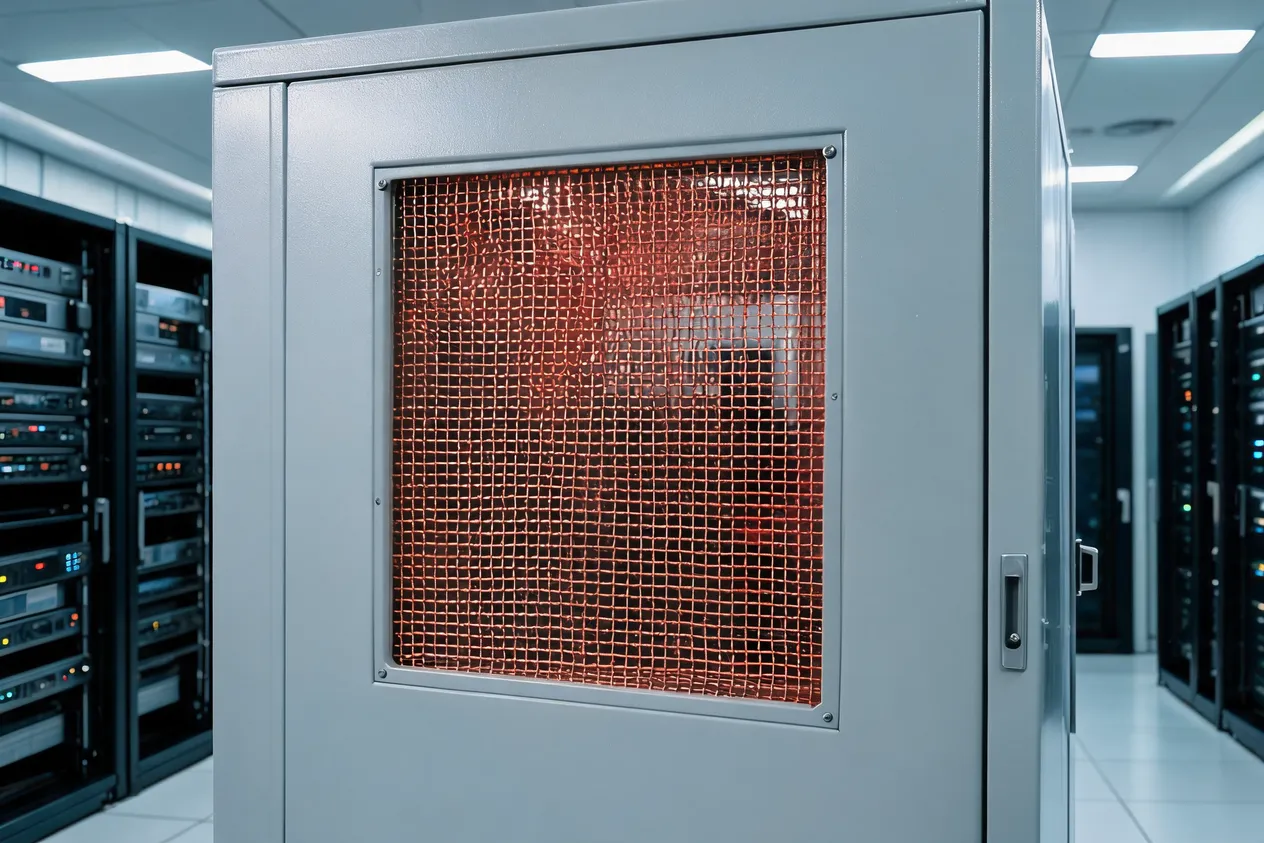
Conductive copper mesh assemblies
Copper mesh specified for current collection and shielding test assemblies where maximum conductivity is required.
Battery Mesh Sourcing Resources
Compare the material grades, product catalog entries, and related categories. Confirm the standard edition and your electrochemistry before ordering.
Last updated: 2026-09-18
Related pages
Battery Mesh FAQ
Common procurement questions about materials, mesh geometry, forms, and ordering battery mesh.
Still have questions about battery mesh?
Send your cell chemistry, material grade, mesh geometry, form, quantity, and destination. Our sourcing team replies with a specification-led review.
Request a QuoteRequest Battery Mesh Pricing
Send cell chemistry, material grade, mesh geometry, form and finish, processing needs, quantity, and destination for a specification-led sourcing review. Our team replies with matched battery mesh options and a factory quote.
Your details stay private. We reply with a matched factory quote — no spam.