Hardware Cloth: Galvanized & Stainless Welded Wire Mesh Supplier
Source hardware cloth in galvanized, PVC-coated and stainless steel welded wire mesh with 1/8 to 1 inch square openings. Compare gauges, roll sizes and coatings, then request a factory quote.
View SpecificationsHardware Cloth Specifications
Hardware cloth is defined by five variables: welded square opening, wire diameter, coating route, roll dimensions, and standard. State all five in millimeters in every RFQ to avoid gauge-table ambiguity and re-quotes.
Resistance-welded at every intersection into a rigid square mesh; no twisting, no loose nodes
Square apertures 1/8, 1/4, 1/2, 3/4, and 1 inch measured center-to-center
0.5-1.0 mm (about 23-19 gauge) chosen by pest pressure and duty
Electro galvanized, hot-dip galvanized, PVC-coated, or 304/316 stainless hardware cloth
Widths 0.6-1.5 m (common 0.6 m, 0.9 m, 1 m, and 48 in) in 10 m, 15 m, 25 m, and 30 m lengths
Galvanized wire per ASTM A641; coating verification per ASTM A90; stainless wire per ASTM A580
Select one or more specifications. Your choices will be included in the quote request.
0 specs selected
| Material route | Typical coating | Expected service | Typical use and RFQ note | |
|---|---|---|---|---|
| Electro galvanized | 8-20 g/m2 bright zinc | Indoor and short outdoor duty; about 1-3 years outside | Economical hardware cloth for screening, crafts, and dry interior guards. Lowest cost; state the ASTM A641 class in the RFQ. | |
| Hot-dip galvanized | 40-80+ g/m2 zinc on the welded mesh | Long outdoor service; 5-15 years by environment | The default outdoor hardware cloth for rodent exclusion, garden guards, and vent screens. Specify galvanized-after-welding so every weld node is sealed. | |
| PVC-coated over galvanized core | Zinc core plus 0.4-0.8 mm PVC jacket | Extended outdoor life with color; 10-20 years | Green or black hardware cloth blends into gardens and buildings. Name the core coating class and jacket thickness. | |
| 304 / 316 stainless steel | Bare corrosion-resistant alloy wire | Decades; no coating to wear away | Premium hardware cloth for marine, food-adjacent, and hygiene-sensitive duty. Highest cost, longest life, zero rust stains. |
Common Stock Sizes: Hardware Cloth Rolls
Typical stock specifications of hardware cloth in electro and hot-dip finishes. Custom widths, lengths, and wire diameters are available at MOQ; confirm wire tolerance and coating mass at RFQ.
| Opening (square) | Wire diameter (mm) | Gauge (approx.) | Roll size | Common finish | |
|---|---|---|---|---|---|
| 1/8 in (3 mm) | 0.4-0.6 | 27-23 ga | 0.6-1 m x 10 m | Electro or hot-dip galvanized | |
| 1/4 in (6 mm) | 0.6-0.9 | 23-20 ga | 0.6-1.2 m x 15/25 m | Hot-dip galvanized | |
| 1/2 in (13 mm) | 0.7-1.0 | 22-19 ga | 0.9-1.2 m x 25 m | Hot-dip or PVC-coated | |
| 3/4 in (19 mm) | 0.8-1.1 | 21-19 ga | 1-1.5 m x 25 m | Hot-dip galvanized | |
| 1 in (25 mm) | 0.9-1.2 | 20-19 ga | 1-1.5 m x 30 m | Hot-dip or PVC-coated |
Choosing Hardware Cloth by Pest and Duty
Match the opening and wire diameter to what the mesh must keep out. Rats and mice test every edge, so small openings and heavier wire beat light netting for any rodent duty.
| Target or duty | Recommended opening | Recommended wire | Why | |
|---|---|---|---|---|
| Mice and young rats | 1/4 in (6 mm) | 0.7-0.9 mm | Small apertures stop gnawing pests at entry points | |
| Rats, squirrels, chipmunks | 1/4 in (6 mm) | 0.9-1.0 mm | Heavy 19-20 gauge resists chewing and prying | |
| Insects, wasps, bees | 1/8 in (3 mm) | 0.4-0.6 mm | Fine openings block small pests while venting air | |
| Garden beds and coops | 1/2 in (13 mm) | 0.7-0.9 mm | Balanced cost and strength for everyday barriers | |
| Sifting and screening | 1/8-1/4 in | 0.5-0.7 mm | Square openings give uniform sizing and flow |
Hardware Cloth Roll Weight Reference
Theoretical weight for freight and handling estimates. Actual weight varies by coating mass and wire tolerance; confirm exact weight on the packing list.
| Opening | Wire diameter (mm) | Approx. weight (kg/m2) | 1 m x 25 m roll (kg) | |
|---|---|---|---|---|
| 1/8 in (3 mm) | 0.5 | 0.55 | 13.8 | |
| 1/4 in (6 mm) | 0.7 | 0.85 | 21.3 | |
| 1/4 in (6 mm) | 0.9 | 1.40 | 35.0 | |
| 1/2 in (13 mm) | 0.8 | 0.90 | 22.5 | |
| 1/2 in (13 mm) | 1.0 | 1.40 | 35.0 | |
| 1 in (25 mm) | 1.1 | 1.55 | 38.8 |
Wire Gauge Reference: BWG, SWG, and AWG
Gauge tables vary by standard and country. Use this conversion reference to check wire diameter in millimeters before you send an RFQ; state millimeters only to avoid ambiguity.
| Gauge (approx.) | BWG (mm) | SWG (mm) | AWG (mm) | Common use | |
|---|---|---|---|---|---|
| 19 | 1.02 | 1.02 | 0.91 | Heavy rodent-proof hardware cloth | |
| 20 | 0.89 | 0.91 | 0.81 | Standard outdoor hardware cloth | |
| 21 | 0.81 | 0.81 | 0.72 | Light outdoor guards | |
| 22 | 0.71 | 0.71 | 0.64 | General screening | |
| 23 | 0.61 | 0.61 | 0.57 | Vent screens and crafts | |
| 24 | 0.56 | 0.56 | 0.51 | Fine screening |
Container Loading Reference: Hardware Cloth Rolls
Palletized quantity estimates for freight budgeting. Actual count depends on roll weight, pallet height, and the packing plan; confirm the exact loading count on the packing list.
| Roll size | Approx. roll weight | 20ft container | 40ft container | 40ft high-cube | |
|---|---|---|---|---|---|
| 1 m x 25 m, 1/4 in opening, 0.7 mm wire | ~21 kg | ~260 rolls | ~550 rolls | ~620 rolls | |
| 1 m x 25 m, 1/2 in opening, 0.8 mm wire | ~22 kg | ~250 rolls | ~530 rolls | ~600 rolls | |
| 0.9 m x 15 m, 1/8 in opening, 0.5 mm wire | ~7 kg | ~700 rolls | ~1,500 rolls | ~1,700 rolls |
Hardware Cloth vs Chicken Wire vs Welded Panel
Compare the three most-asked wire mesh options side by side before you choose. Hardware cloth wins where rigidity and small openings matter; the other two excel where cost or panel size rules.
| Comparison | Hardware cloth | Chicken wire | Welded wire panel | |
|---|---|---|---|---|
| Construction | Resistance-welded square mesh | Twisted hexagonal netting | Welded grid panels | |
| Opening range | 1/8-1 in square | 1/2-2 in hex | 1/2-8 in square | |
| Wire diameter | 0.5-1.0 mm (19-23 ga) | 0.4-1.2 mm (19-27 ga) | 2.0-6.0 mm | |
| Rodent resistance | High; 1/4 in stops rats | Low; light and flexible | High; heavy wire | |
| Outdoor life (HDG) | 5-15 years | 5-15 years | 5-20 years | |
| Form factor | Rolls 0.6-1.5 m wide | Rolls 0.5-2 m wide | Panels and rolls | |
| Best for | Pest exclusion, screening, guards | Poultry runs, gardens, stucco lath | Fencing, storage, security |
Installation Tools and Time Estimates
Standard tools and typical labor for installing hardware cloth. Time varies with gauge, area, and fastening method; heavier wire and sealed seams take longer.
| Task | Tools | Typical time (per 10 m2) | |
|---|---|---|---|
| Cutting to size | Tin snips or bolt cutters | 20-40 min | |
| Fastening to timber | Staples or screws and washers | 40-60 min | |
| Fastening to masonry | Masonry screws and washers | 60-90 min | |
| Sealing edges and seams | Wire ties, sealant, gloves | 15-30 min | |
| Buried anti-dig skirt | Shovel, mesh, staples | 30-60 min |
Hardware Cloth Types We Source
One rigid welded weave, three corrosion-protection routes. Compare coating life against your environment before you specify hardware cloth.
Galvanized hardware cloth
Electro or hot-dip zinc on low-carbon steel wire; the standard choice for rodent exclusion, screening, and outdoor guards.
Stainless steel hardware cloth
304 or 316 alloy welded mesh for marine, food-adjacent, and hygiene-sensitive duty with no coating to fail.
PVC-coated hardware cloth
Green or black PVC jacket over a galvanized core; extra life and color for gardens, buildings, and coastal sites.
How to Select the Right Hardware Cloth
Start from the pest or duty, then fix opening, wire diameter, coating, roll size, and verification. A complete hardware cloth RFQ avoids assumptions and re-quotes.
By target pest
Mice need 1/4 inch apertures; rats and squirrels need 1/4 inch on heavy 19-20 gauge wire; insects need 1/8 inch screening.
By opening size
Smaller openings stop smaller pests but restrict air and light. Choose the largest aperture that still blocks the target.
By wire diameter
Light 23 gauge hardware cloth suits screening and crafts. Rodent and security duty demands 19-20 gauge (0.9-1.0 mm).
Electro or hot-dip?
Electro galvanized suits indoor and short-term outdoor use. Hot-dip hardware cloth carries far more zinc for years outside.
When to choose PVC or stainless
PVC adds color and jacket protection over the zinc core; stainless suits marine, coastal, and hygiene-sensitive duty.
Roll width and length
Match roll width to the opening or run being screened to minimize seams. Common widths are 0.6 m, 0.9 m, 1 m, and 48 in.
State millimeters, not gauge
Gauge tables vary by standard and country. State opening and wire diameter in millimeters in every hardware cloth RFQ.
When to choose welded over chicken wire
For rodent-proof barriers and rigid panels, welded hardware cloth outperforms any hexagonal netting. Keep chicken wire for light poultry runs.
Visual size reference
1/8 inch opening is about the width of a grain of rice, 1/4 inch about a pencil lead, and 1/2 inch about a fingertip. Compare against these before you specify hardware cloth.
Why Buyers Choose Hardware Cloth
Hardware cloth remains the default welded mesh for pest control, screening, and guards for honest reasons: rigid small openings, easy handling, and proven corrosion routes.
Rigid, rodent-proof construction
Every intersection is resistance-welded, so hardware cloth holds its square openings under chewing, prying, and weather.
Small openings that stop pests
Square apertures down to 1/8 inch block mice, rats, squirrels, and insects while still venting air and light.
Four coating routes
Electro, hot-dip, PVC-coated, and stainless options let you buy exactly the service life the site demands.
Easy to cut and fasten
Hardware cloth trims with tin snips and fixes with staples, screws, or wire ties; no welding or framing needed.
Ready stock, fast lead time
Standard openings and gauges ship from stock programs in days, keeping pest-control and building schedules on track.
Verified, traceable supply
Rolls carry labels with opening, wire diameter, coating class, and quantity; coating mass is verifiable per ASTM A90.
Where Hardware Cloth Is Used
Choose hardware cloth when you need a rigid, small-opening welded barrier that holds its shape while keeping pests, debris, and fingers out.
Rodent and pest exclusion
Hardware cloth sealed over gaps, pipes, and foundations keeps rats, mice, and squirrels out of buildings, coops, and sheds.
Vent, window, and soffit guards
Small-opening hardware cloth screens vents, windows, and soffits so air flows while wasps, bats, and rodents stay out.
Sifting and screening
Rigid welded hardware cloth sorts compost, soil, sand, and seed by size with a consistent square aperture.
Garden and plant protection
Frames and rings of hardware cloth shield beds and young trees from rabbits, dogs, and burrowing pests.
Machine guarding and safety barriers
Welded hardware cloth panels form fixed guards around machinery, fans, and openings where airflow and visibility matter.
Crafts, repair, and DIY
Cuttable galvanized hardware cloth shapes into cages, trays, screens, and reinforcements for workshops and repairs.
Hardware Cloth Buying Mistakes to Avoid
Seven errors that let pests through, shorten service life, or trigger disputes. Every one is avoidable at the RFQ stage.
Using chicken wire for rodents
Hexagonal netting flexes and tears, and its openings are too large. Rodent exclusion needs welded hardware cloth in 1/4 inch or smaller.
Buying wire that is too light
23 gauge hardware cloth is fine for vents, but a determined rat can bend it. Match wire diameter to real pest pressure.
Using electro galvanized outdoors
Thin bright zinc fails within a couple of seasons outside. Outdoor guards need hot-dip galvanized hardware cloth.
Mixing gauge standards in the RFQ
BWG, SWG, and AWG tables differ. State wire diameter and opening in millimeters only, and the dispute disappears.
Leaving gaps at seams and edges
Every gap is a door for rodents. Overlap seams by at least 5 cm, double-fasten edges, and seal around pipes with mesh plus sealant.
Choosing openings too large for the pest
Rats slip through many 1/2 inch gaps and gnaw to enlarge them. Where rats are the target, 1/4 inch heavy hardware cloth is the standard.
Fastening without tension or backing
Sagging mesh lifts at the bottom edge. Fix the mesh taut over a rigid frame and bury or skirt the bottom edge where burrowing pests dig.
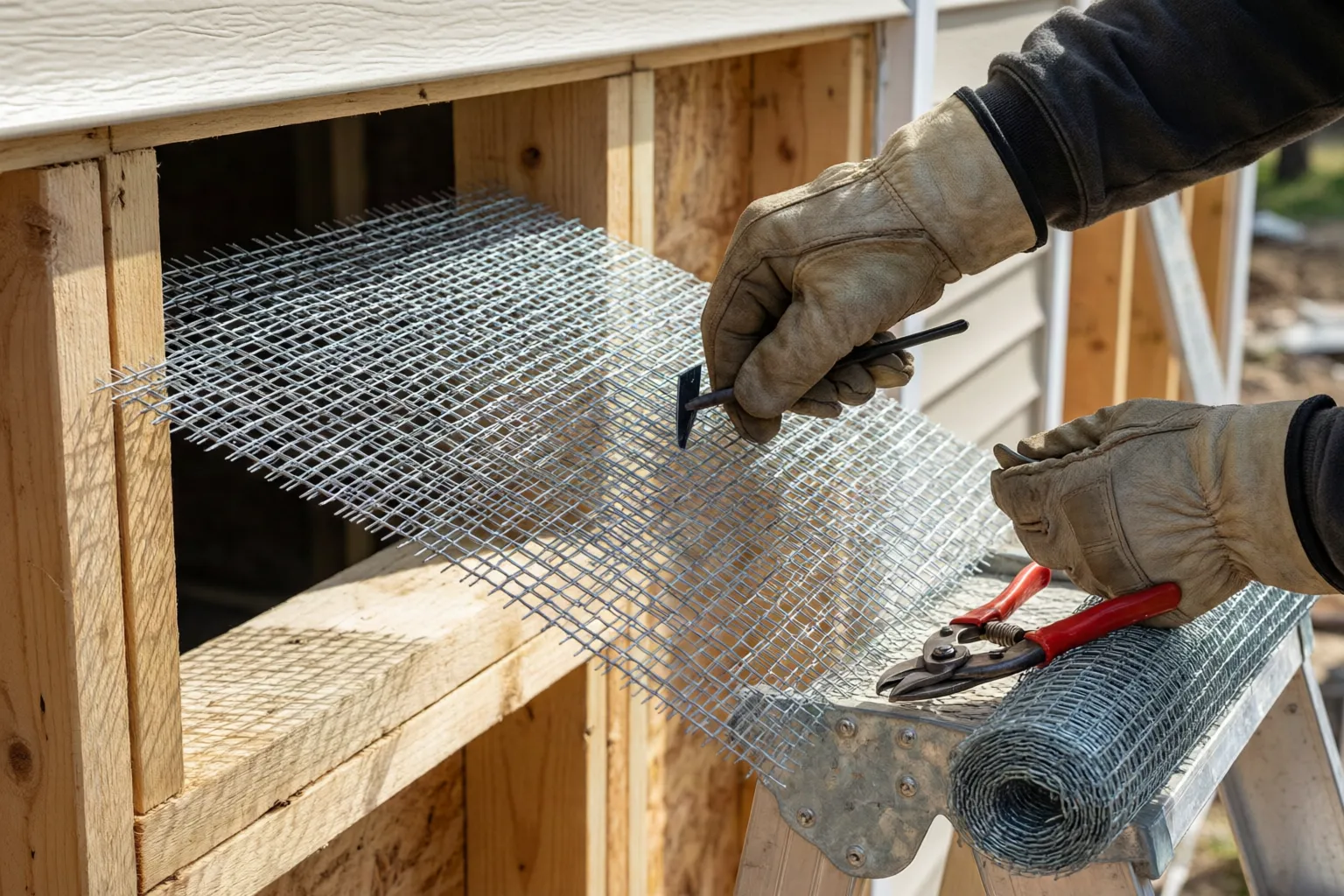
Cut, tension, and fasten hardware cloth correctly, and seal every edge for a barrier that genuinely keeps pests out.
Working with Hardware Cloth
Measure and cut to size
Measure the opening or run, then cut hardware cloth with tin snips or bolt cutters. Cut at a wire line and wear gloves, since cut ends are sharp.
Tension and fasten to the frame
Fix the mesh taut over wood, masonry, or metal with staples, screws and washers, or wire ties every 150-300 mm. Work from one edge outward to avoid wrinkles.
Lap seams and seal the edges
Overlap adjoining pieces by at least 5 cm and double-fasten the seam. Fold or cap cut edges away from walkways and seal around pipes with mesh plus a bead of sealant.
Stop digging at the bottom
Bury the bottom 20-30 cm outward as a skirt, or pin it under a ground board, so burrowing rodents cannot tunnel under the barrier.
Hardware Cloth Packing for Export
Packing keeps rolls flat and round, protects zinc and PVC finishes, and preserves traceability through transit and receiving inspection.
Rolls wrapped and strapped
Each hardware cloth roll is compressed, wrapped in waterproof paper and woven bag, and strapped to hold its shape.
Palletized for container loading
Rolls stand on pallets or pack in bundles sized to the container plan, with edge protection against forklift damage.
Label by specification
Every bundle carries opening, wire diameter, coating class, roll dimensions, quantity, and production lot.
Certificates on request
Coating mass certificates per the RFQ standard and mill certificates for the steel wire accompany the shipment when ordered.
Share destination details
State destination port, trade term, and inspection requirements. Pre-shipment inspection by SGS, BV, or TÜV is available on request.
Factory QC before shipment
Every lot passes incoming wire inspection, weaving, welding, galvanizing, and final inspection with AQL sampling before packing. Coating mass per ASTM A90 and mill certificates are available with the shipment.
Hardware Cloth in Service
Use scenarios show how opening, wire diameter, and coating change by duty; they are not customer claims.
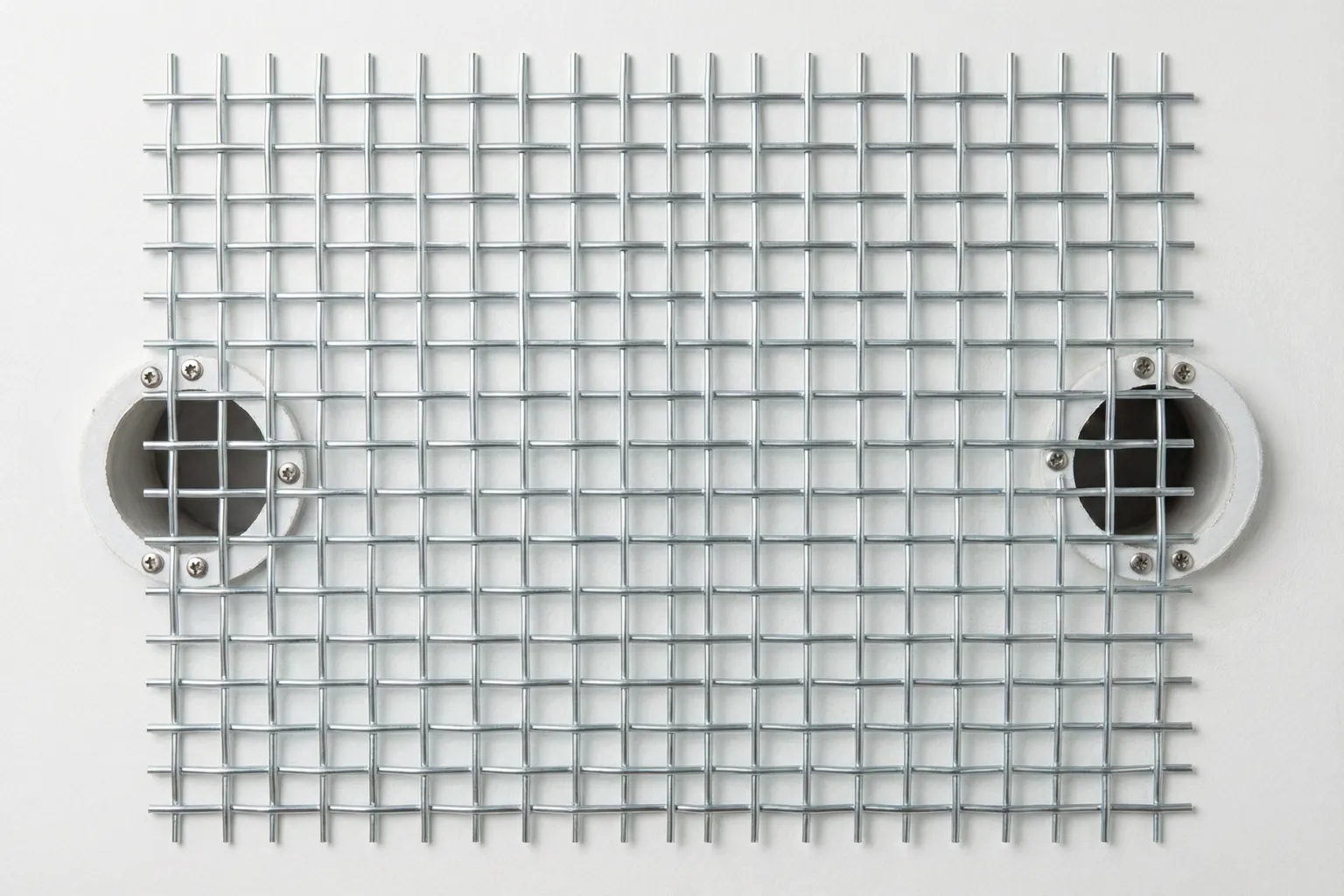
Rodent exclusion at a food warehouse
Hot-dip galvanized hardware cloth in 1/4 inch opening on 0.9 mm wire, screwed over pipe entries and foundation gaps with sealed seams.
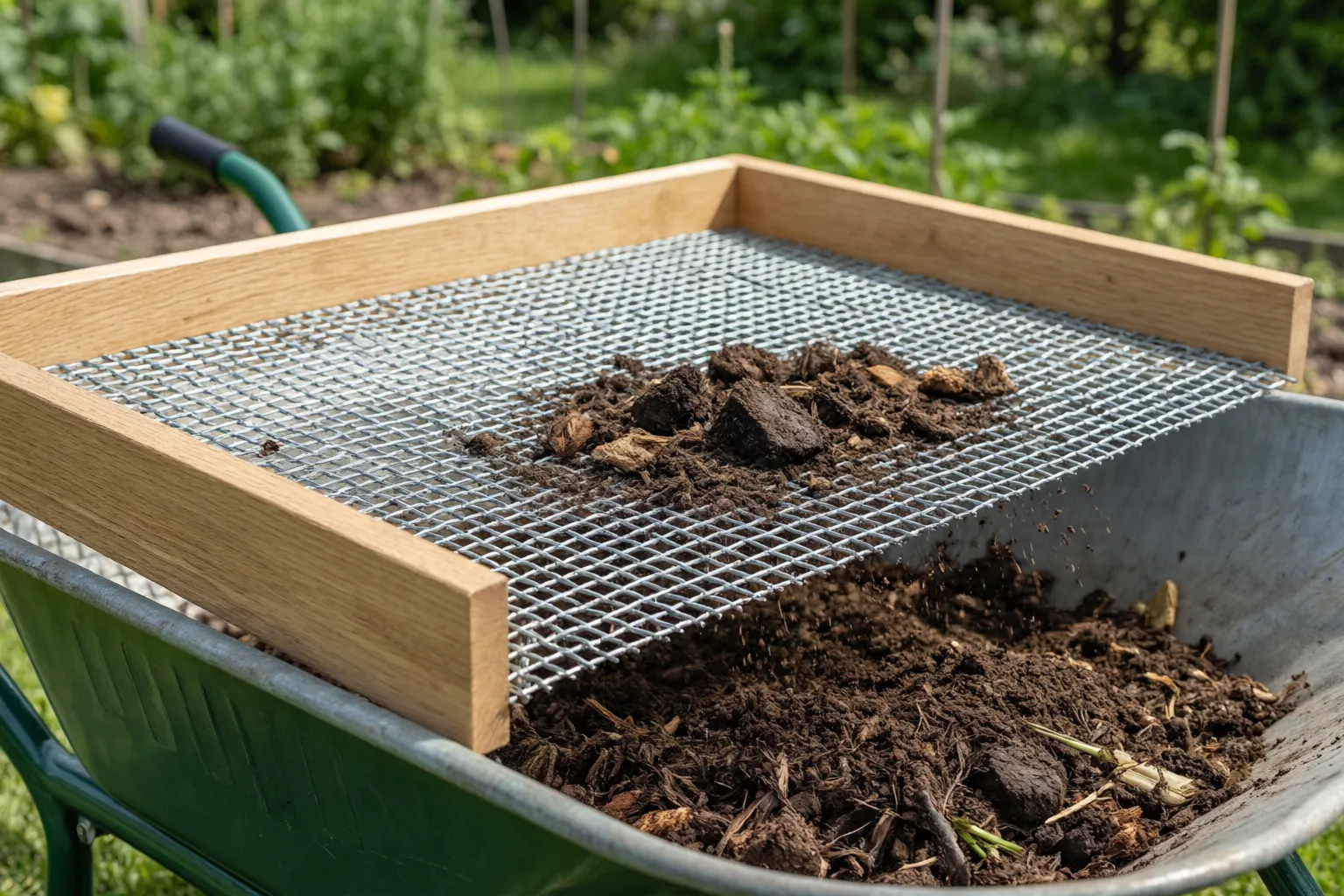
Compost and soil sifting station
1/2 inch galvanized hardware cloth framed into a rigid screen, sizing compost and topsoil over a collection tray.
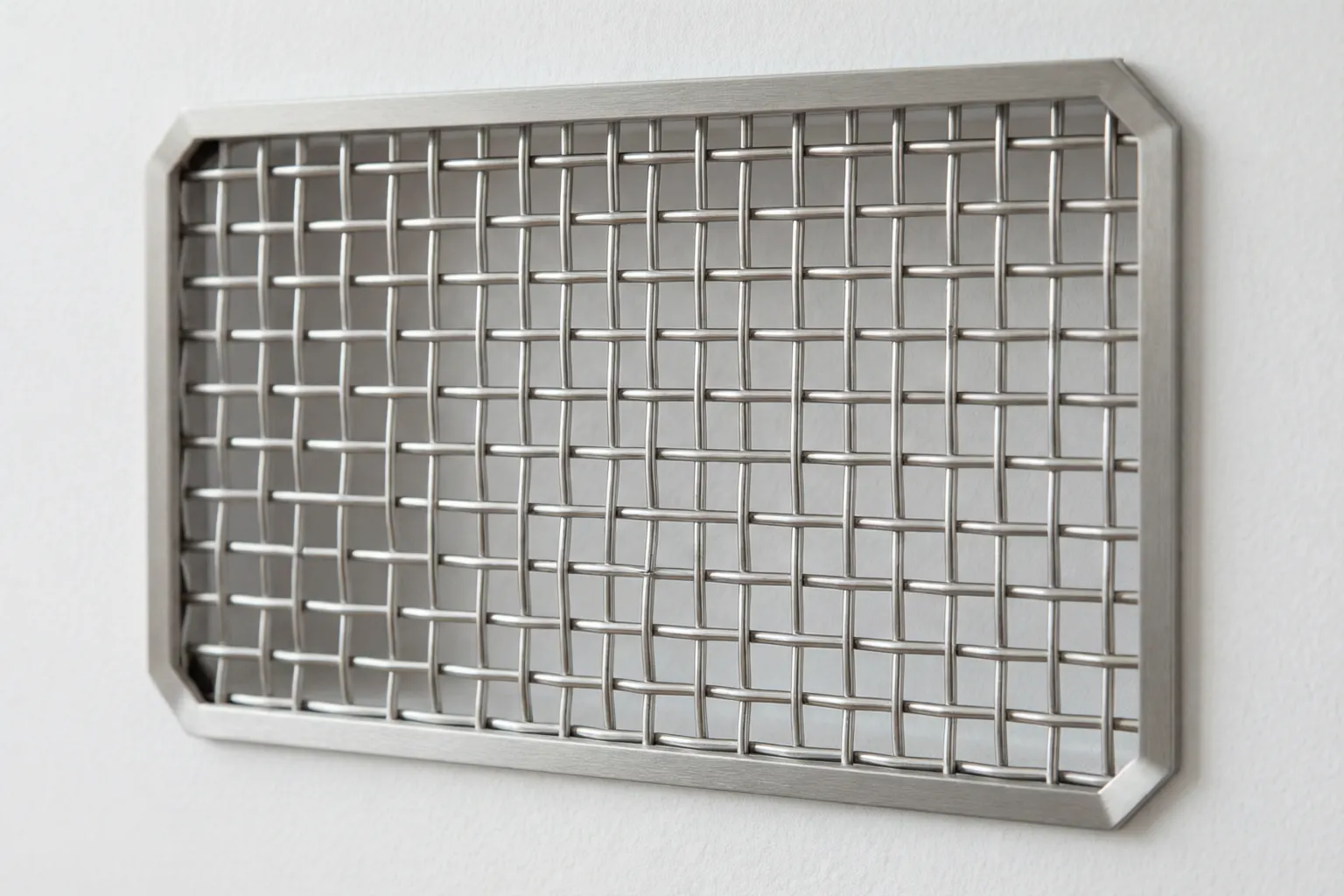
Vent and window guard on a barn
1/4 inch stainless hardware cloth fixed to vent frames and window openings, keeping wasps, bats, and rodents out while air moves.

Garden bed and tree protection
PVC-coated hardware cloth rings and frames around raised beds and young trees, blocking rabbits and dogs without rust marks.
Hardware Cloth Sourcing Resources
Compare welded mesh products, coating standards, and related categories. Confirm the standard edition and project requirements before ordering.
Last updated: 2026-08-22
Related pages
Reference standards
Hardware Cloth FAQ
Common procurement questions about openings, wire gauges, coatings, and ordering hardware cloth.
Still have questions about hardware cloth?
Send your opening, wire diameter, coating route, roll size, and quantity. Our sourcing team replies with a specification-led review.
Request a QuoteRequest Hardware Cloth Pricing
Send opening, wire diameter, coating type and class, roll dimensions, quantity, application, and destination for a specification-led sourcing review. Our team replies with matched hardware cloth options and a factory quote.
Your details stay private. We reply with a matched factory quote — no spam.