Wire Mesh Demister Pads for Gas-Liquid Separation
Source wire mesh demister pads for gas-liquid separation. Review common specifications and send your vessel drawing, material and process data for a quote.
View Demister SpecificationsDefine the Mesh Pad, Vessel Fit and Process Duty
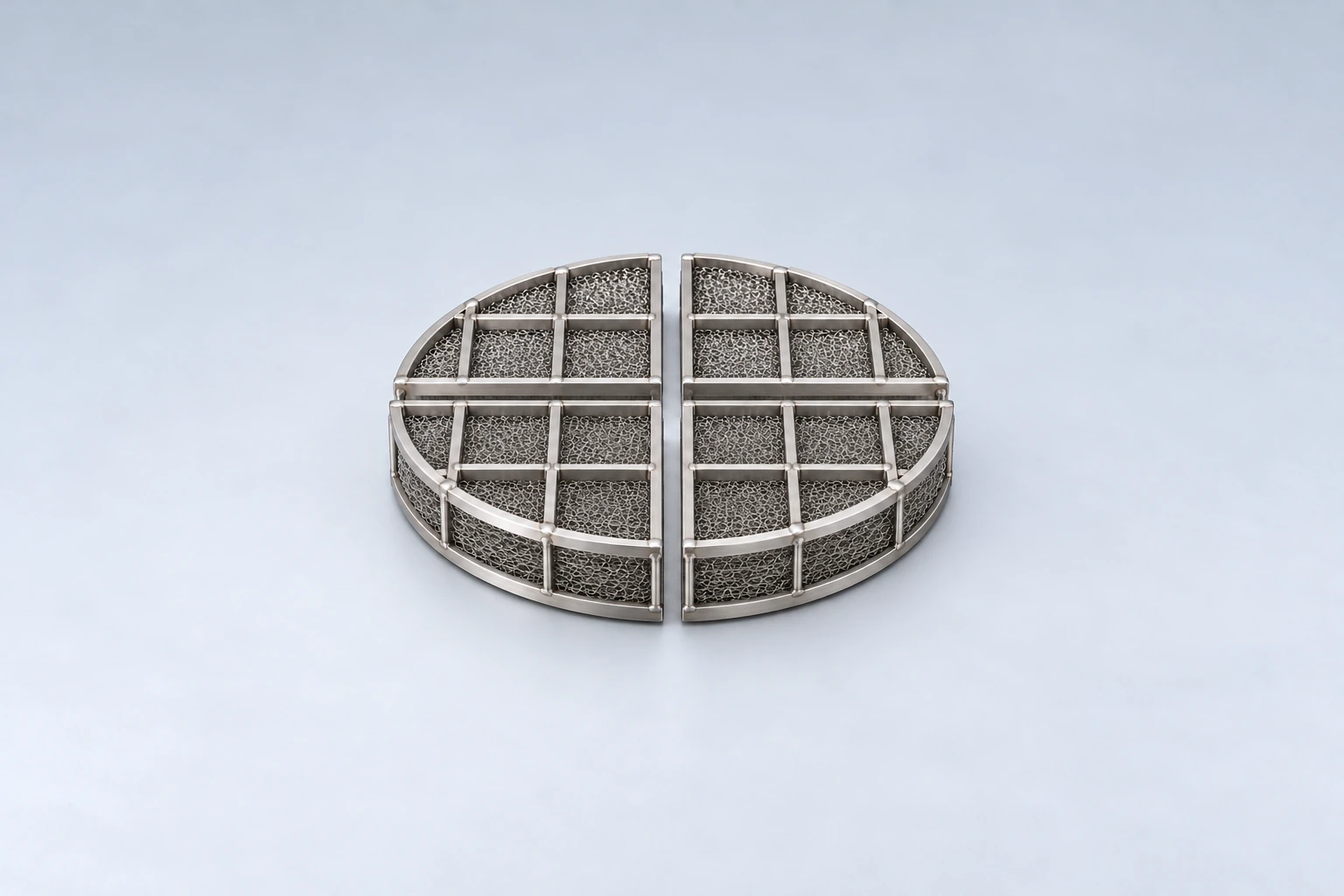
A wire mesh demister is a bed of knitted mesh that captures entrained liquid droplets from a gas or vapor stream. Droplets contact the filaments, coalesce and drain. The numerical ranges below are published industry references for metal mesh pads, not stock availability, production limits or performance guarantees. The hero image is an AI-generated illustration of a finished mesh pad and open support grids, not a verified supplied design. See the technical sources in Resources; confirm the ordered configuration against your drawing and process data.
304 or 316L stainless steel for sourcing review; mesh, grids and fixings specified separately
0.10–0.28 mm for common metal mesh pad designs; confirm the selected filament
100–300 mm; specify mesh-bed thickness separately from the overall assembly height
80–192 kg/m³ for common metal pad styles; density alone does not define efficiency
Round or rectangular geometry, one-piece or sectional layout, with agreed support and retention details
Select one or more specifications. Your choices will be included in the quote request.
0 specs selected
| Demister requirement | Reference or RFQ information | Confirm before ordering | |
|---|---|---|---|
| Mesh and assembly materials | Requested grade, such as 304 or 316L, for mesh, grids and fixings | Compatibility with process chemistry, concentration, temperature and cleaning; required material records | |
| Wire diameter | Industry reference: 0.10–0.28 mm for common metal mesh designs | Actual wire size and mesh style; this is not a guaranteed droplet-removal rating | |
| Mesh-pad thickness | Industry reference: 100–300 mm | Mesh-bed thickness, total assembly height and available clearance are separate dimensions | |
| Bulk density | Industry reference: 80–192 kg/m³ for common metal pad styles | Agreed mesh density and measurement basis; plastic pads require their own specification | |
| Finished pad dimensions | Vessel internal diameter or rectangular length and width, units and tolerances | Support ring, internals, obstructions and required fit against the approved drawing | |
| Sectional construction | Manhole opening, section dimensions, orientation and assembly layout | How sections pass through the access opening and fit together without unintended bypass | |
| Support grids and fixings | Top and bottom grid details, support interface, retention method and accessory scope | Who supplies each part; grid material and mechanical design reviewed by the equipment engineer | |
| Process and acceptance requirements | Gas flow at stated conditions, pressure, temperature, liquid load and separation target | Performance basis, allowable pressure drop, fouling conditions and agreed verification method |
Mesh Geometry and Droplet Removal Are Different Requirements
A knitted mesh demister is not selected with a square-woven mesh-to-micron conversion. Define its construction and process performance separately.
| Parameter | What it describes | What else the RFQ needs | |
|---|---|---|---|
| Wire diameter | The size of the filaments forming the knitted mesh | Mesh structure, material and required operating duty | |
| Bulk density | Mesh mass per specified pad volume | The density measurement basis, mesh-bed dimensions and style | |
| Pad thickness | Depth of the mesh bed in the flow direction | Assembly height, vessel clearance, flow orientation and process requirements | |
| Droplet-removal target | Required collection performance for a stated droplet population | Droplet sizes, gas and liquid conditions, efficiency definition and verification basis | |
| Allowable pressure drop | The pressure-loss budget for the agreed operating condition | Gas rate, liquid loading, clean or loaded condition and fouling allowance |
Compare Complete Pads and Installation Formats
Use these configurations to describe the assembly you need. Finished dimensions, mesh style, materials and accessory availability are confirmed for the exact request.
One-piece round mesh pads
A circular mesh pad sized to a vessel drawing. Specify the bed thickness, density, support arrangement and retention details, and check that the assembly can pass through the available access opening.
Sectional demister pads
A pad divided into sections for handling and manhole entry. Include a section layout, joining or overlap details, identification marks and the grid arrangement on the drawing.
Rectangular or framed pads
A rectangular mesh bed or framed assembly for a defined equipment interface. State the flow direction, finished dimensions, frame material, drainage path and mounting details.
Replacement pads and grid assemblies
A replacement mesh pad alone or a complete pad-and-grid scope. Provide the existing assembly drawing and operating data so a replacement is reviewed for both fit and duty.
Prepare a Wire Mesh Demister RFQ
Start with the separation task and the vessel interface. An existing sample helps identify construction, but dimensions alone do not establish a suitable replacement.
State the process conditions
Identify the gas and liquid, operating pressure and temperature, gas flow with its reference conditions, liquid loading and expected operating range. Include any solids, foaming or contamination that could affect the pad.
Define the separation requirement
State the target droplet sizes or allowable liquid carryover, required collection efficiency and maximum pressure drop with an agreed evaluation basis. Do not assign a performance rating from wire diameter or density alone.
Select materials against the actual service
Use 304 or 316L as common stainless inquiry routes, then review chemistry, concentrations, temperature, cleaning and fabrication requirements. Higher alloys, PP, PTFE or other media need separate compatibility and supply confirmation.
Provide the vessel and access drawing
Include vessel internal dimensions, support ring or beams, manhole opening, obstructions, flow direction and available assembly height. Identify the drawing revision and distinguish mesh-bed dimensions from overall dimensions.
Fix the assembly and inspection scope
Specify the mesh style, wire diameter, bed thickness, density, section arrangement, grids and fixings. Agree dimensional checks, material records, density checks and any performance verification before order release.
Add the purchasing details
Include quantity, destination, requested delivery date, packing requirements and any sample or drawing-approval step. A requested shutdown date is a planning input; supply timing is confirmed in the quotation.
Compare Demister Quotes on a Clear Basis
WireMesh Sourcing coordinates specification-led sourcing, factory matching, quality control and export requirements. Defining the assembly and acceptance criteria gives each quotation a reviewable scope.
Check the complete fit
Finished dimensions, access constraints and support details help distinguish a mesh bed from the complete assembly that must fit the vessel.
Keep material requirements explicit
Separate specifications for the mesh, grids and fixings make alloy requirements and requested traceability easier to review.
Agree what inspection must verify
A drawing revision, density basis, section plan and document list turn general product descriptions into order acceptance criteria.
Coordinate protection and identification
A packing plan can identify each section and protect mesh beds and grids during transport and handling.
Where Wire Mesh Mist Eliminators Are Used
Knitted mesh pads are used to control entrained droplets in process equipment. Final suitability depends on gas and liquid conditions, fouling, drainage and the equipment design.
Distillation and absorption columns
Review a mesh pad for liquid entrainment control in the vapor path. Include throughput, pressure, liquid properties, available space and the required carryover limit.
Scrubbers and gas washing systems
A demister may be specified downstream of a washing stage. Describe the wash liquid, solids, corrosion conditions, drainage and cleaning needs; fouling can make another separation arrangement more appropriate.
Evaporators and flash vessels
Review vapor-liquid separation duties where droplets can travel with the outlet vapor. Include operating pressure, temperature, liquid concentration, foaming and pressure-drop limits.
Separator vessels and knock-out drums
Define the outlet carryover requirement and actual gas and liquid loads. Review the mesh pad together with inlet conditions, vessel geometry and existing supports rather than treating it as an isolated part.
Resolve These Details Before Ordering
A pad that fits the vessel may still differ from the process or assembly requirement.
Ordering knitted roll material as a finished demister
A roll is raw mesh material. A finished demister specification also defines the mesh-bed form, thickness, density, dimensions and agreed grids or retention system.
Using mesh count as a droplet-removal rating
A square-woven mesh opening chart does not rate a knitted demister. State the collection target and operating conditions separately from the physical mesh specification.
Assuming a denser pad is always better
Density is only one selection input. Review pressure drop, liquid loading, drainage, fouling and the required separation performance before changing the existing design.
Ignoring manhole and support dimensions
A full-size pad may need sections to enter the vessel. Include the access opening, support interface and assembly layout before approving the finished dimensions.
Applying metal-pad references to plastic media
The metal-pad density and wire ranges on this page do not define PP or PTFE pads. Specify the polymer, filament dimensions and construction separately.
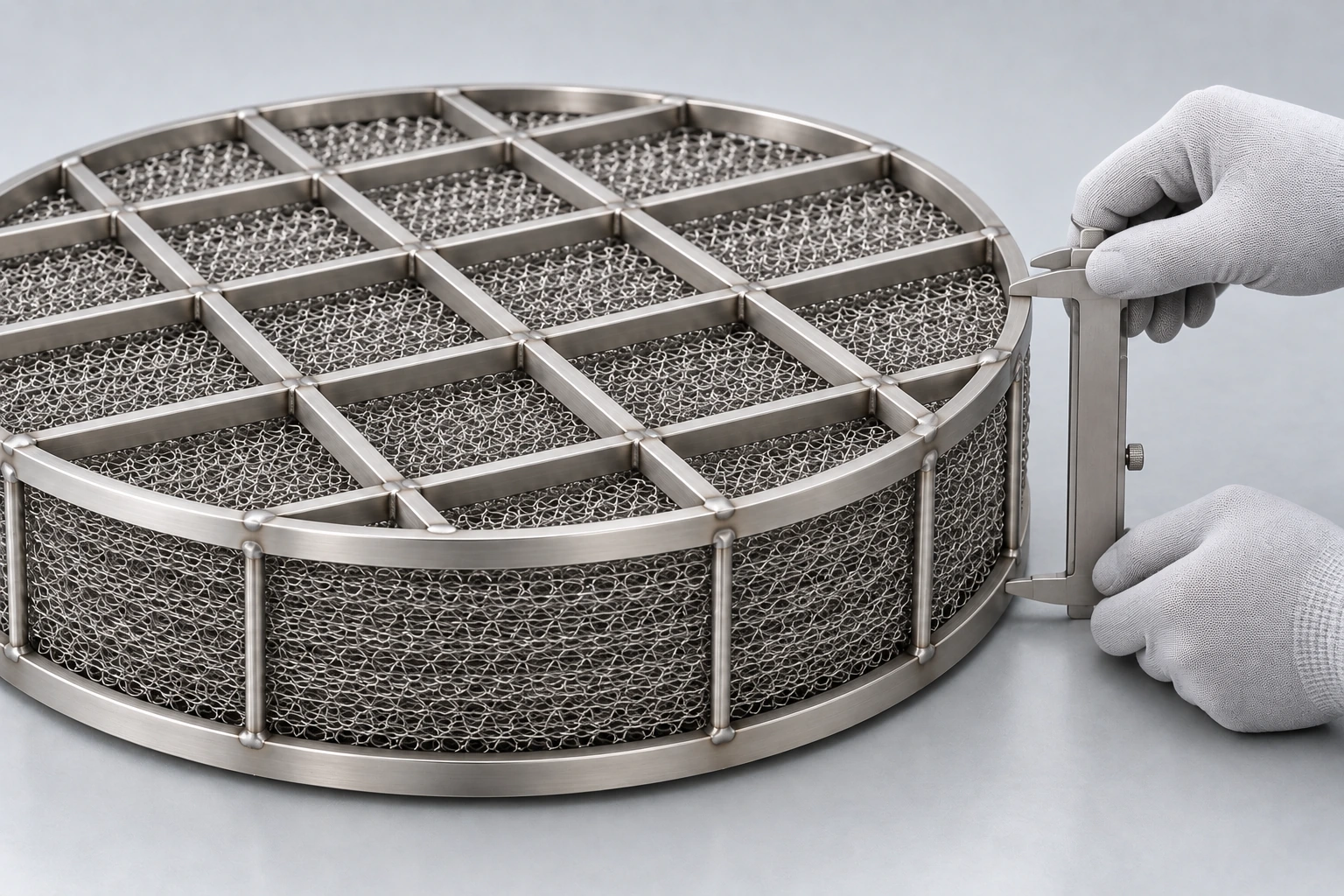
AI-generated illustration of gloved handling and a caliper check on a finished demister assembly. No measured value, inspection result or factory record is shown. Installation and servicing must follow the equipment owner's approved procedure.
Review the Pad Against the Approved Vessel Drawing
Check the received configuration
Compare the material identification, dimensions, mesh-bed thickness, agreed density evidence, section labels and accessory list with the order and approved drawing. Check for deformation or contamination.
Confirm access and support interfaces
Check the sections against the manhole and layout drawing, and verify grids, supports and retention details with the responsible equipment engineer. Do not use a mesh pad as a working platform unless the equipment design expressly permits it.
Verify orientation and assembly details
Follow the approved flow orientation, section sequence, fastening details and fit requirements. Review unintended bypass paths and drainage against the equipment drawing; do not improvise a different pad fit on site.
Record condition and follow the startup procedure
Use the equipment owner's checks for installation, startup and subsequent inspection. Keep the approved assembly record and operating baseline so later pressure-drop or carryover changes can be investigated.
Protect the Mesh Bed and Keep the Assembly Identifiable
Agree packing with the order so the delivered sections, grids and documents can be checked before installation.
Protect against deformation
Request suitable rigid support and restraints to protect the mesh-bed shape and grids from crushing or movement in transit.
Keep components clean and separate
Specify covers or liners appropriate to the cleanliness requirements and transport conditions. Keep fixings and separate grid parts identifiable.
Label each section and drawing revision
Agree section numbers, orientation marks where required, assembly references, material identification and quantity on labels and packing records.
Confirm the inspection and document list
Identify the material records, dimensional checks, density checks, assembly photographs and packing evidence required for the order, and agree when each is issued.
Four Demister Procurement Scenarios
These are example purchase requests, not completed customer projects or performance results. AI-generated images illustrate round replacement pads, rectangular assemblies and sectional configurations; they do not verify a supplied model, specification or installation.
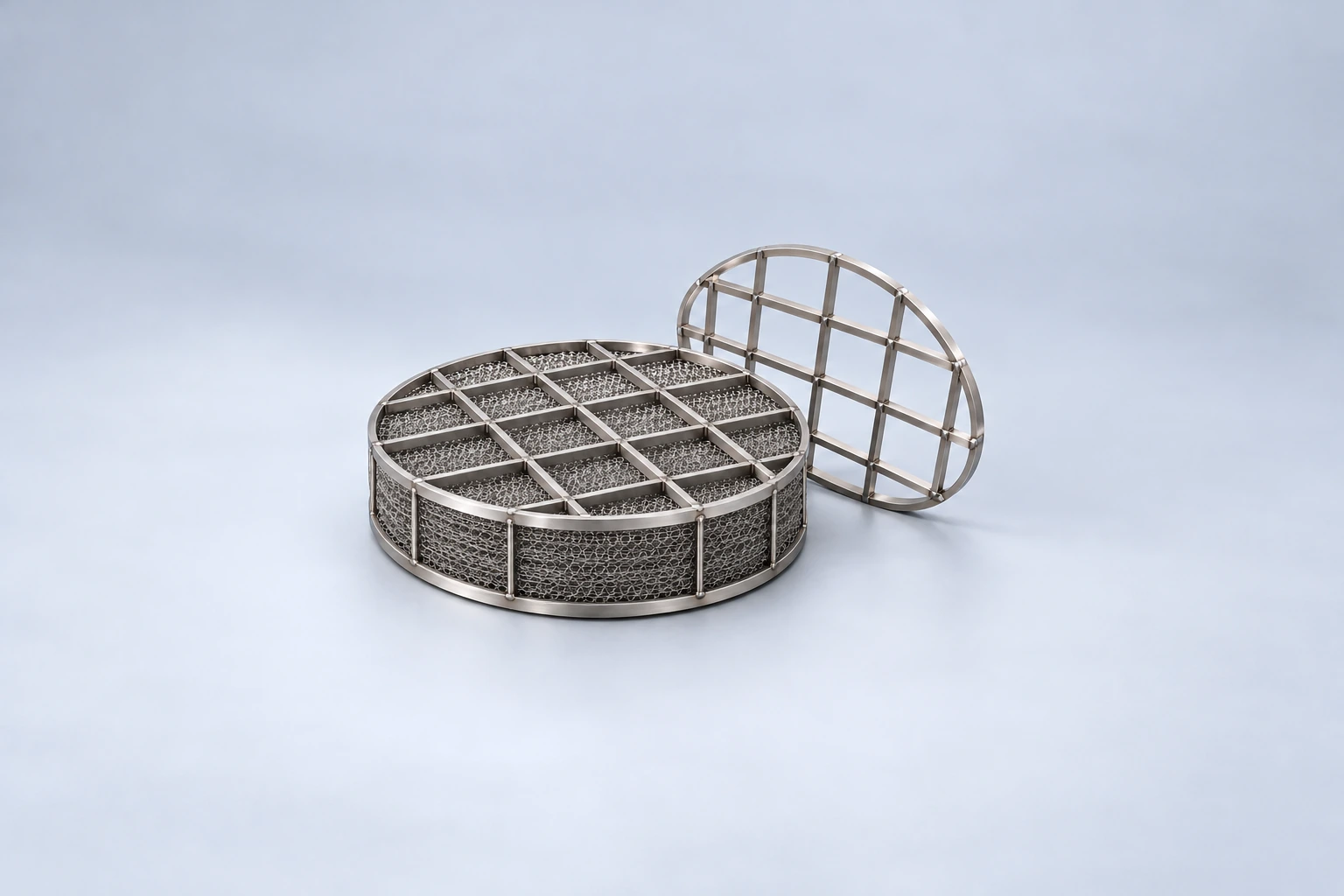
Example: tower demister replacement
A maintenance buyer submits the existing pad and grid drawing, vessel dimensions, material specification, mesh-bed thickness and density. The RFQ also identifies changed operating conditions and the shutdown date.
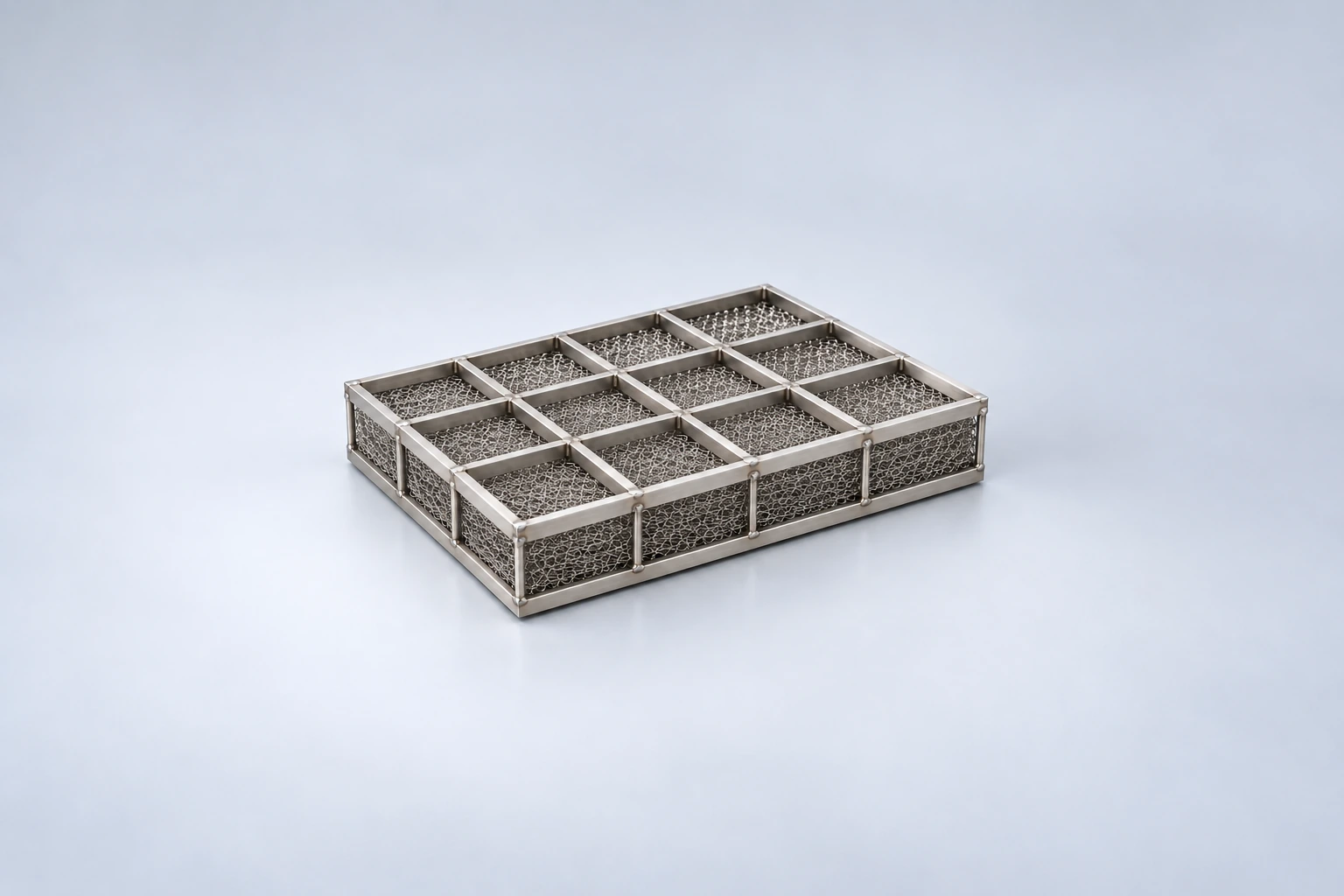
Example: scrubber outlet pad
A buyer describes the wash liquid, gas rate, solids, corrosion conditions and cleaning method. The request includes the outlet geometry, drainage arrangement and allowable carryover and pressure drop.
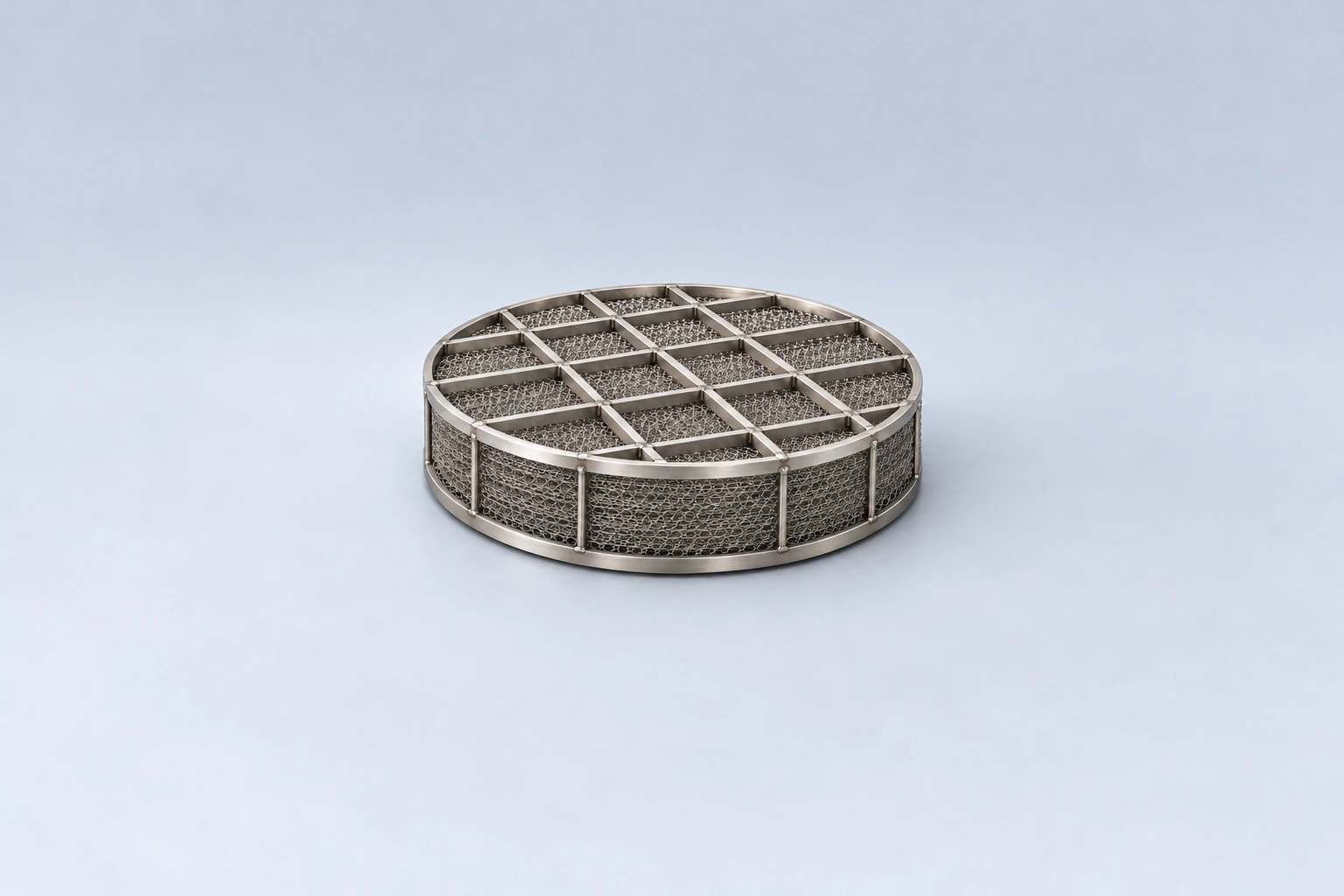
Example: evaporator demister
An equipment team supplies vapor flow at stated conditions, operating pressure, temperature, liquid concentration and foaming information, together with the pad-space drawing and separation target.
Example: sectional pad installation
A vessel drawing shows the pad dimensions, manhole opening, support ring and obstructions. The buyer requests a section layout, identified grids and fixings, plus packing that preserves each section's shape.
Demister Materials, Specifications and Technical Sources
The references explain knitted mesh separation and published supplier specifications. They provide technical context, not evidence of WireMesh Sourcing stock, certified performance or identical supplied designs. Ordinary woven wire-cloth standards are not a blanket demister performance specification.
Content reviewed: 2026-10-14
Related sourcing pages
Technical references
Questions About Mesh Demister Pads
Clarify the construction, reference parameters and information needed for a drawing-based quote.
Have a vessel drawing or replacement pad specification?
Share the dimensions, material, mesh-bed requirements and operating data so the sourcing scope can be reviewed.
Request a Demister QuoteRequest a Quote for Wire Mesh Demister Pads
Send your vessel drawing, requested material, pad dimensions, mesh specification and grid scope. Include process conditions, separation requirements, quantity and destination so we can review the assembly and quotation requirements with you.
Your details stay private. We reply with a matched factory quote — no spam.