Food Grade Wire Mesh for Food Processing
Source stainless steel mesh for food processing. Compare 304/316 grades, screen specifications, cleaning conditions, and documentation. Request a quote.
View SpecificationsHow to Specify Food Grade Stainless Steel Mesh
Food grade wire mesh is a purchasing description, not a material standard or automatic certification. Define the food or process medium, contact conditions, cleaning procedure, mesh geometry, fabrication, and documents required for the finished item.
304, 316, or 316L stainless steel selected against the food, salts, acids, moisture, temperature, cleaning chemistry, and fabrication route
Woven plain, twill, plain Dutch, twill Dutch, reverse Dutch, or welded stainless mesh chosen for screening, support, draining, or filtration duty
State the clear opening in mm or µm, or the agreed retention target. Mesh count alone does not define the opening because wire diameter changes it
Specify wire diameter, open area, and any strength or flow requirement when they affect the process or equipment fit
Roll, sheet, cut disc, formed screen, framed panel, or fabricated element; include dimensions, tolerances, edge condition, frame interface, and drawing where applicable
List the required material test certificate, grade verification, aperture inspection, declaration, cleaning record, or third-party inspection before quotation
Select one or more specifications. Your choices will be included in the quote request.
0 specs selected
| Material route | When to review it | Food-processing selection consideration | RFQ instruction | |
|---|---|---|---|---|
| 304 stainless steel | General food-processing screens, drains, trays, and guards where the process medium and cleaning program are compatible | 304 is widely used in food and beverage equipment; confirm the actual food, moisture, salts, cleaning chemicals, temperature, and fabrication details | State the required grade standard, mesh construction, contact conditions, and material-record request | |
| 316 stainless steel | Processes involving chloride exposure, saltier foods, or more aggressive media where added corrosion resistance is required | 316 contains molybdenum and may be considered where the operating environment is more corrosive; suitability remains application-specific | Describe the medium, concentration where known, temperature, cleaning method, and exposure cycle | |
| 316L stainless steel | Welded frames, baskets, or fabricated screens where the buyer specifies a low-carbon grade | 316L is commonly specified for fabricated stainless components; evaluate the finished construction, weld treatment, and intended service together | Provide the drawing, weld or finish requirements, material record, and any post-fabrication verification | |
| Buyer-specified alloy or finish | Highly acidic, salty, abrasive, high-temperature, or validated pharmaceutical process duties | A generic food-grade description is insufficient for severe or regulated service; the finished assembly and its use conditions need separate review | Supply the governing specification, applicable standard, validation or declaration requirement, and equipment drawing |
Choose the Construction Around the Process Task
The right food processing mesh depends on whether it screens solids, drains or dries product, supports a belt or tray, or retains fine particles. Treat weave and opening as engineering choices, not interchangeable labels.
Plain weave wire cloth
An equal-wire woven grid for general sifting, screening, straining, and guard applications. Specify aperture and wire diameter together.
Twill weave wire cloth
A woven route for finer mesh on heavier wire where strength and a smaller opening must be balanced. Confirm geometry from the agreed specification.
Dutch weave filter media
A dense woven construction for fine liquid or powder filtration. Use an agreed micron or retention target, operating conditions, and element design instead of a mesh-count-only request.
Welded stainless support mesh
A rigid square-opening mesh for trays, guards, drying racks, basket supports, and equipment panels. State opening, wire, panel size, edge, and frame details.
Build a Food Processing Mesh RFQ in the Right Order
Start with the product and its contact conditions, then complete the material, mesh, fabrication, and documentation details. This prevents a generic food-grade request from becoming an unsuitable finished screen.
Define the process task
State whether the mesh will sieve, strain, filter, drain, dry, convey, support, or guard the food-processing operation.
Describe the contact conditions
Name the food or medium, direct or indirect contact, temperature, moisture, salts, acids, pressure, and expected exposure cycle.
Specify cleaning conditions
Give the planned washdown, CIP, sanitizer, chemical, steam, drying, and cleaning-frequency conditions for compatibility review.
Choose the material route
Identify 304, 316, 316L, or a buyer-specified alloy, and state the material standard or record required.
Set the mesh geometry
Provide clear opening or retention target, mesh count where relevant, wire diameter, weave or welded construction, and open-area requirement.
Define the finished form
Include roll, sheet, disc, panel, basket, frame, element, drawing, dimensions, tolerances, edges, and joining requirements.
List evidence before quotation
State the certificate, declaration, grade verification, inspection, or third-party document needed for the intended market and finished assembly.
Complete the commercial request
Provide quantity, destination, target date, packing needs, and any sample or pre-production approval step.
What a Complete Food Grade Mesh Request Helps Control
The purpose of a complete specification is to make the material, geometry, fabrication, and verification requirements visible before production. It is not a substitute for the buyer's food-safety or regulatory assessment.
Clear material selection
Separates the specified stainless grade from unverified claims about the finished item's food-contact status.
Repeatable mesh geometry
Connects opening, wire diameter, weave, open area, and finished dimensions to the actual process task.
Defined fabrication scope
Makes the requested cutting, forming, framing, welding, edge treatment, and drawing revision explicit.
Documented verification
Places material records, grade verification, aperture checks, declarations, and inspection requirements in the RFQ.
Use-condition review
Keeps food, cleaning agents, temperature, salts, acids, and contact duration visible when selecting a material route.
Freight-ready delivery
Captures quantity, destination, protective packing, and receiving checks for a comparable quotation.
Food Processing and Pharmaceutical Mesh Applications
These are application examples that show how stainless mesh may be specified. They do not establish that an individual mesh, finish, or fabricated assembly is suitable for every product or regulated process.
Ingredient sifting and screening
Woven screens can separate oversize material from powders, grains, sugars, spices, and dry ingredients when aperture, wire, frame, and cleaning conditions are specified.
Draining and drying supports
Welded or woven stainless mesh can form trays, racks, and supports for draining or drying where product weight, opening, frame, and cleaning access are defined.
Liquid straining and filtration
Plain, twill, or Dutch weave mesh can be reviewed for beverage, oil, syrup, and process-liquid straining when the retention objective and pressure conditions are known.
Conveyor and equipment interfaces
Mesh used on conveyors, guards, baskets, or equipment panels needs the finished dimensions, load, drive or frame interface, and operating environment.
Foreign-material control screens
A buyer can define a screen or strainer as one part of a documented control point, with required inspection and replacement criteria set by the plant.
Pharmaceutical process hardware
For pharmaceutical filtering or screening, specify the validated process requirements, cleaning approach, material records, and finished equipment requirements; this page does not claim GMP or sterilizing-filter suitability.
Avoid These Food Grade Wire Mesh Assumptions
Food-contact suitability depends on the finished item and its intended use. These checks help turn a broad request into a reviewable specification.
Treating a grade name as a compliance certificate
304 or 316 on its own does not prove the finished mesh complies with every market, food, cleaning regime, or customer requirement. Define the required evidence.
Ordering by mesh count only
Mesh count does not uniquely identify clear opening. Include aperture or retention target and wire diameter.
Leaving cleaning conditions out
Washdown chemicals, CIP media, steam, salts, temperature, and cycle frequency may affect material and fabrication selection.
Ignoring edges and fabrication
Cut edges, welds, frames, fasteners, and finishes are part of the finished food-contact assembly and need to appear on the drawing or RFQ.
Using food and pharmaceutical duties interchangeably
Pharmaceutical applications can require process-specific validation and documentation beyond a general food-processing mesh request.
Follow the equipment manufacturer's instructions and the facility's approved food-safety, sanitation, and maintenance procedures. These are general procurement considerations, not a validated cleaning or compliance procedure.
Prepare and Maintain Mesh Screens for Their Intended Service
Confirm the delivered specification
Check material designation, mesh geometry, dimensions, frame or edge details, and agreed documents against the purchase order before installation.
Install without damaging the mesh
Use the specified frame, support, clamp, or housing interface so the screen is not stretched, kinked, or left with unsupported edges.
Use the approved cleaning method
Apply the facility's approved cleaning and sanitation procedure, including chemical, temperature, contact time, rinse, and drying controls.
Inspect the finished screen
Check for damage, corrosion, loose wires, distorted openings, compromised welds, or residues according to the site's inspection procedure.
Replace or requalify as required
Set replacement, repair, documentation, and requalification decisions through the buyer's quality system and the actual process risk assessment.
Food Processing Mesh Packing for Transit and Receiving
The packing plan should protect mesh faces, finished edges, frames, and identification through shipment. Confirm the final packing and document package before order release.
Protect mesh surfaces
Use separators and protective layers appropriate to the delivered form so mesh faces do not rub, crease, or deform during transit.
Secure framed and formed parts
Support frames, baskets, panels, or cut parts so rims, welds, and edges are not loaded or distorted in shipment.
Identify the agreed configuration
Mark packs with the order reference, material designation, mesh specification, dimensions, quantity, and handling information agreed for the order.
Include requested documents
Confirm which material records, inspection reports, declarations, or packing documents must travel with the shipment or be issued in advance.
Plan receiving inspection
Compare received items, condition, identification, and documents with the purchase order before use in the food-processing operation.
Examples of How Food Processing Mesh Can Be Defined
These illustrative scenarios are not customer case studies or performance claims. Each uses the same principle: define service conditions and finished-item requirements before sourcing.
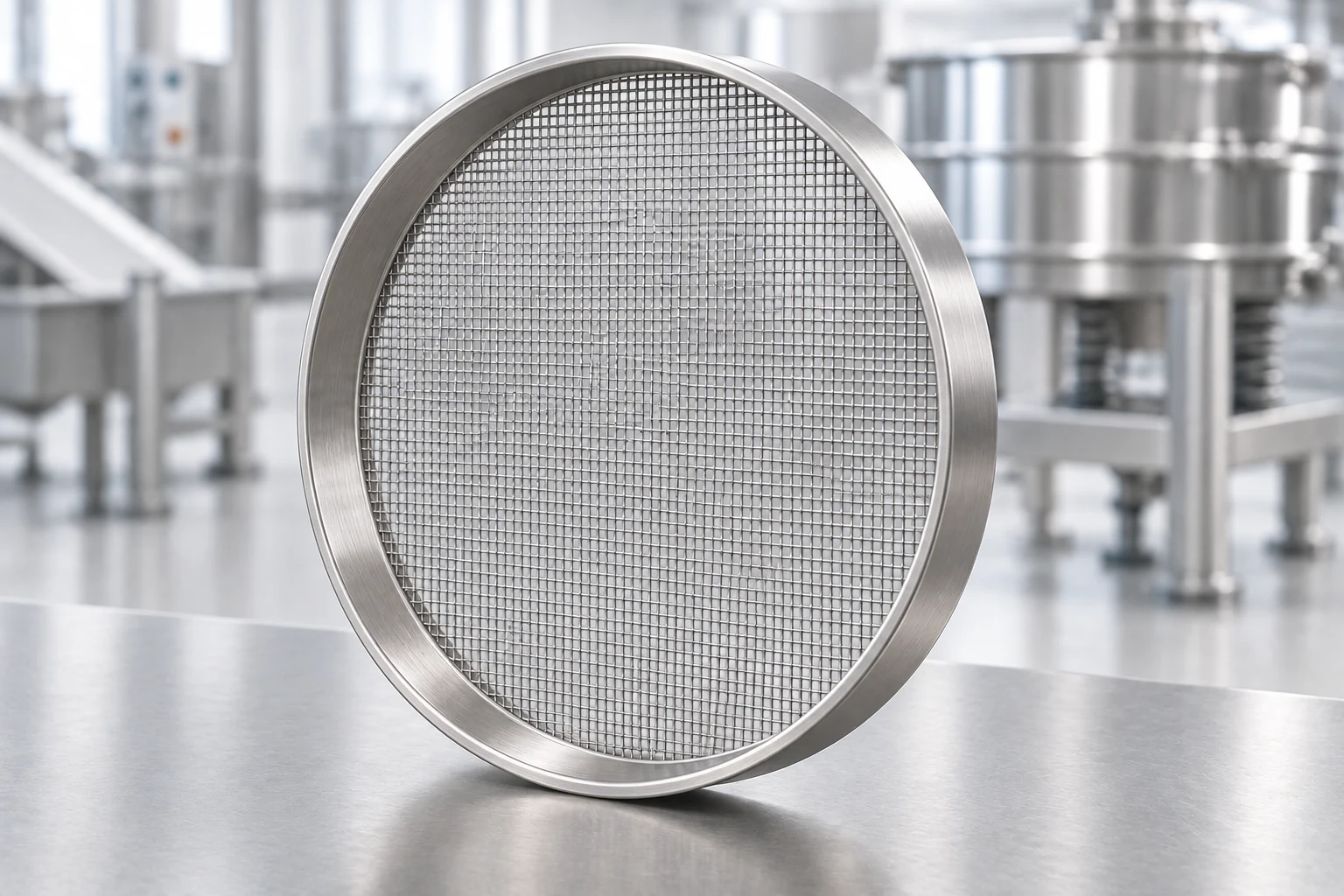
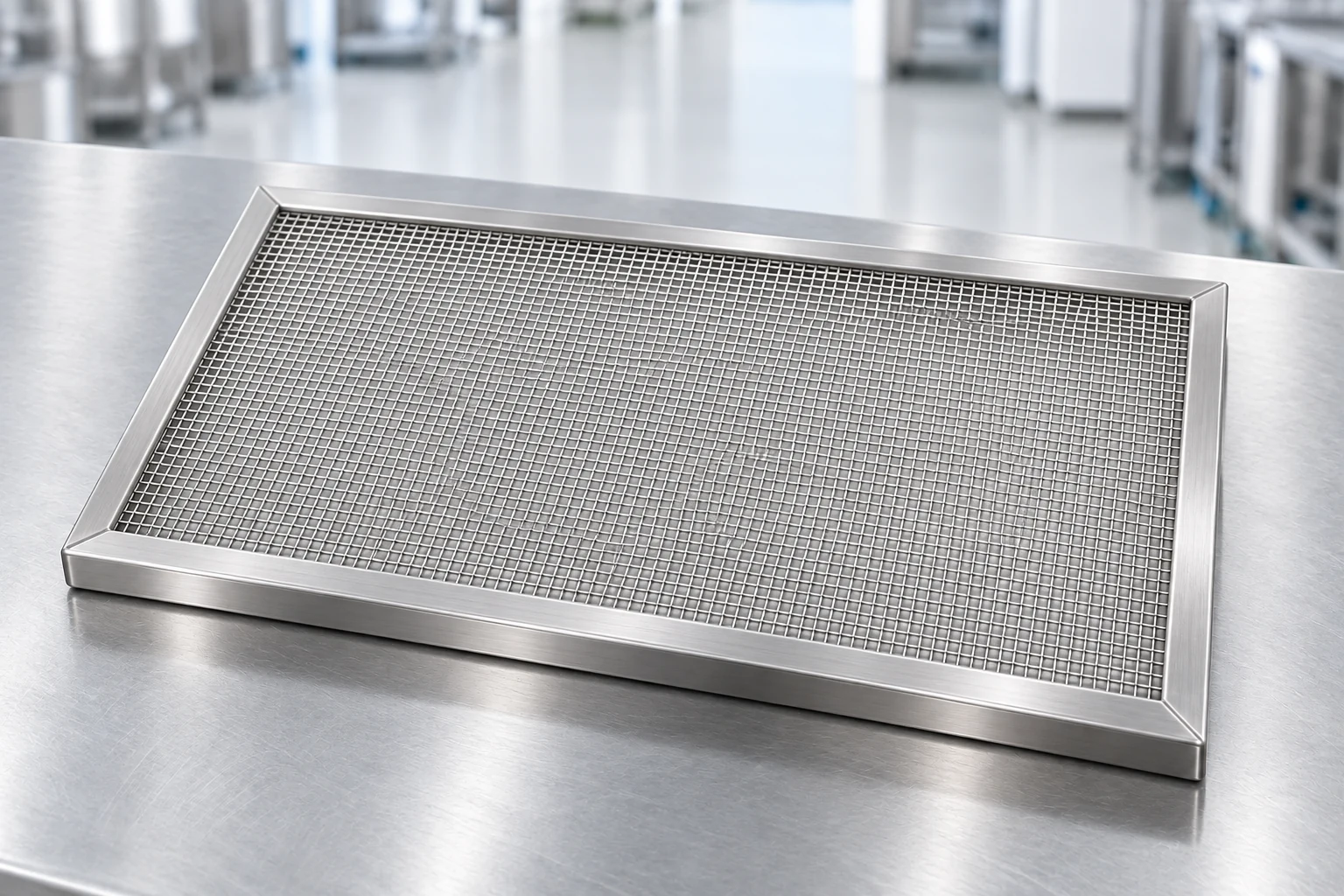
Dry-ingredient sifting screen
A processor specifies product type, target opening, wire diameter, 304 mesh, framed dimensions, cleaning procedure, and material record request.
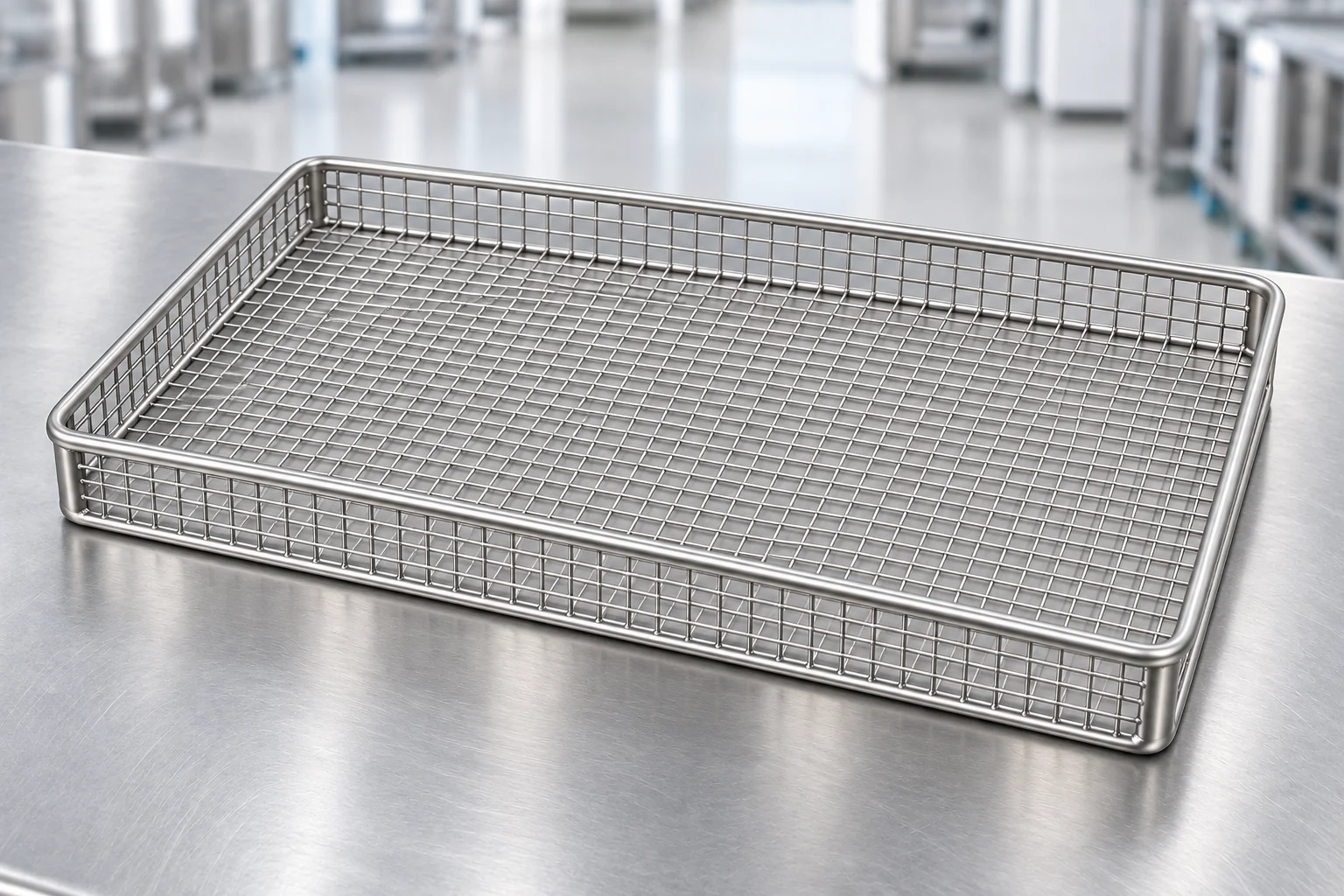
Produce draining tray
An equipment fabricator defines a welded 316 mesh opening, tray dimensions, load, edge and weld details, washdown conditions, and drawing revision.
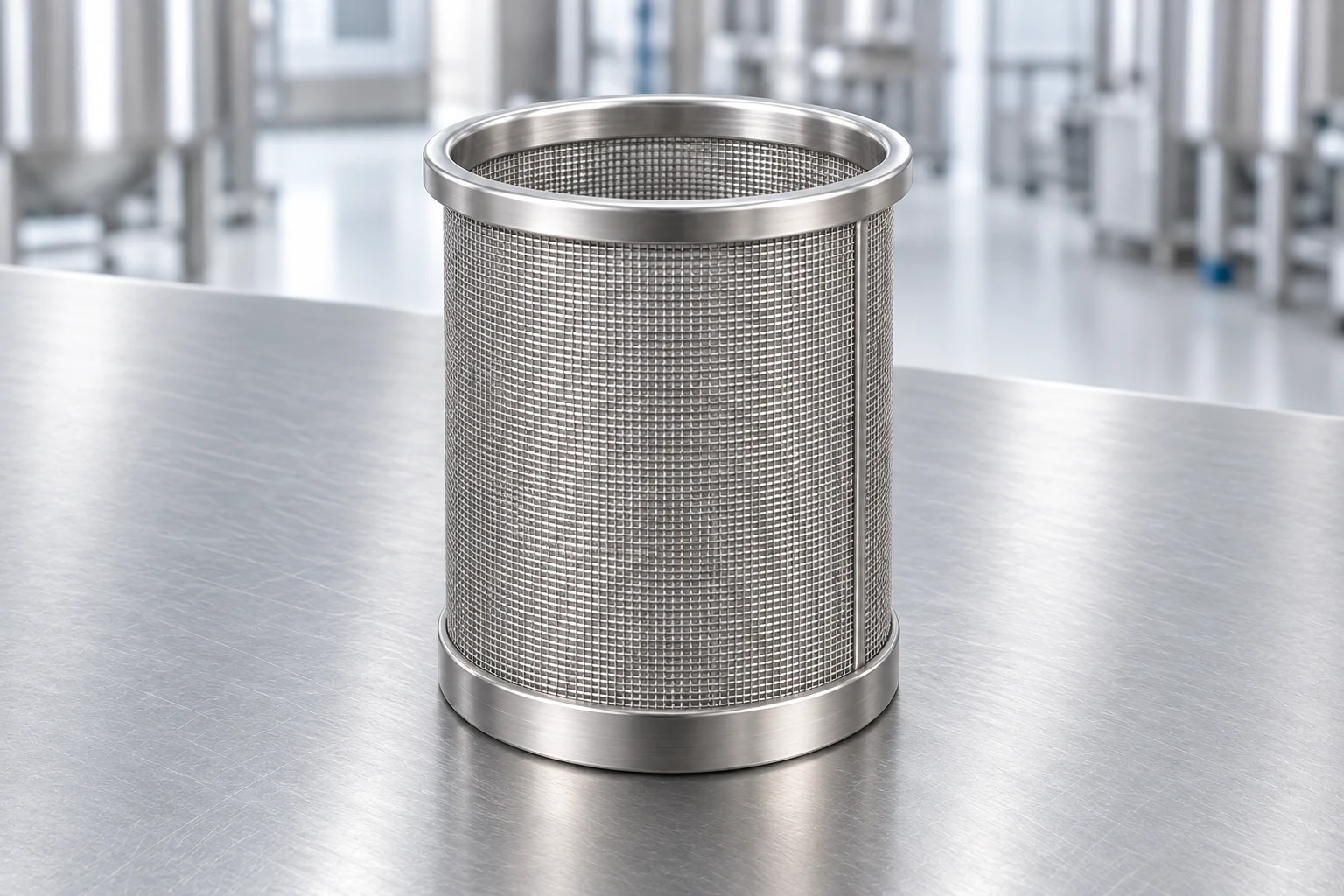
Beverage strainer insert
An OEM provides the liquid, filtration target, pressure, housing interface, Dutch weave requirement, material grade, and inspection criteria.
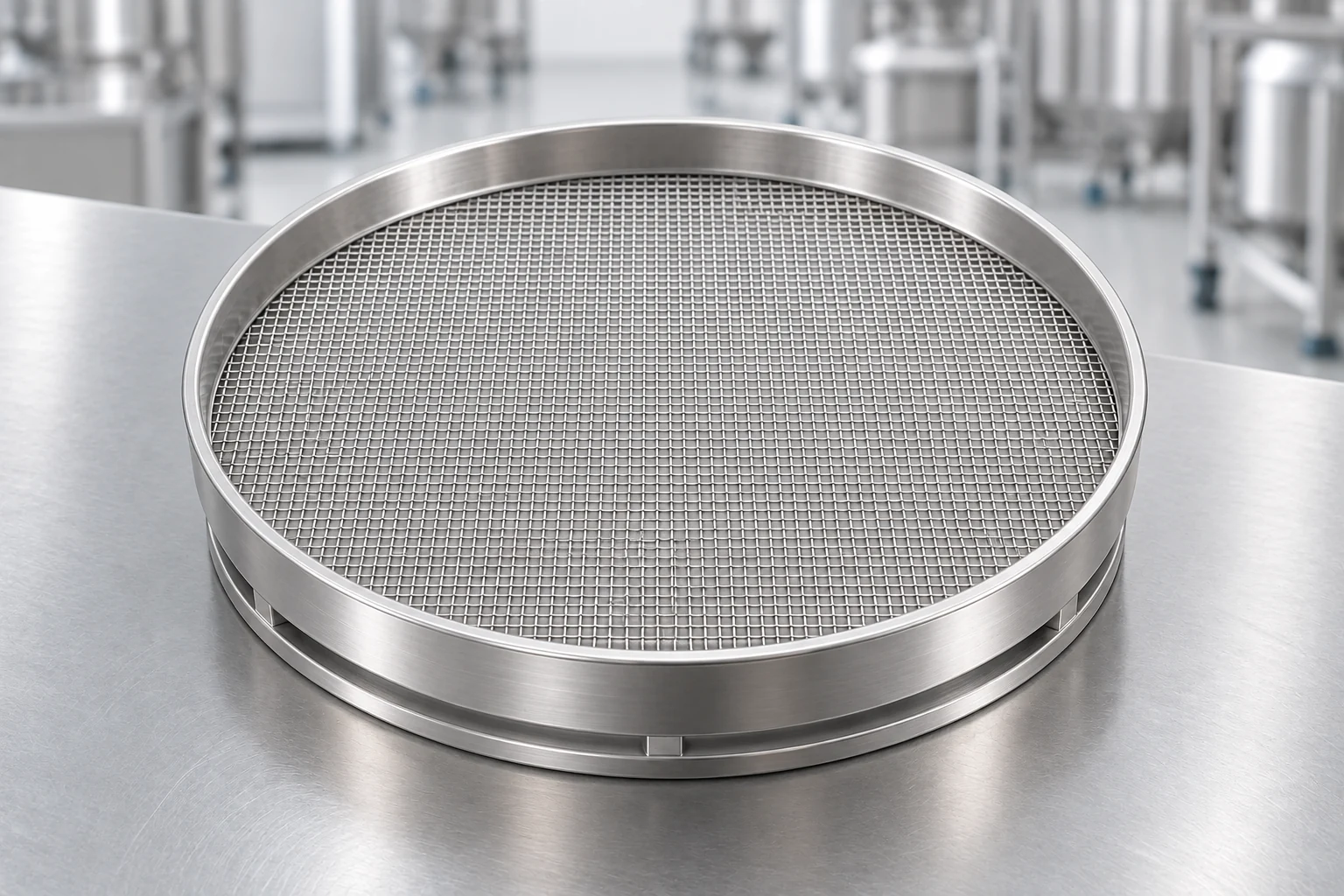
Pharmaceutical screening component
A project team supplies its governing process specification, product-contact requirements, mesh geometry, finish, documentation, and validation inputs for review.
Food Grade Wire Mesh Standards and Sourcing Resources
Review related mesh constructions and the cited regulatory frameworks before finalizing a purchase specification. Regulations describe requirements; they do not by themselves certify a specific finished mesh or assembly.
Last updated: 2026-09-28
Related pages
Reference standards
Questions About Food Grade Stainless Steel Mesh
Use these answers to prepare a sourcing request. Confirm regulatory, food-safety, and process suitability with the responsible buyer, equipment designer, and qualified reviewer.
Need a review of a food-processing mesh specification?
Send the food or medium, contact and cleaning conditions, material grade, mesh geometry, finished dimensions or drawing, document requirements, quantity, and destination.
Request a QuoteRequest Food Grade Wire Mesh Pricing
Send the food or process medium, direct or indirect contact conditions, cleaning method, 304/316/316L requirement, mesh construction and opening, wire diameter, finished dimensions or drawing, documents, quantity, and destination for a specification-led sourcing review.
Your details stay private. We reply with a matched factory quote — no spam.