Extruder Screens & Screen Packs
Source extruder screens and screen packs for plastic extrusion. Specify dimensions, material, mesh, layer sequence and edge finish for a drawing-based quote.
View SpecificationsDefine the Screen Pack and Its Equipment Interface
Extruder screens are woven wire mesh filtration components used to retain contaminants in a polymer melt stream before downstream processing. Plastic extrusion filter screens may be single discs or supported multilayer packs. The fields below define an RFQ, not stock sizes or production limits. Product images on this page are AI-generated illustrations, not photographs of supplied parts.
Finished diameter or shape, overall thickness, tolerances, active mesh area and equipment seating detail
Specified grade for filter mesh, support layers and any perimeter binding; include material record requirements
Weave, mesh count and wire diameter, clear opening where applicable, or an agreed retention requirement and test method
Every layer's specification and order, flow direction, loose or joined assembly, weld detail or rim dimensions
Polymer, additives, contamination, melt temperature, throughput, operating pressure and differential-pressure conditions
Select one or more specifications. Your choices will be included in the quote request.
0 specs selected
| RFQ requirement | Information to provide | Check before ordering | |
|---|---|---|---|
| Finished dimensions | Diameter or dimensioned shape, thickness, flatness, tolerances, units and drawing revision | Distinguish the cut mesh blank from the finished pack; include any center hole or cutout | |
| Equipment interface | Breaker-plate or screen-changer drawing, seat dimensions, support and seal detail | A machine model or nominal diameter alone does not establish fit | |
| Material specification | Alloy designation for each mesh layer, rim and joining material; requested material records | Review compatibility with the actual polymer, additives, temperature and any cleaning process | |
| Woven media | Weave, mesh count in each wire direction, wire diameter and opening where applicable | Do not substitute a mesh-count-only description for complete wire geometry | |
| Filtration requirement | Contaminants to retain, required opening or retention rating, rating definition and verification method | Geometric opening and tested particle-retention performance are different quantities | |
| Layer sequence | Each layer's mesh and material, numbered in a stated flow direction | Identify the fine filter layer and downstream support against the breaker plate | |
| Joining and edge finish | Loose stack, spot-weld locations or bound rim; rim width, material and finished dimensions | Confirm active area and seating; perimeter binding does not itself define the equipment seal | |
| Operating duty | Polymer and feedstock, contamination, melt temperature, flow or throughput, pressure and differential pressure | Agree the operating requirements with the equipment and process specification | |
| Order and inspection | Quantity, destination, requested date, sample approval, inspection criteria, documents and packing | Confirm sourcing availability and acceptance requirements for the exact drawing |
Mesh Count, Clear Opening and Filtration Rating
SPE's screen-pack selection guidance explains why wire diameter matters when comparing screens with the same mesh count. Specify the controlled quantity rather than relying on a universal mesh-to-micron conversion.
| Specification | What it describes | What to include | |
|---|---|---|---|
| Mesh count | The number of openings per linear inch in a stated direction | Weave and wire diameter; the same count can have different clear openings | |
| Clear opening | The geometric gap between adjacent wires in square-opening woven mesh | Opening in micrometers or millimeters and the corresponding wire geometry | |
| Filtration rating | A particle-retention requirement defined by a method and acceptance criterion | Rating definition, test method and acceptance criterion; do not equate it automatically with opening | |
| Dutch weave | Filter cloth with different warp and shute geometry | Weave designation, both wire systems and agreed filtration requirement; avoid square-mesh conversion charts |
Compare Single Screens and Extruder Screen Packs
These construction options help describe the requested part. Final media, dimensions, joining and suitability are reviewed against your drawing and process requirements. A stacked or spot-welded pack is not sintered mesh.
Single-layer screens
One cut woven mesh disc or specified shape. Define the wire geometry, finished dimensions, edge condition and equipment support; a single layer is not a universal selection for any feedstock.
Loose multilayer stacks
Separate filter and support screens assembled in a specified order. List every layer and the flow direction so the stack can be identified and checked before use.
Spot-welded screen packs
Specified mesh layers joined at discrete points to hold the assembly together. State the layer order, joining details, finished thickness and edge acceptance criteria; spot welding does not establish a pressure rating.
Rimmed screen packs
A mesh assembly with perimeter binding. Dimension the rim and exposed mesh area separately, specify the rim material and confirm the screen-changer seat and sealing interface.
Build an Extruder Screen RFQ from the Process and Drawing
Start with the existing approved screen specification or equipment drawing. Review changes in feedstock, filtration or layer sequence with the process and equipment requirements before requesting a replacement.
Describe the melt filtration task
Identify the polymer, additives, virgin or recycled feedstock, contaminants to retain and required product quality. Add melt temperature, throughput, operating pressure and differential-pressure conditions.
Confirm the finished interface
Provide the breaker-plate or screen-changer drawing, screen shape, dimensions, thickness, tolerances, support, active area and sealing detail. Pair sample photographs with dimensions and a drawing revision.
Specify the filter media
Give the material, weave, mesh count and wire diameter, plus clear opening or an agreed retention requirement. Dutch weave needs its own construction specification rather than a square-mesh conversion.
Record the complete layer sequence
List filter and support layers from a clearly marked upstream side to the downstream equipment support. SPE describes downstream layers as supporting the fine mesh and spacing it from the breaker plate; the actual sequence follows your process design.
Set approval and order requirements
State assembly style, inspection criteria, required material records, sample approval, quantity, destination and requested delivery date. Keep the approved specification as the reference for repeat orders.
Compare Screen Pack Quotes Against the Same Requirements
WireMesh Sourcing supports specification-led wire mesh sourcing, factory matching, quality control and export coordination. A complete extruder screen specification makes the sourcing request and inspection scope explicit.
Separate fit from filtration
Finished dimensions and seating detail address equipment fit; weave, wire geometry and the filtration requirement define the media to review.
Identify every layer
A written layer sequence distinguishes the fine mesh, support layers, materials and joining requirements instead of comparing packs by layer count alone.
Agree what to inspect
Drawing revision, finished dimensions, mesh specification, layer order and edge condition provide a basis for agreed receiving checks.
Keep repeat orders consistent
Retain the approved drawing, sample criteria, media specification and packing instructions together when preparing the next RFQ.
Specify Screens Around Your Extrusion Process
Review these duties where the equipment uses woven wire mesh extruder screens. Suitability depends on the particular polymer, filtration task, operating conditions and screen-changer design.
Plastic recycling and pelletizing
Describe the recycled feedstock, contamination and retention target. Include throughput, pressure conditions and the approved screen-change criteria when requesting replacement packs.
Polymer compounding
Identify the resin, intended additives or fillers and unwanted particles. The filtration requirement must distinguish contamination from ingredients intended to remain in the compound.
Film and sheet extrusion
Provide the resin, product-quality requirement and existing filtration arrangement. Discuss defects with the process team rather than assuming every gel or surface issue will be resolved by finer mesh.
Pipe, tubing and profile extrusion
Use the screen-changer interface and process specification to define the replacement screen. Confirm pack dimensions, layer order, operating duty and acceptance criteria together.
Resolve These Details Before Ordering
A familiar mesh number or machine model is only part of a complete replacement specification.
Ordering by mesh count alone
Wire diameter and weave affect the opening. Specify the complete media geometry or agreed filtration requirement when changing suppliers or reordering.
Leaving the layer order unstated
The same layer count can describe different assemblies. Identify every mesh layer, its order and the upstream and downstream sides.
Using blank diameter as finished diameter
A rim and stack thickness affect the finished interface. Dimension the completed pack, exposed mesh area and seating detail.
Treating a bound edge as the equipment seal
Binding retains or finishes the perimeter. The equipment seat and sealing arrangement need separate confirmation against the drawing.
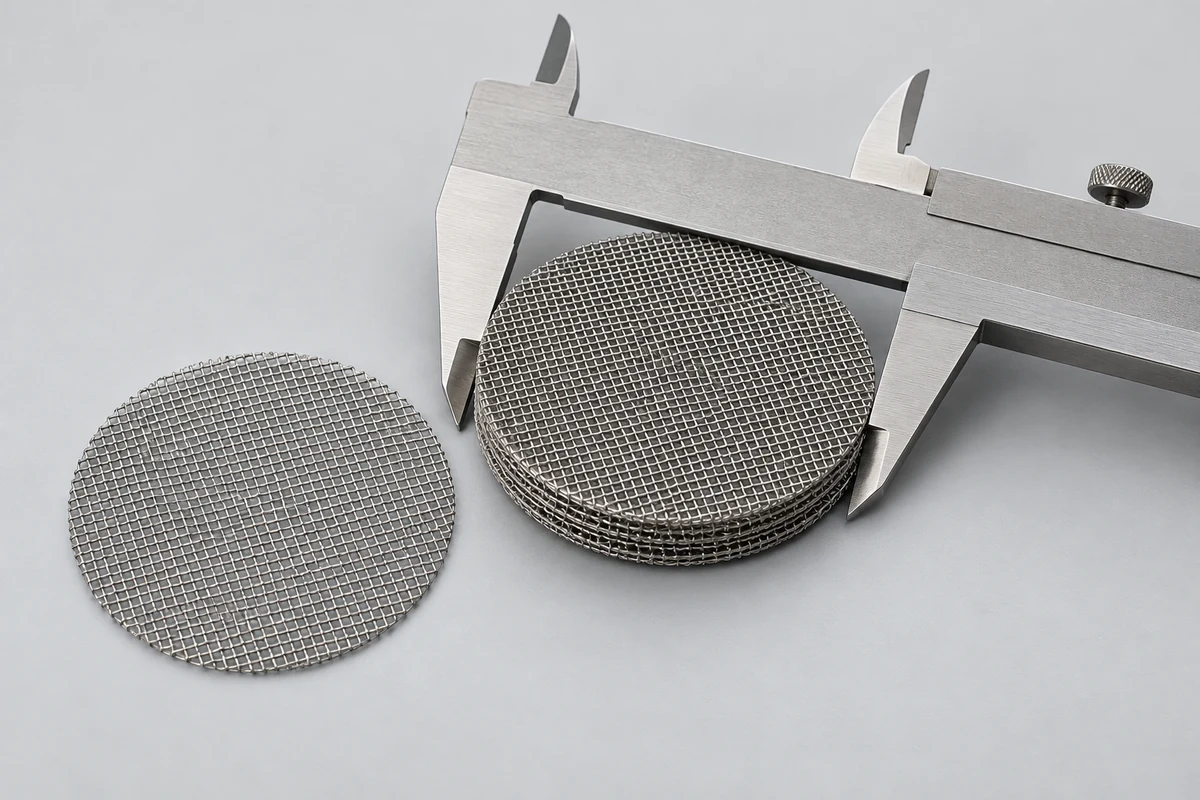
AI-generated inspection illustration. No measurement result or supplied-part inspection is represented.
Check the Approved Screen Pack Before Release to Production
Match the order and drawing
Check part identification, drawing revision, quantity and requested material records against the approved purchase specification.
Check finished geometry and edges
Use the agreed inspection method for dimensions, overall thickness, flatness, rim and active area. Check for damaged mesh, loose wires and joining defects against the acceptance criteria.
Verify the media and layer arrangement
Confirm each specified mesh layer, material, order and direction using the agreed records and inspection process. Do not assume that similar-looking mesh layers are equivalent.
Confirm equipment suitability
Review the seat, support, seal and approved operating requirements. Installation and screen changes must follow the equipment manufacturer's procedures; this checklist is a procurement and receiving review.
Keep Screen Identification and Layer Order Clear
Include packing and document requirements in the RFQ so they can be confirmed with the sourcing scope. These are requirements to agree, not default supply commitments.
Group by approved configuration
Specify how different sizes, media and pack styles should be separated. For loose screens, define how each layer and intended sequence must be identified.
Protect mesh and finished edges
Agree separators, pack support and handling protection appropriate to the thin mesh, joined stack or bound rim. State any cleanliness and moisture-protection requirements.
Define labels and receiving information
Request the part identifier, drawing revision, configuration, quantity and agreed batch identification on the relevant package labels.
List the documents required
Agree material records, inspection results, approved-sample records and packing lists, including when each document is required.
Four Ways to Describe an Extruder Screen Request
These are illustrative RFQ scenarios, not completed customer projects or performance claims. All product images are AI-generated illustrations and do not verify supplied configurations, materials or specifications.
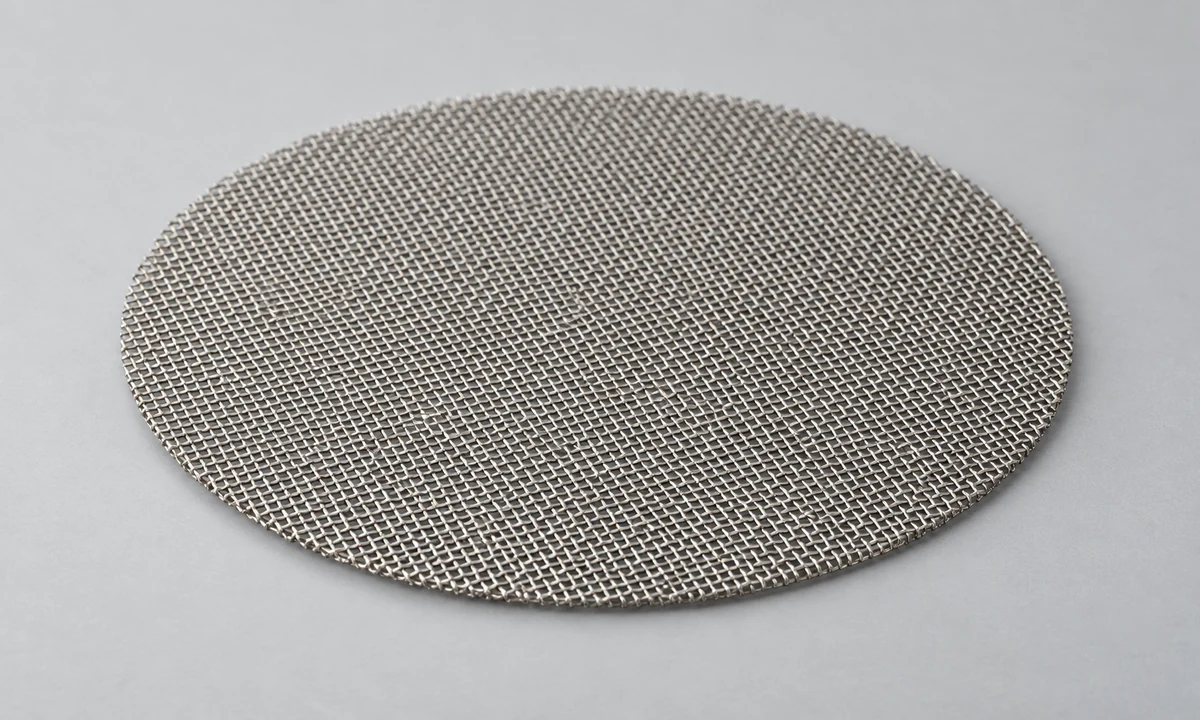
Single-layer replacement disc
A buyer provides the approved screen drawing, finished diameter, wire geometry, material, cut-edge criteria and equipment support for a single-layer replacement request.
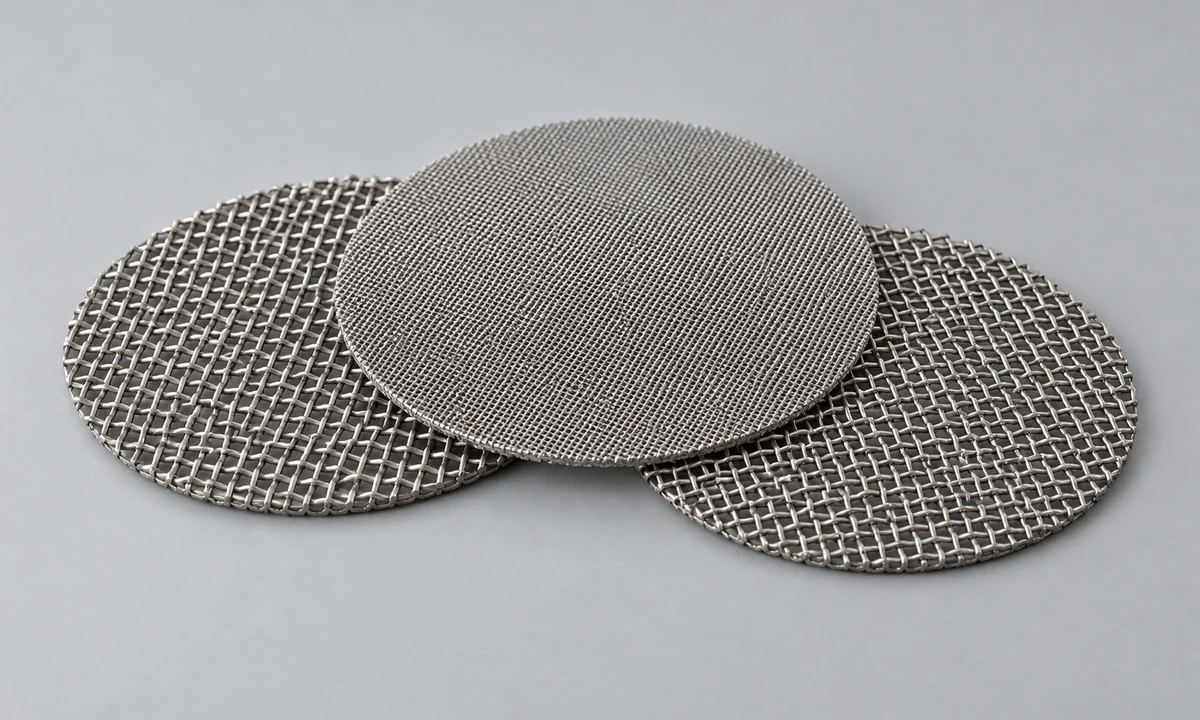
Loose filter and support layers
A process team lists each mesh layer from upstream to downstream, identifies the fine layer and equipment support, and requests separately identified sets for an approved pack arrangement.
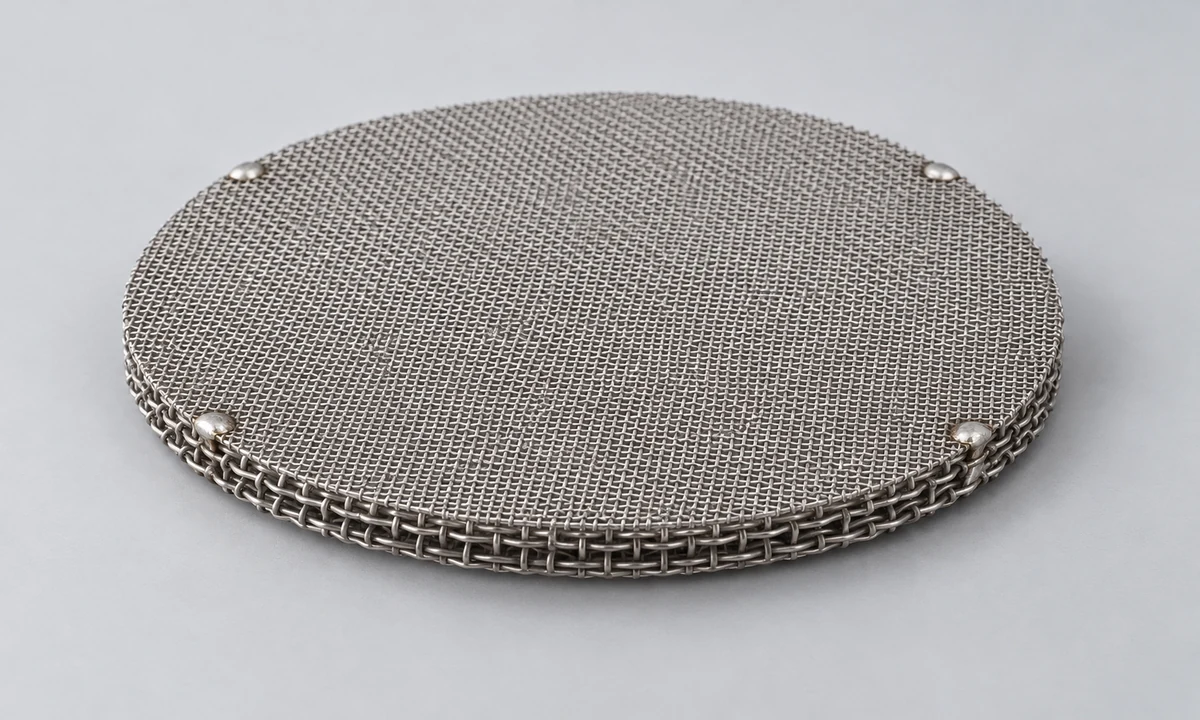
Spot-welded multilayer pack
A replacement RFQ specifies every layer, joining detail, finished thickness, dimensions and inspection criteria so the assembled pack can be reviewed against the existing drawing.
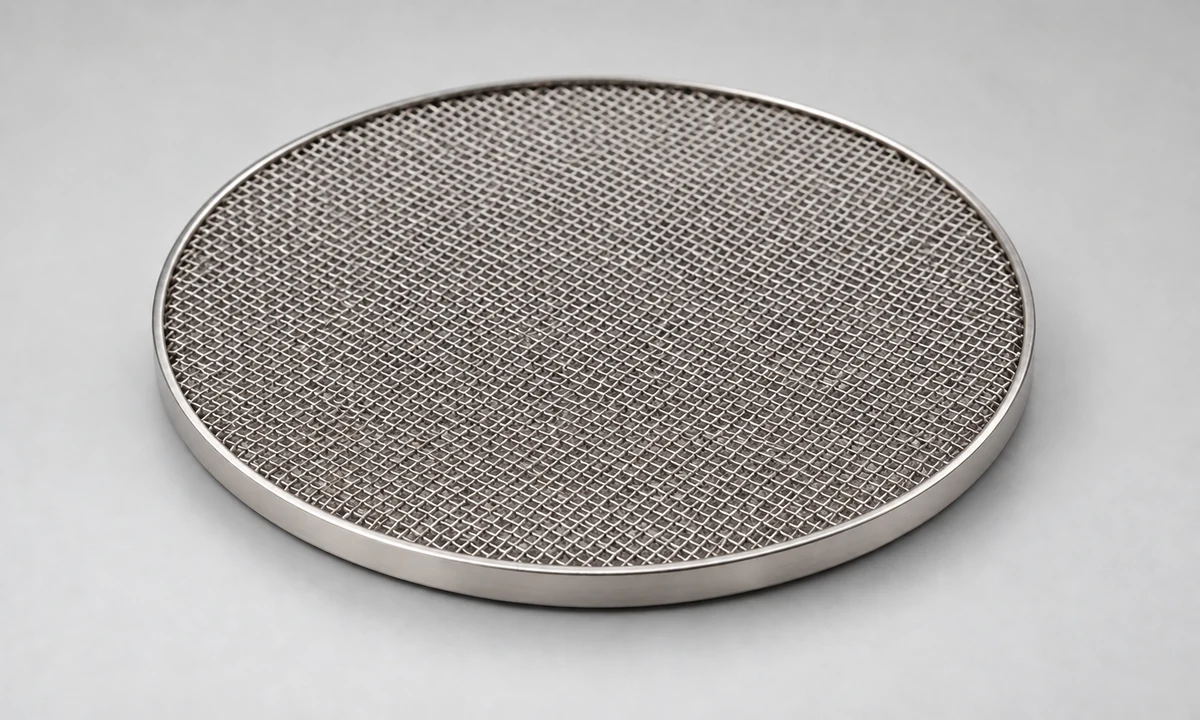
Rimmed screen-changer pack
A drawing defines mesh and rim materials, finished diameter, rim width, thickness, exposed mesh area and seating interface. Seal compatibility is confirmed separately with the equipment requirements.
Extruder Screen Materials and Specification Resources
Review related mesh and finished components alongside the technical references. A source explains a specification principle; it does not certify a supplied screen or determine the correct pack for your process.
Last updated: 2026-10-09
Related mesh and filter pages
Technical references
Questions About Extruder Screens and Screen Packs
Use these answers to prepare a replacement or custom polymer melt filtration screen request.
Have a screen-pack drawing or replacement sample?
Share the finished dimensions, media, layer sequence, edge construction and equipment interface with your process conditions.
Request a QuoteRequest a Quote for Extruder Screens and Screen Packs
Send your drawing, polymer and operating conditions, finished screen dimensions, material, mesh or retention requirement, layer order and assembly finish. Add quantity, destination and required inspection records so we can review the sourcing scope with you.
Your details stay private. We reply with a matched factory quote — no spam.