Test Sieve Mesh & Laboratory Woven Wire Test Sieves
Source framed laboratory test sieves with woven wire mesh for particle-size analysis. Compare ASTM E11-24 and ISO 3310-1:2016 requirements for aperture, frame, material, and inspection before requesting a quote.
View SpecificationsLaboratory Test Sieve Specifications
A test sieve is a finished assembly: precision woven wire cloth tensioned in a frame for particle-size analysis. The standard, nominal aperture, wire diameter, frame size, material, and requested inspection level must be specified together.
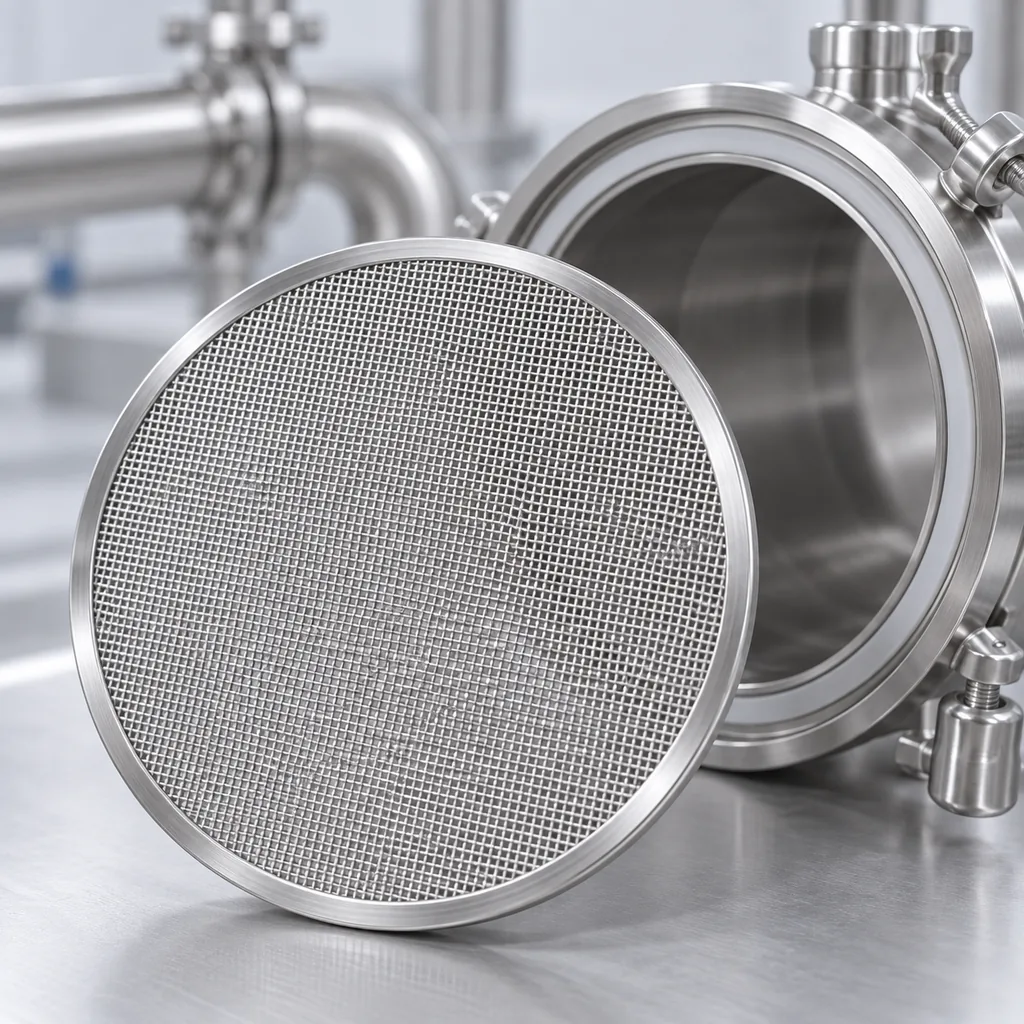
Framed woven wire test sieve for particle-size analysis; this page covers finished test sieves rather than loose replacement sieve cloth
ISO 3310-1:2016 for metal wire cloth test sieves and ASTM E11-24 for woven wire test sieve cloth and test sieves; name the required edition in the RFQ
The opening size that defines the sieve designation. ISO 565 provides the nominal opening-size series; aperture is not interchangeable with mesh count
Mesh count, wire diameter, nominal aperture, open area, and weave interact. State the aperture and wire diameter when reproducibility matters
Specify frame diameter and frame height, including the unit system, so the sieve fits the intended shaker, lid, receiver, and stacking arrangement
Current product data lists stainless steel and brass material routes. State the required mesh and frame material, marking, inspection, certificate, or traceability requirement for review
| Reference | What it governs | Standard scope | RFQ implication | |
|---|---|---|---|---|
| ASTM E11-24 | Woven wire test sieve cloth, construction, frame sizes, and inspection procedures | Nominal apertures from 125 mm to 20 µm; SI units for cloth and inch-pound units for frames | State ASTM E11-24 and the requested inspection or calibration documentation; do not assume a certification level | |
| ISO 3310-1:2016 | Technical requirements and testing for test sieves of metal wire cloth | Nominal apertures from 125 mm to 20 µm in accordance with ISO 565 | State the standard, aperture, frame dimensions, and any inspection record needed | |
| ISO 565:1990 | Nominal opening sizes for metal wire cloth, perforated plate, and electroformed sheet | Sizes at or above 1 mm are expressed in mm and smaller sizes in µm | Use nominal aperture with units rather than an ambiguous mesh-number-only request | |
| Project or laboratory method | The buyer's sampling and sieving procedure | Outside the product standard unless explicitly cited | Provide the applicable method and shaker interface when they affect selection |
Test Sieve Terms: What Each Field Means
These fields describe different properties. Listing one does not reliably define the others.
| Field | Meaning | Why it belongs in the RFQ | |
|---|---|---|---|
| Nominal aperture | Specified opening size in mm or µm | It is the primary particle-size separation designation | |
| Mesh count | Openings per linear inch | It does not by itself define aperture or wire diameter | |
| Wire diameter | Diameter of the wire used to weave the cloth | It affects opening geometry, open area, and cloth behavior | |
| Frame diameter | Outside or nominal diameter of the sieve frame | It determines shaker, lid, receiver, and stack compatibility | |
| Frame height | Usable or nominal height of the frame | It affects stacking clearance and sample capacity |
Test Sieve RFQ Checklist
Provide these details to receive a quotation aligned to the laboratory method instead of a generic mesh estimate.
| Field | What to provide | Why it matters | |
|---|---|---|---|
| Standard and edition | ASTM E11-24, ISO 3310-1:2016, or project-specified standard | Sets the construction and inspection reference | |
| Nominal aperture | Opening size and unit in mm or µm | Defines the target particle-size cut | |
| Frame | Diameter, height, lid/receiver interface, and shaker compatibility | Prevents an equipment mismatch | |
| Materials | Required wire-cloth and frame material | Lets the review evaluate the construction | |
| Inspection and documents | Inspection, calibration, certificate, serial marking, or traceability requirement | Prevents unsupported assumptions about documentation | |
| Commercial details | Quantity, destination, required date, and packing needs | Allows a comparable factory and freight quotation |
How Test Sieves Are Specified
The product remains a framed woven wire test sieve; these routes organize the standard, material, frame, and documentation choices that distinguish one request from another.
ASTM E11-24 test sieve
A request governed by ASTM E11-24, with the buyer identifying nominal aperture, frame format, and required inspection or calibration documentation.
ISO 3310-1:2016 test sieve
A request governed by ISO 3310-1:2016 for metal wire cloth test sieves, with aperture and dimensions stated in the intended unit system.
Stainless steel woven wire sieve
A stainless steel material route for the mesh and/or frame as defined in the RFQ, considered where durability and cleaning compatibility matter.
Brass construction route
A brass material route listed in current product data. Confirm the exact component material, frame format, aperture, and standard before quotation.
How to Select Test Sieve Mesh and Frames
Start from the test method and nominal aperture, then complete the frame, material, and inspection details. Mesh count is a supporting descriptor, not a complete test-sieve specification.
Start with the test method
Identify the laboratory, customer, or regulatory method that controls the sieve series and reporting.
Name the standard and edition
Specify ASTM E11-24 or ISO 3310-1:2016 when applicable, plus any project-specific requirement.
Set the nominal aperture
State the opening in mm or µm. The nominal aperture establishes the separation point.
Add wire and mesh geometry
Include mesh count and wire diameter where needed. They cannot replace the nominal aperture.
Match the frame to equipment
Provide frame diameter, height, and shaker, lid, or receiver interface.
Choose materials deliberately
State wire-cloth and frame material rather than assuming all components use the same construction.
Define inspection and documents
Describe required inspection, certificate, marking, serial record, or traceability before quotation.
Finish the commercial request
Give quantity, destination, required date, and packing needs for a comparable offer.
Why a Complete Test Sieve Specification Matters
A complete specification does not guarantee a laboratory outcome, but it gives buyers and suppliers a shared basis for comparing the assembly, required documents, and quotation.
Clear particle-size designation
A nominal aperture with its unit states the intended sieve opening more clearly than mesh count alone.
Equipment-compatible framing
Frame diameter and height make shaker, lid, receiver, and stack compatibility explicit.
Comparable standards basis
Naming ASTM E11-24 or ISO 3310-1:2016 gives suppliers the same reference.
Material transparency
Separating wire-cloth and frame material requirements avoids construction assumptions.
Documentation requested up front
Inspection, marking, and traceability needs can be evaluated before offers are compared.
Sourcing and export-ready RFQ
Quantity, destination, and packing requirements give the review enough detail to assess factory matching and freight.
Where Laboratory Test Sieves Are Used
Test sieves support controlled particle-size analysis and routine grading when a method calls for a defined aperture series. Confirm the applicable method and sample behavior with the laboratory.
Laboratory particle-size analysis
Stacked woven wire test sieves separate powders, granules, and other particulate samples into aperture-defined fractions.
Incoming-material quality control
Quality teams use a defined sieve set to check supplied granular material against an internal or customer specification.
Aggregate, soil, and mineral testing
Construction-material and mining laboratories use test sieves when the cited method requires laboratory-scale particle-size classification.
Food and powder processing
Process and quality teams use laboratory sieving to review powder or granular consistency; the buyer selects materials and procedures suitable for its application.
Pharmaceutical and chemical development
Research and quality-control laboratories may use sieve analysis within their validated particle-characterization procedures.
Research and pilot plants
Development teams use defined sieve apertures to compare batches, evaluate milling results, and prepare repeatable scale-up data.
Test Sieve Buying Mistakes to Avoid
Most avoidable problems come from treating a laboratory test sieve as generic screening mesh. Define the finished assembly and verification need before requesting prices.
Ordering by mesh count alone
Mesh count does not fully define nominal aperture or wire diameter. Include aperture and unit.
Confusing sieve cloth with a finished test sieve
A test sieve includes a frame and tensioned cloth. This page covers the finished framed product.
Leaving out the standard edition
Name the exact ASTM or ISO edition and any laboratory method that applies.
Assuming standard scope equals availability
The 125 mm to 20 µm scope belongs to the standards. Confirm the requested configuration in the RFQ.
Omitting frame dimensions
A correct aperture can still be unusable when the sieve does not fit the shaker, lid, receiver, or stack.
Assuming certification without requesting it
Inspection, calibration, certificates, and traceability documents must be stated and confirmed for the configuration.
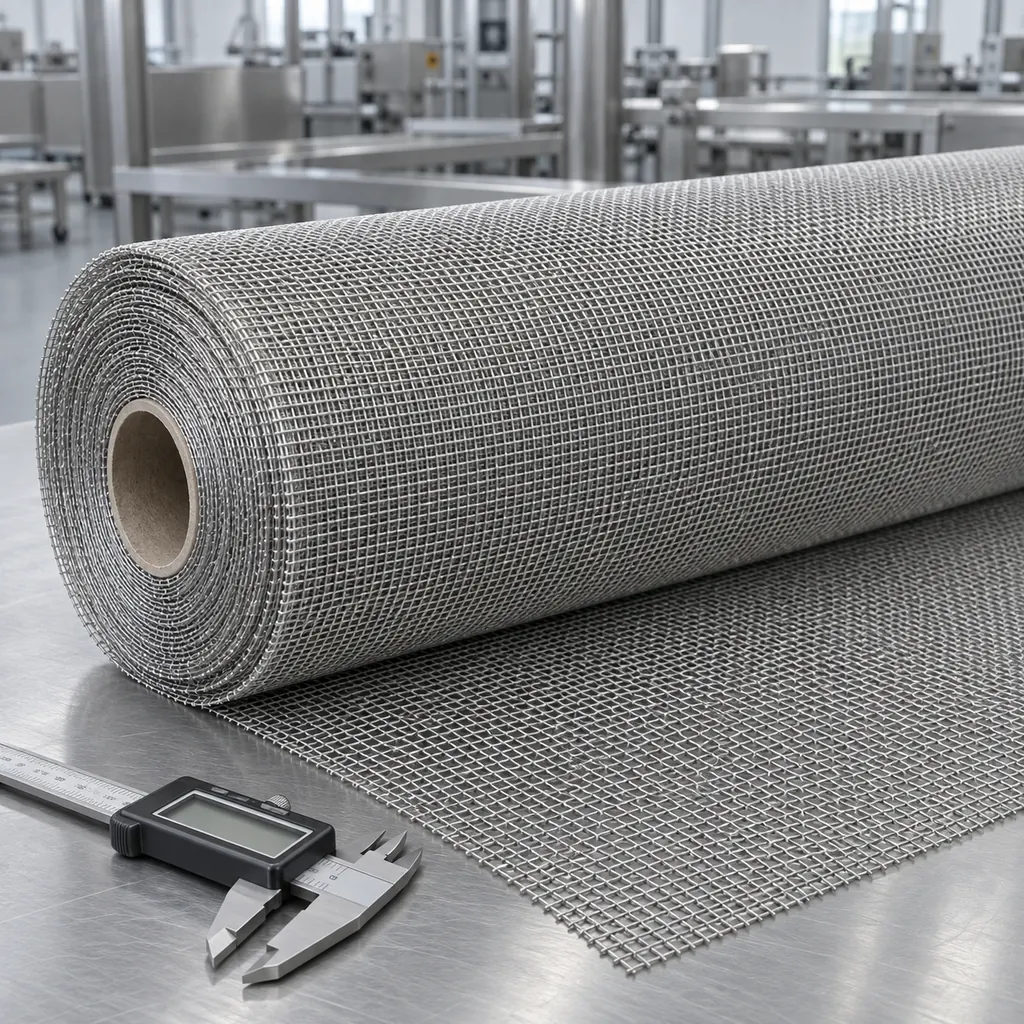
Follow the laboratory's approved test method and equipment instructions. These are general handling considerations, not a substitute for a validated procedure or standard.
Handling Test Sieves in Laboratory Workflows
Inspect before use
Check the frame, mesh surface, label, and required identification against the laboratory acceptance procedure.
Stack by the intended aperture series
Arrange the sieve stack in the order required by the applicable method, with compatible lid and receiver components.
Avoid deforming the wire cloth
Use cleaning and handling methods approved by the laboratory so the mesh is not bent, stretched, or damaged.
Maintain required records
Retain inspection, calibration, cleaning, and use records where the quality system or test method requires them.
Test Sieve Packing for Transit and Receiving
Packing should protect the frame and woven wire cloth while preserving the configuration information needed at receiving. Confirm the final packing and documentation plan with the quotation.
Protect the mesh face
Use packing that prevents contact damage to the woven wire surface during handling and transit.
Protect frame edges
Separate and secure completed sieve frames so transport does not distort the rim or mesh tension.
Label the specification
Identify the agreed aperture, frame format, material, quantity, and order reference in packing documentation.
Request documents in advance
List inspection, certificate, marking, or traceability needs in the RFQ so they can be confirmed.
State destination and handling needs
Provide destination, trade terms, and special packing instructions for a freight-ready quotation.
Inspect on receipt
Check the delivered configuration and condition against the purchase order before placing sieves into service.
Test Sieve Mesh in Laboratory and QC Work
These scenarios illustrate how a framed woven wire sieve can be specified. They are examples, not customer case studies or performance claims.
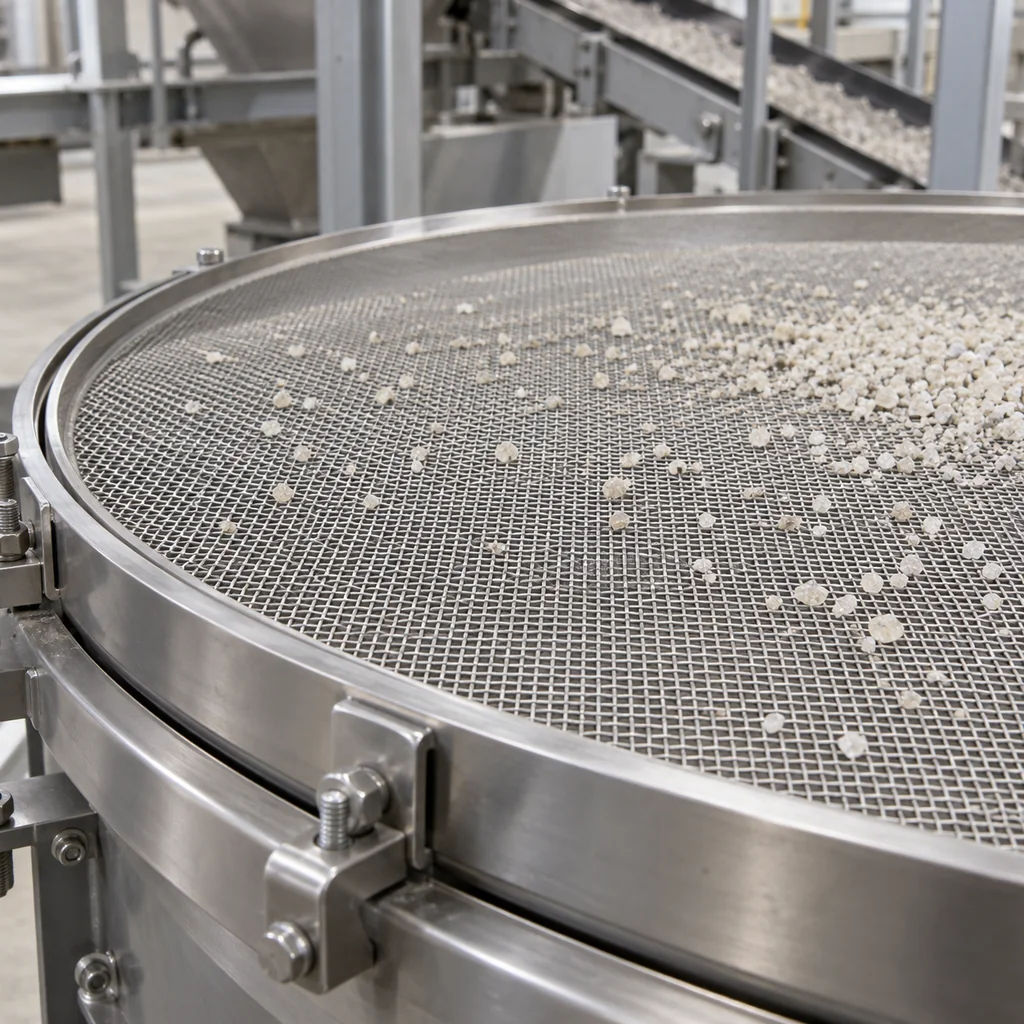
Granular-material screening review
A laboratory specifies a stack of nominal apertures, frame size, and the applicable standard for a controlled particle-size comparison.
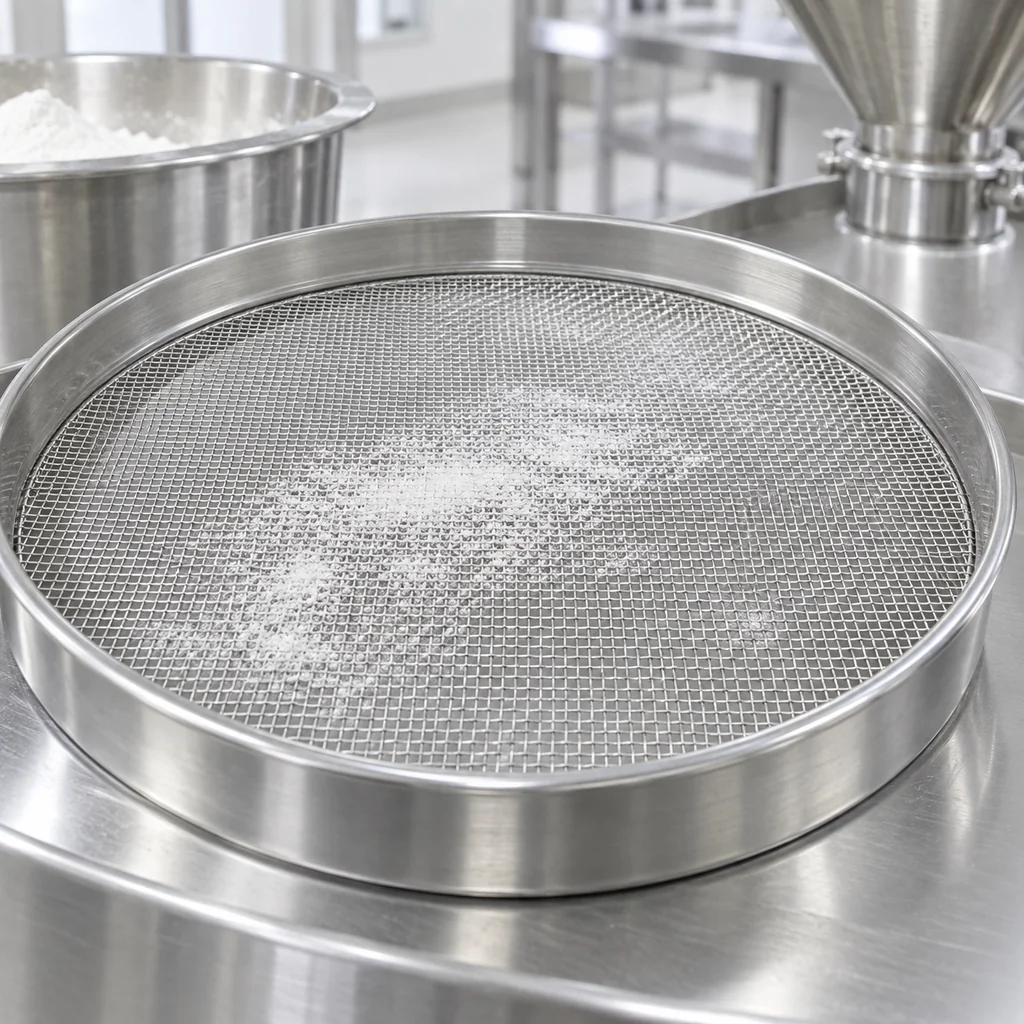
Food-powder consistency check
A quality team defines the test method, aperture series, material requirements, and cleaning procedure for an internal workflow.
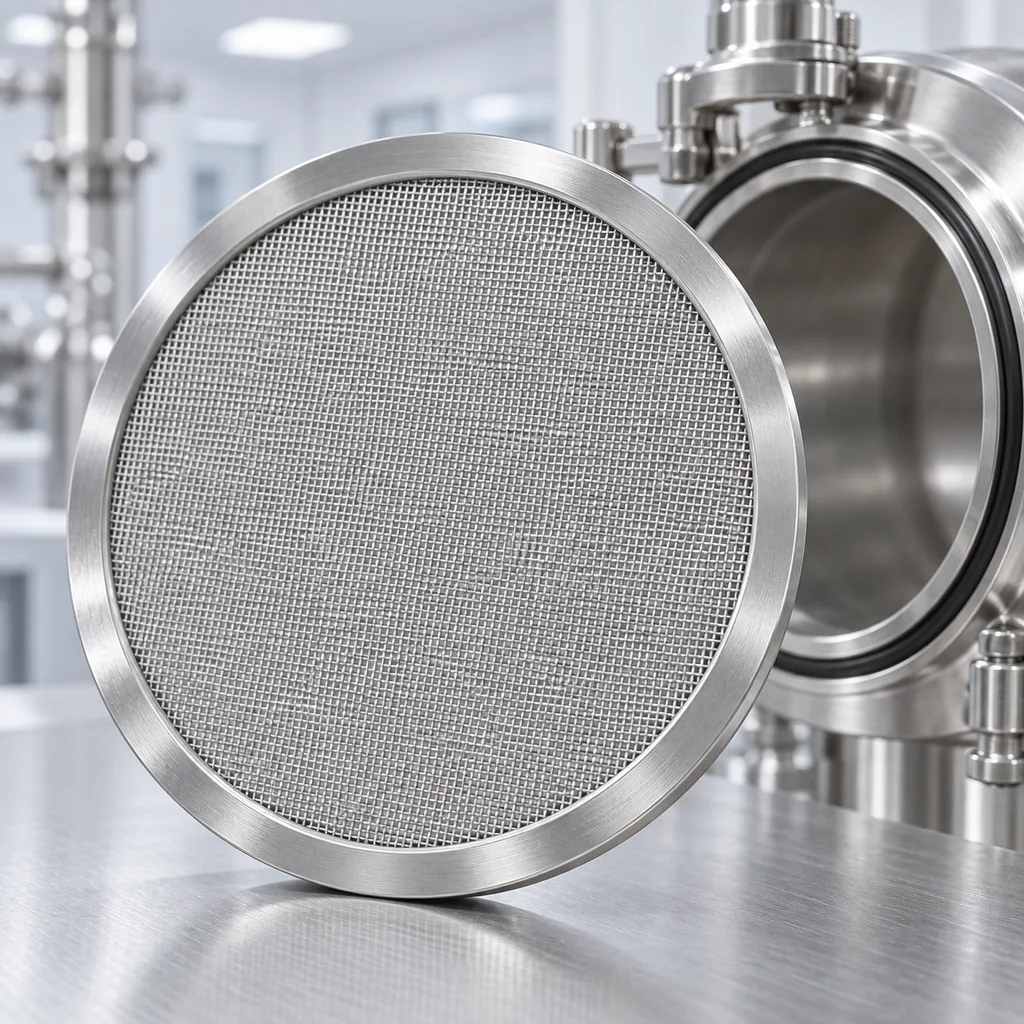
Pharmaceutical development screening
A development laboratory documents the sieve configuration and traceability within its validated particle-characterization process.
Chemical-material qualification
A buyer requests framed woven wire test sieves with the required aperture, frame interface, material, and inspection documents for incoming-material review.
Test Sieve Standards and Sourcing Resources
Use these guides to distinguish laboratory test sieves from industrial mesh applications, then review the cited standards directly before finalizing a purchase specification.
Last updated: 2026-09-22
Related pages
Reference standards
Test Sieve Mesh FAQ
Answers to the specification questions buyers should resolve before sourcing laboratory woven wire test sieves.
Need help matching a test sieve to your method?
Send the standard and edition, nominal aperture, frame dimensions, material, inspection requirement, quantity, and destination. We will review the request as a finished laboratory test sieve specification.
Request a QuoteRequest Test Sieve Mesh Pricing
Send the governing standard, nominal aperture, mesh and wire details where required, frame diameter and height, material, inspection or document request, quantity, and destination for a specification-led sourcing review.
Your details stay private. We reply with a matched factory quote — no spam.