Stucco Wire Mesh: Galvanized Netting and Lath Supplier
Source stucco wire mesh in galvanized, PVC-coated and stainless netting and lath. Compare openings, gauges, and roll sizes for your project. Request a factory quote.
View SpecificationsStucco Wire Mesh Specifications
Stucco wire mesh is defined by six variables: mesh pattern, opening size, wire diameter, coating route, roll dimensions, and furring type. State all six in every RFQ to avoid gauge-table ambiguity and re-quotes.
Hexagonal wire netting (stucco netting) or welded wire lath with diamond or square openings for keying render coats
Hexagonal apertures 1/2, 3/4, 1, and 1-1/2 inch for netting; 1/2 and 1 inch diamond openings for expanded metal lath
0.4-1.2 mm (about 27-19 gauge) for hexagonal stucco netting; heavier 1.0-1.8 mm for welded lath
Electro galvanized, hot-dip galvanized, PVC-coated, or 304/316 stainless steel stucco wire mesh
Widths 0.9-2 m (common 1 m and 48 in) in 25 m, 30 m, and 50 m lengths
Galvanized wire per ASTM A641, self-furring stucco netting per ASTM C1032, installation per ASTM C1063, coating mass per EN 10244-2
Select one or more specifications. Your choices will be included in the quote request.
0 specs selected
| Coating route | Typical coating | Expected service | Best for and RFQ note | |
|---|---|---|---|---|
| Electro galvanized | 8-20 g/m2 bright zinc on stucco mesh | Indoor render and temporary exterior; about 1-3 years | Economical stucco wire mesh for interior ceiling work and short-term exterior plaster. Lowest cost; state the ASTM A641 class in the RFQ. | |
| Hot-dip galvanized after weaving | 40-80+ g/m2 zinc on the woven stucco netting | Long exterior service; 5-15 years by environment | The default outdoor stucco wire mesh for exterior rendering and foundation plaster. Specify galvanized-after-weaving so every twist joint and cut end is sealed. | |
| PVC-coated over galvanized core | Zinc core plus 0.4-0.8 mm PVC jacket | Extended outdoor life with color; 10-20 years | Green or black PVC stucco mesh for architectural render where the mesh may stay visible or face coastal exposure. Name the core coating class and jacket thickness. | |
| 304 / 316 stainless steel | Bare corrosion-resistant alloy wire | Decades with no coating to wear away | Premium stucco wire mesh for marine environments, food-adjacent render, and listed building restoration. Highest cost, longest life, zero rust staining. |
Common Stock Sizes: Stucco Wire Mesh Rolls
Typical stock specifications of stucco wire mesh in hexagonal netting and welded lath. Custom widths, lengths, and wire diameters are available at MOQ; confirm wire tolerance and coating mass at RFQ.
| Product type | Opening | Wire diameter (mm) | Gauge (approx.) | Roll size | Common finish | |
|---|---|---|---|---|---|---|
| Hexagonal stucco netting | 1/2 in (13 mm) | 0.5-0.7 | 25-22 ga | 1 m x 25 m | Electro or hot-dip galvanized | |
| Hexagonal stucco netting | 3/4 in (19 mm) | 0.6-0.8 | 23-21 ga | 1 m x 25/50 m | Hot-dip galvanized | |
| Hexagonal stucco netting | 1 in (25 mm) | 0.7-1.0 | 22-19 ga | 1 m or 48 in x 50 m | Hot-dip or PVC-coated | |
| Self-furring stucco netting | 1 in (25 mm) | 0.8-1.0 | 21-19 ga | 1 m x 25/50 m | Hot-dip galvanized self-furring | |
| Diamond mesh metal lath | 1/2 in diamond | 1.0-1.4 | 19-17 ga | 0.9 m x 3.6 m sheets | Hot-dip galvanized | |
| Welded wire stucco lath | 1 in (25 mm) | 1.2-1.8 | 17-14 ga | 1.2 m x 2.4 m panels | Hot-dip or PVC-coated |
Choosing Stucco Wire Mesh by Render Type and Surface
Match the stucco mesh pattern, opening, and wire diameter to the render system and substrate. The mesh must key the scratch coat without excessive wire showing through the finish.
| Render type | Recommended mesh | Opening | Wire diameter | Why | |
|---|---|---|---|---|---|
| Three-coat exterior stucco | Self-furring hexagonal netting | 1 in | 0.8-1.0 mm | Furred profile creates 1/4 in gap for full embedment; standard for ASTM C1063 systems | |
| Interior ceiling plaster | Expanded metal or hex netting | 1/2-3/4 in | 0.6-0.8 mm | Light wire reduces sag on overhead work; smaller openings hold ceiling plaster without bulging | |
| Curved surface render | Hexagonal stucco netting | 1 in | 0.7-0.9 mm | Flexible hex mesh conforms to arches, columns, and domes without cutting every panel | |
| Restoration and heritage render | Stainless steel hex netting | 1 in | 0.8-1.0 mm | Zero rust risk on historic facades; compatible with lime-based render systems | |
| Insulation render system (EIFS) | Welded wire mesh lath | 1 in | 1.2-1.6 mm | Rigid lath supports thick insulation board and base coat without deflection |
Stucco Wire Mesh Coverage and Weight Reference
Theoretical coverage and weight for estimating material requirements and freight costs. Actual weight varies by coating mass and wire tolerance; confirm on the packing list.
| Mesh type | Opening | Wire diameter (mm) | Approx. weight (kg/m2) | Roll area (1 m x 30 m) | Approx. roll weight (kg) | |
|---|---|---|---|---|---|---|
| Hexagonal stucco netting | 1/2 in (13 mm) | 0.5 | 0.35 | 30 m2 | 10.5 | |
| Hexagonal stucco netting | 1 in (25 mm) | 0.8 | 0.65 | 30 m2 | 19.5 | |
| Self-furring hex netting | 1 in (25 mm) | 0.9 | 0.75 | 30 m2 | 22.5 | |
| Diamond metal lath | 1/2 in diamond | 1.2 | 1.80 | per sheet (3.2 m2) | 5.8 per sheet | |
| Welded stucco lath | 1 in (25 mm) | 1.4 | 2.10 | per sheet (2.9 m2) | 6.1 per sheet |
Stucco Wire Mesh Selection by Substrate Type
The substrate determines which mesh pattern, wire diameter, and fixing method to use. Match the stucco mesh to the wall material for a bond that lasts the life of the building.
| Substrate | Recommended mesh | Fixing method | Key consideration | |
|---|---|---|---|---|
| Timber frame / wood sheathing | Self-furring hexagonal stucco netting, 1 in, 0.9 mm | Galvanized staples at 6 in stud spacing | Weather barrier required behind mesh. Use longest staple leg that penetrates sheathing by minimum 1/2 in. | |
| Masonry / brick / block | Expanded metal lath or self-furring hexagonal netting | Masonry nails or power-driven pins at 6 in spacing | No building paper needed on solid masonry. Use furring nails to maintain the 1/4 in bond gap. | |
| Cast-in-place concrete | Welded wire lath or expanded metal, 1 in opening, 1.4 mm minimum wire | Shot-fired pins or expansion anchors at 6 in spacing | Do not install on green concrete. Allow full cure. Maintain minimum 1/2 in standoff from concrete surface. | |
| Steel frame / metal stud | Self-furring hexagonal stucco netting | Self-tapping screws with large-diameter washers at 6 in spacing | Check galvanic compatibility. Use stainless steel fasteners in coastal and high-humidity environments. |
Stucco Wire Mesh Types We Source
One stucco application, four material routes. Compare coating life against your project environment before you specify stucco wire mesh.
Galvanized stucco wire mesh
Electro or hot-dip zinc on low-carbon steel wire; the standard choice for exterior plaster, interior render, and ceiling lath.
PVC-coated stucco wire mesh
Green or black PVC jacket over a galvanized core; additional corrosion protection for coastal projects and decorative exposed mesh.
Stainless steel stucco wire mesh
304 or 316 alloy hexagonal netting or lath for marine environments, food-grade facilities, and heritage restoration with no coating to degrade.
How to Select the Right Stucco Wire Mesh
Start from the render system and substrate, then fix mesh pattern, opening, wire diameter, coating, and furring type. A complete stucco wire mesh RFQ avoids assumptions and re-quotes.
By render system and substrate
Three-coat stucco needs self-furring netting with a 1/4 in gap for embedment; thin-coat systems can use flat hexagonal mesh stapled directly to sheathing.
By surface shape
Flat walls suit any mesh type; curved surfaces need flexible hexagonal stucco netting that conforms without folding or tearing.
Self-furring or flat?
Self-furring stucco wire mesh has dimpled or V-shaped wires that create an automatic standoff from the substrate. Flat mesh needs separate furring nails or spacers.
Hexagonal netting or welded lath?
Hexagonal stucco netting is flexible, light, and low-cost. Welded wire lath is rigid and carries heavier render loads but costs more and is harder to curve.
Electro or hot-dip coating?
Electro galvanized suits interior work where moisture is minimal. Hot-dip galvanized stucco mesh carries far more zinc for exterior and high-humidity environments.
Match wire to render thickness
Light 0.6 mm wire works for 1/2-3/4 in render; heavy 1.0+ mm wire is needed for 1-1/2 in and thicker stucco applications where the mesh must carry the wet load.
State millimeters, not gauge
Gauge tables vary by standard and country. State opening and wire diameter in millimeters in every stucco wire mesh RFQ to eliminate ambiguity.
Specify overlap and fastening
Stucco mesh laps 2-4 inches at seams and is fastened every 6 inches along framing. State the overlap width and staple type in the installation specification.
Why Buyers Choose Stucco Wire Mesh
Stucco wire mesh remains the world's default plaster keying surface for honest reasons: reliable bond, easy installation, and proven performance across every climate.
Proven mechanical bond
The open mesh structure of stucco wire mesh creates a continuous mechanical key that holds render in place without reliance on adhesive alone.
Flexible for complex geometries
Hexagonal stucco netting follows arches, domes, and columns without the cutting and waste required by rigid lath sheets.
Light and easy to install
One person can handle and staple a 50 m roll of stucco wire mesh with basic tools; no welding, framing, or heavy equipment needed.
Multiple coating routes
Electro, hot-dip, PVC-coated, and stainless options let you buy exactly the service life the building demands.
Crack control across surfaces
Stucco wire mesh distributes thermal and settlement stresses across the entire wall plane, reducing the incidence and width of hairline cracks.
Verified, traceable supply
Rolls carry labels with opening, wire diameter, coating class, and quantity; coating mass is verifiable per ASTM A90 for quality assurance.
Lower lifetime cost than inferior alternatives
Hot-dip galvanized stucco wire mesh costs more than electro per roll but lasts 5-10 times longer outdoors. The lifecycle cost advantage makes specification-grade stucco mesh the economical choice for any permanent building.
Where Stucco Wire Mesh Is Used
Choose stucco wire mesh when you need a reliable keying surface that bonds render to walls, ceilings, and curved substrates without slipping or delaminating.
Exterior wall plaster and stucco
Self-furring stucco wire mesh provides the mechanical key for three-coat exterior plaster systems on frame, masonry, and concrete walls.
Ceiling and soffit render
Light hexagonal stucco netting or expanded metal lath holds ceiling plaster and acoustic render on overhead surfaces without sagging.
Arched and curved surfaces
Flexible stucco netting conforms to arches, columns, barrel vaults, and domed ceilings where rigid lath cannot follow the curve.
Building restoration and repair
Stainless steel stucco wire mesh replaces corroded lath in heritage facade restoration, compatible with lime and hydraulic render.
Exterior insulation finish systems
Welded stucco lath reinforces base coat over insulation board in EIFS assemblies, adding impact resistance and crack control.
Fireproofing and acoustic barriers
Stucco mesh supports cementitious fireproofing sprays and acoustic render on walls and ceilings in commercial and industrial buildings.
Stucco Wire Mesh Buying Mistakes to Avoid
Seven errors that cause render cracking, corrosion, or delamination — each one leading to costly rework that can exceed the original project cost. Every mistake is avoidable with the right specification at the RFQ stage.
Using flat mesh without a furring gap
Stucco mesh must stand 1/4 in off the substrate so the scratch coat keys behind the wires. Flat mesh nailed tight against sheathing loses all mechanical bond.
Buying wire that is too light for exterior render
Light 27-25 gauge stucco netting flexes under wet render weight and causes cracking. Exterior three-coat stucco needs 0.8 mm minimum wire diameter.
Choosing electro galvanized for exterior
Thin bright zinc fails within 1-3 years outside. Exterior stucco wire mesh must be hot-dip galvanized after weaving so every joint is sealed.
Mixing gauge standards in the RFQ
BWG, SWG, and AWG tables differ. State wire diameter and opening in millimeters only, and the dispute disappears.
Insufficient lap at mesh seams
Stucco mesh laps of less than 2 inches create weak points where render cracks. Lap hexagonal netting by 2 full meshes and overlap welded lath by 2 inches minimum.
Ignoring cut edge corrosion
Every cut end on galvanized stucco wire mesh bares steel that rusts first. Specify hot-dip galvanized after weaving, or touch up field cuts with zinc-rich paint.
Oversized openings for thin-coat render
1-1/2 inch openings push too much render through the mesh, wasting material and leaving the back of the wire exposed. Use 1 inch maximum for any stucco or plaster system.
Choosing electro galvanized for freeze-thaw climates
Freeze-thaw cycles drive water into any micro-crack in the zinc coating. Electro galvanized stucco mesh fails within one to two winters in cold regions. Specify hot-dip galvanized after weaving for any building in a freeze-thaw climate zone.
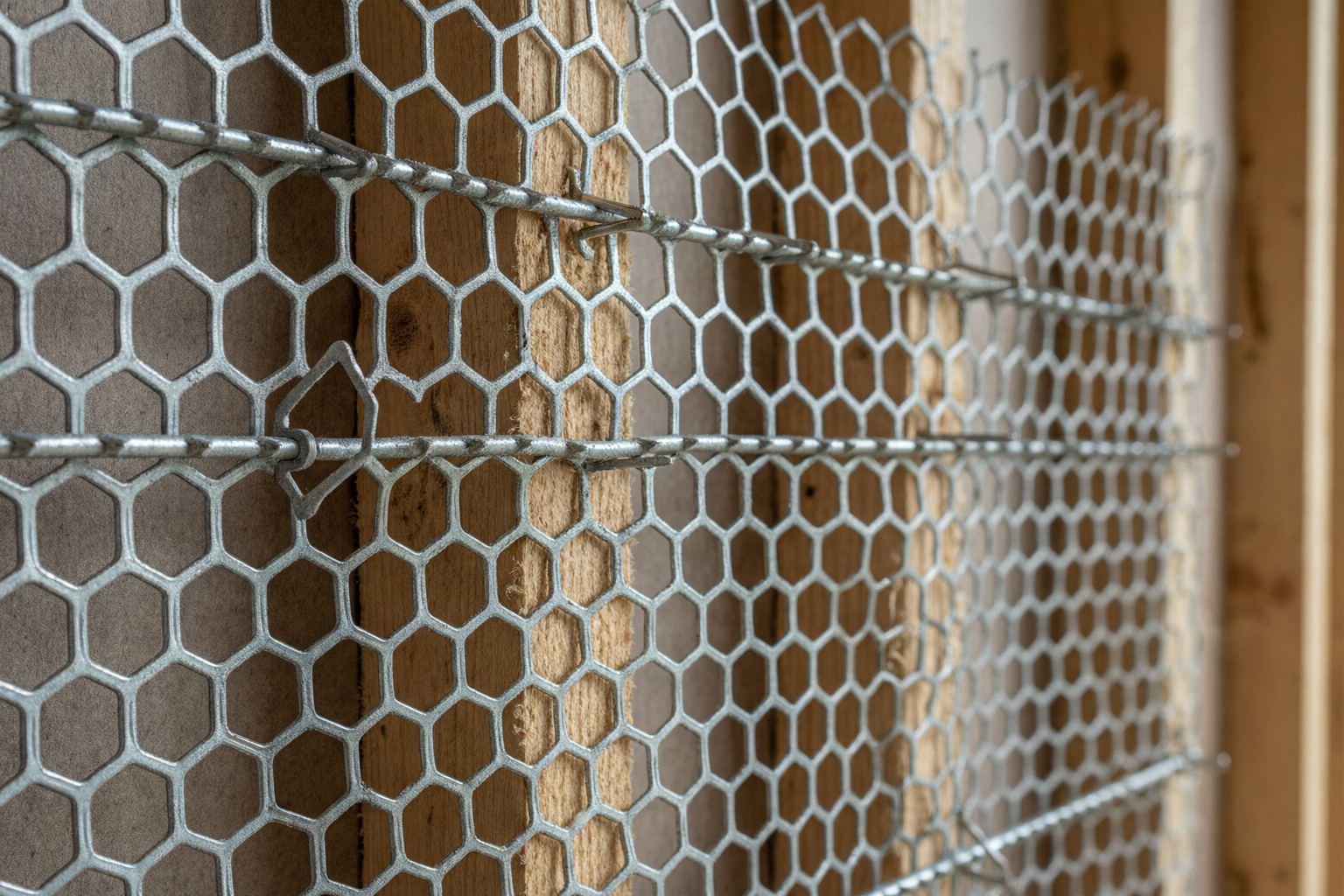
Install stucco wire mesh correctly, lap seams properly, and protect every cut end for a long service life without corrosion or delamination.
Working with Stucco Wire Mesh
Prepare the substrate and weather barrier
Install building paper or house wrap over sheathing, lapped shingle-style so water drains outward. Staple the paper flat before applying any stucco mesh.
Roll and fasten the stucco mesh
Unroll the stucco wire mesh horizontally along the wall, overlapping vertical seams by 2-4 inches. Staple or nail every 6 inches along studs and 6-8 inches in the field.
Self-furring mesh installs with a built-in gap
Self-furring stucco netting automatically stands the mesh 1/4 inch off the substrate. If using flat mesh, install furring nails or dimple washers to create the same gap.
Trim and seal all cut edges
Cut stucco wire mesh with aviation snips along a wire line. Every cut bares steel, so brush zinc-rich paint on cut ends of galvanized stucco mesh to prevent rust bleeding.
Stucco Wire Mesh Packing for Export
Packing keeps rolls round, protects zinc and PVC finishes, and preserves traceability through transit and receiving inspection.
Rolls wrapped and strapped
Each stucco wire mesh roll is compressed, wrapped in waterproof paper and woven bag, and strapped to hold its shape during container transit.
Palletized for container loading
Rolls stand on pallets or pack in bundles sized to the container plan, with edge protection against forklift and cargo shift damage.
Label by specification
Every bundle carries opening, wire diameter, coating class, roll dimensions, quantity, and production lot for full traceability.
Certificates on request
Coating mass certificates per the RFQ standard and mill certificates for the steel wire accompany the shipment when ordered.
Share destination details
State destination port, trade term, and inspection requirements. Pre-shipment inspection by SGS, BV, or TÜV is available on request.
Stucco Wire Mesh in Service
Use scenarios show how mesh pattern, coating, and wire diameter change by project type; they are not customer claims.
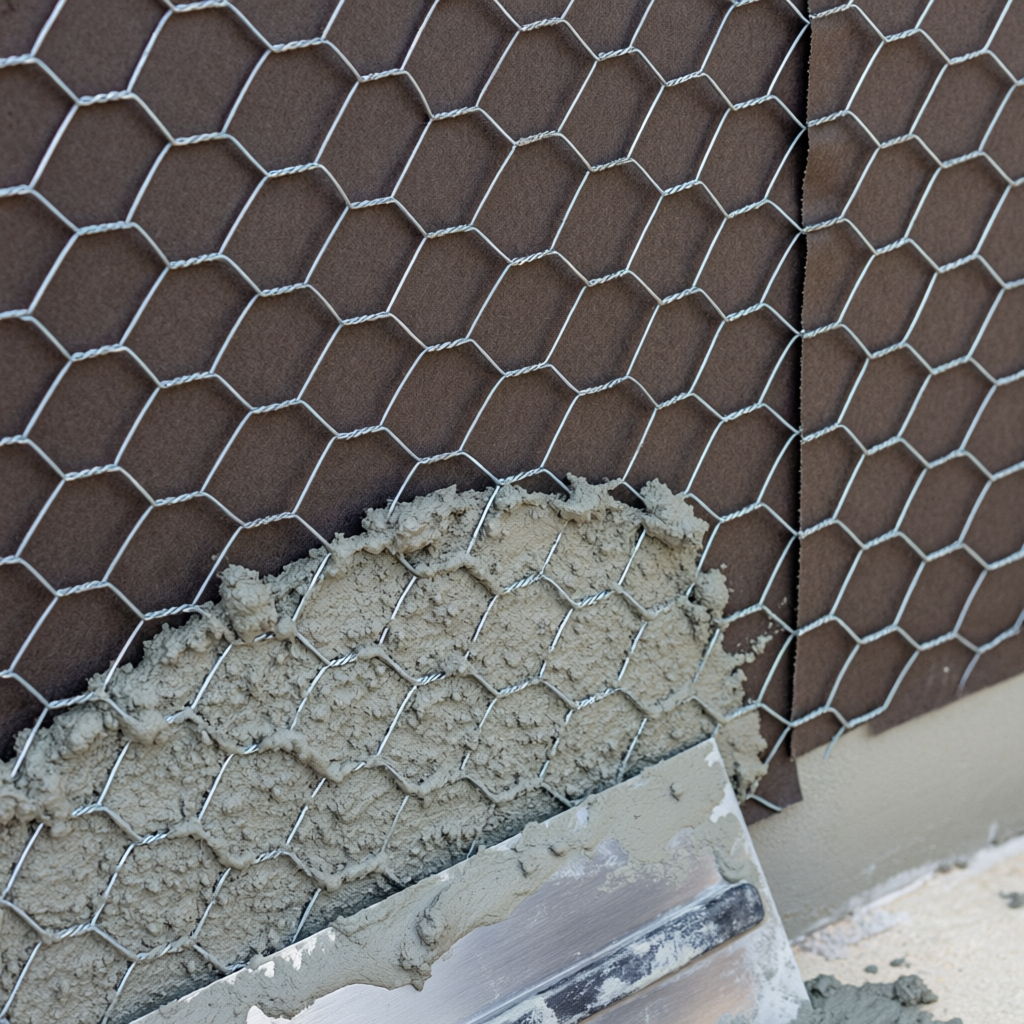
Three-coat exterior stucco wall
Hot-dip galvanized self-furring hexagonal stucco netting in 1 inch opening on 0.9 mm wire, installed horizontally over building paper on a timber frame wall.
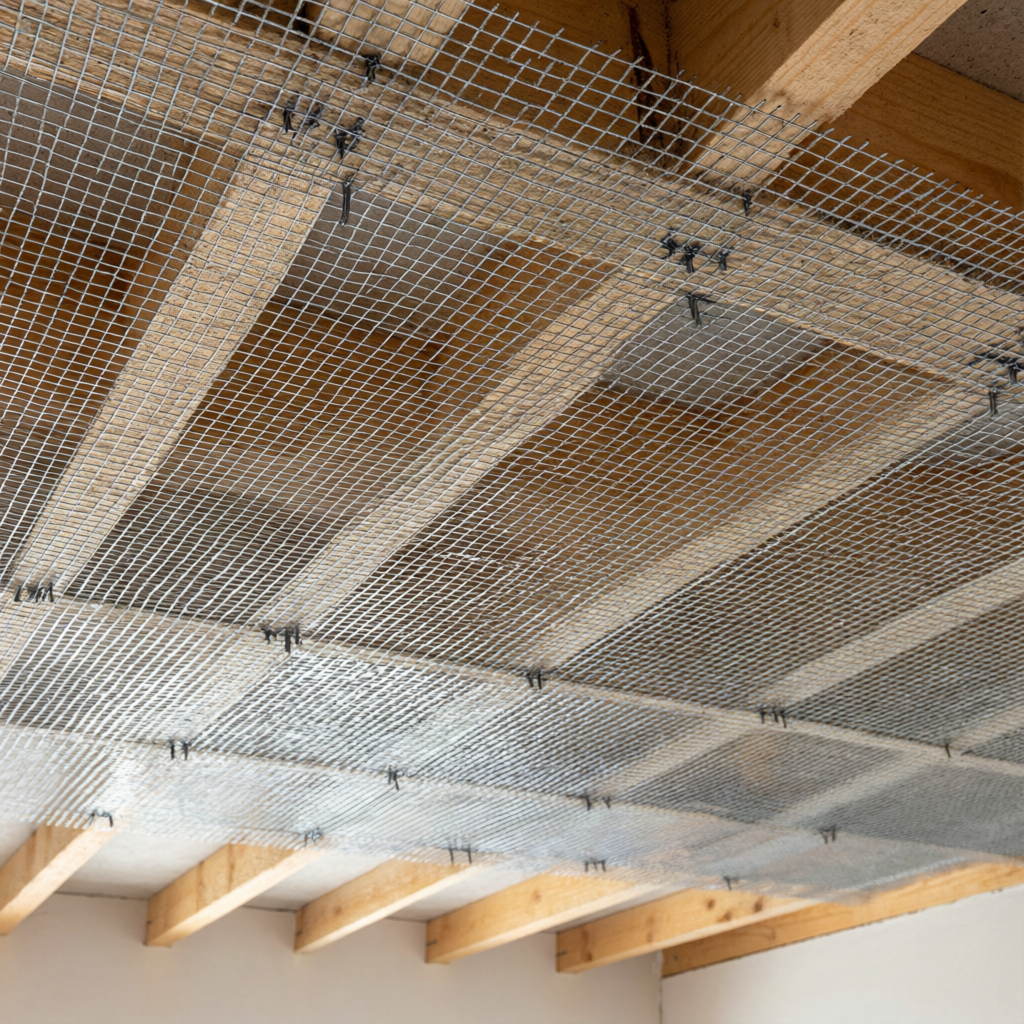
Interior ceiling plaster lath
Light electro galvanized expanded metal lath in 1/2 inch diamond pattern, stapled to ceiling joists to support a smooth plaster finish on a restaurant ceiling.
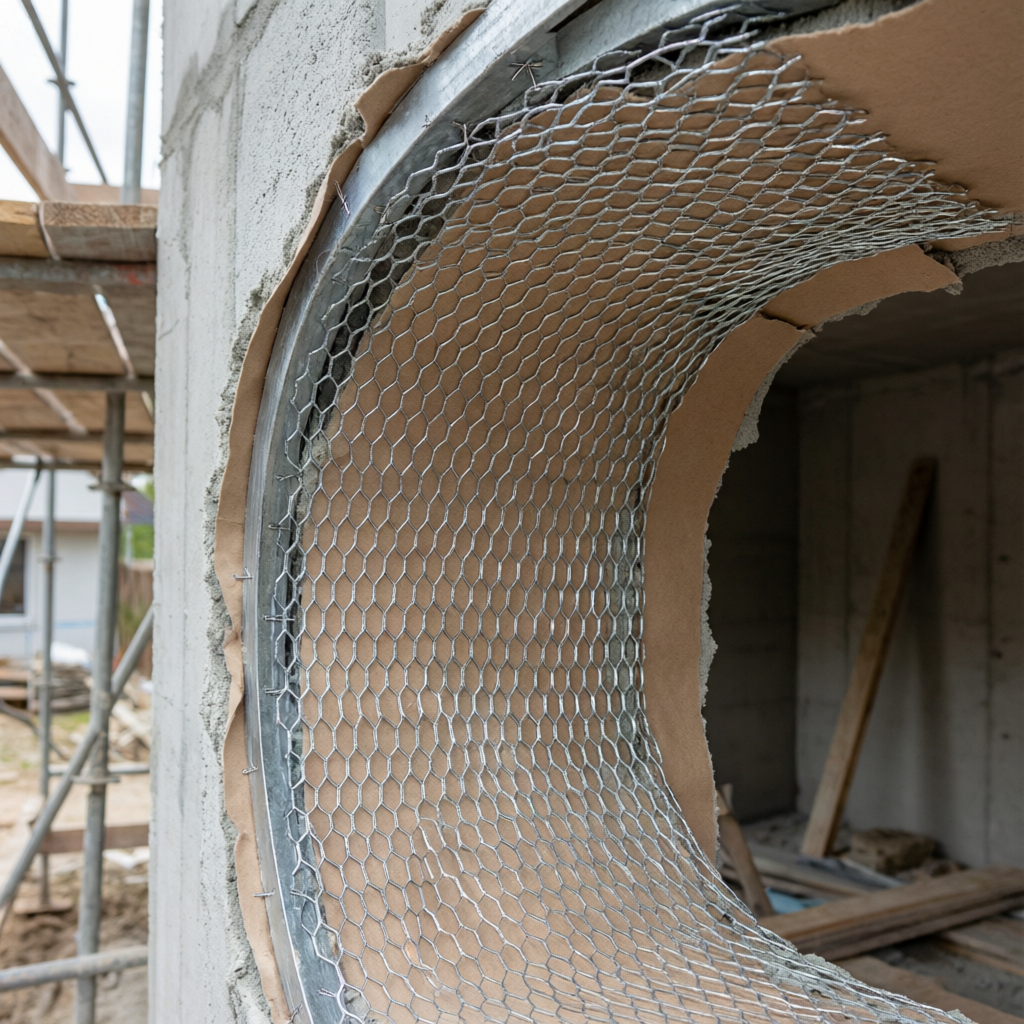
Curved archway render
Flexible hot-dip stucco wire mesh in 1 inch hexagonal opening formed over an arched window opening, keying the scratch and brown coats on the curved surface.
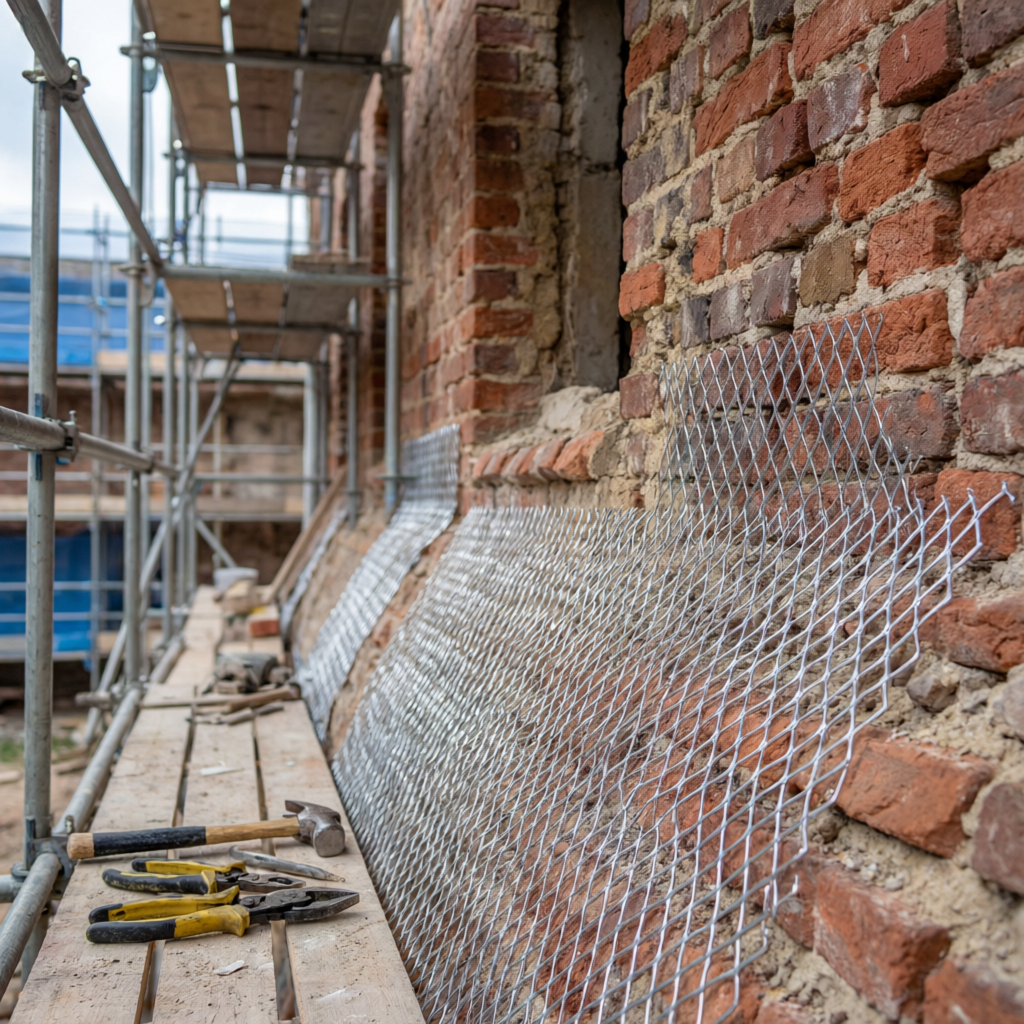
Heritage facade restoration
Stainless steel 304 grade stucco netting replacing corroded original lath on a historic masonry facade, compatible with breathable lime render for listed building consent.
Stucco Wire Mesh Sourcing Resources
Compare stucco mesh products, coating standards, and related categories. Confirm the standard edition and project requirements before ordering.
Last updated: 2026-08-22
Related pages
Reference standards
Stucco Wire Mesh FAQ
Common procurement questions about mesh types, openings, coatings, and ordering stucco wire mesh for plaster and render projects.
Still have questions about stucco wire mesh?
Send your mesh type, opening, wire diameter, coating route, roll size, and quantity. Our sourcing team replies with a specification-led review and factory-matched options.
Request a QuoteRequest Stucco Wire Mesh Pricing
Send mesh pattern, opening, wire diameter, coating type and class, roll dimensions, quantity, application, and destination for a specification-led sourcing review. Our team replies with matched stucco wire mesh options and a factory quote.
Your details stay private. We reply with a matched factory quote — no spam.