1/8 Inch Wire Mesh: Galvanized & Stainless Options
Mice squeezing through 1/4 inch? Tiny insects riding in through vents? Fine seeds and grit clogging your process? 1/8 inch wire mesh with its 3.175 mm square opening is the finer barrier that blocks small pests, small animals, and coarse particles while keeping airflow and visibility. Compare galvanized, PVC-coated, and stainless routes, pin down the wire diameter and roll size you need, and send the full specification for a factory-led quotation.
View SpecificationsHow to Specify 1/8 Inch Wire Mesh Correctly
A 1/8 inch wire mesh request that names only the opening size will not guarantee the mesh actually solves your problem. To stop tiny pests, contain small animals, protect workers, or last outdoors, you also need to specify wire diameter, coating route, form factor, and the environment. Do not rely on gauge or mesh count alone: both vary by material and supplier, and very fine wire has little tolerance for corrosion.
1/8 in × 1/8 in square clear opening (3.175 × 3.175 mm)
Commonly 0.25–0.50 mm; confirm the finished diameter after coating
About 31–25 gauge, but purchase by millimetres rather than gauge alone
Approximately 7 wires per inch each way, measured from wire centre to wire centre
Galvanized steel, PVC-coated galvanized steel, or stainless steel 304 / 316
Rolls, panels, or cut-to-size pieces with the edge and packing specified
Select one or more specifications. Your choices will be included in the quote request.
0 specs selected
| RFQ item | What to state | Why it matters | Example for 1/8 inch wire mesh | |
|---|---|---|---|---|
| Clear opening | Inside-face opening in inch and mm | Prevents confusing opening size with mesh count or wire centre spacing | 1/8 in × 1/8 in (3.175 × 3.175 mm) square opening | |
| Wire diameter | Nominal finished diameter and tolerance | Controls strength, open area, weight, and price — critical on fine wire | 0.40 mm finished wire, measured after zinc coating | |
| Construction | Resistance-welded square mesh | Distinguishes welded mesh from woven wire cloth or screening mesh | Welded wire mesh, uniform square pattern | |
| Material / finish | GBW, GAW, PVC over zinc, 304, or 316 | Sets corrosion resistance and expected service life for fine wires | Hot-dip galvanized after welding for outdoor insect screens | |
| Roll or panel | Width, length, edge condition, and quantity | Determines manufacturing, freight, and handling of fine rolls | 1 m × 30 m roll, trimmed edges, 100 rolls | |
| Application | Environment, pest or particle size, guard, sieve, or enclosure duty | Ensures the mesh is fine enough and the wire withstands real conditions | Mouse and insect exclusion for a store vent |
Common 1/8 Inch Wire Mesh Supply Options
These are common sourcing ranges, not a universal stock commitment. Wire diameter, coating mass, width, roll length, and finished opening tolerance must be confirmed in the quotation.
| Construction and finish | Typical finished wire diameter | Approx. gauge | Common form | Typical use | |
|---|---|---|---|---|---|
| Electro galvanized welded mesh | 0.25–0.40 mm | 31–27 ga | Narrow rolls and 1 m rolls | Fine screens, insect exclusion, crafts, dry-area vent guards | |
| Galvanized wire before welding (GBW) | 0.30–0.45 mm | 30–26 ga | Rolls | Economical fine screens and general barriers where weld exposure is acceptable | |
| Galvanized after welding (GAW) | 0.40–0.55 mm | 27–24 ga | Rolls and cut panels | Outdoor insect and small-rodent barriers, damp service | |
| PVC-coated galvanized mesh | 0.80–1.10 mm overall | Core and jacket specified separately | Green or black rolls | Decorative, agricultural, and longer-life perimeter use | |
| 304 / 316 stainless welded mesh | 0.25–0.45 mm | 31–25 ga | Rolls, panels, and cut pieces | Washdown, food-adjacent, coastal, filtration, and corrosion-sensitive duty |
Weight Guide for 1/8 Inch Wire Mesh
Theoretical bare-steel weight is for planning freight only. It assumes equal wire diameter in both directions; zinc, PVC, aperture tolerance, and roll packing change the shipped weight. Confirm the packing-list weight before booking freight.
| Clear opening | Wire diameter | Theoretical bare-steel weight | Approx. 1 m × 30 m roll | |
|---|---|---|---|---|
| 1/8 in × 1/8 in | 0.25 mm | 0.23 kg/m² | 7 kg | |
| 1/8 in × 1/8 in | 0.40 mm | 0.55 kg/m² | 17 kg | |
| 1/8 in × 1/8 in | 0.55 mm | 1.00 kg/m² | 30 kg |
Where 1/8 Inch Wire Mesh Works Best
The fine 3.175 mm square opening makes 1/8 inch wire mesh the choice when 1/4 inch is not fine enough: it blocks small insects and tiny rodents, screens coarse particles, and contains small animals while still passing air and light. Select wire diameter and finish for the real duty rather than the opening alone.
1/8 Inch Wire Mesh for Mice and Small-Rodent Exclusion
Mice and small rats can sometimes squeeze through coarser openings, so the 3.175 mm clear opening of 1/8 inch wire mesh provides a much higher-confidence barrier around vents, foundations, storerooms, and utility openings — provided edges and frame joints are sealed to the same standard.
1/8 Inch Wire Mesh for Insect and Fly Screening
Flies, wasps, and many small insects get through 1/4 inch mesh. 1/8 inch wire mesh covers vents, windows, and equipment openings with a 3.175 mm barrier that blocks most common flying insects while letting air move freely.
1/8 Inch Wire Mesh for Fine Sieving and Screening
The uniform welded grid grades and retains small seeds, sand, grit, and coarse debris for light sieving, parts containment, and pre-filtration. State particle shape, size, and load so the wire diameter and support match the duty.
1/8 Inch Wire Mesh for Small-Bird and Small-Animal Cages
Finches, parakeets, chicks, and other small animals need bar spacing finer than 1/4 inch to stay contained. 1/8 inch wire mesh panels give them air and visibility while welded intersections resist prying better than woven wire.
1/8 Inch Wire Mesh for Vent and Equipment Guards
Fans, blowers, conveyor nip points, and small cabinet openings can be guarded with fine 1/8 inch welded wire mesh to keep fingers, tools, and debris away while preserving airflow. Evaluate impact, pinch-point, and regulatory safety requirements separately.
1/8 Inch Wire Mesh for Garden and Plant Protection
Form 1/8 inch wire mesh into cages, cloches, or bed covers that keep small birds, insects, and some rodents off seedlings and fruit while letting rain and sun through. Choose GAW, PVC, or stainless when the mesh stays in wet ground or weather.
Choose the Right 1/8 Inch Wire Mesh Finish
The same 1/8 inch opening performs differently once its coating, weld route, and wire grade change. Fine wire has very little metal to lose to corrosion, so begin with the environment and expected life, then compare price.
Electro Galvanized 1/8 Inch Wire Mesh
The budget-friendly choice for dry, protected interiors: a bright zinc layer keeps the price down on light 1/8 inch wire mesh rolls and fine screens. Its weakness is moisture — the thin coating on 0.25–0.40 mm wire wears through quickly, so keep this finish indoors or away from persistent damp.
GBW and GAW 1/8 Inch Wire Mesh
The weld route decides how long fine mesh lasts outdoors. GBW starts with zinc-coated wire, so each welded joint ends up with thinner protection; GAW coats the fabricated mesh after welding, shielding the welds too. For exposed 1/8 inch wire mesh, GAW is usually the safer call because rust tends to begin at the joints.
PVC-Coated 1/8 Inch Wire Mesh
A polymer sleeve over galvanized steel adds colour and a second weather barrier, but on a 3.175 mm opening every layer of coating steals meaningful open space. Order by core wire diameter, finished diameter, jacket thickness, and the true clear opening you need — not by colour alone.
Stainless 1/8 Inch Wire Mesh
304 stainless suits clean or mildly corrosive duty; 316 handles chlorides, salt air, and harsher chemicals. Because 1/8 inch stainless wire mesh is so fine, its corrosion resistance is what lets it survive washdowns, food processing, filtration, and coastal air. Request the grade and a material certificate when traceability matters.
How to Select 1/8 Inch Wire Mesh That Actually Solves Your Problem
Choosing the wrong fine mesh is an expensive mistake — pests keep coming back, small animals slip out, or the wire rusts through within a season. Work backwards from the problem you are solving rather than the product name, then build a complete specification from there.
Start with what you need to stop
Is it mice, very small insects, tiny birds, fingers, or fine particles? The 3.175 mm opening can handle all of these, but the right wire diameter, support spacing, and frame depend on the threat. Describe the pest and the environment, not just the opening size.
Confirm 1/8 inch is the right opening — and write it in millimetres
1/8 inch wire mesh means a 1/8 in × 1/8 in square clear opening equal to 3.175 × 3.175 mm. It sits between 1/4 inch mesh and fine woven screening, so state the clear opening and its tolerance in the RFQ to get comparable quotes.
Pick wire diameter by load and durability, not just price
Cheaper thin wire dents, distorts, and corrodes sooner. A static insect screen may only need 0.25–0.40 mm, while a cage, guard, or anything exposed to impact should step up to 0.45 mm or heavier. Confirm whether the quoted diameter is core wire or the finished coated size.
Choose the finish for where it will live, not where it ships from
With only 0.25–0.50 mm of wire, corrosion protection does the real work. Indoor and dry: electro-galvanized suffices. Outdoor or damp: GAW or PVC-coated. In washdown, food, or coastal settings, step up to 304 or 316 stainless. Skimping on the finish for fine wire simply schedules an early replacement.
Decide how it will be installed before you order
Long continuous runs suit rolls, but they need framing or backing. Pre-cut panels stay flatter inside guards and cages, and formed pieces cut on-site labour. Tell the supplier how you will mount it so edge treatment and dimensional tolerances come out right.
Ask for evidence when failure is costly
When the mesh guards workers, protects food production, or secures a facility, ask for mill certificates, measured opening and wire records, weld strength data, and a pre-shipment inspection. The cost of a rejected batch and re-shipment far exceeds the price of the check.
Mistakes That Make 1/8 Inch Wire Mesh Fail at Its Job
Fine mesh usually fails in service not because the opening was wrong, but because critical details were missing from the purchase order. These are the errors that leave pests getting in anyway, mesh rusting far too early, or installations falling apart.
Ordering by gauge or mesh count alone
A stated 31 gauge or 7 mesh can mean different things to different suppliers. Put the nominal wire diameter in millimetres, write the 3.175 mm clear opening, and make clear whether diameters are core wire or finished coated wire.
Calling it galvanized and finding rust in a season
Electro-galvanized fine wire carries only a thin zinc layer that disappears fast once weather gets involved. If the mesh is going outside or into damp conditions, specify GAW (galvanized after welding) or PVC-coated instead of relying on the word galvanized.
Forgetting that coating shrinks the tiny opening
A 3.175 mm opening does not have much room to spare. A PVC jacket can swallow a meaningful share of that clear space, so if you need a true 1/8 inch opening after coating, state it and allow a larger mesh pitch or a thinner jacket.
Skipping packaging, edge, and support details
Fine rolls flatten and dent easily, and cut panels can leave sharp ends. Confirm core support, waterproof wrapping, roll labels, panel protection, and edge treatment — and remember fine mesh needs closer support spacing once installed.
Benefits of 1/8 Inch Welded Wire Mesh
1/8 inch wire mesh delivers finer exclusion than 1/4 inch while keeping good airflow, visibility, and roll handling. The right material route determines whether those benefits last in the actual environment — especially important for fine wires.
Uniform 1/8 Inch Wire Mesh Openings
Resistance-welded intersections hold a repeatable 3.175 mm grid for fine barriers, screens, cages, and containment.
Finer 1/8 Inch Wire Mesh Exclusion
Blocks many small insects, tiny rodents, and small birds that can defeat 1/4 inch mesh, while still passing air, light, and visibility.
1/8 Inch Wire Mesh Corrosion Routes
Specify zinc, PVC over zinc, 304, or 316 according to cost, moisture, washdown, chloride exposure, and target service life.
Easy-to-Frame 1/8 Inch Wire Mesh
Light 1/8 inch wire mesh can be cut to panels, cages, guards, and small enclosures with suitable tools and safe edge treatment.
Efficient 1/8 Inch Wire Mesh Roll Supply
Standard-width rolls reduce waste for continuous runs; custom lengths and panels can simplify fabrication where repeat cuts are needed.
Predictable 1/8 Inch Wire Mesh Freight
Opening, wire diameter, roll size, and theoretical weight give a practical starting point for container planning and receiving checks.
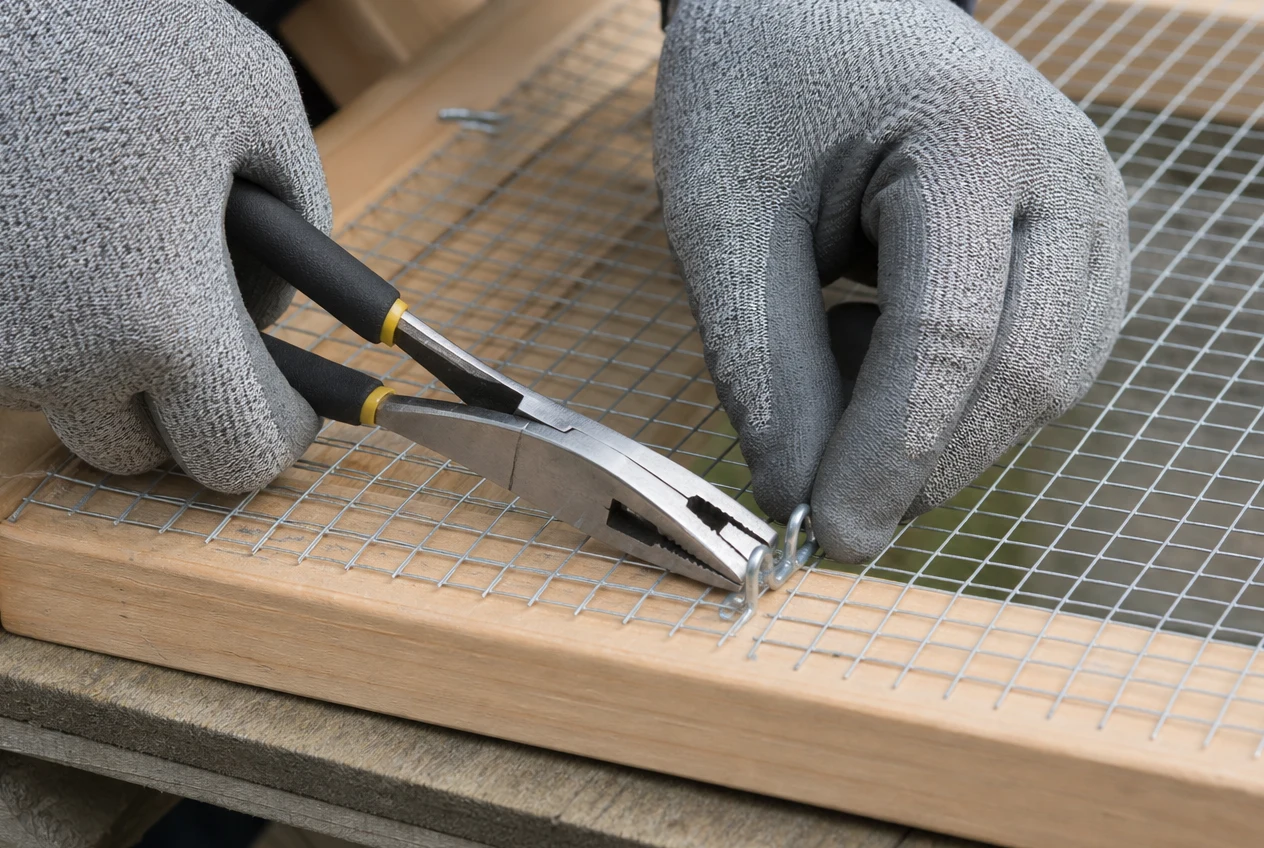
Work to the project safety plan. Treat cut ends as sharp, protect the finish during installation, and use a frame or fasteners suitable for the load and environment. Fine wire bends more easily than heavier mesh — support it accordingly.
Installing 1/8 Inch Wire Mesh
Inspect before cutting
Compare the delivered roll label, opening, wire diameter, finish, width, and quantity against the purchase order. Photograph visible transit damage before unpacking fully — fine rolls are more susceptible to denting.
Plan the support and overlap
Mark the frame, posts, or backing so the mesh is supported at closer spacing than heavier mesh would require. Overlap or bind joints where the application requires a continuous barrier with no gap larger than the opening.
Cut along wire lines and protect edges
Use appropriate cutters, gloves, and eye protection. Trim projecting wire ends or cover them with edging, a frame, or another approved finish — especially important where fine cut ends could be accessible.
Fix without damaging the finish
Use compatible clips, staples, ties, or fasteners. Avoid scraping zinc or PVC unnecessarily; repair exposed galvanized areas only where the project specification permits. Do not over-tension fine wire mesh or it will distort.
Export Packing for 1/8 Inch Wire Mesh
Packing should protect the roll shape, fine wires, coating, labels, and inspection access from the factory through receiving. Give destination and handling details in the RFQ — fine mesh is more vulnerable to transit damage than heavy gauge rolls.
Supported roll cores
Fine rolls can ship on suitable cores with tied ends to reduce crushing and telescoping during handling. A stiffer core may be specified for very fine wire gauges.
Moisture protection
Waterproof paper, plastic film, woven bags, or pallet wrapping can be selected for route and container conditions to protect fine zinc wires from staining in transit.
Clear bundle labels
Mark each roll or pallet with the opening, wire diameter, finish, dimensions, quantity, gross weight, and purchase-order reference for easy receiving and stock identification.
Flat-pack cut panels
Protect stacked panels with separators, edge guards, and pallet or case packing where flatness and finish are important. Thin panels can bend if stacked incorrectly.
Confirm shipping instructions
State destination port, trade term, container plan, required documents, inspection needs, and any customer shipping marks before production is packed.
1/8 Inch Wire Mesh in Practical Use
These examples show how the same fine opening needs a different finish, wire size, and support arrangement by environment. They are specification examples, not customer claims.
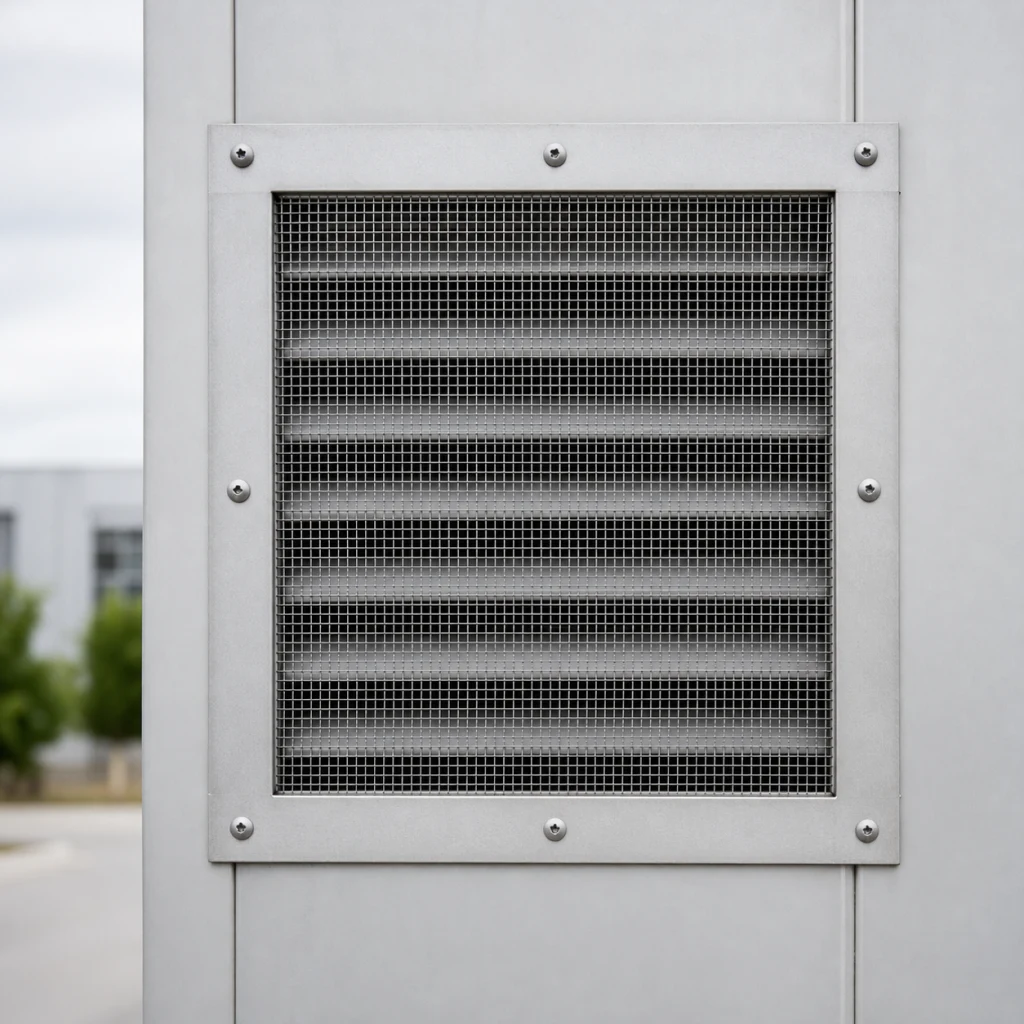
1/8 Inch Wire Mesh Rodent-Proofing Screen
GAW 1/8 inch wire mesh is framed into a vent and foundation screen for a food store, with the fine 3.175 mm opening, sealed edges, and damp-service finish selected to keep mice and small insects out for years.
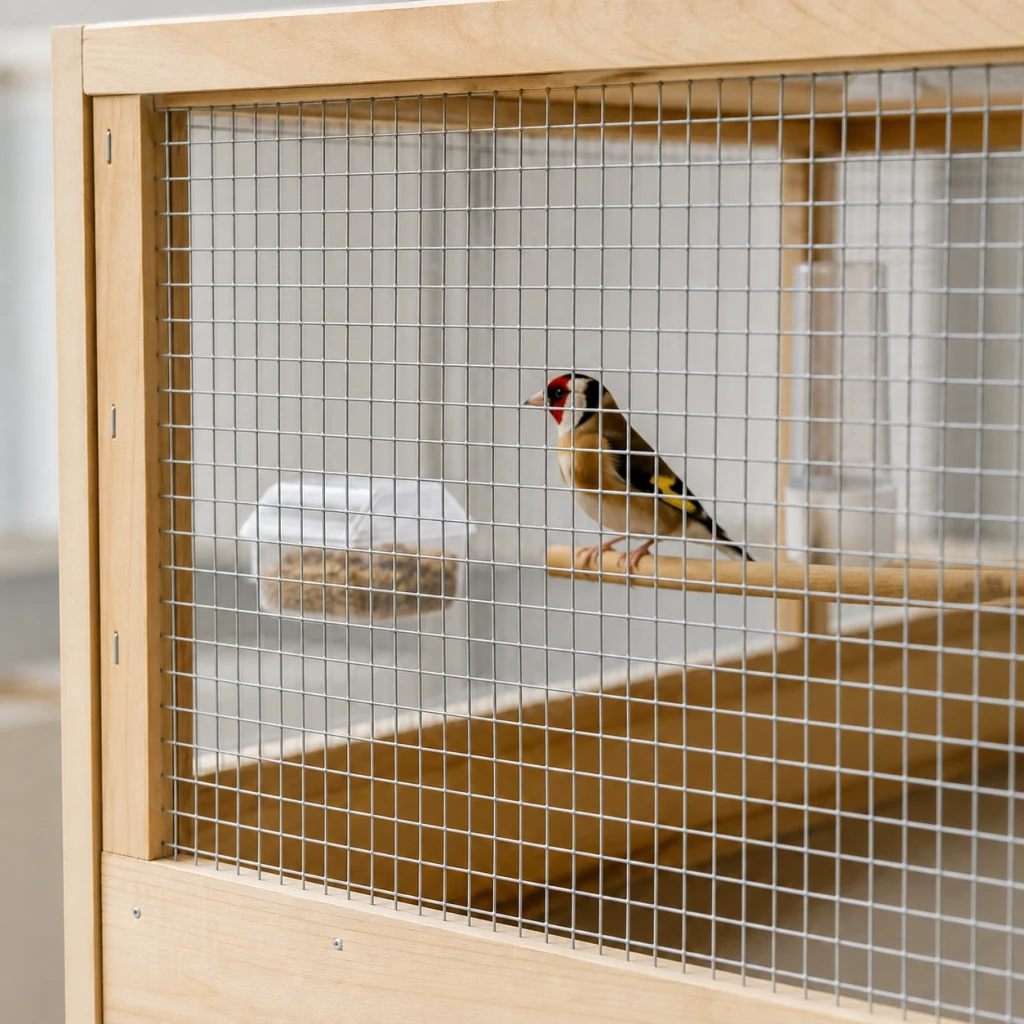
1/8 Inch Wire Mesh Fine Pre-Filter Screen
A framed stainless steel 1/8 inch welded wire mesh acts as a coarse pre-filter in a washdown area, protecting finer downstream filter media from grit and debris while simplifying cleaning.
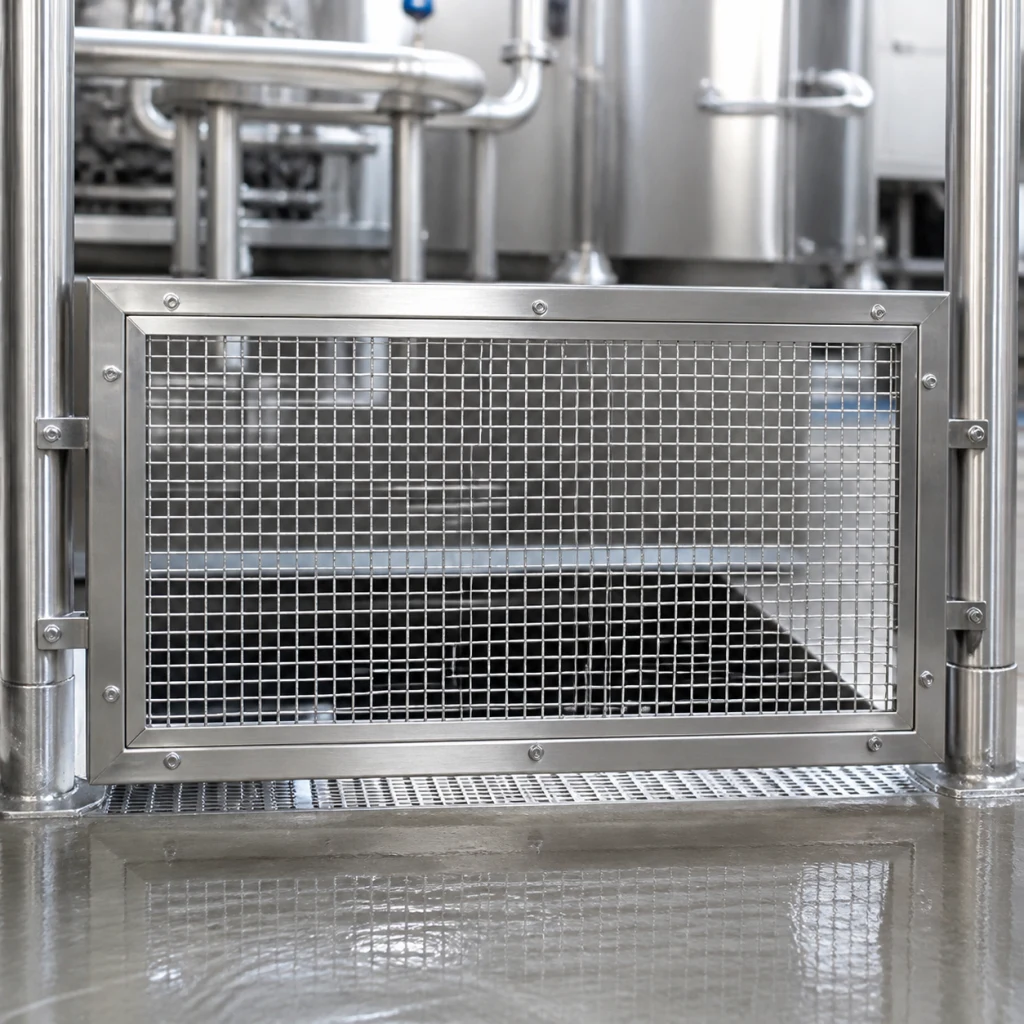
1/8 Inch Wire Mesh Small-Bird Cage Panel
A light galvanized one-eighth inch wire mesh panel forms the sides of a small-bird cage, with species-specific bar spacing confirmed and a stronger perimeter system specified where predator pressure is high.
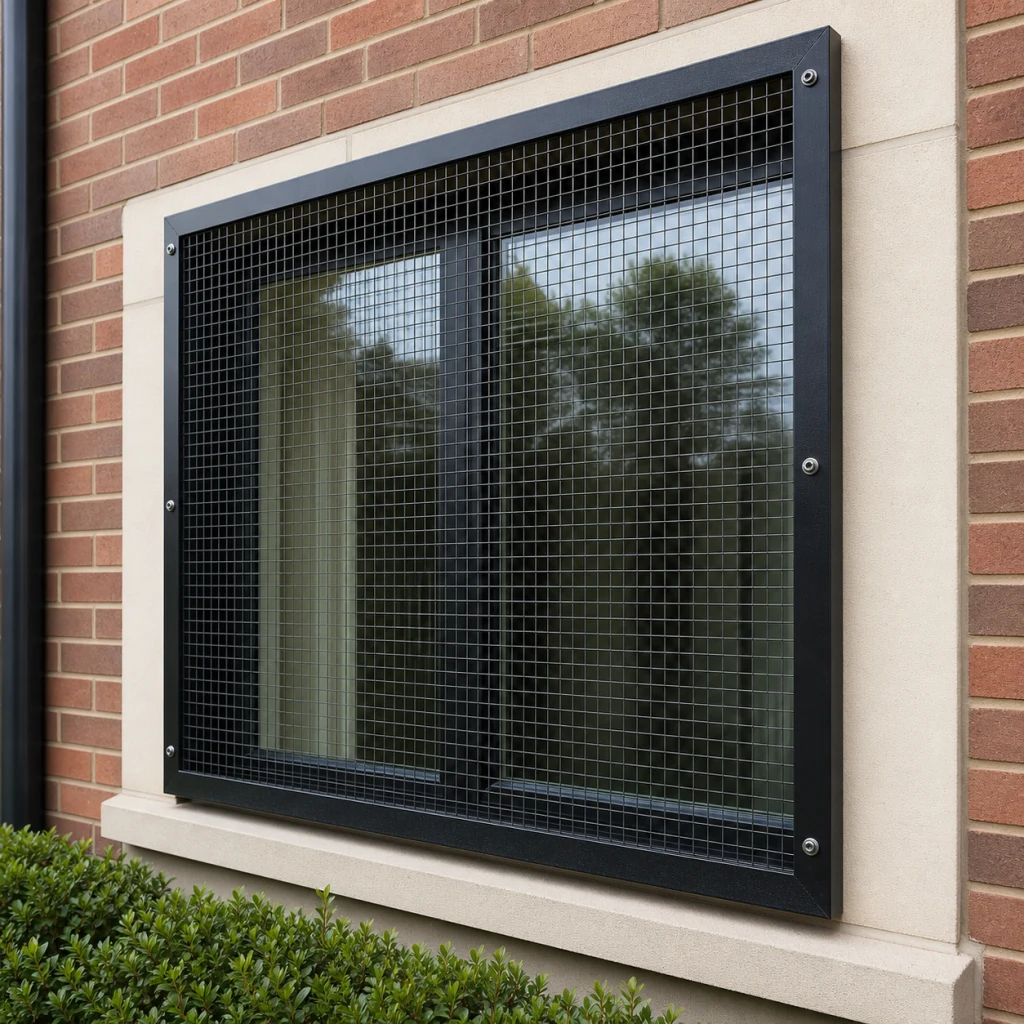
1/8 Inch Wire Mesh Equipment Vent Guard
A framed 1/8 inch welded wire mesh guard keeps fingers and debris away from a fan and cabinet opening while preserving airflow. The final design follows the applicable machine safety assessment.
1/8 Inch Wire Mesh References
Use these related pages and standards to refine the specification. Confirm the applicable edition and project requirements before placing an order.
Last updated: 2026-08-15
Related pages
Reference standards
Questions About 1/8 Inch Wire Mesh
Common questions about opening size, gauge, coatings, applications, and ordering one-eighth-inch welded wire mesh.
Need help specifying 1/8 inch wire mesh?
Send the opening, wire diameter, finish, dimensions, quantity, application, and destination. We will return a specification-led sourcing response.
Request a QuoteRequest 1/8 Inch Wire Mesh Pricing
Send your 3.175 mm opening, wire diameter, coating or stainless grade, roll or panel size, quantity, application, destination, and target delivery date for a specification-led quote.
Your details stay private. We reply with a matched factory quote — no spam.