Wedge Wire Screen Supplier: Panels, Cylinders & Sieve Bends
Source wedge wire screen panels, cylinders and sieve bends. Specify slot opening, material, flow direction and dimensions. Send drawings for a quote.
View SpecificationsSpecify the Slot, Profile and Support Structure
A wedge wire screen uses parallel profile wires welded to support rods to form continuous slots. The wedge-shaped profile creates an opening that widens below the screening face. Specify slot width directly rather than a woven mesh count. The manufacturer technical references below explain the construction; the final supply specification requires drawing and application review.
Nominal clear slot in mm or microns, with required acceptance limits
Required grade, process medium, temperature and cleaning conditions
Screening wire width × height and profile shape, or the original drawing reference
Rod section, pitch, unsupported span and design load
Panel length × width, cylinder diameter × length, or sieve-bend radius and arc
Select one or more specifications. Your choices will be included in the quote request.
0 specs selected
| Specification | Include in your RFQ | Why it matters | Confirmation required | |
|---|---|---|---|---|
| Slot opening | Nominal slot width and minimum/maximum limits | Defines the narrowest opening at the screening face | Agree measurement locations and the acceptance method. | |
| Screen form | Flat panel, cylinder, sieve bend or basket | Matches the screening surface to the equipment | Provide a drawing, quantity and item reference. | |
| Material grade | Grade for wires, supports and frame | Suitability depends on medium and operating conditions | Include chemical exposure, design temperature and required material documentation. | |
| Profile wire size | Width × height and cross-section | Changes face geometry and theoretical open area | Specify the profile separately from slot width. | |
| Support rods | Section, pitch and orientation | Influences stiffness and usable open area | Include unsupported span, pressure differential and mechanical contact loads. | |
| Finished dimensions | Panel size, tube diameter and length, or bend radius and arc | Controls installation fit | State tolerances and whether diameter is inside or outside. | |
| Flow and slot direction | Flow across the surface and through the screen | Determines the appropriate screening face and orientation | For cylinders, state inside-to-outside or outside-to-inside flow. | |
| Mounting and connections | Frame, edge bars, clamps, end rings or flanges | Prevents equipment interface mismatch | Reference the mounting drawing and connection dimensions. | |
| Inspection and packing | Slot checks, dimensions, weld inspection and packing requirements | Defines release and receiving checks | Confirm records, identification and packing before ordering. |
Match the Screen to the Process
These are typical wedge wire applications, not a statement of project approval or guaranteed performance. Selection depends on the feed, separation task, loads and installation.
Mineral dewatering
Flat panels and sieve bends are used in slurry drainage and solids separation. Specify feed characteristics, wear conditions and supporting equipment.
Water treatment
Cylinders and panels can serve as screening surfaces in water systems. Share flow, solids, pressure differential and cleaning requirements.
Resin and media retention
Continuous-slot screens retain process media while allowing fluid passage. Confirm particle-size distribution and the smallest particles that must be retained.
Process filtration
Screen cylinders and baskets are used in straining and separation assemblies. Specify flow direction, connections and maintenance access.
Screening decks
Supported panels provide a rigid screening surface. Give the span, mounting points, vibration and contact from scrapers or brushes.
Wastewater screening
Wedge wire can form the screening surface of drum and other separation equipment. Fibrous or sticky feed requires attention to orientation and cleaning.
Wedge Wire Screen Forms to Compare
Define the required form before comparing quotations. Slot width alone does not establish the finished product, supports or installation fit.
Flat screen panels
Parallel profile wires on supporting rods, with edge bars or a frame where required. Specify screening face, panel size, rod pitch and fixing details.
Screen cylinders and tubes
Cylindrical continuous-slot surfaces for filtration and retention duties. Specify diameter, length, slot orientation, flow direction and end connections.
Sieve bend screens
Curved screening surfaces used for dewatering and classification. Provide radius, arc or chord dimensions, feed direction and clamp details.
Screen baskets
Formed screening surfaces for equipment-specific assemblies. Share the original drawing, rim and base dimensions, supports and operating loads.
How to Select a Wedge Wire Screen
Start with what the screen must retain and the equipment it must fit. Resolve geometry, operating conditions and acceptance criteria before comparing prices.
Define the separation task
Send particle-size distribution, particle shape and the desired retained fraction. A long slot and a square woven opening of the same nominal width do not necessarily retain the same particles.
Specify slot width and limits
State nominal opening, units and acceptance limits. Do not assume that a quoted nominal slot includes your required tolerance.
Resolve flow and screening face
Show how feed travels over the surface and through it. Confirm the narrow slot face and the direction in which the opening widens, especially for cylinders.
Balance open area and support
For a uniform profile-wire surface, theoretical face open area is slot width ÷ (slot width + wire face width) × 100%. Rods, frames and blocked edges reduce usable open area; flow capacity also depends on the process.
Check material and cleaning conditions
Provide the required grade, medium, concentration, temperature and cleaning chemicals. A stainless steel grade alone does not establish suitability for every service environment.
Confirm fit and inspection
Provide mounting tolerances, loads and inspection requirements. Use the original replacement specification where possible rather than treating a worn opening as the target slot.
What the Continuous-Slot Design Offers
The manufacturer references below explain the geometry and typical uses. Actual results depend on slot selection, support design, feed and maintenance.
A defined screening opening
Slot width describes the narrow passage at the screening face. Include tolerances and inspection methods to make that specification verifiable.
Relief behind the screening face
The tapered profile provides a widening passage that can reduce particle wedging. Sticky deposits and fibrous material can still cause blinding.
Comparable face geometry
Slot and wire face width provide a basis for comparing theoretical open area. Compare supported assemblies rather than relying on the face percentage alone.
A supported screening surface
Profile wires and rods form a welded structure. Pitch, span and frame design must be assessed against the actual loads.
Several equipment forms
Panels, cylinders, curved screens and baskets address different layouts. The mounting drawing determines whether a form is suitable.
Explicit acceptance criteria
Naming slot checks, material evidence, weld inspection and dimensions gives buyers a clearer basis for reviewing quotations.
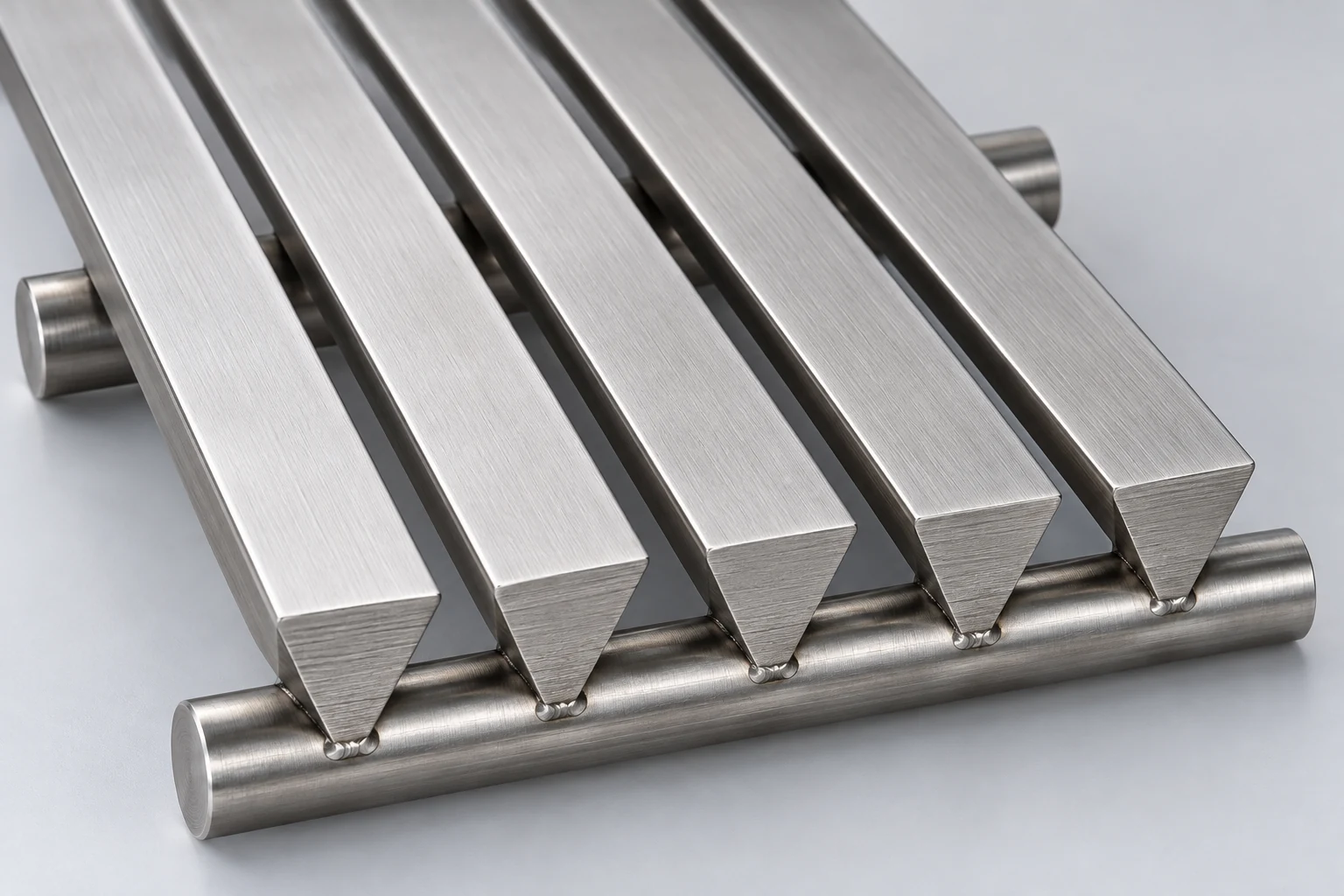
AI-generated illustration of profile wires, continuous slots and supporting rods. It is not a manufacturing drawing or an order-specific photograph. Follow approved equipment drawings for installation.
Confirm the Screening Face, Supports and Interfaces
Compare the delivered item with the order
Check identification, dimensions, slot measurements and the agreed material and inspection documents before installation.
Verify the screening face and flow
Match the narrow slot face, orientation and flow to the approved drawing. Check cylinder inside-to-outside or outside-to-inside flow explicitly.
Check supports and mounting interfaces
Confirm frames, support positions, clamps, flange dimensions and specified clearances. Resolve mismatches before fitting the screen.
Check condition and maintenance access
Inspect for transport distortion, damaged wires and obstructed slots. Confirm access for the equipment's specified cleaning and replacement procedure.
Protect Slots, Edges and Finished Geometry
Agree packing for each screen form and destination. These points are an RFQ checklist, not a confirmed packing specification.
Support the finished shape
Request packing that supports panels flat and prevents cylinders or curved screens from rolling, bending or being crushed.
Protect the screening surface
Specify separators and edge protection to prevent wire damage, contact marks and debris entering the slots.
Separate and identify items
Label each screen by drawing reference, material, slot specification and quantity. Keep different specifications distinguishable at receiving.
Confirm handling and shipment details
Provide destination, handling limits and shipment requirements so cases, pallets and lifting provisions can be reviewed with the quotation.
Wedge Wire Screen Configuration Examples
These AI-generated product illustrations show screen forms for specification discussions. They are not customer cases, completed deliveries or confirmed stock items.
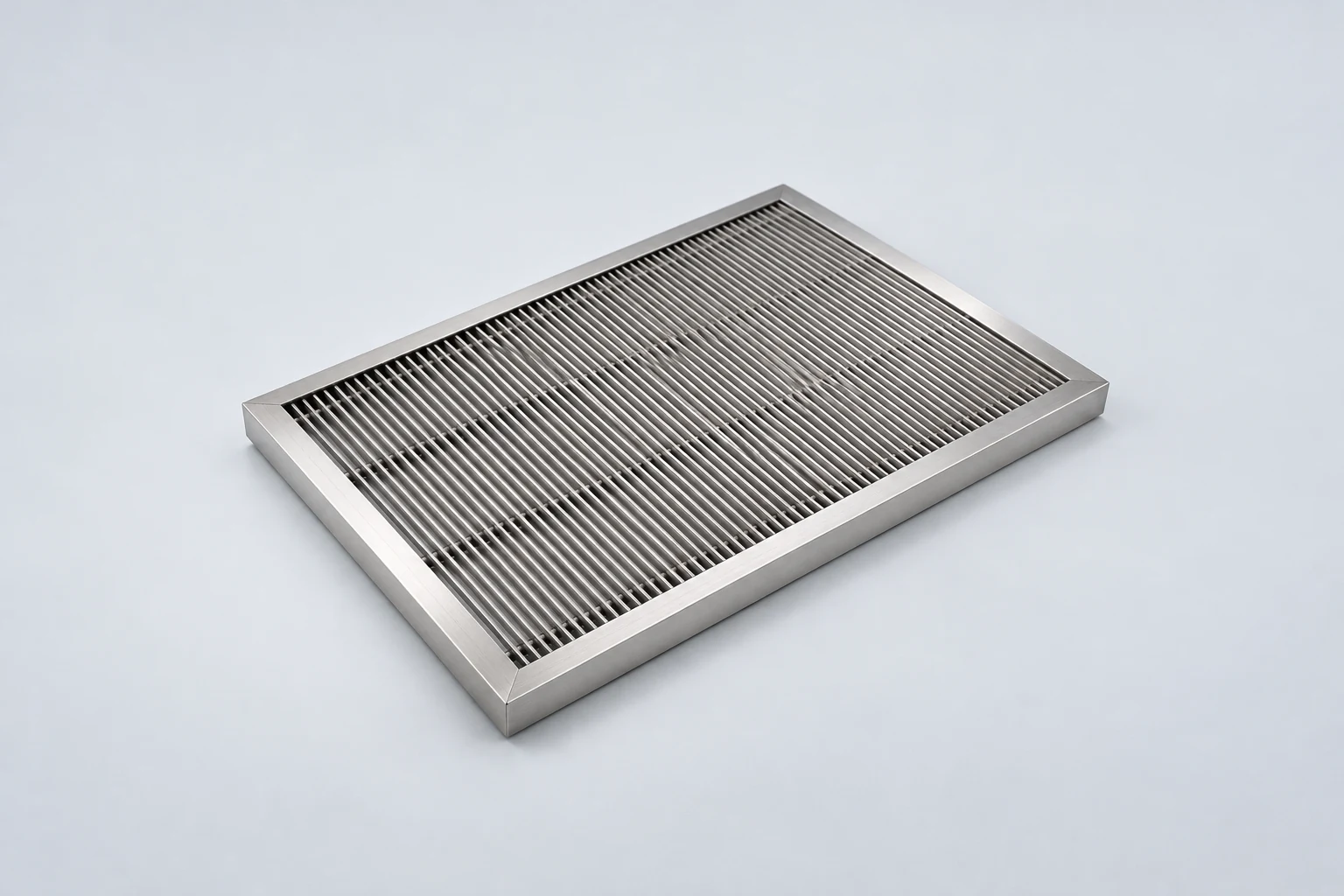
Flat panel illustration
A supported continuous-slot panel. Define dimensions, slot width, rod pitch, frame and fixing points.
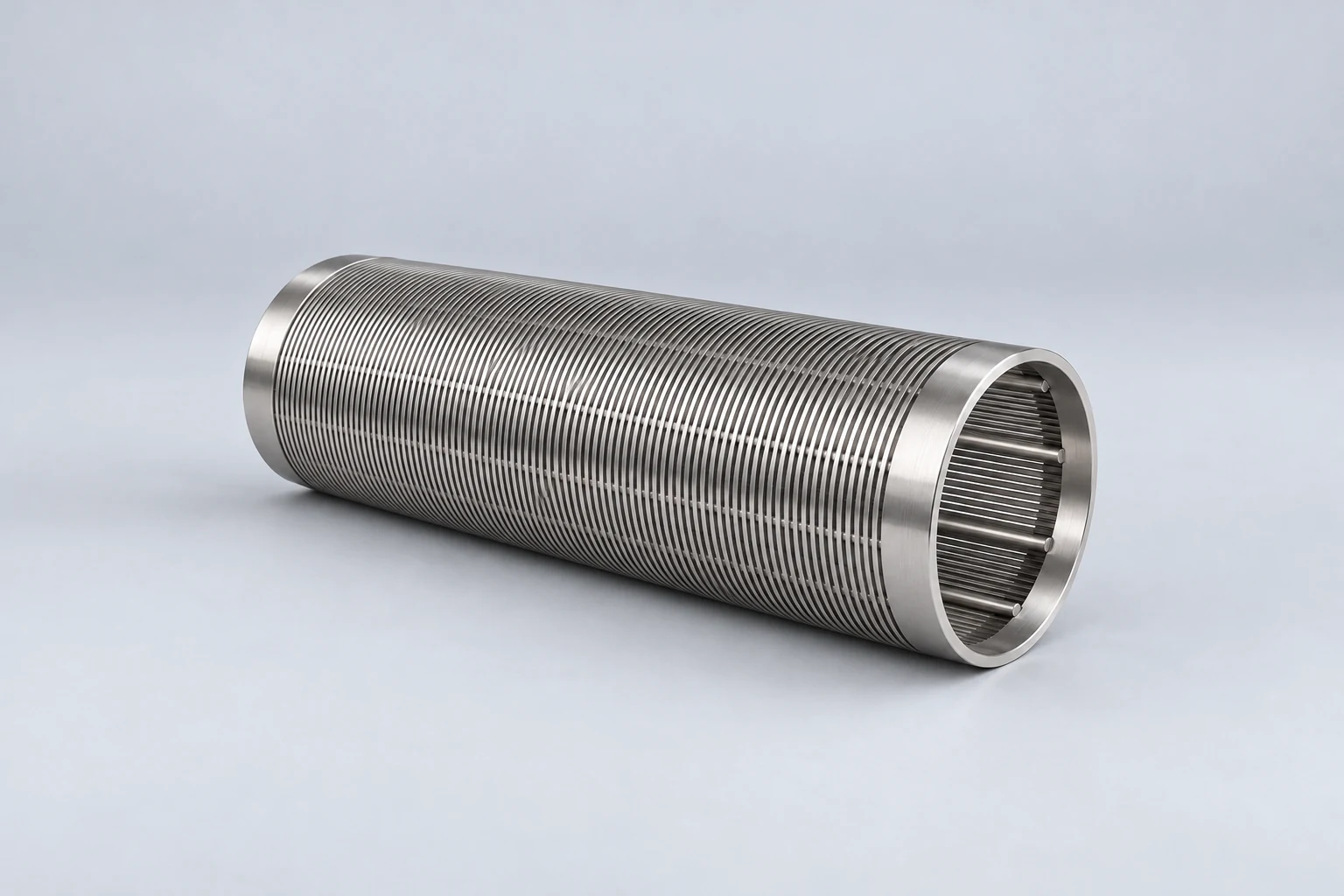
Screen cylinder illustration
A cylindrical surface with end rings. Define diameter, length, flow direction, slot orientation and connections.
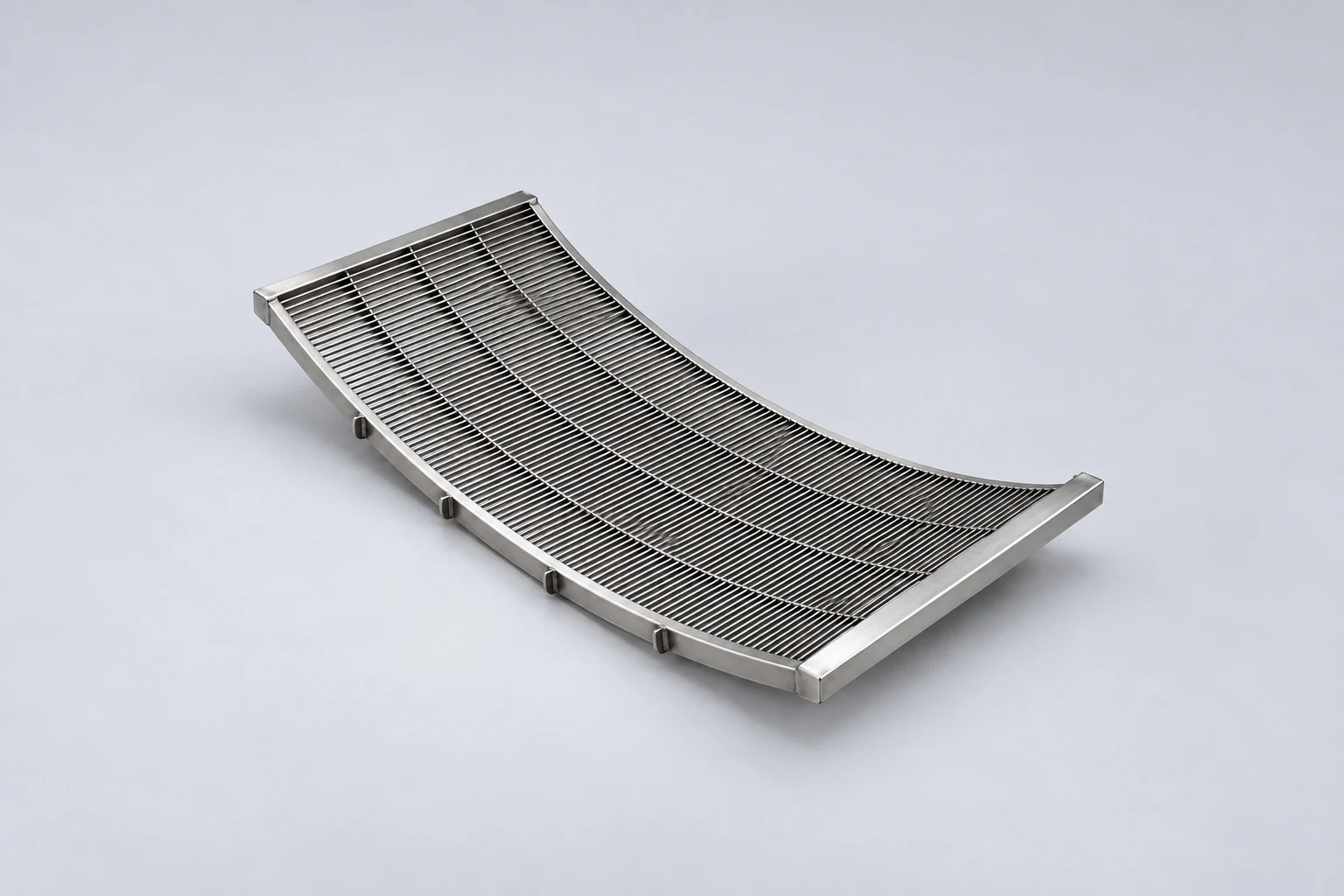
Sieve bend illustration
A curved screening panel. Define radius and arc or chord dimensions, slot direction, feed arrangement and clamps.
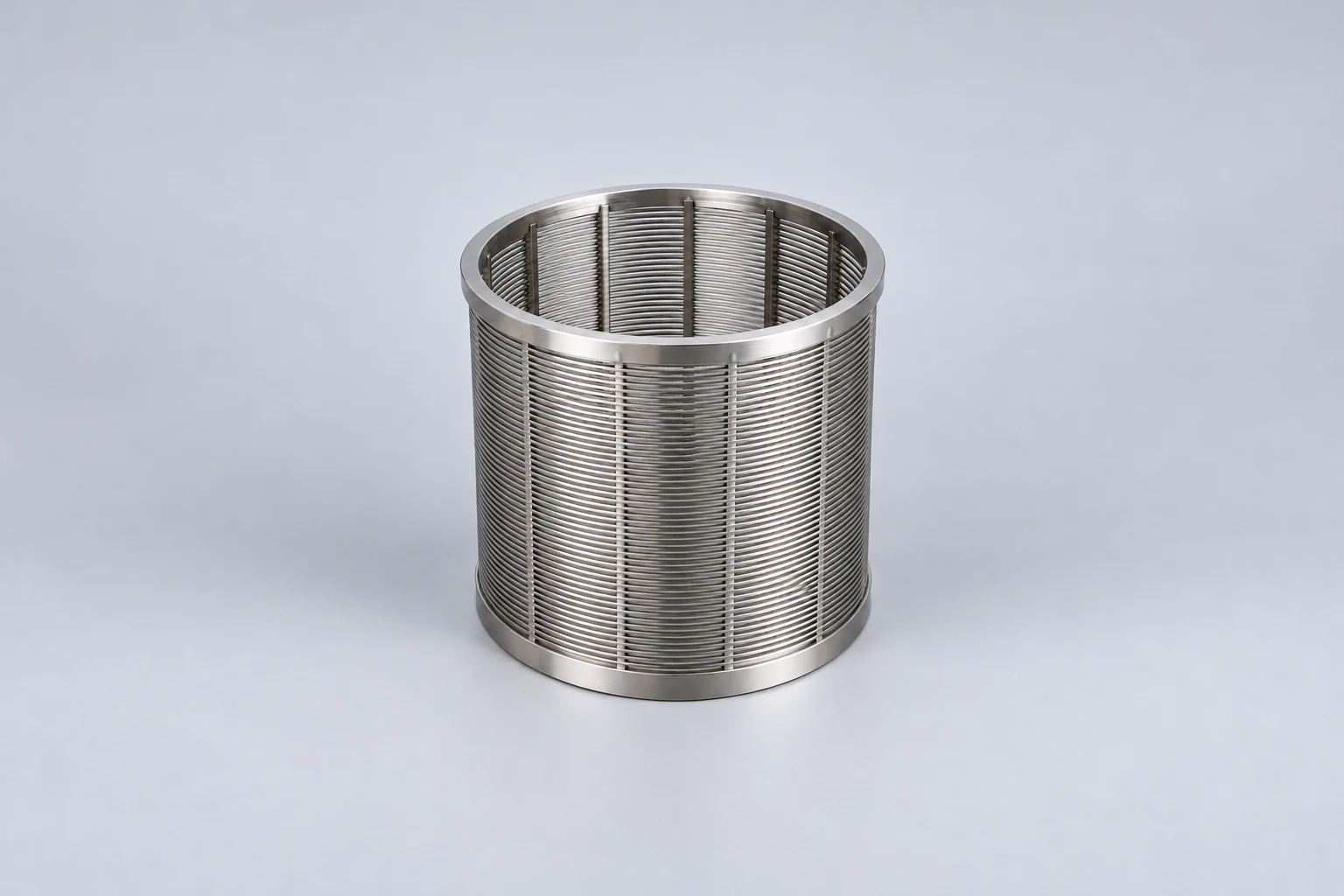
Screen basket illustration
A formed basket with supports. Define rim, base, mounting details and equipment-specific operating loads.
Compare Screen Constructions and Prepare Your RFQ
External manufacturer resources explain construction and application principles. Their product ranges, proprietary designs and performance claims are not WireMesh Sourcing supply commitments or endorsements.
Content last reviewed: 2026-10-10
Related sourcing guides
Manufacturer technical references
Wedge Wire Screen Questions
Resolve the specification and installation details before requesting a production quotation.
Need help defining the screen specification?
Send your drawing or describe the process, required separation and mounting dimensions. Identify unknown slot or support details for review.
Request a QuoteSend Your Wedge Wire Screen Drawing and Requirements
Share slot width and tolerance, screen form, material, dimensions, flow direction, supports, mounting details, quantity and destination for a specification-led sourcing review.
Your details stay private. We reply with a matched factory quote — no spam.