Sintered Wire Mesh: Sheets, Discs & Filters
Source sintered wire mesh sheets, discs and filter elements to your drawing. Define alloy, layer construction, micron rating criteria and operating duty.
View SpecificationsWhat Is Sintered Wire Mesh?
Sintered wire mesh is a porous metal filter medium made by bonding woven wire meshes at their contact points through sintering. In a multilayer laminate, different meshes provide particle retention, protection, flow distribution and support. A common five-layer arrangement uses a protective layer, a filtration layer, a distribution layer and two support layers; the actual sequence must be specified. The manufacturer references below explain this construction. Layer count alone does not establish a filtration rating or pressure limit.
Sinter-bonded woven mesh; state each layer, its sequence and the flow direction
Specify the stainless steel or alloy grade, including 316L where required; confirm suitability and availability
Target particle size in microns, nominal or absolute definition, efficiency and test conditions
Sheet, cut disc, cylinder or assembled filter element, subject to drawing review
Fluid, flow, viscosity, temperature, pressure and permitted differential pressure
Select one or more specifications. Your choices will be included in the quote request.
0 specs selected
| Specification | What to provide | What to confirm | RFQ or acceptance evidence | |
|---|---|---|---|---|
| Layer construction | Mesh specification and order of every layer; filtration face and flow direction | Whether the requested part is sinter-bonded, rather than a loose or spot-welded mesh pack | Agreed laminate description, finished thickness and construction drawing | |
| Material grade | Required stainless steel or alloy grade and contact environment | Compatibility with the fluid, cleaning chemistry and operating temperature | Material documentation and any agreed verification scope | |
| Filtration performance | Target retention in microns, rating definition, efficiency and test fluid or particles | How performance is measured; do not equate a mesh count or bubble point with a guaranteed retention rating | Supplier test method, results and agreed acceptance criteria | |
| Flow and pressure drop | Required flow, fluid viscosity or gas conditions, effective filtration area and clean pressure-drop allowance | Pressure drop under the stated conditions and the effect of the chosen media and element geometry | Flow or permeability data with test conditions; ISO 4022 where applicable and agreed | |
| Operating limits | Working temperature, system pressure, forward and reverse differential pressure, and cycling conditions | Limits of the complete element, including supports, joints and seals; not just the metal medium | Application review and agreed supplier operating limits | |
| Finished dimensions | Drawing units (in or mm); sheet width and length; disc OD, ID and thickness; or element OD, ID and overall length | Dimensional tolerances, flatness, edge condition and usable filtration area | Dimensioned drawing and inspection plan | |
| Connections and assembly | End fittings, threads or flanges, sealing interface, joining requirements and support arrangement | Fit in the housing, flow orientation and compatibility of media, fittings and seals | Assembly drawing and agreed integrity or leak-test requirements | |
| Cleaning and reuse | Contaminant type, proposed cleaning method, backwash conditions and replacement criteria | Whether the element construction and retained material allow the proposed method | Supplier-approved cleaning guidance; do not assume unlimited reuse | |
| Quantity and documentation | Quantity, sample needs, drawing revision, destination and required documents | Quotation scope, inspection records, packing requirements and delivery proposal | Itemized quotation and mutually agreed release documents |
Where Buyers Consider Sintered Mesh
These are application categories for specification review, not confirmation that one laminate suits every process. Match the media and finished element to the actual duty.
Process liquid filtration
For process-fluid duties, provide chemistry, solids, viscosity, flow and allowable pressure drop. Material compatibility and retention performance need separate confirmation.
Backwash filter elements
For systems designed to reverse flow during cleaning, identify both forward and reverse differential pressure and the support arrangement. Backwash capability follows the complete element design.
Polymer and resin filtration
State melt or resin properties, operating temperature, viscosity and contamination load. Compare suitable wire mesh, fiber and powder media against the same process requirements.
Gas filtration and distribution
Provide gas composition, flow conditions and required distribution or retention function. For distribution duties, permeability and geometry may be more relevant than a particle rating.
Hydraulic and lubrication systems
Identify the fluid, cleanliness requirement, housing dimensions and service conditions. A visually similar mesh element does not establish replacement equivalence.
OEM and replacement components
Send the drawing revision, element interfaces, existing media specification and acceptance criteria. Dimensional fit and filtration performance must both be reviewed.
Sheets, Discs, Cylinders and Filter Cartridges
These forms describe the part to be sourced. Availability, dimensions, laminate structure and assembly scope are confirmed during quotation.
Sintered wire mesh sheets
Rigid porous laminate sheets for cutting or further fabrication. Specify length, width, finished thickness, filtration face, flatness and edge condition.
Sintered mesh filter discs
Round, annular or drawing-defined flat parts. Identify outside and inside diameters, thickness, edge treatment, mounting support and flow orientation.
Sintered mesh cylinders
Hollow cylindrical media components. Define diameters, length, seam requirements and supports; distinguish a media sleeve from a complete sealed element.
Sintered wire mesh filter cartridges
Finished elements combining mesh media with fittings and any specified supports. Provide connection drawings, sealing details and complete-element performance requirements.
Select the Filtration Duty Before the Layer Count
Use the same retention, flow, pressure-drop and cleaning criteria when comparing filter media. A five-layer label, a material grade or a micron number is not a complete specification.
Define the retention claim
Specify what particles must be retained, the required efficiency and the conditions used to measure it. Ask how the supplier defines nominal or absolute ratings rather than assuming the terms are interchangeable.
Balance retention with flow
Provide fluid properties, flow and filtration area alongside the retention target. Request pressure-drop evidence under those conditions, not an isolated micron rating.
Review the full assembly
Confirm media, support, joints, fittings, seals and flow direction together. Limits stated for a sheet do not automatically apply to a fabricated cartridge or its housing.
Sintered mesh versus woven wire cloth
Woven cloth defines the starting wire and weave structure. Sintering bonds contact points and, in a laminate, joins the layers. Choose between them according to support, fabrication and filtration needs; do not assume either is universally better.
Sintered mesh versus an unsintered screen pack
A loose, rimmed or spot-welded stack is a screen pack unless its meshes have been bonded by sintering. State the actual joining method and layer order when comparing quotations.
Sintered mesh versus metal fiber felt
Mesh uses woven wires; fiber felt uses a web of metal fibers bonded through sintering. These are different pore structures. The Bekaert reference below explains fiber media; compare the proposed performance and cleaning method for your duty.
Sintered mesh versus sintered powder
Powder-based media bond metal particles rather than woven wires. Confirm the material structure explicitly when a quotation says only 'sintered metal filter'. Similar names do not establish equivalent retention, permeability or element strength.
What a Defined Sintered Mesh Specification Adds
Manufacturer references describe the bonded construction and its fabrication options. Performance benefits still depend on the selected laminate, the finished part and the process.
Bonded layer structure
Sintering joins contact points to form an integrated medium. Define the actual laminate so retention and support functions can be reviewed together.
Protection and support by design
A multilayer arrangement can combine a fine filter layer with protection, distribution and support layers. Their roles and sequence must be agreed rather than inferred from layer count.
Cleaning considered early
Suitable constructions may be cleaned and reused. Identify contaminant removal, cleaning compatibility and inspection requirements before assuming a reusable element will suit the process.
Multiple fabrication forms
Bonded mesh can be fabricated into flat and cylindrical components. A dimensioned drawing makes the requested form and assembly scope explicit.
Comparable quotations
One specification for media, dimensions, duty and test evidence lets buyers compare proposals against the same requirements instead of matching product names alone.
Defined receiving checks
Agreed drawing revisions, material records, inspection scope and packing marks make it clearer what must be checked when an order arrives.
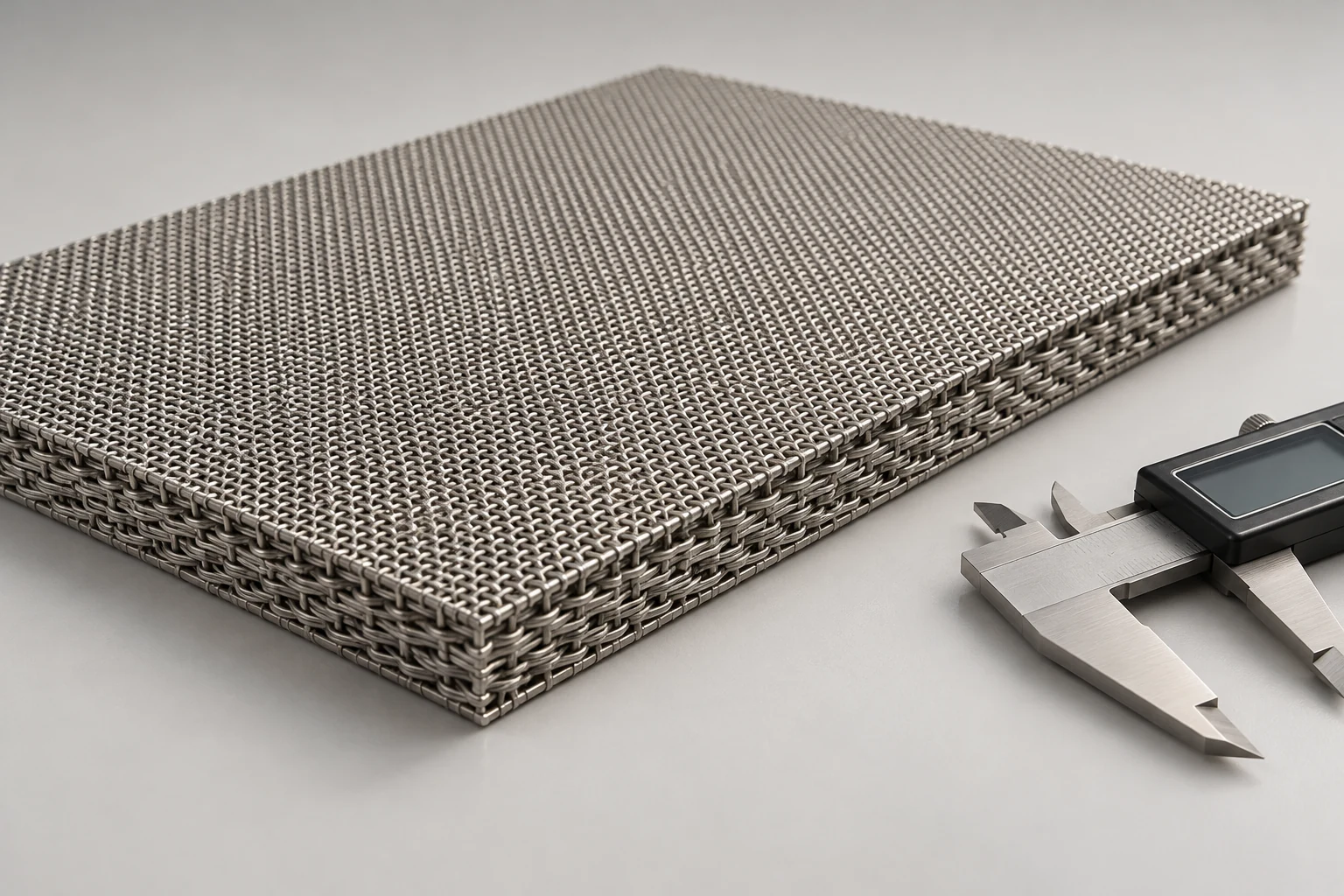
AI-generated inspection illustration; it is not a photograph of an inspected order or a measurement result. Installation and cleaning must follow the equipment and supplier instructions.
Check the Component Before Installation
Match the item to the approved specification
Check item identification, drawing revision, quantity, dimensions and the supplied material or test records against the order. Isolate a discrepancy for review before fitting the part.
Inspect media and joining details
Review surfaces, cut edges, visible damage, seams and end fittings within the agreed inspection scope. A visual check cannot establish retention performance or internal bond integrity.
Confirm support and flow orientation
Check the approved filtration face, flow direction, housing supports and sealing interface. Do not substitute a part solely because its outer dimensions match.
Agree the commissioning evidence
Use the equipment-specific procedure and agreed supplier limits. Confirm any required integrity, leak or performance checks before releasing the assembly for service.
Specify Protection for Fine Media and Finished Interfaces
Agree packing with the supplier as part of the quotation. The protection needed for flat laminates differs from that for assembled elements and their connections.
Separate and support flat parts
Specify separators, surface protection and rigid support for sheets and discs so parts cannot rub together or bend during transport.
Protect cylindrical elements
Request individual restraint and protection for mesh surfaces, end fittings and sealing faces. Avoid packing loads acting directly on the filter medium.
Define cleanliness requirements
State the receiving cleanliness requirement, compatible protective materials and any required closure of openings. Do not assume ordinary export packing provides process cleanliness.
Label by order and specification
Agree item numbers, material, media specification, drawing revision, quantity and shipping marks. Keep relevant inspection documents associated with the shipment.
Four Ways to Describe a Sintered Mesh Requirement
These are hypothetical buying examples, not customer projects. All images are AI-generated product illustrations and do not establish a supplied specification.
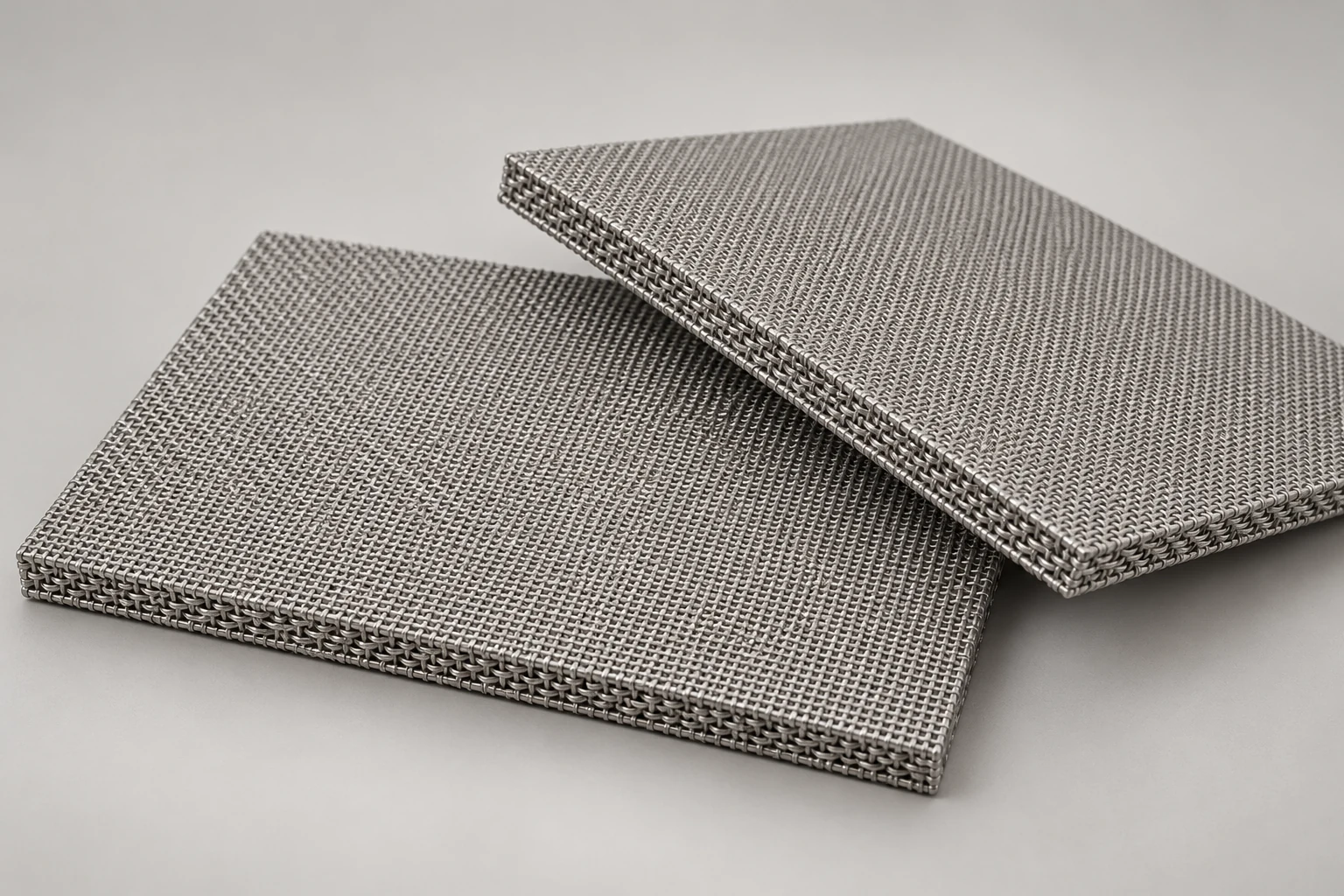
Sheet for further fabrication
An OEM requests laminate sheets. The RFQ identifies layer sequence, filtration face, material, thickness, usable sheet dimensions and acceptance tolerances before cutting or forming is reviewed.
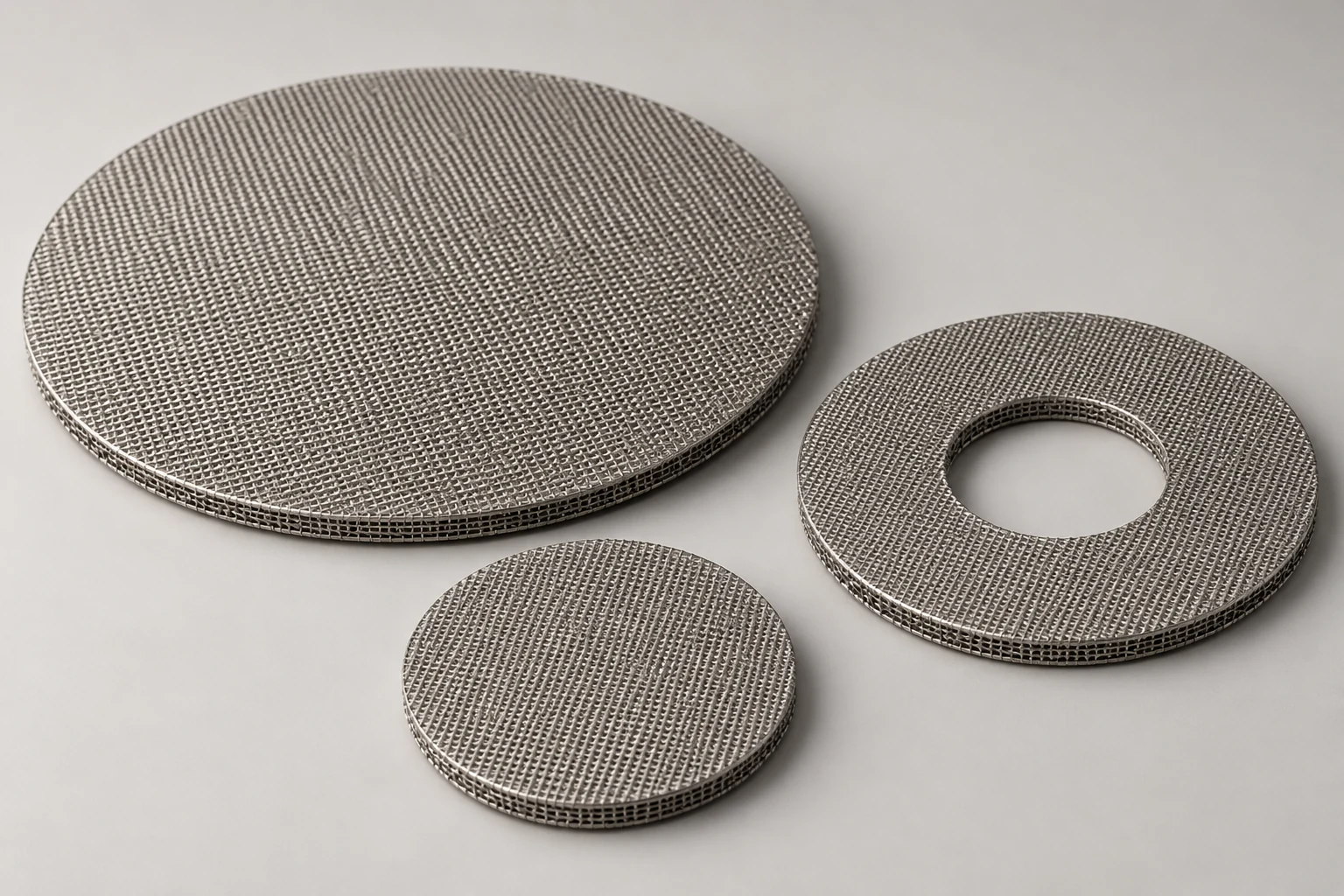
Disc for a supported filter holder
A buyer requests an annular disc. The drawing defines OD, ID, thickness, sealing and support interfaces; the process brief separately defines retention and flow requirements.
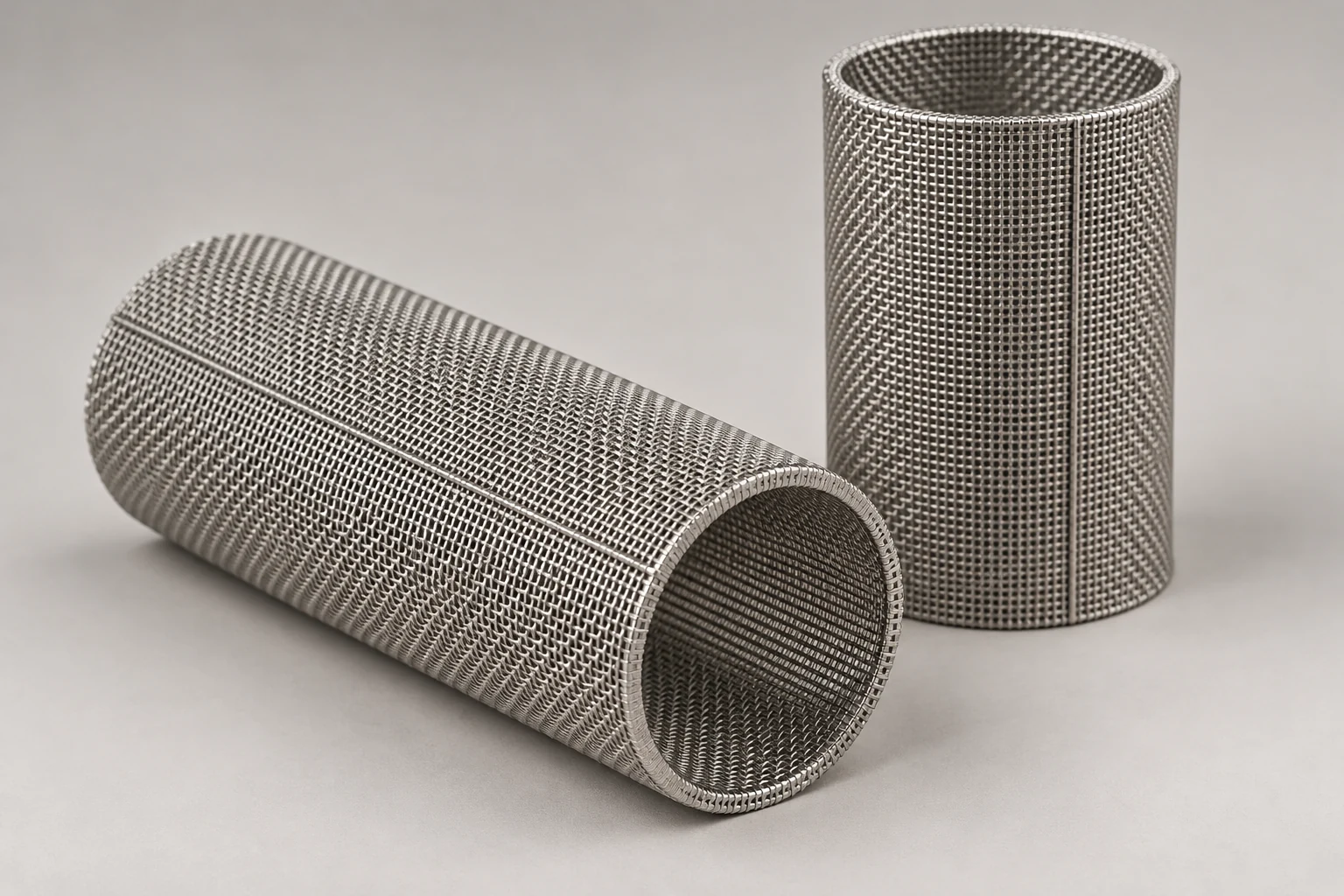
Cylinder for a backwash assembly
A buyer requests a media cylinder. The RFQ includes geometry, joining, support, forward and reverse flow conditions and cleaning requirements rather than assuming every cylinder is backwashable.
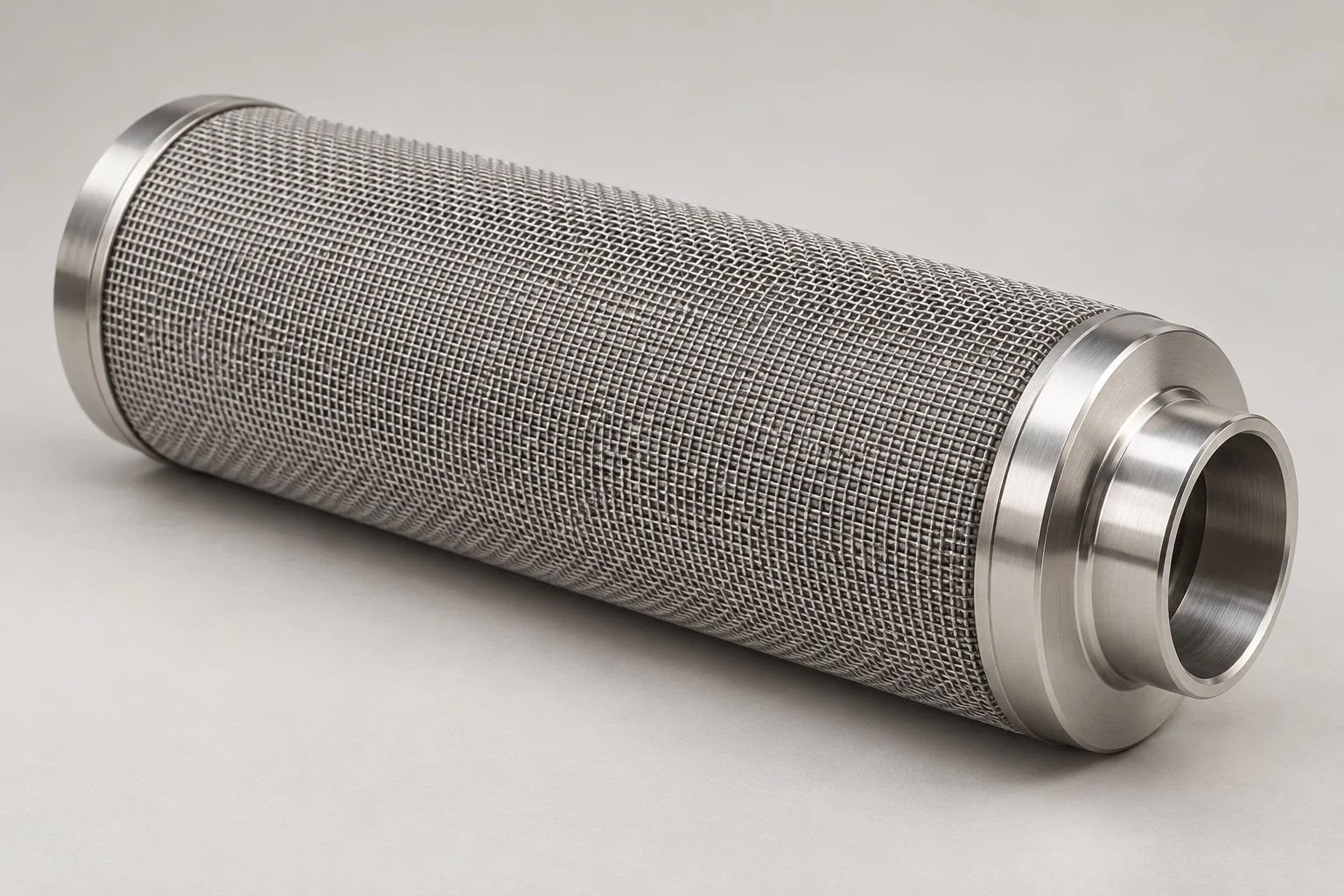
Cartridge for an existing housing
An OEM requests a complete replacement element. The review covers media performance, end fittings, seals, flow direction and operating limits alongside the housing dimensions.
Technical References for a Better Sintered Mesh RFQ
The external sources support general construction and testing explanations, not WireMesh Sourcing product ratings or certification. Confirm each method's scope and applicability with the supplier. This page's buying examples and illustrations are explanatory materials.
Content and sources reviewed: 2026-10-10
Related sourcing guides
Manufacturer and testing references
Sintered Wire Mesh FAQ
Use these answers to prepare the RFQ; the supplier must confirm the offered construction and performance against the stated application.
Have a drawing or an existing filter specification?
Send it with your process conditions and identify any requirements that still need confirmation.
Request a QuoteSend Your Sintered Wire Mesh Specification
Share the material, layer construction, retention requirements, dimensions, quantity and operating duty. WireMesh Sourcing reviews the specification for factory matching, quality-control planning and export coordination; the offered configuration and terms are confirmed in the quotation.
Your details stay private. We reply with a matched factory quote — no spam.