Wire Mesh Conveyor Belts for Baking, Cooling & Food Processing
Source stainless steel wire mesh conveyor belts from verified Chinese factories: balanced, compound and double balanced weave, flat flex, flat wire, chain-driven and rod constructions in 304, 316 and 310S stainless steel. Compare belt types by open area, aperture and drive, then request a factory quote.
View SpecificationsWire Mesh Conveyor Belt Specifications
A wire mesh conveyor belt is defined by six variables: weave construction, wire diameter, aperture, material, width and edges, and drive and connection. State all six in every RFQ so the factory can match the belt to your process, product, and machine.
Balanced, compound balanced, double balanced, flat flex, flat wire, chain-driven, pinroll or sprocket-driven, rod, and rod-reinforced weaves, matched to the product and process
The flat or round wire gauge, commonly from about 0.9 mm to 2.5 mm for typical conveyor duties; drives strength, open area and weight
The clear opening that supports the product and lets air, heat or water pass, typically about 3-15 mm for common belt types
304 or 316 stainless steel for food contact and washdown, 310S stainless steel for high-temperature furnace duty, or carbon steel for general conveying
Custom widths, commonly 200-3000 mm, with welded or clinched edges that stop the weave from unraveling in service
Friction, sprocket, pinroll or chain drive, supplied as an endless belt or open length for on-site splicing
| Spec item | What to state | Why it matters | RFQ note | |
|---|---|---|---|---|
| Weave construction | Balanced, compound, flat flex, flat wire, rod, or driven weave | Sets product support, open area and tracking | Name the belt type you intend to compare. | |
| Wire diameter | Nominal flat or round wire size in millimeters | Drives strength, open area, weight and life | Use millimeters, not gauge alone. | |
| Aperture / opening | Clear opening in millimeters | Determines product support and airflow | Match it to the smallest product you carry. | |
| Material | 304, 316, 310S stainless or carbon steel | Matches food contact, washdown and temperature | Describe the service environment. | |
| Width and edges | Belt width, welded or clinched edges | Determines fit and whether the belt stays intact | State machine width and edge type. | |
| Drive and connection | Friction, sprocket, pinroll, or chain; endless or open | Controls tracking, tension and splicing | Share sprocket or chain pitch if known. |
Wire Mesh Conveyor Belt Types and Typical Reference Rows
Reference rows for the belt types we source, based on typical conveyor belt practice. Aperture and wire diameter define product support and open area. Confirm the exact aperture, wire, width, edge and open area with the factory before production.
| Belt type | Wire dia. (mm) | Aperture (mm) | Mesh* | Open area | Ref. weight (kg/m²) | Typical duty | |
|---|---|---|---|---|---|---|---|
| Balanced weave | 1.2 | 5.0 | 5 | ~55% | 8.5 | Baking, cooling, general handling | |
| Chain-driven | 2.0 | 10.0 | 2.5 | ~60% | 14 | Furnaces, long conveyors | |
| Compound balanced weave | 1.2 | 3.0 | 8.5 | ~45% | 10 | Baking small products, powders | |
| Double balanced weave | 2.0 | 8.0 | 3 | ~58% | 16 | Heavy conveying | |
| Flat flex | 0.9 | 5.0 | 5 | ~70% | 7 | Food processing, freezing | |
| Flat wire | 1.5 | 6.0 | 4 | ~65% | 9.5 | Ovens, cooling, drying | |
| Pinroll-driven balanced weave | 1.6 | 12.0 | 2 | ~60% | 13 | Lightweight positive-drive conveying | |
| Rod belt | 2.5 | 15.0 | 1.7 | ~62% | 18 | High-temperature conveying | |
| Rod-reinforced weave | 2.0 | 10.0 | 2.5 | ~60% | 15 | High load, heat treatment | |
| Sprocket-driven balanced weave | 1.6 | 12.0 | 2 | ~60% | 13 | Lightweight positive-drive conveying |
Choosing a Wire Mesh Conveyor Belt by Process
A selection guide based on the process duty. Confirm the final belt specification, temperature and washdown requirements with the factory before production.
| Process | Recommended belt type | Recommended material | Why | |
|---|---|---|---|---|
| Baking and convection ovens | Balanced or compound balanced weave | 304 stainless steel | Balanced spirals give stable tracking and good airflow for even baking | |
| Freezing and cooling tunnels | Flat flex or flat wire | 304 or 316 stainless steel | High open area passes cold air quickly and sheds frost | |
| Frying, washing and dewatering lines | Flat wire or rod | 316 stainless steel | Corrosion resistance with easy clean-in-place access | |
| Heat treatment and industrial furnaces | Rod or rod-reinforced, balanced weave | 310S stainless steel | Heavy wire and higher-grade alloy hold up to furnace heat | |
| High-load and long conveyors | Chain-driven or double balanced weave | 304 or carbon steel | Chain drive gives positive tracking and carries heavier loads |
Wire Mesh Conveyor Belt Types We Source
Each weave changes how the belt supports product, passes air, and tracks on the machine. Compare the belt types before you specify.
Balanced weave conveyor belt
Alternating left- and right-hand spiral wires linked by cross rods. The standard belt for straight-running baking, cooling and general conveying with stable tracking.
Compound balanced weave conveyor belt
A denser balanced weave with more spirals and cross rods, giving a tighter surface and smaller openings for baking small products and carrying powders.
Double balanced weave conveyor belt
Two balanced spirals in the weave structure for heavier duty, used where a stronger, more stable belt surface is needed for heavier conveying.
Flat flex conveyor belt
Interlocked stainless strands in a bricklay pattern with very high open area. Common in food processing and freezing where airflow and cleanability matter most.
Flat wire conveyor belt
Flat wire spirals and cross rods forming a smooth, open belt for ovens, cooling and drying lines that need a flat carrying surface with good airflow.
Chain-driven conveyor belt
A wire mesh belt driven by side roller chains for positive tracking on long conveyors and furnace lines where friction drive is not enough.
Pinroll-driven balanced weave belt
A balanced weave belt with pinroll positive drive for lightweight conveying that needs precise, reliable tracking.
Sprocket-driven balanced weave belt
A balanced weave belt with sprocket positive drive, used for lightweight conveying where the belt must stay indexed to the drive.
Rod conveyor belt
A rod-linked belt with large openings and heavy wire for high-temperature conveying and processes that need maximum drainage and airflow.
Rod-reinforced conveyor belt
A woven belt reinforced with cross rods for high-load and heat-treatment duties where a stiffer, stronger carrying surface is required.
How to Select a Wire Mesh Conveyor Belt
Start from the process and the product, then fix weave, wire diameter, aperture, material, width, edges and drive. A complete wire mesh conveyor belt RFQ avoids assumptions and re-quotes.
By process and temperature
Baking and cooling lines take balanced or compound weave in 304; furnace and heat-treatment duty takes rod or rod-reinforced belts in higher-grade alloy. State the operating temperature in the RFQ.
By product size and support
The aperture must be small enough to support the smallest product while staying large enough for airflow, heat or drainage. State the smallest product dimension.
By open area
Higher open area means better airflow and lighter weight, but less surface support. Balance flow against the product and the belt strength the line needs.
By drive and tracking
Friction drive suits shorter, lighter belts; sprocket, pinroll or chain drive gives positive tracking on long, heavy or indexed lines. Share the machine's drive type and pitch.
By width and edges
State the belt width your machine accepts, commonly 200-3000 mm, and whether you need welded or clinched edges to stop the weave from unraveling.
By material and washdown
304 stainless steel suits most food lines; 316 adds chloride resistance for frequent washdown, frying or salted products; 310S suits high-temperature furnace duty.
Endless or open length
An endless belt is spliced and closed by the factory; an open length is shipped flat for you to splice on site. State which your line needs.
Give millimeters, not just belt type
The same belt type can be made in many apertures and wire diameters. Give aperture and wire in millimeters, plus width, drive and connection details.
Why Buyers Choose Wire Mesh Conveyor Belts
Wire mesh conveyor belts combine open structure with metal strength, so they handle heat, washdown and heavy load where fabric belts cannot.
High open area for airflow
Open-mesh construction passes heat, cold air and water through the product bed for even baking, fast freezing and efficient drying.
Heat and flame resistance
All-metal construction handles high process temperatures without melting, stretching or releasing material into food.
Cleanable and hygienic
Open structure drains and air-dries quickly, and stainless steel suits washdown and food-contact lines that demand clean surfaces.
Custom endless belts
Belts built to your width, length, edge and drive, closed as endless loops or shipped open for on-site splicing.
Factory-direct sourcing
Verified Chinese belt factories with specification-led quotes, samples and material certificates coordinated before export.
Verified materials and QC
Alloy checks, aperture gauging and material certificates arranged before dispatch for food and furnace belts.
Where Wire Mesh Conveyor Belts Are Used
Choose a wire mesh conveyor belt when the process needs airflow, heat transfer, drainage, or washdown through an open, durable belt surface.
Baking and convection ovens
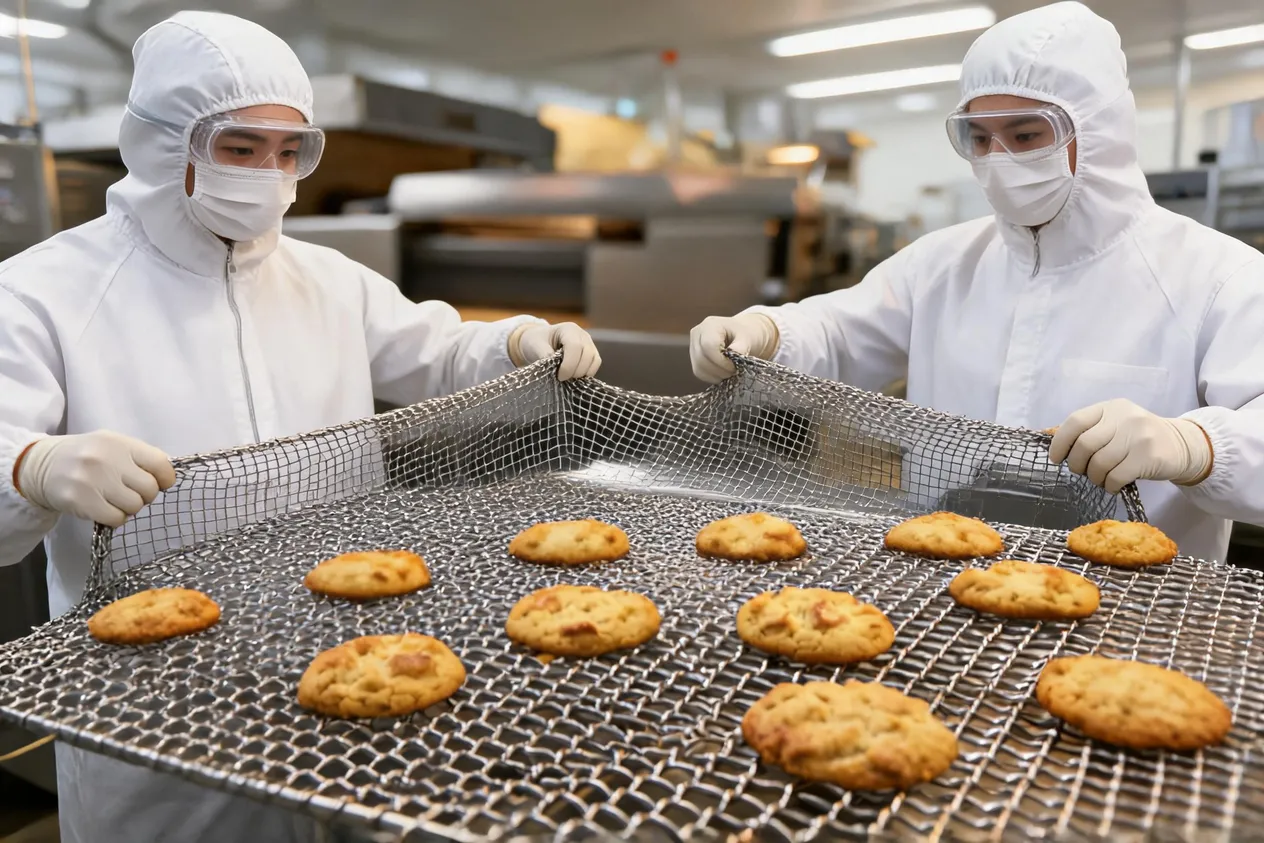
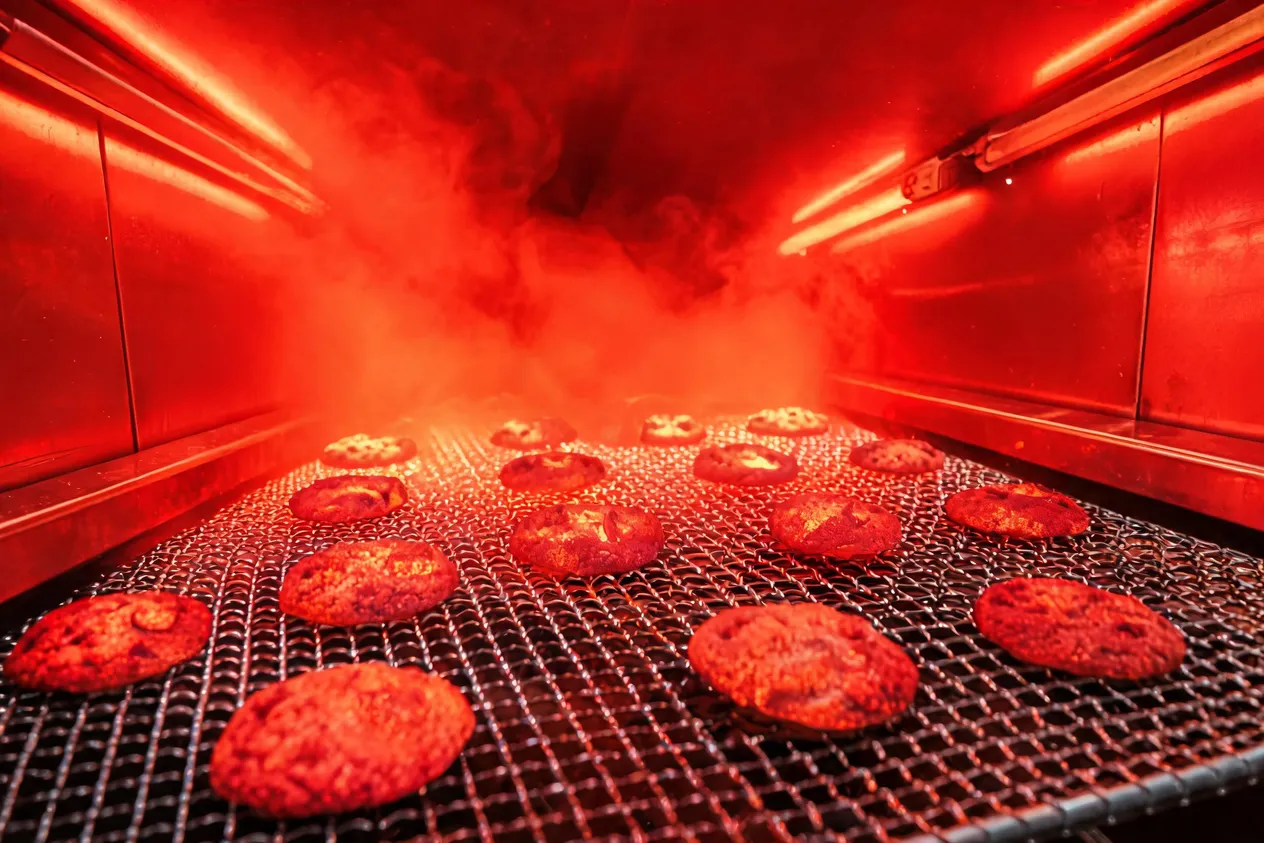
Open-mesh belts that let oven heat reach the product evenly for bread, biscuits, cookies and pizza lines.
Cooling, freezing and drying tunnels
High-open-area belts that pass cold or dry air through the product bed in tunnels, spirals and freezers.
Food processing lines
Frying, enrobing, washing and coating lines where a cleanable stainless belt carries product through the process.
Heat treatment and industrial furnaces
Rod and rod-reinforced belts that move parts and workpieces through hardening, sintering and heat-treatment furnaces.
Washing, dewatering and rinsing
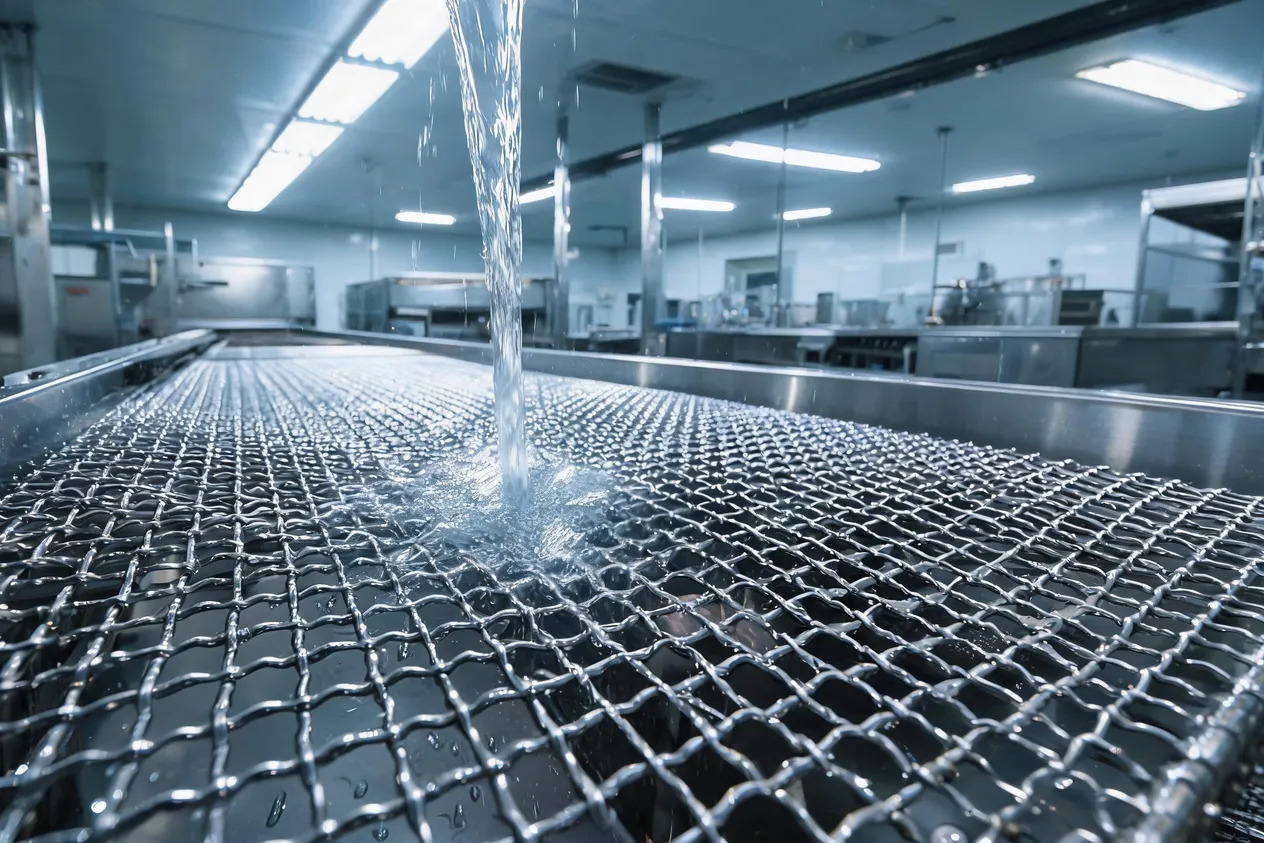
Open belts that drain water and rinse residue while carrying product through washing and dewatering stations.
General material handling
Balanced and chain-driven belts for sorting, accumulating and conveying parts and products on production lines.
Wire Mesh Conveyor Belt Buying Mistakes to Avoid
Eight errors that cause poor tracking, short belt life, or costly re-quotes. Every one is avoidable at the RFQ stage.
Ordering by belt type without aperture
A belt name alone does not fix the opening. Give the aperture and wire diameter in millimeters so the belt actually supports your product.
Ignoring drive compatibility
A friction-driven belt on a sprocket line, or the wrong chain pitch, will not track. Share the machine's drive type, sprocket and pitch.
Choosing open area without product support
A very open belt passes air well but can let small products fall through or mark soft product. Balance open area against the product you carry.
Underspecifying material for washdown
Frequent chlorine-based washing, frying and salted products want 316 over 304. Match the alloy to the washdown and product chemistry.
Forgetting endless versus open length
An endless belt that arrives open, or an open belt delivered closed, disrupts the line. State the connection you need before production.
Not stating width and edges
A belt that does not match the machine width or lacks the right edge can fray in service. Give width and welded or clinched edges.
Ignoring temperature limits
A belt specified for baking will not hold up in a furnace. State the operating temperature profile for the correct weave and alloy.
Not requesting material documentation
Food-grade and furnace belts may need material traceability. Request mill test certificates with the RFQ when documentation is required.
Plan for belt weight, splicing, tension and tracking. Follow the machine maker's instructions and site safety requirements when fitting wire mesh conveyor belts.
Wire Mesh Conveyor Belt Handling and Installation
Check the delivered specification
Compare weave, wire diameter, aperture, material, width, edges, drive and connection against the order before fitting.
Fit and tension the belt
Install the belt on the machine, tension evenly across the width, and seat sprockets or chains if the belt is positive-driven.
Splice or close endless belts
For open-length belts, follow the factory's splicing instructions so the joint stays flat and does not disturb tracking.
Track and run in
Run the belt slowly and adjust tracking, then load gradually. Confirm the belt runs true before putting the line into full service.
Wire Mesh Conveyor Belt Packing for Export
Packing protects the weave, edges and finish during transit so endless and open-length belts arrive ready to fit.
Endless belts coiled safely
Endless belts are coiled or looped with padding so the weave is not crushed or distorted in transit.
Open lengths on cores
Open-length belts are shipped flat on sturdy cores with protective wrapping to keep the weave and edges intact.
Edge and finish protection
Welded or clinched edges and the belt surface are padded against impact and abrasion during handling.
Bundle by specification
Separate and label weave type, material, width, aperture and quantity so each belt is easy to identify on arrival.
Provide shipping marks
Include order, item, quantity, weight, destination and inspection marks on each package.
Wire Mesh Conveyor Belts That Solve Line Problems
Each scenario starts from a line problem and shows how the belt specification solves it. Scenarios are illustrative, not customer claims.

Biscuits browning unevenly on the oven belt
Dense woven belts can block oven airflow, so biscuits brown unevenly and stick. A balanced or compound balanced weave belt in 304 stainless steel, with an aperture matched to the biscuit size, passes oven heat evenly and supports the product without marking it.

Product freezing slowly through a tunnel
A closed or heavy belt slows cold-air contact, extending freezer dwell time. A flat flex belt with high open area passes cold air through the product bed, shortening the freeze and draining away condensation.
Furnace belt sagging and losing tracking
Light woven belts sag and drift in high-temperature furnaces, spilling parts. A rod or rod-reinforced belt in 310S stainless steel, chain-driven for positive tracking, holds a stable surface through furnace heat.
Washdown corrosion on a frying line
General stainless rusts and pits under frequent chlorine washdown and frying conditions. A 316 stainless flat wire or rod belt with open construction drains and air-dries quickly, resisting chloride corrosion between washes.
Wire Mesh Conveyor Belt Sourcing Resources
Compare wire mesh conveyor belts with other wire mesh products and review the materials behind the belt specification.
Last updated: 2026-09-11
Related pages
Reference standards
Wire Mesh Conveyor Belt FAQ
Common procurement questions about wire mesh conveyor belt types, materials, and ordering details.
Still have questions about wire mesh conveyor belts?
Send your process, product size, belt width, material and drive details. Our sourcing team replies with a specification-led review and factory pricing.
Request a QuoteRequest Wire Mesh Conveyor Belt Pricing
Send your weave type, aperture and wire diameter, material, belt width and edges, drive and connection, quantity, application, and destination for a specification-led sourcing review and factory-direct pricing.
Your details stay private. We reply with a matched factory quote — no spam.