Knitted Wire Mesh Supplier
Source knitted wire mesh rolls, demister pads and compressed rings. Compare supply forms and prepare material, dimensions and duty requirements for a quote.
Prepare Your SpecificationFind the Knitted Wire Mesh Form You Need
Define Your Knitted Wire Mesh Requirement
Knitted wire mesh is made from interlocking wire loops. Its dimensions and structure depend on how the material is supplied and measured. Specify relaxed, stretched or compressed condition where relevant. The table is an RFQ checklist, not a stock list, filtration rating or universal production range.
Mesh material, formed pad or compressed part
Required grade and material documentation
Wire diameter, construction or approved sample
Dimensions, units and measurement condition
Process exposure or component loading
Select one or more specifications. Your choices will be included in the quote request.
0 specs selected
| Supply requirement | Dimensions and construction to provide | Duty and acceptance information | |
|---|---|---|---|
| Mesh material | Wire diameter, knit reference, relaxed width and length, layer basis and quantity unit | Material grade, further processing, net mass basis and approved sample if available | |
| Finished demister pad | Pad geometry, mesh-bed thickness, density basis, sections and support or fixing scope | Gas and liquid properties, flow, temperature, pressure and vessel drawing | |
| Compressed ring | OD, ID, thickness, drawing tolerances and compressed construction | Loading, movement, mounting conditions and agreed mechanical acceptance criteria | |
| Replacement requirement | Existing drawing or sample details, photographs with scale and installation envelope | Reason for replacement, operating conditions and features that must remain equivalent |
Match the Mesh to the Component's Job
The same product family includes material for further processing and finished components. Choose the route by what the item must do, then confirm its construction and service conditions.
Mist elimination
For entrained liquid droplets in gas or vapor, define the finished pad and process duty together. The wire mesh demister guide covers vessel fit, drainage and assembly questions.
Further fabrication
For material that will be cut, layered or formed, confirm usable dimensions, knit condition and net mesh weight before comparing quotations.
Damping and sealing
For compressed rings, identify the component interface, loading and movement. A ring's dimensions alone do not establish its mechanical response or sealing suitability.
Existing equipment replacement
Record the old component's geometry, construction and duty. Photographs help identify a part, but cannot establish its material grade or performance.
From Knitted Wire Mesh Material to a Finished Part
Rhodius and ACS describe tubular, rolled and processed constructions in the references below. Agree the specific offered form with the supplier; a general construction description is not a promise of every size or material.
Tubular or flattened mesh
Clarify whether width means tube diameter, circumference or lay-flat width, and whether the stated area includes one face or both layers.
Rolls or cut lengths
State width, length, quantity and edge requirements. Keep the material condition consistent between a sample, quotation and receiving inspection.
Layered demister pads
Specify mesh-bed thickness, finished shape, sections and support grids separately. Density is one construction parameter; it does not independently establish separation efficiency.
Compressed components
Formed parts need a dimensioned drawing and an acceptance method appropriate to their job. Define compression, tolerances and any required mechanical testing.
Choose by Construction, Material and Duty
Start with the component requirement rather than selecting by a mesh name alone. These distinctions help prevent quotations for different constructions being treated as equivalent.
Knitted versus woven wire mesh
Knitted wire mesh uses interlocking loops; woven cloth uses crossing warp and weft wires. Do not transfer a woven-cloth aperture calculation or mesh-count specification to a deformable knitted structure as a verified filter rating.
Knitted versus welded wire mesh
Welded mesh joins crossing wires at their intersections. A welded panel and a looped knitted medium serve different construction needs; match flexibility, geometry and the required component function.
Mesh material versus finished assembly
A roll specification does not define a demister's supports or a ring's loading behavior. Decide which party supplies the forming, supports, fixings and inspection evidence.
Material grade and compatibility
The three linked products list 304 stainless steel. Identify the actual gas, liquid, cleaning chemicals and temperature for review. Request confirmation of any alternative grade rather than assuming availability or suitability.
Density and measurement basis
For bulk density, agree net mesh mass divided by the specified mesh volume, including the compression condition. Keep support grids and packaging outside the mesh-mass basis unless the specification explicitly says otherwise.
Performance evidence
Ask for evidence under the intended conditions when separation efficiency, pressure drop or mechanical response is critical. Wire diameter, density and an old sample alone do not prove the finished part's performance.
Make Knitted Wire Mesh Quotations Comparable
A shared specification gives factory matching and inspection a common starting point. WireMesh Sourcing coordinates those requirements with the supplier and confirms the offered configuration through the quotation.
Compare the same supply scope
Separate mesh material from forming, grids, fixings and packing. A lower quoted price may describe a different delivery scope.
Record the measurement condition
Agree dimensions and weight in the same relaxed or compressed state so a receiving check can be compared with the approved specification.
Resolve missing information early
Identify unknown grades, dimensions and operating conditions before sample or quotation review. Use a drawing revision to record agreed changes.
Plan acceptance before ordering
Define the documents, dimensional checks and any required performance evidence alongside the part, rather than leaving acceptance to visual similarity.
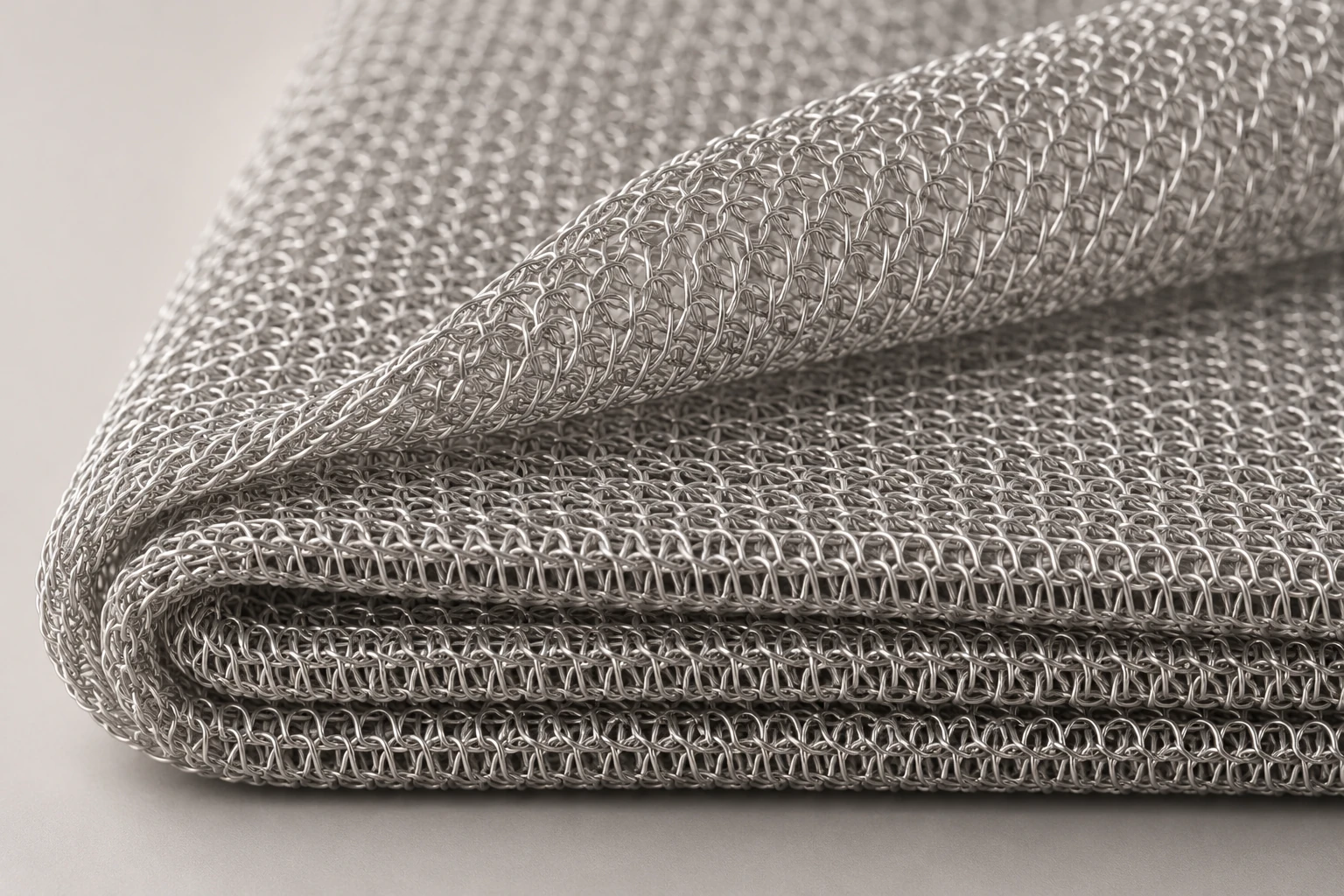
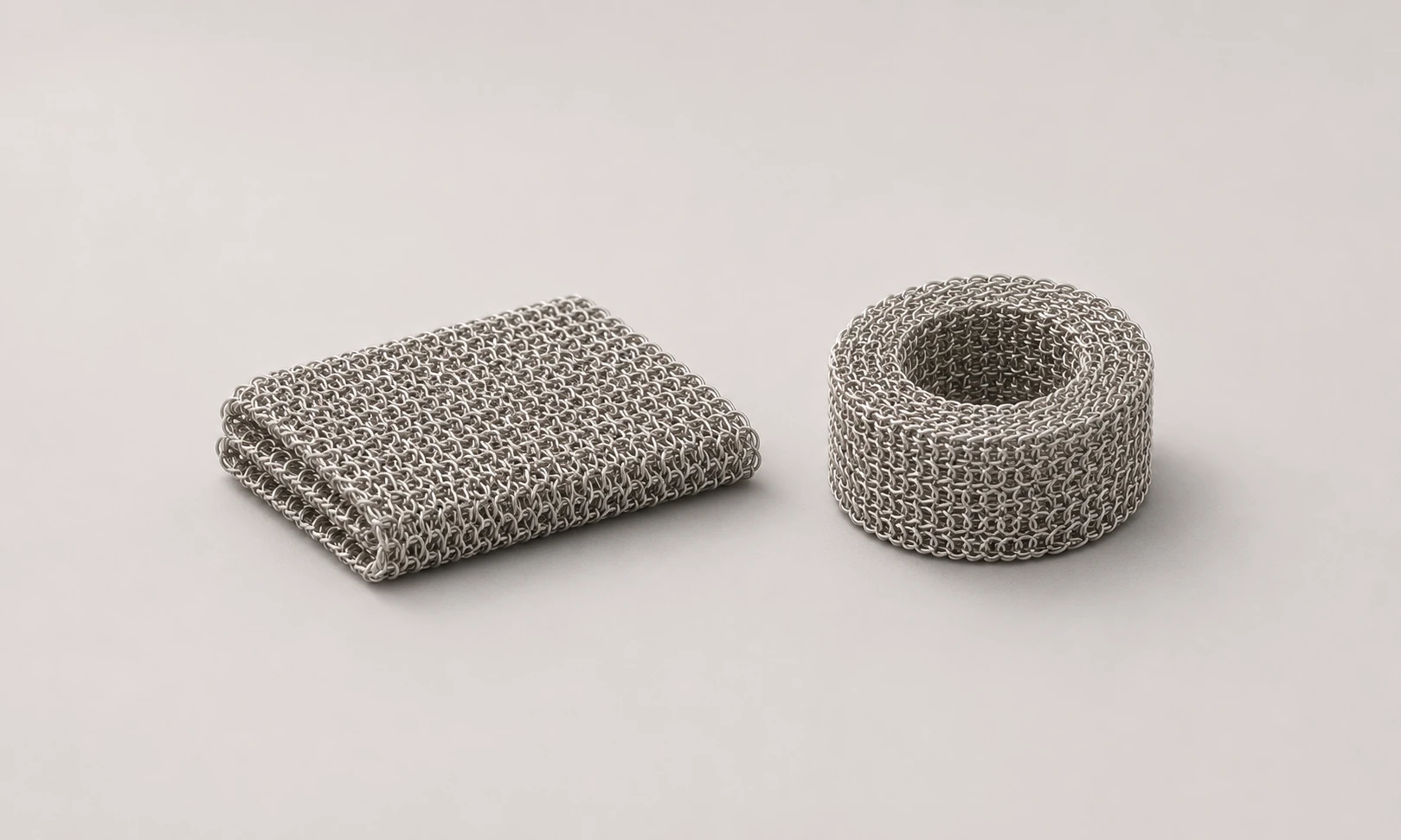
Interlocking wire loops and folded mesh layers in close-up. Confirm the delivered construction against the approved specification; follow the equipment-specific instructions for fitting and commissioning.
Inspect Against the Approved Specification
Identify the delivered material or part
Compare item identification, quantity, drawing revision and supplied material records with the order. Keep discrepancies separate for supplier review before use.
Measure in the agreed condition
Check width, length, pad thickness or ring dimensions using the approved reference state and tolerances. Record the layer or compression basis with the result.
Review construction and included parts
Look for damaged loops, loose wire or handling deformation within the agreed inspection scope. Check support grids, sections and fixings if they are included in the order.
Confirm fit and required evidence
Check the installation envelope and obtain agreed mechanical or process-performance evidence where required. A visual inspection is not a substitute for a performance test.
Protect the Agreed Mesh Form in Transit
Confirm packing requirements in the quotation. Different forms need different protection against deformation and loss of identification.
Rolls and cut material
Agree restraint and protection for edges and loops. Label the material grade, dimensions, quantity unit and item reference.
Pads and formed parts
Specify support and separation so transport loads do not alter the ordered geometry. Keep pad sections and included components identifiable.
Documents and shipping marks
Associate inspection records and material documents with the shipment. Confirm packing units, destination and required shipping marks.
Prepare a Knitted Wire Mesh RFQ Around the Job
Use the following requirement outlines to organize your inquiry. The relevant product pages provide the next level of detail.
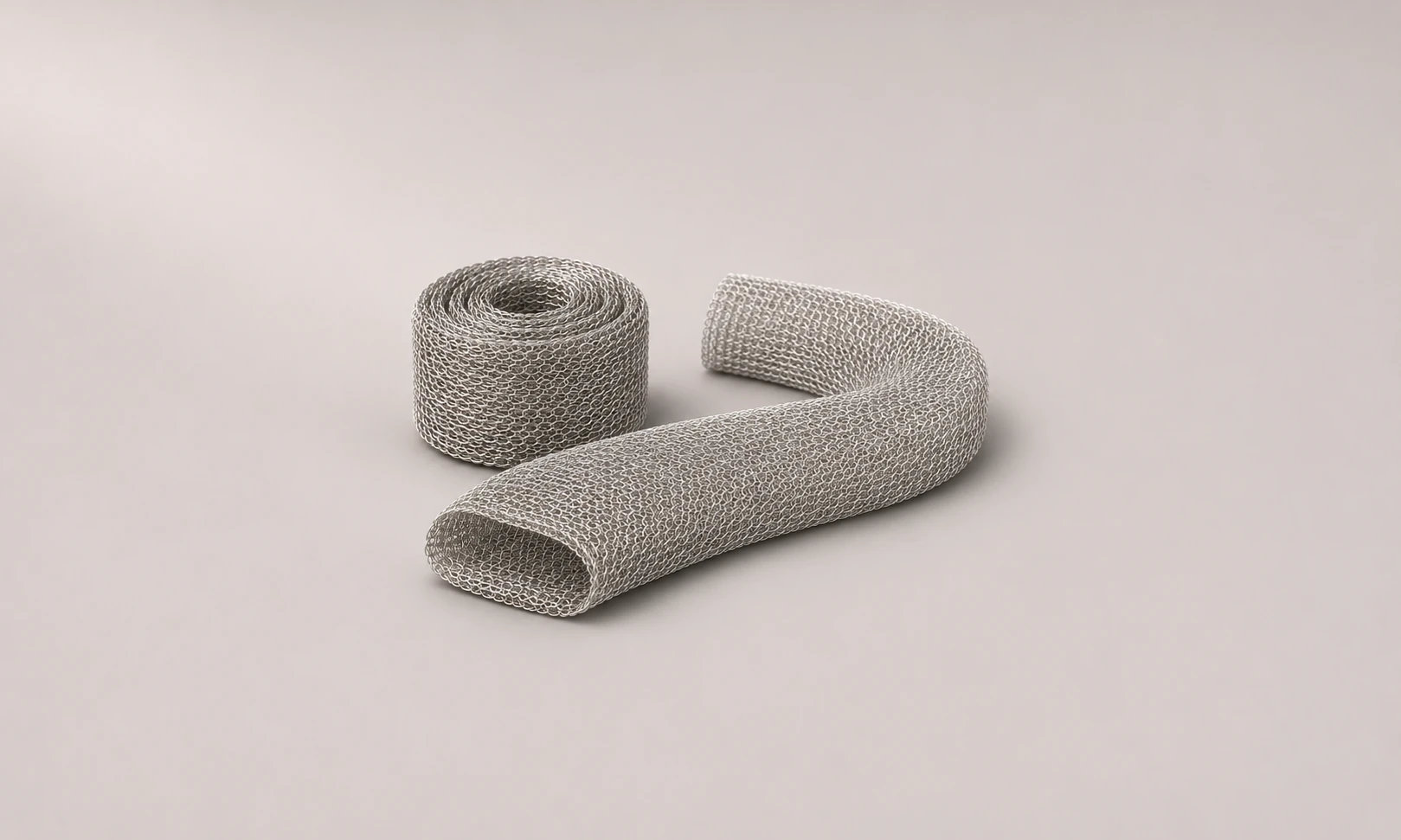
Material for further processing
Provide the required material, wire and knit reference, relaxed dimensions, quantity and what will happen to the mesh during fabrication.
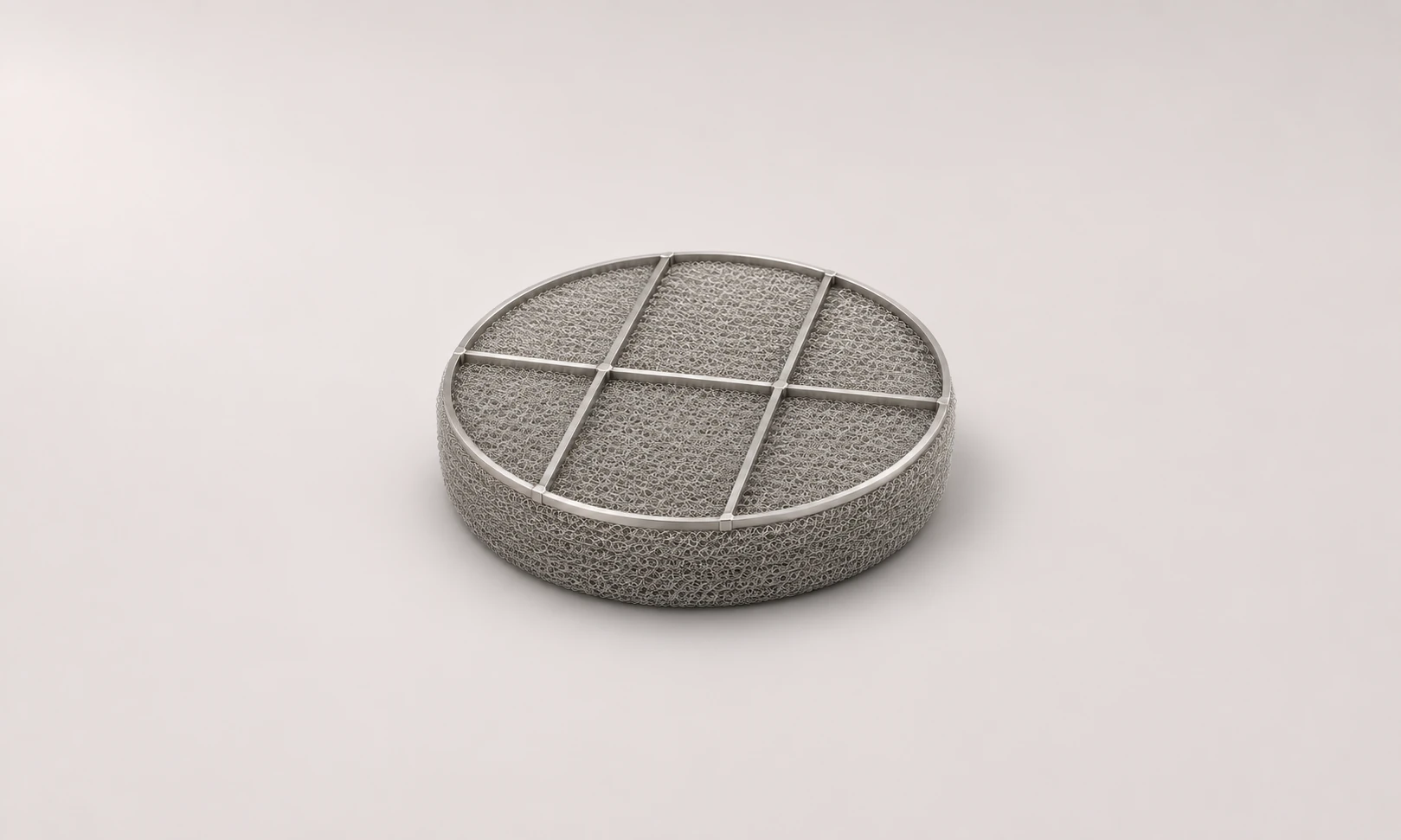
A replacement demister pad
Send the vessel or pad drawing, section layout, support scope and process conditions. Distinguish mesh-bed thickness from overall assembly height.
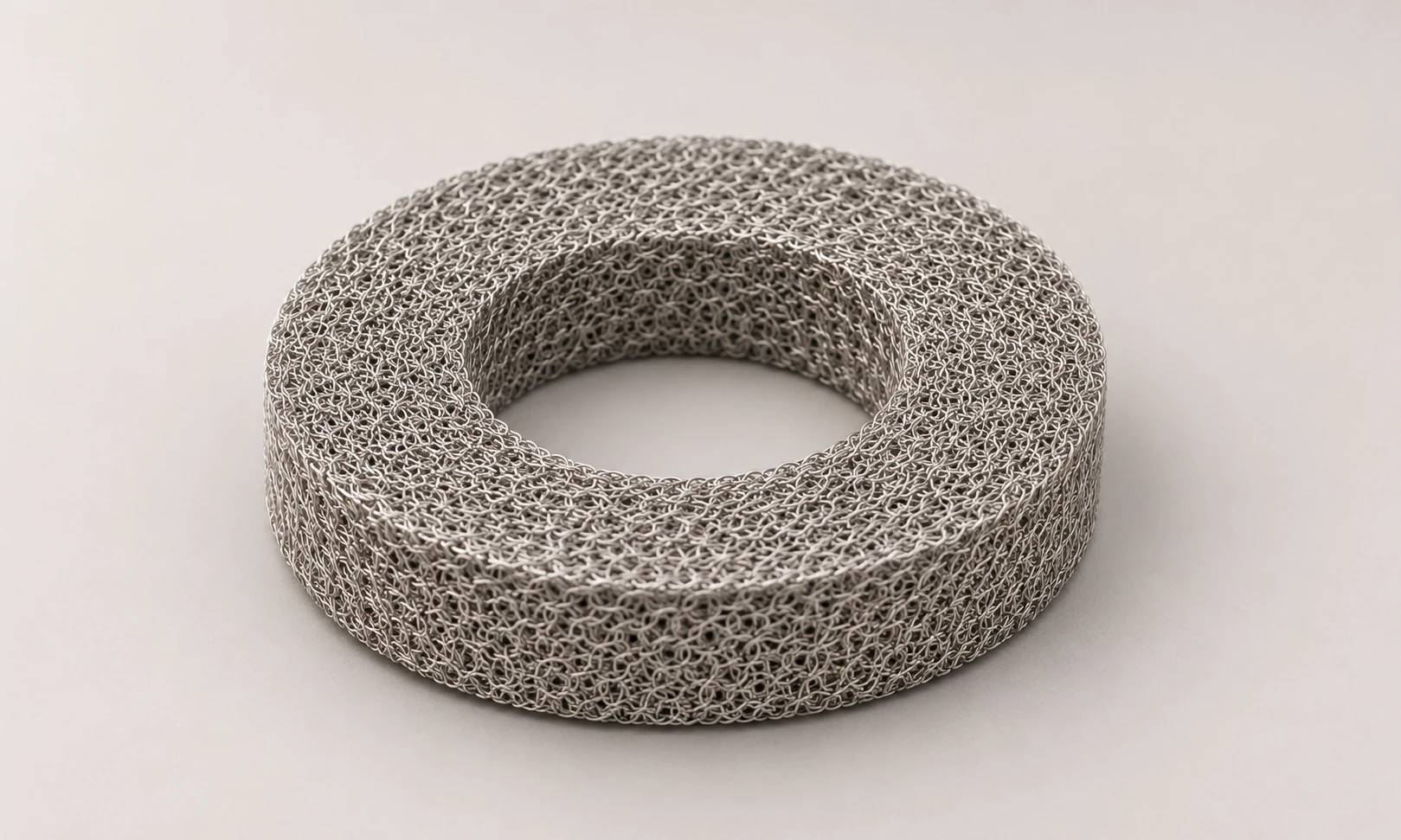
A compressed damping ring
Provide OD, ID, thickness, the mounting interface and loading conditions. Identify the dimensional and mechanical acceptance requirements.
An unidentified existing part
Send clear photographs with scale, the installation envelope and the operating history. Identify which features are known and which need investigation.
Continue Your Knitted Wire Mesh Selection
The manufacturer references explain general construction and applications. Their materials, sizes and performance claims do not establish WireMesh Sourcing supply limits.
Related sourcing guides
Knitted Wire Mesh FAQ
Resolve the construction and measurement questions before selecting a product or comparing supplier quotations.
Have a drawing or an existing sample?
Send the available information and identify the material, dimensions or operating details that still need confirmation.
Discuss Your RequirementRequest a Knitted Wire Mesh Quote
Tell us whether you need mesh material, a demister pad or a compressed ring. Send the material requirement, dimensions, measurement condition, quantity and operating duty so WireMesh Sourcing can coordinate factory matching, inspection requirements and export packing against the same specification.