Knitted Wire Mesh Demister Pad for Gas–Liquid Separation
Reduce entrained liquid carryover with a 304 stainless steel knitted wire mesh demister pad for process columns, evaporators and scrubber towers. Define the pad and assembly against your vessel and operating duty, whether you are specifying a new unit or replacing an existing pad.
FOB reference price from $14.00 / m². Varies by spec and quantity; final quote on inquiry.
What the Right Demister Pad Can Help Address
The value comes from reducing liquid-droplet carryover and matching the assembly to the duty. These are intended outcomes, not quantified performance guarantees.
Reduce process-liquid carryover
Capturing entrained droplets can help retain valuable process liquid that would otherwise leave with the gas stream. The recoverable amount depends on the actual duty.
Limit downstream droplet loading
Reducing carryover can help limit unwanted liquid reaching downstream equipment and process streams. Confirm the required separation target for your application.
Reduce replacement fit uncertainty
Agree pad dimensions, access constraints and included components before ordering so a replacement can be reviewed against the existing vessel.
Catalog Mesh Count
40–120
Catalog Wire Diameter
0.08–0.25 mm
Catalog Aperture
0.132–0.385 mm
Catalog Open Area
36.8–38.8%
Listed Material
304 Stainless Steel
Catalog Mesh Entries
3
Sample
Available
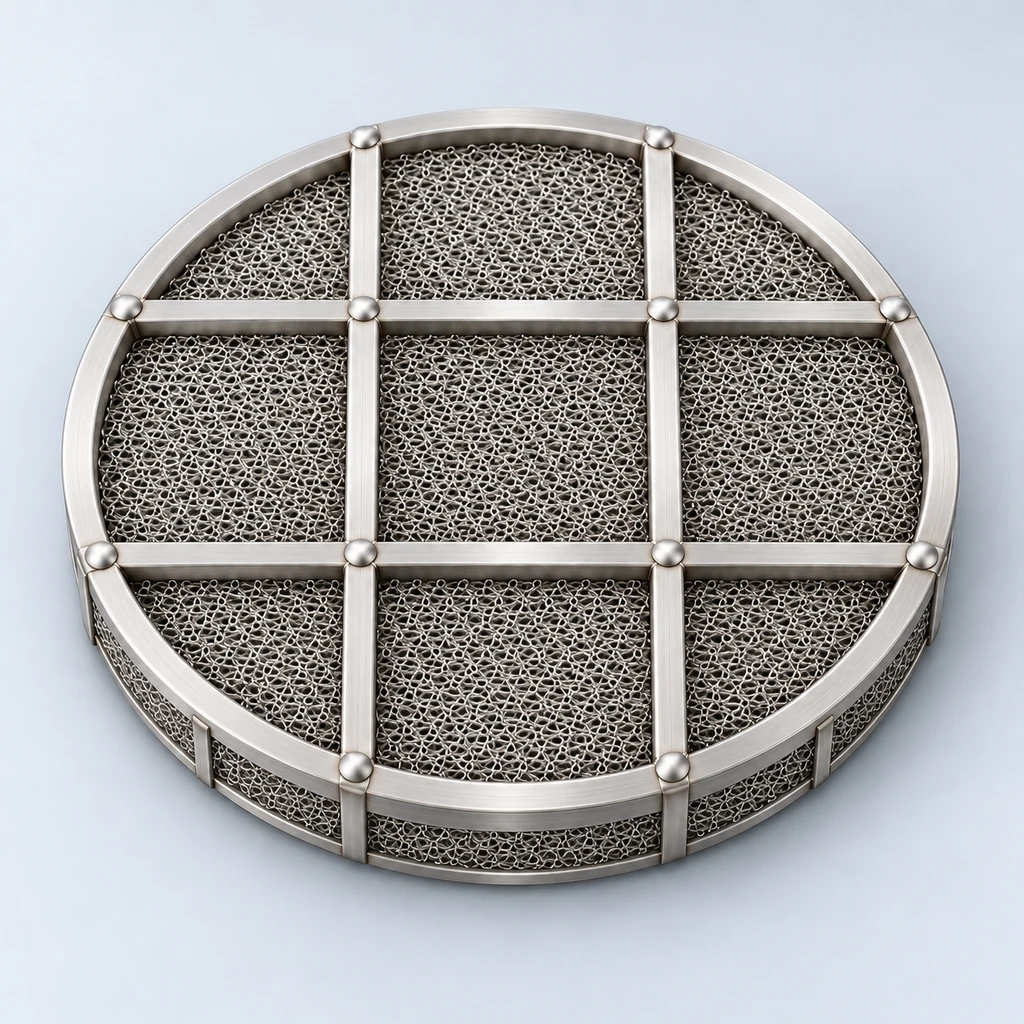
Catalog Mesh Data and Finished-Pad Requirements
The mesh count, wire diameter, aperture and open area below are existing catalog fields. They do not specify finished pad dimensions, bulk density, void fraction or liquid-droplet removal performance. Use the buyer guide to define those requirements separately; catalog SKU selection alone is not approval of a finished demister pad.
Official Standard Tolerance SKU Matrix
Select and lock exact sub-specifications (supports batch multi-spec consolidated inquiry)
Don't see the specification you need? Ask about other options.
Tell us the product, specification, or application. You can inquire even if the details are incomplete.
| Nominal Mesh Count | Std. Wire Dia. (mm)Std. Wire Dia. (inch / Gauge) | Aperture Size (mm)Aperture Size (inch) | Ref. Open Area | Est. Weight (kg/m²)Est. Weight (lb/ft²) | Micro Link | |
|---|---|---|---|---|---|---|
| 40 Mesh | 0.250 mm0.00980" | 0.385 mm0.01520" | 36.8% | 1.25 kg/m²0.2600 lb/sq.ft | ||
| 80 Mesh | 0.120 mm0.00470" | 0.198 mm0.00780" | 38.8% | 0.58 kg/m²0.1200 lb/sq.ft | ||
| 120 Mesh | 0.080 mm0.00310" | 0.132 mm0.00520" | 38.8% | 0.38 kg/m²0.0800 lb/sq.ft |
Download the Full Wire Mesh Catalog
Get the complete catalog with specifications, applications, and ASTM compliance — as a PDF.
100X Simulated Microscope Lens View (Auxiliary Physical Design)
Demister Pad Buyer Guide
Start with the problem and the purchase route. Use the fit diagram and inquiry template to turn an equipment requirement into a reviewable pad specification.
Choose Your Purchasing Route
A replacement with changed operating conditions needs a different review from a like-for-like spare.
1.New equipment
- Provide
- Vessel drawing, installation space, process medium and design or operating data. Identify the required separation duty and allowable pressure drop.
- Confirm before ordering
- Finished pad specification, supports, component materials and supply scope against the equipment requirement.
2.Replacement under the same duty
- Provide
- Existing drawing and pad specification, current operating data and permitted inspection photos. Identify any damage or fit differences.
- Confirm before ordering
- Drawing revision, measured fit, mesh construction and the parts to be retained or replaced. Matching outside dimensions alone is insufficient.
3.Replacement after a process change
- Provide
- Previous and proposed operating conditions, the original pad specification and the observed carryover or pressure-drop issue.
- Confirm before ordering
- Whether the original configuration remains suitable. Resolve changed-duty requirements before approving a repeat order.
Describe the Operating Problem
These are possible review directions, not a diagnosis or instructions for opening operating equipment. Use available operating records and photos from permitted inspections.
| What you observe | Possible review directions | Information to share |
|---|---|---|
| Pressure drop rises over time | Review possible fouling or plugging alongside changes in gas or liquid load. | Pressure-drop trend, throughput, service medium and available deposit photos. |
| Carryover increases at similar throughput | Review possible pad damage, displacement or a path around the mesh. | Operating comparison, existing pad specification and permitted photos of the pad, edges and supports. |
| Carryover increases after throughput is raised | Review the new duty against the original operating window and possible re-entrainment. | Before-and-after flow, pressure and temperature data, plus the original pad specification. |
| A same-size replacement performs differently | Compare construction and installation as well as dimensions. | Old and new specifications, material, wire, density, thickness and assembly records. |
Check Pad Dimensions and Assembly Fit
Read the mesh layer, complete assembly and vessel access as separate requirements. Match each reference to your approved drawing.
Mesh layer and complete assembly
Example sections and separate vessel access
- APad outside diameter
- Provide the finished pad diameter or length and width, and the mating vessel dimensions. Identify agreed clearances on the drawing.
- BMesh-layer thickness
- State the thickness of the knitted mesh bed separately from the grids and fixings.
- CComplete assembly height
- Confirm total occupied height, including grids, fixing projections and required installation clearance.
- DUpper grid
- Identify the required grid material and geometry, and whether it is included in the supply scope.
- ELower grid
- Identify the lower support arrangement and its interface with existing vessel supports.
- FFixings and hold-downs
- Confirm the required fixing parts, materials and drawing references; the illustration does not define an approved fastening design.
- GSection layout
- Agree the actual section layout and identification where a segmented pad is required. The illustrated number of sections is not a product specification.
- HVessel access opening
- Provide the clear access-opening dimensions and handling constraints so the proposed sections and grids can be checked for entry.
Read the Selection Parameters Together
A catalog mesh entry does not determine the finished pad. Review these inputs together; this guide does not prescribe a mesh style or calculate performance.
- Wire diameter
- Wire diameter affects the surface presented to droplets. Review it together with mesh construction and duty rather than treating it as a droplet-size rating.
- Bulk density
- Density describes mesh mass per bed volume. It helps distinguish pad constructions but does not independently establish collection efficiency.
- Mesh-layer thickness
- Thickness is a separate construction dimension. Confirm it with the mesh style and the space available for the complete assembly.
- Gas velocity
- Velocity links the process flow to the available pad area. Check the operating range with the selected construction instead of assuming a same-size pad suits every throughput.
- Liquid load and condition
- State the amount and nature of entrained liquid, including viscosity or known deposits where available. Drainage and fouling concerns belong in the duty review.
Process Column Mist Elimination
Listed applications include distillation columns, evaporators and scrubber towers. Droplets captured on the knitted wire merge and drain, reducing liquid carried onward with the gas. Suitability remains specific to the process duty.
- Distillation columns
- Evaporators
- Scrubber towers
Material and Demister Pad Selection
304 Stainless Steel for the Specified Duty
304 stainless steel is the listed mesh material. Review compatibility against the actual medium and temperature, and identify the materials of grids and fixings separately. A material designation alone is not an assembly performance rating.
No batch alloy analysis is published for this product. Include any required material certificate and traceability documents in the inquiry.
Define the Pad Before Comparing Quotes
- Material compatibility:Identify the medium and relevant temperature or corrosion conditions for review.
- Component materials:Confirm mesh, grid and fixing materials in the approved order scope.
- Documentation:Agree the required material identification, traceability and inspection documents before ordering.
Demister Pad Purchasing Checklist
Use this checklist to compare quotations against the same order scope. Detailed inquiry inputs are collected in the buyer guide. Woven-screen aperture tolerances do not establish demister pad performance.
| Selection Item | Current Product Information | Include in Your Inquiry | Confirm in the Quotation |
|---|---|---|---|
| Pad dimensions and fit | Finished dimensions are defined for the requested assembly | Vessel drawing, pad shape and dimensions, mesh thickness and available height | Finished size, measurement references and agreed tolerances |
| Mesh construction and density | Knitted wire mesh; catalog entries are not a finished-pad specification | Required mesh style, wire diameter and bulk density, or existing pad specification | Mesh construction, density and mesh-layer thickness |
| Material and traceability | 304 stainless steel is the listed mesh material | Required material designation and documents for mesh, grids and fixings | Materials of all supplied parts and the documentation package |
| Process and separation duty | Listed for mist elimination in process columns; no universal performance rating | Media, flow rates, pressure, temperature, separation target and allowable pressure drop | Suitability for the stated duty and any agreed performance acceptance criteria |
| Support grids and sections | Grid, fixing and segment requirements must be agreed | Access opening, support details and mesh-only or complete-assembly requirement | Drawing, segment layout, included components and installation interfaces |
| Inspection and order scope | Acceptance and delivery requirements are confirmed per quotation | Quantity, destination, required date, inspection plan and requested documents | Inspection criteria, packing, document scope and confirmed delivery terms |
Mist Elimination Technical References
- “the droplets coalesce and drain.”Sulzer: KnitMesh™ Wire Mesh Mist EliminatorsTechnical reference for droplet capture, coalescence and drainage in knitted mesh. Sulzer's product ratings and installation options are not specifications or guarantees for this product.
- “confirmed per application after technical review of your process data.”Averinox: Demisters & Mist EliminatorsIndustry reference for defining a demister pad against process and vessel requirements. Its numerical ranges, materials and supply commitments belong to that supplier and are not adopted here.
Custom Processing for Knitted Mesh · Quality Assurance for Knitted Mesh · Packaging & Logistics
Custom Processing for Knitted Mesh
Fabrication of knitted mesh into functional shapes before shipment.
Compressed Shapes
Knitted mesh compressed into rings, cylinders and pads at controlled density for sealing and damping parts.
Demister Pad Assembly
Multi-layer pads assembled with support grids and tie wires to your vessel diameter and thickness.
Cut-to-Length Sleeves
Knitted sleeves and tapes cut to length for EMI shielding, filtration and anti-vibration wrapping.
Quality Assurance for Knitted Mesh
Knitted products are verified for density, material and fit before export.
Density Verification
Compressed parts weighed and dimensioned to hold specified density and compression recovery.
Material Certification
Wire and filament lots covered by mill certificates; metal-plastic combinations documented per order.
Fit Inspection
Demister pads and rings trial-checked against your drawing dimensions before packing.
Packaging & Logistics
Packing that preserves shape and cleanliness of knitted products.
Carton Packing
Pads, rings and sleeves packed in cartons with PE liners to keep out dust and moisture.
Shape Protection
Compressed shapes cushioned to prevent deformation; demister pads shipped flat with edge guards.
Container Loading
Optimized 20GP / 40HQ loading plans with photos and loading reports shared before vessel departure.
Trade Terms
FOB Tianjin or CIF major ports; DHL, FedEx and SF Express available for sample shipments worldwide.
Knitted Wire Mesh Demister Pad: Buyer Questions
Related Mesh Products and Selection Resources
Browse all products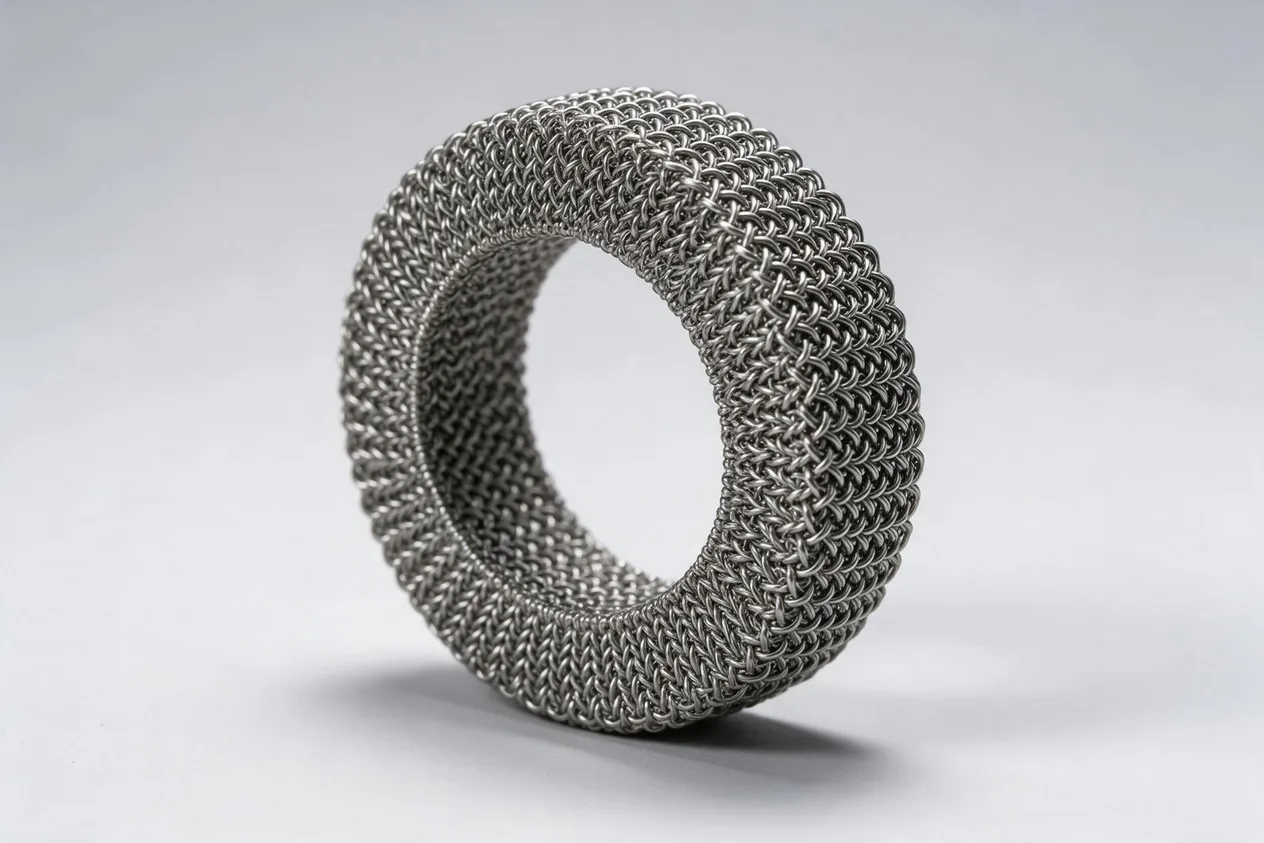
Compressed Knitted Wire Mesh Ring
304 Stainless Steel · 40–120 mesh
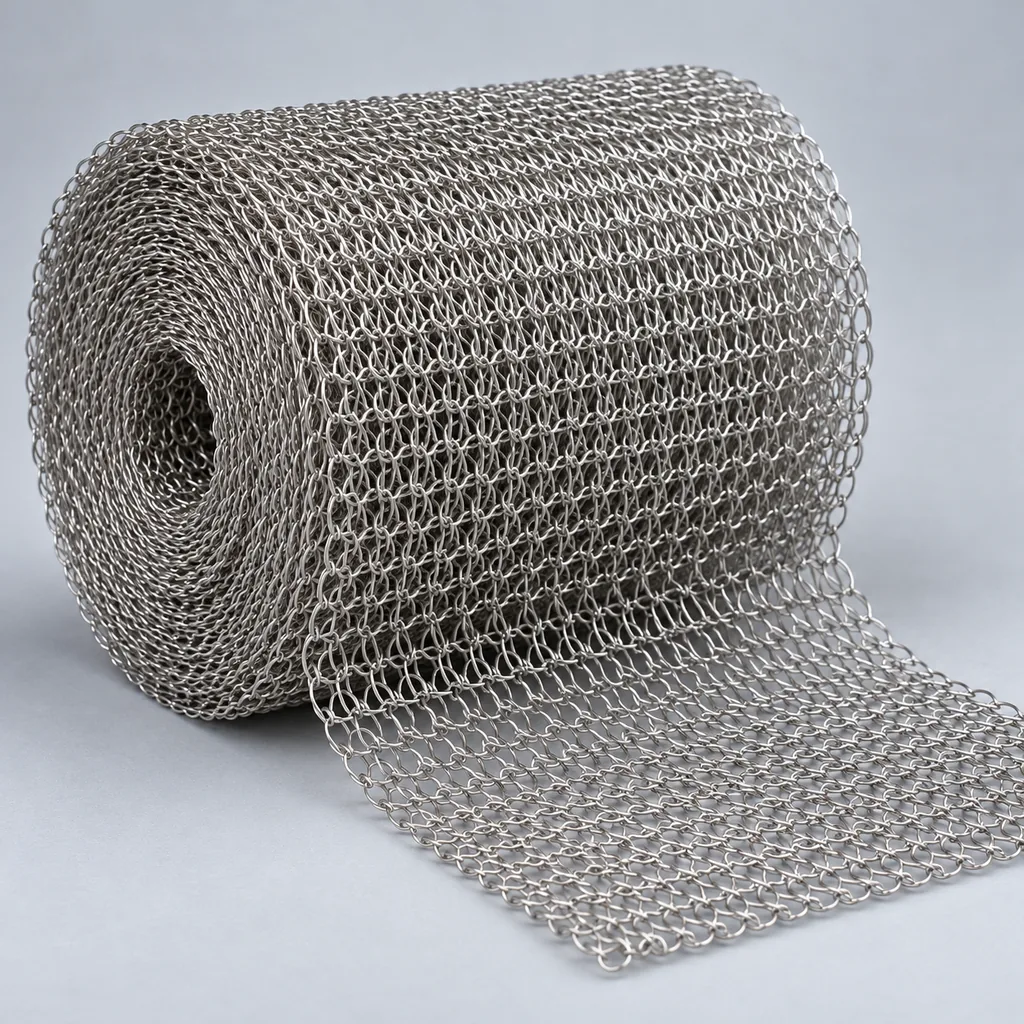
Stainless Steel Knitted Wire Mesh
304 Stainless Steel · 40–120 mesh
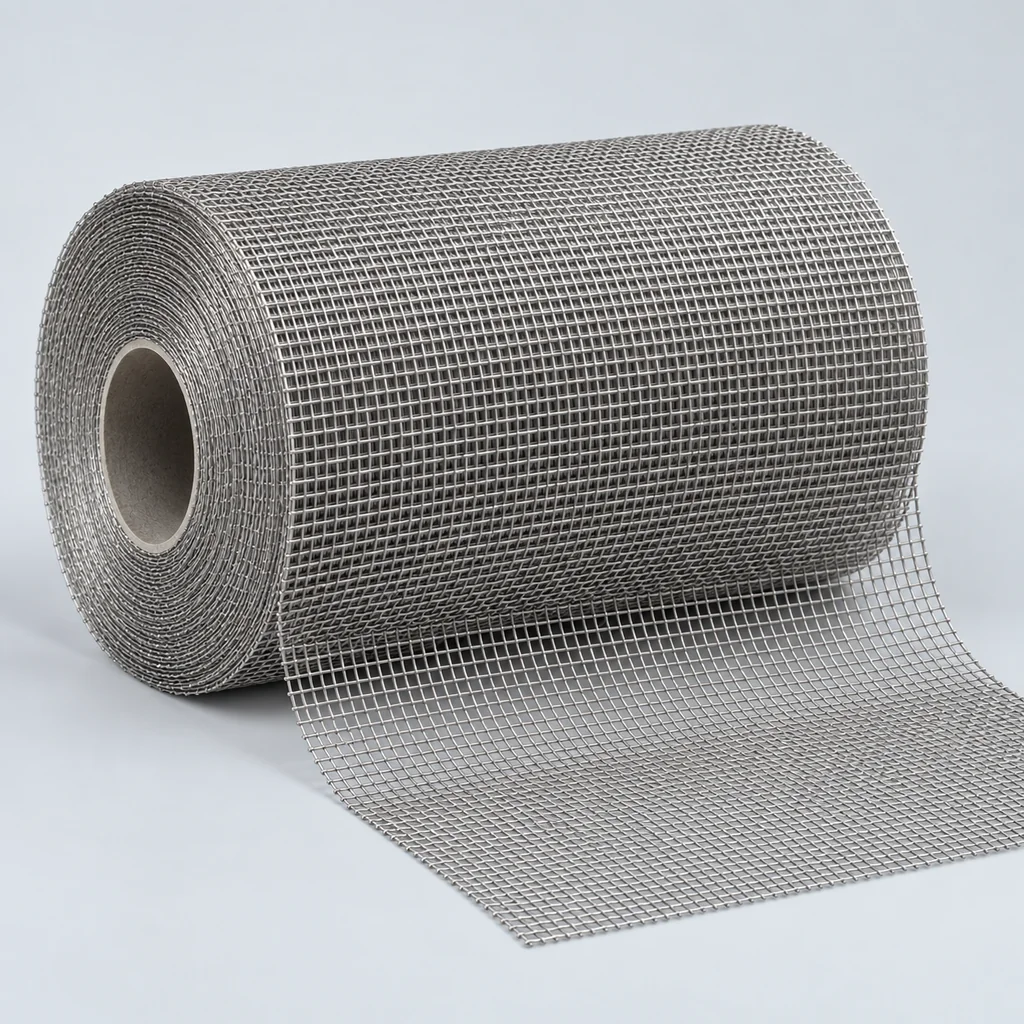
304 Stainless Steel Plain Weave Mesh
304 Stainless Steel · 20–325 mesh
304 Stainless Steel Twill Weave Mesh
304 Stainless Steel · 20–325 mesh
Specify Your New or Replacement Demister Pad
Send the pad or vessel drawing, dimensions, process conditions, material and required assembly scope. Include quantity and destination to request a quotation against a defined demister pad specification.