Epoxy Mesh Supplier: Epoxy Coated Wire Mesh Rolls & Cut Pieces
Source epoxy mesh with an electrostatic epoxy powder coating fused onto steel or aluminum wire. Compare mesh counts, wire diameters, and coating routes for filter support layers, insect screens, speaker grilles, and guards, then request a factory quote.
View SpecificationsEpoxy Mesh Coating and Specification Guide
Epoxy mesh starts with a woven wire cloth or welded grid, then receives a thermoset epoxy coating: powder is applied by electrostatic spray or fluidized bed and oven-cured at 180-200 C, fusing into a continuous 30-80 micron film. The core wire is low-carbon steel (Q195/Q235 class) for strength and economy, or aluminum alloy (5052/5154 class) for lightweight screens. State mesh count, wire diameter, opening, core material, coating color and film thickness, form, and quantity in every RFQ. Epoxy mesh specifications combine woven geometry with film properties, so both the mesh numbers and the coating numbers belong in the RFQ.
Thermoset epoxy powder fused by electrostatic spray or fluidized bed, oven-cured at 180-200 C to a 30-80 micron continuous film
Low-carbon steel wire (Q195/Q235 class) or aluminum alloy wire (5052/5154 class); confirm the core material in the RFQ
Plain weave wire cloth, twill weave wire cloth, welded wire mesh, and fine insect screen mesh
Black and gray standard; white and custom RAL colors on request with batch production
Fine woven cloth from 14 mesh to 100 mesh; welded guards from 1/2 in opening upward
0.15-0.60 mm for woven cloth; 1.0-4.0 mm for welded mesh; state coated and core dimensions
Rolls 0.9-1.5 m wide by 15-30 m long, sheets, and cut-to-size pieces
Select one or more specifications. Your choices will be included in the quote request.
0 specs selected
| Coating route | Structure | Expected service | Typical use and RFQ note | |
|---|---|---|---|---|
| Electrostatic powder spraying | Epoxy powder charged and fused at 180-200 C into a 30-80 micron film | Smooth even film with good coverage on fine wire | The standard route for epoxy mesh cloth and screens. Confirm film thickness and cure schedule in the RFQ. | |
| Fluidized bed dipping | Preheated wire dipped in fluidized epoxy powder for a thicker build | Thicker, tougher film on coarse wire and welded mesh | Epoxy mesh guards and heavy screening where film thickness matters more than fine detail. | |
| Electrophoretic epoxy (e-coat) | Aqueous epoxy bath deposits an even film before oven cure | Uniform thin film with excellent coverage on complex weaves | Fine filter support meshes where opening consistency and edge coverage are critical. | |
| PVC dip coating | Plasticized PVC jacket 0.4-0.8 mm thick over the wire | Soft thick jacket for fencing and outdoor color work | Fencing and enclosures; not a substitute for epoxy where solvents, oil, or heat are present. |
Common Stock Sizes: Epoxy Coated Plain Weave Wire Mesh
Typical stock epoxy mesh grades in black and gray. Rolls are commonly 0.9-1.5 m wide by 15-30 m long; sheets cut to size. Opening equals 25.4 divided by mesh count minus wire diameter, so both numbers define what passes through.
| Mesh count | Wire diameter (mm) | Opening (mm) | Form | Common use | |
|---|---|---|---|---|---|
| 14 x 14 | 0.25 | 1.56 | Rolls | Window screens and coarse screening | |
| 16 x 16 | 0.25 | 1.34 | Rolls | Window and door screens | |
| 18 x 16 | 0.23 | 1.18 | Rolls | Insect screens and dust screening | |
| 18 x 18 | 0.25 | 1.16 | Rolls | Insect screens, light filtration backing | |
| 24 x 24 | 0.20 | 0.86 | Rolls | Filter support and backing | |
| 40 x 40 | 0.16 | 0.48 | Rolls | Fine filter support layers |
Epoxy Coated Insect Screen Mesh Specifications
Fine-count screens with an aluminum alloy or steel core, coated black or gray. Aluminum core keeps the screen light and corrosion resistant; steel core adds strength for larger spans. Confirm roll width and frame type at RFQ.
| Mesh count | Core wire | Coated wire (mm) | Roll width | Typical use | |
|---|---|---|---|---|---|
| 14 x 14 | Aluminum 5052 | 0.23-0.28 | 0.9-1.2 m | Standard window screens | |
| 16 x 16 | Aluminum 5052 | 0.25-0.30 | 0.9-1.2 m | Windows and door screens | |
| 18 x 16 | Aluminum 5052 / steel | 0.23-0.28 | 0.9-1.5 m | Fine insect and dust screening | |
| 18 x 18 | Aluminum 5052 / steel | 0.25-0.30 | 0.9-1.5 m | Patio and pet screening | |
| 20 x 20 | Steel | 0.25-0.30 | 0.9-1.5 m | Sandfly and fine dust screening |
Filter Support Mesh: Typical Pleated Filter Backing Grades
Epoxy mesh used as the inner support layer of pleated filter elements. The coated wire holds pleat geometry and resists the fluid, while the opening keeps pressure drop low. Open area figures are approximate for square-mesh geometry.
| Mesh count | Wire diameter (mm) | Open area (approx.) | Pleat support role | Common filter duty | |
|---|---|---|---|---|---|
| 30 x 30 | 0.19 | 60% | Light backing | Hydraulic return filters | |
| 40 x 40 | 0.16 | 56% | Standard backing | Hydraulic and lube oil filters | |
| 60 x 60 | 0.12 | 51% | Fine backing | Air intake and fuel filters | |
| 80 x 80 | 0.10 | 47% | Precision backing | Fine air and process filters | |
| 100 x 100 | 0.08 | 47% | Extra-fine backing | High-efficiency pleated elements |
Epoxy Coating Acceptance Checklist
Use these checkpoints to verify epoxy mesh on arrival. State the target values in the RFQ so the factory quotes against them and ships certificates.
| Checkpoint | Typical target | Why it matters | |
|---|---|---|---|
| Film thickness | 30-80 micron fused epoxy, measured at several points | Thin or uneven film exposes wire at wear points and cut edges | |
| Adhesion | No flaking when wire is bent 180 degrees around its own diameter | Poor adhesion fails at the first fold, pleat, or tensioning | |
| Pinholes and bare spots | None under 5-10x magnification | Every pinhole is a corrosion and adhesion starting point | |
| Color and gloss | Uniform across rolls; no patchiness between batches | Mixed batches show visible patchwork on screens and grilles | |
| Cure state | Film hard and solvent-resistant to a rub test | Under-cured film stays soft and blocks fine mesh openings | |
| Opening consistency | Opening variance within mesh tolerance | Pleating, airflow, and filtration all depend on uniform openings |
Container Loading Reference: Epoxy Coated Wire Mesh
Reference loading for freight planning, assuming standard rolls and stacked sheets. Rolls stow denser than sheets and panels. Road weight limits at destination and the final packing list govern.
| Container | Rolls | Sheets / cut pieces | Approximate coverage | |
|---|---|---|---|---|
| 20' GP | 60-90 rolls | 400-600 sheets | 2,000-3,500 m2 | |
| 40' GP | 120-180 rolls | 800-1,200 sheets | 4,000-7,000 m2 | |
| 40' HQ | 140-200 rolls | 900-1,400 sheets | 5,000-8,000 m2 |
Epoxy Mesh RFQ Template
Copy this field list into your inquiry. A complete RFQ gets one accurate quote instead of three rounds of clarification.
| Field | Example | Why it matters | |
|---|---|---|---|
| Construction | Epoxy coated plain weave wire cloth | Sets the production line and quoting basis | |
| Mesh count | 18 x 16 | Defines what passes through the screen | |
| Wire diameter | 0.23 mm coated | Sets strength, open area, and price together with the count | |
| Core material | Aluminum 5052 or low-carbon steel | Drives weight, corrosion behavior, and cost | |
| Coating color and film thickness | Black, 40 micron min | Locks appearance and durability expectations | |
| Form and dimensions | Rolls, 1.2 m wide x 30 m | Sets packing, loading, and handling needs | |
| Quantity and destination | 200 rolls, CIF Rotterdam | Drives price tier and freight planning | |
| Certificates / inspection | Coating certificates + pre-shipment inspection | Defines acceptance criteria up front |
Epoxy vs PVC Coated vs Galvanized Wire Mesh
The three mainstream protection routes for wire mesh, with epoxy mesh as the hard-film option. Start from the fluid, environment, and temperature, then let cost decide between candidates.
| Factor | Epoxy coated | PVC coated | Galvanized | |
|---|---|---|---|---|
| Film character | Thin hard thermoset film, 30-80 micron | Thick soft plastic jacket, 0.4-0.8 mm | Zinc layer, no polymer film | |
| Oil, fuel, and solvent resistance | Excellent; the film is inert to petroleum fluids | Fair; PVC softens in some solvents | Unaffected by fluids; zinc is sacrificial | |
| Temperature range | Continuous use to roughly 120-150 C | Softens above about 60 C | Unlimited until zinc melts | |
| Outdoor color life | Good; UV-stable black and gray | Excellent with UV-stable compound | No color; dulls to matte gray | |
| Cut-edge repair | Touch-up epoxy paint or edge trim | Caps, sleeves, or repair compound | Zinc-rich paint on cut ends | |
| Best for | Filter support, screens, grilles, guards | Fencing and outdoor enclosures | Fences, farms, construction, gabions |
Constructions We Supply in Epoxy Coated Wire
One coating family, many constructions. Compare plain weave, twill weave, welded, and screen formats of epoxy mesh before you specify.
Epoxy coated plain weave wire mesh
The standard construction for screens, grilles, and filter backing: a simple over-under weave in fine to medium counts.
Epoxy coated twill weave wire mesh
Heavier wires woven twill for greater strength and stable openings in demanding filter and screen duty.
Epoxy coated welded wire mesh
A rigid welded grid with a thick fused epoxy build for machine guards, security screens, and enclosures.
Epoxy coated insect screen mesh
Fine aluminum-core mesh in window-screen counts, coated black or gray for long outdoor service.
Where Epoxy Mesh Is Used
Choose epoxy mesh when the part must resist oil, moisture, and abrasion while keeping consistent openings and a clean finish.
Hydraulic and air filter support
Epoxy mesh forms the inner support layer of pleated filter elements, holding pleat geometry while oil or air flows through without blocking.
Window and insect screens
Fine epoxy coated aluminum mesh keeps insects out while resisting corrosion and cleaning easily with water.
Speaker and appliance grilles
Black epoxy mesh covers speakers and appliances with a consistent acoustic mesh that shrugs off fingerprints and humidity.
Particle grading and sifting
Epoxy coated cloth supports grading screens and protects finer sieve layers in multi-deck separation machines.
Automotive and mobile filtration
Fuel, oil, and air filter elements in vehicles use epoxy coated support mesh for pleat stability and chemical resistance.
Industrial guarding and screening
Epoxy coated welded mesh panels shield machinery and secure openings with a tough, non-glare finish.
How to Select the Right Epoxy Mesh
Start from the application, then fix the epoxy mesh core wire, mesh count, film thickness, color, and verification. A complete RFQ avoids assumptions and re-quotes.
Start from the application
Filter backing needs fine counts and uniform openings; screens need strength and appearance; guards need heavy wire and a thick film build.
Choose the core wire
Aluminum alloy keeps screens light and corrosion resistant; low-carbon steel adds strength and lowers cost. Name the core material in the RFQ.
Mesh count and wire diameter together
The count decides what passes, the wire diameter decides strength and open area. State both numbers, never count alone.
Film thickness vs flexibility
Thicker films resist wear but can crack at tight bends. Flexible screens need a thin film; guards and heavy screening need a thick build.
Fix the color with a reference
Black and gray run in stock programs. Custom colors produce in batch lots, so quote against a RAL code and approve a swatch before bulk.
Plan for cut edges
Cut edges expose the core wire. Order touch-up epoxy or edge trim with cut pieces so corrosion does not start at the frame line.
By form
Rolls suit continuous screening runs; sheets and cut pieces suit panels and grilles; welded panels suit guarding and enclosures.
Verify with a sample
Request a sample of the exact count, wire, and color before bulk. Check adhesion with a 180-degree bend and film thickness with a gauge.
Epoxy Mesh Buying Mistakes to Avoid
Six epoxy mesh buying errors that shorten service life or trigger rejection disputes. Each one is avoidable at the RFQ stage.
Specifying epoxy coated without film thickness
A thin or uneven film exposes wire at wear points and cut edges. State 30-80 micron targets and verify on arrival.
Ignoring the core material
Steel and aluminum cores behave differently under corrosion and weight loads. An unnamed core invites the factory to choose the cheapest.
Ordering screens by mesh count alone
The same count with a thicker wire gives a smaller opening and less open area. Always pair count with wire diameter.
Confusing epoxy with PVC coating
The two films differ in thickness, flexibility, temperature range, and oil resistance. Quotes that look cheap may be PVC in disguise.
Leaving cut edges unprotected
Cut edges expose bare core wire and corrode first. Order touch-up compound or edge trim with every cut-to-size piece.
Skipping the adhesion check
A 180-degree bend test on arrival catches flaking film that no paperwork can justify. Require the check in the RFQ.
Why Buyers Choose Epoxy Mesh
Epoxy mesh pairs a hard fused film with consistent woven openings: chemical resistance and clean appearance at a fraction of stainless cost.
Oil and solvent resistant film
The cured epoxy film resists petroleum fluids, mild acids, and alkalis, which is why filter elements rely on it as support mesh.
Cost-effective vs stainless
Coated steel and aluminum wire deliver corrosion resistance at a fraction of stainless steel wire cloth cost, which keeps epoxy mesh the economical choice for screens and filter backing.
Long, low-maintenance service
A quality film over the right core runs for years in screens and filter elements with nothing but routine washing.
Consistent openings for filtration
Woven construction and controlled coating keep epoxy mesh openings uniform, so pleating, airflow, and separation behave predictably.
Clean, uniform appearance
Black and gray epoxy finishes read professional on grilles, guards, and screens, and hide handling marks better than bright metal.
Fast turnaround on stock grades
Standard counts, colors, and roll widths ship from stock programs in days; custom colors and builds follow in weeks.
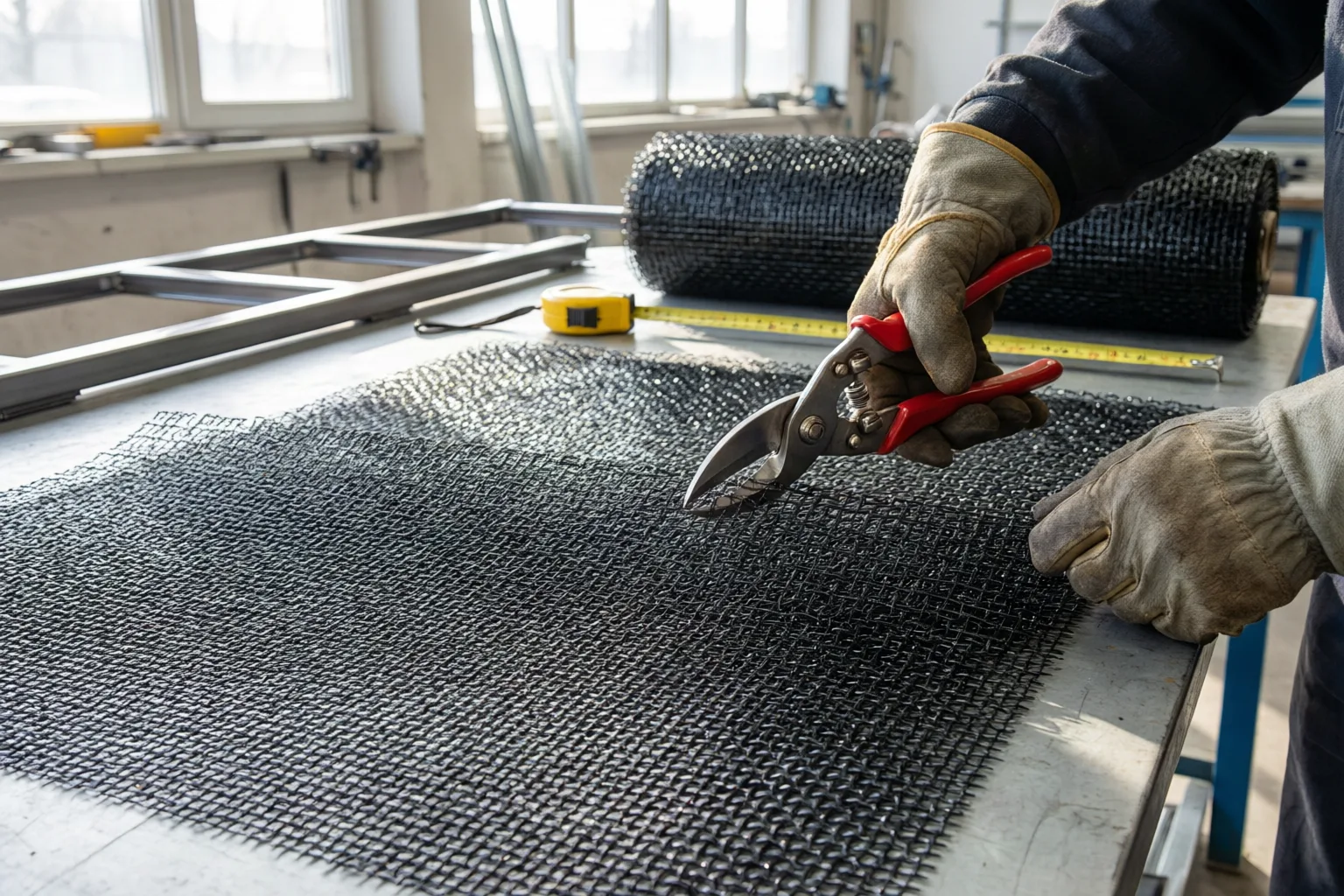
Protect the film. Cut cleanly, seal edges, and form without sharp creases for a long, neat service life.
Working with Epoxy Mesh
Cut with shears, not heat
Use aviation snips, a guillotine, or a fine-tooth saw to cut epoxy mesh. Torches and grinding discs burn the epoxy film back from the cut and expose the core.
Seal every cut edge
Touch up exposed ends with matching epoxy paint or trim with an edge channel so moisture cannot climb the bare wire.
Form without sharp creases
Tight folds crack the film. Use a radius of at least a few wire diameters at bends, and tension evenly when fitting screens.
Clean with mild detergents
Rinse with water and wipe with mild detergent. Avoid solvent cleaners and abrasive pads, which dull or strip the film.
Epoxy Mesh Packing for Export
Packing protects the epoxy mesh finish, keeps rolls round and sheets flat, and preserves traceability through transit and receiving inspection.
Rolls wrapped and banded
Rolls ship in waterproof film and woven bags, stood on pallets with protected ends so the coating never scuffs during handling.
Flat packing for sheets
Sheets and cut pieces pack flat on pallets or in plywood cases with interleaving paper and corner protection.
Edge and corner protection
Every bundle carries corner guards and strapping that never bears directly on the coated surface.
Label by count and color
Each bundle lists construction, mesh count, wire diameter, core material, color, film thickness, dimensions, and quantity.
Certificates and inspection
Film thickness and adhesion certificates accompany the shipment when requested. Pre-shipment inspection by SGS, BV, or TÜV is available on request.
Epoxy Mesh in Service
Use scenarios show how core wire and coating change by duty; they are not customer claims.
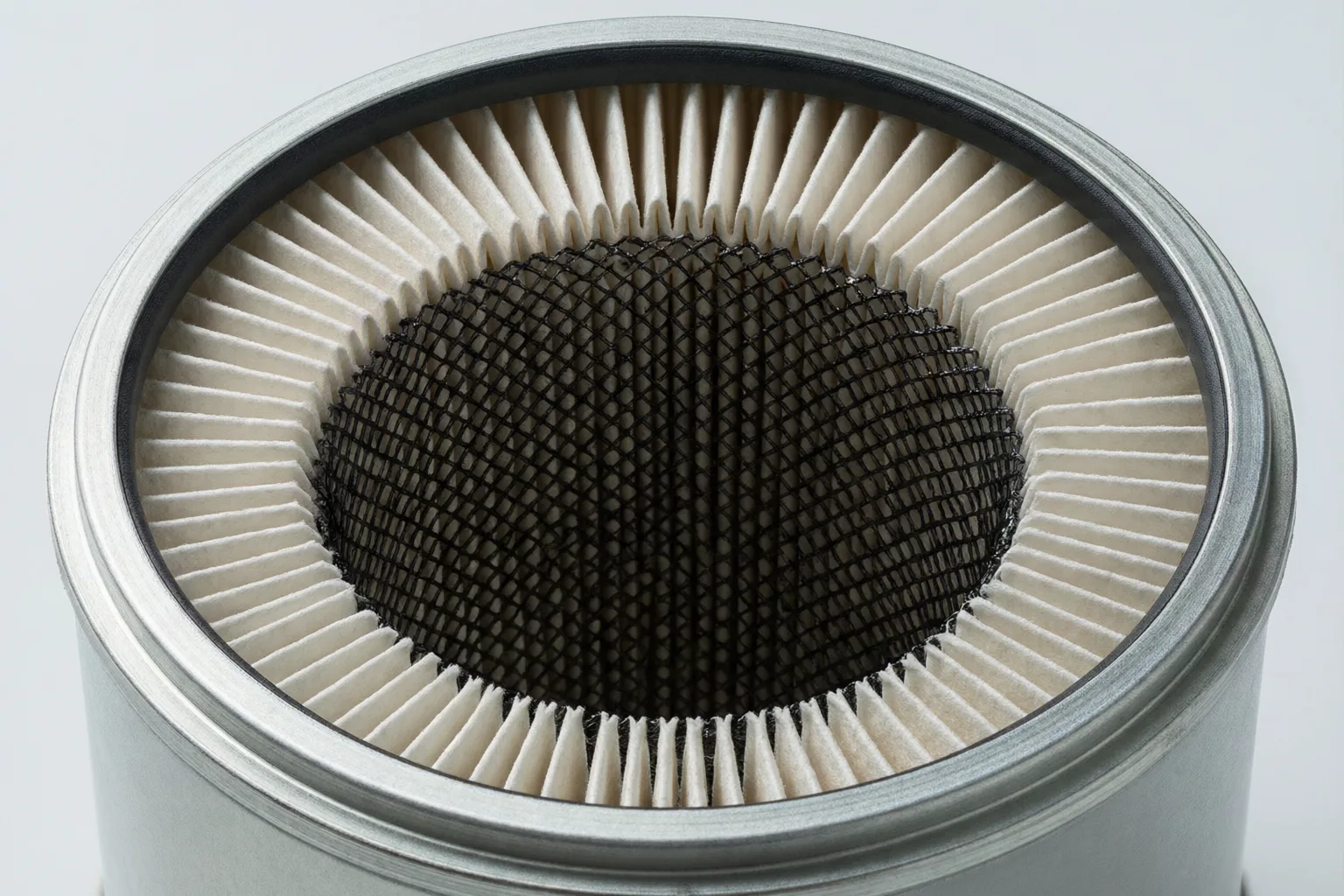
Pleated filter element backing
Epoxy coated 40 x 40 mesh specified as the inner support layer of a hydraulic filter element, holding pleat geometry against oil flow.
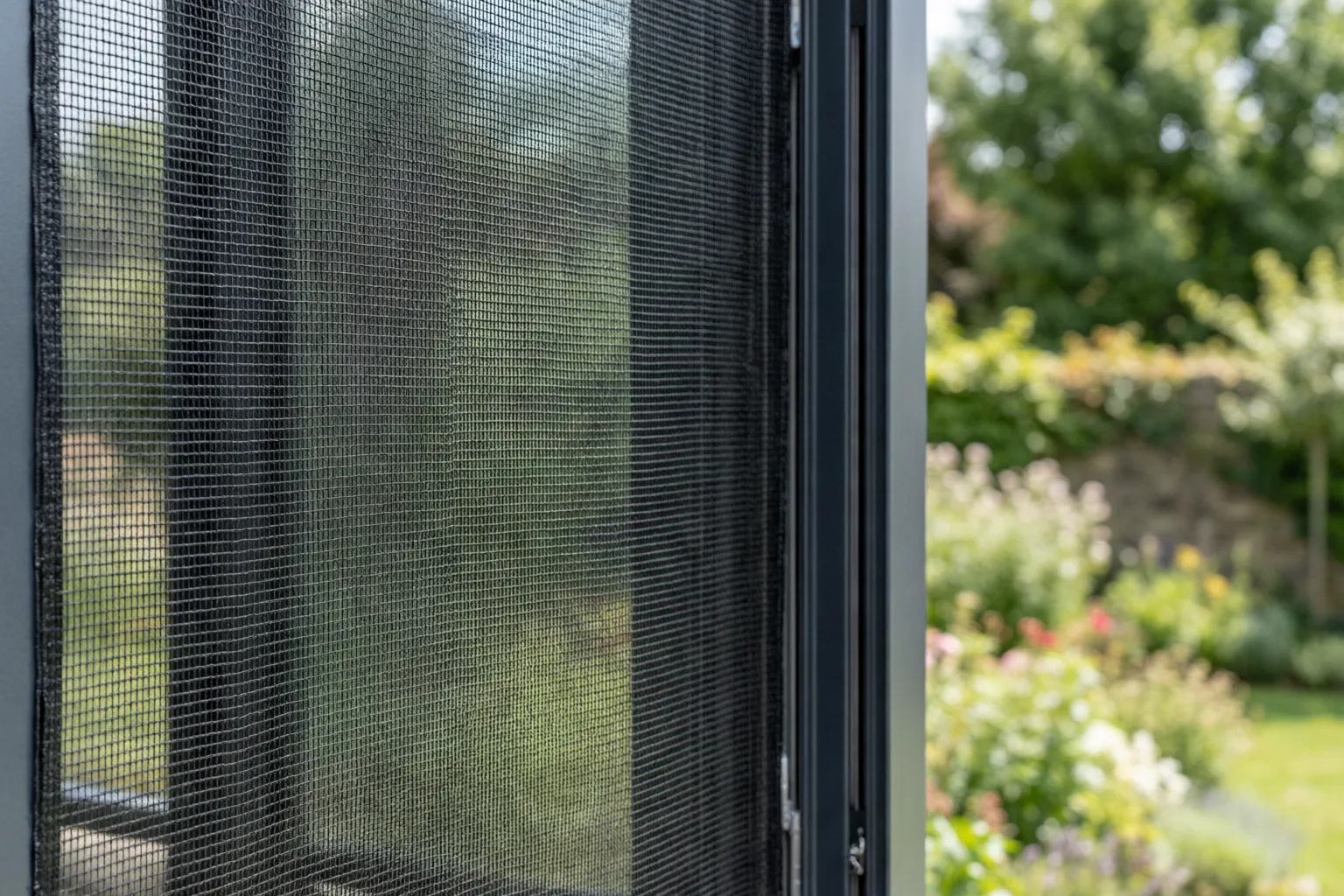
Residential window screening
Fine epoxy coated aluminum screen mesh in black, fitted to residential window frames where corrosion resistance and clean lines both matter.
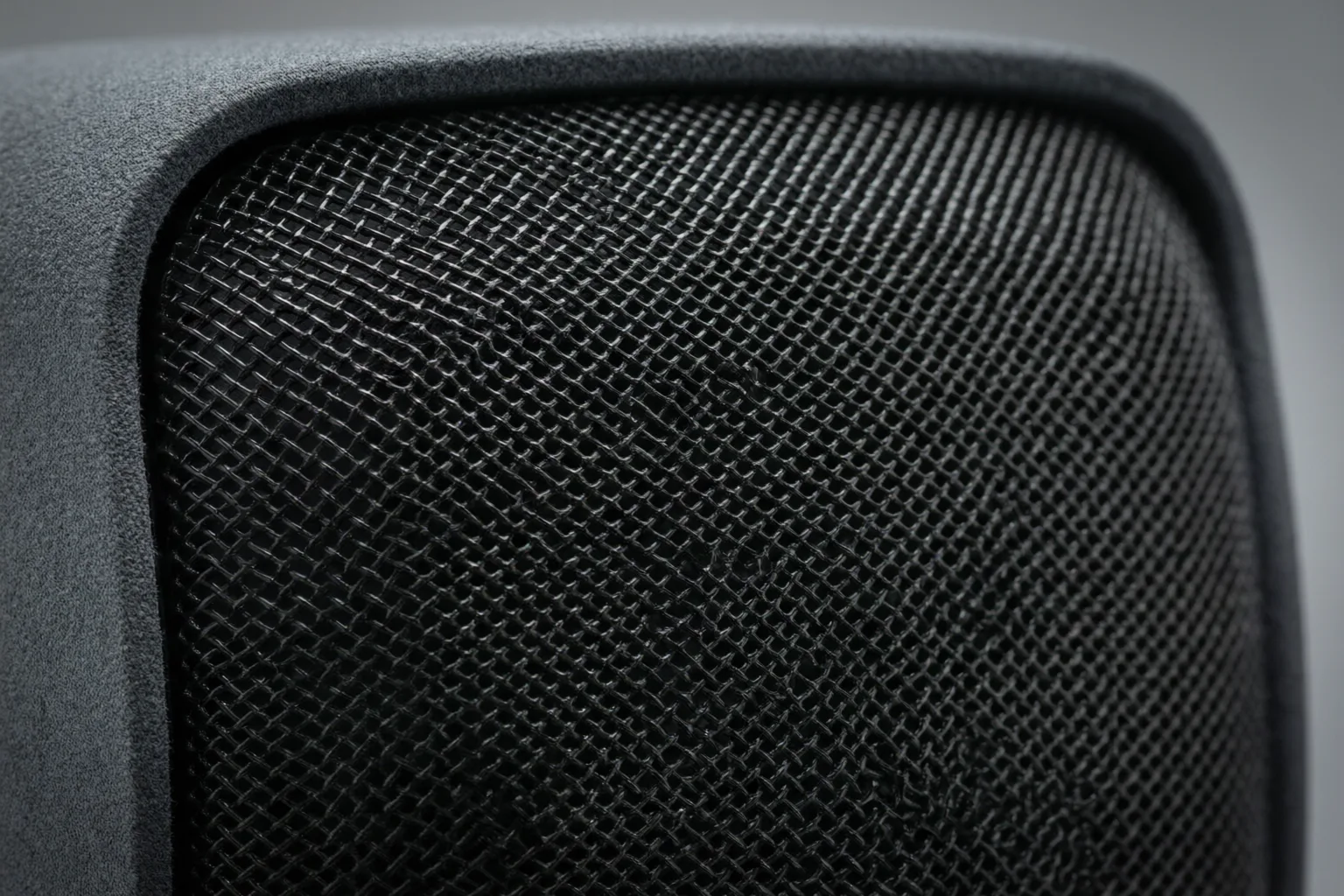
Speaker grille production
Black epoxy coated plain weave cloth selected for speaker grilles, balancing acoustic openness, appearance, and fingerprint resistance.
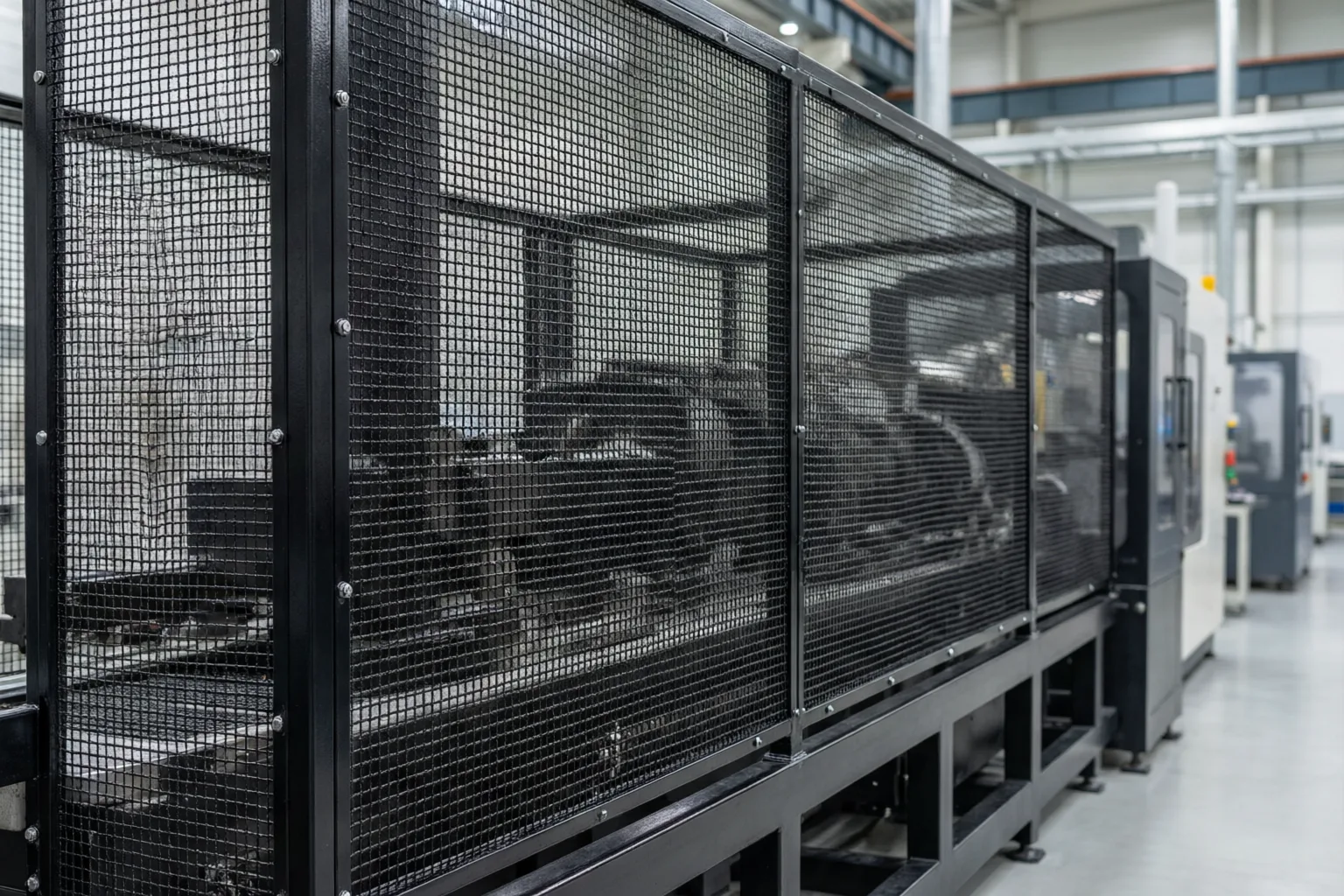
Machine guarding panels
Epoxy coated welded mesh panels with a thick film build used for equipment guarding where impact and wash-down duty are expected.
Epoxy Mesh Sourcing Resources
Compare coating routes and core materials. Confirm the project requirements, fluid, and color reference before ordering.
Last updated: 2026-08-24
Related pages
Reference standards
Epoxy Mesh FAQ
Common procurement questions about epoxy mesh coating, constructions, and ordering.
Still have questions about epoxy mesh?
Send your construction, mesh count, wire diameter, core material, coating color and film thickness, dimensions, and quantity. Our sourcing team replies with a specification-led review.
Request a QuoteRequest Epoxy Mesh Pricing
Send construction, mesh count, wire diameter, core material, coating color and film thickness, dimensions, quantity, application, and destination for a specification-led sourcing review. Our team replies with matched epoxy mesh options and a factory quote.
Your details stay private. We reply with a matched factory quote — no spam.