Stainless Steel Welded Wire Mesh: Specs & Sourcing
Compare stainless steel welded wire mesh grades, openings, wire diameters, panels and rolls. Send your specification for a sourcing quote.
View SpecificationsStainless Steel Welded Wire Mesh Specifications
Stainless steel welded wire mesh is a grid of intersecting stainless wires joined at their crossings. The fixed intersections distinguish it from woven wire cloth. A usable specification identifies grade, wire diameter, clear opening or center-to-center pitch, finished dimensions and acceptance criteria. Our current catalog includes a 304 welded mesh panel reference; 316/316L, rolls and custom dimensions require a separate sourcing review. Images on this page are AI-generated illustrations and do not verify alloy grade or a delivered product.
State 304, 304L, 316 or 316L explicitly. Use the grade comparison below to prepare the RFQ, then confirm the proposed material and documentation.
Clear opening is the gap between adjacent wires; pitch is their center-to-center spacing. State both directions for rectangular mesh and identify which dimension your drawing uses.
Specify diameter in mm, with inch equivalents if needed. If using a gauge number, name the gauge system and provide its diameter equivalent.
State panel width and length, or roll width and length, plus edge condition, flatness and any framing or cutting requirement. Confirm the available form before ordering.
Agree dimensional tolerances, weld-junction checks, material evidence, surface condition and packing. ASTM A580/A580M addresses stainless wire; it does not by itself certify the finished welded mesh.
Select one or more specifications. Your choices will be included in the quote request.
0 specs selected
| Grade | Selection starting point | Welding consideration | What to confirm in the RFQ | |
|---|---|---|---|---|
| 304 | General-purpose stainless grade to evaluate for indoor screens, partitions and suitable washdown environments. | Review weld quality and the required surface condition after fabrication. | Current panel catalog reference. Confirm actual environment, geometry, availability and material evidence. | |
| 304L | Low-carbon member of the 304 family to evaluate when fabrication or the purchase specification calls for it. | Outokumpu identifies reduced carbide precipitation during welding from the lower carbon content; grade selection still depends on the fabrication route. | Specify 304L explicitly and request the supporting material record. Supply requires confirmation. | |
| 316 | Molybdenum-alloyed grade to evaluate where pitting and crevice corrosion resistance demands exceed those of 304. | Joint quality, contamination control and post-fabrication surface requirements remain relevant. | Describe chlorides, cleaning chemicals and service temperature. Supply and suitability require confirmation. | |
| 316L | Low-carbon member of the 316 family for applications that require its chemistry and fabrication characteristics. | Outokumpu identifies improved resistance to intergranular corrosion after welding from the low-carbon chemistry. | Specify 316L and the required documentation. It is not a blanket approval for seawater or aggressive chemicals; supply requires confirmation. |
304 Welded Mesh Panel: Current Catalog Reference
These wire and clear-opening values come from the existing Stainless Steel Welded Wire Mesh Panel catalog record. They are reference combinations, not a stock list or a promised manufacturing range. Confirm tolerances, panel size, surface condition, quantity and availability in the quotation.
| Material | Wire diameter (mm) | Clear opening (mm) | Listed form | |
|---|---|---|---|---|
| 304 stainless steel | 1.6 | 11.1 | Panel; confirm finished dimensions | |
| 304 stainless steel | 0.8 | 5.55 | Panel; confirm finished dimensions | |
| 304 stainless steel | 0.5 | 2.68 | Panel; confirm finished dimensions |
Welded Mesh vs Woven Wire Cloth vs Expanded Metal
The construction changes how the material is specified and fabricated. Darby's welded mesh overview explains the fixed intersections and cutting behavior; use the linked guides to compare the other constructions.
| Construction | How it is formed | Dimensions to specify | Selection consideration | |
|---|---|---|---|---|
| Welded wire mesh | Intersecting wires joined at the crossings. | Clear opening or pitch in each direction, wire diameter and finished dimensions. | Fixed intersections suit defined grids and cut parts; confirm weld quality and required rigidity. | |
| Woven wire cloth | Separate wires interlaced in a weave. | Weave, mesh count or aperture, wire diameter and finished dimensions. | Evaluate for screening or filtration geometry; cut edges may require securing. | |
| Expanded metal | A sheet slit and stretched into an interconnected pattern. | Diamond dimensions, strand width, sheet thickness and raised or flattened form. | Evaluate the one-piece sheet structure and surface profile rather than quoting it as welded wire. |
Panels, Rolls and Parts to Specify
Describe the form your installation needs. The current catalog reference is a 304 panel; roll construction, other grades and fabrication requests are subject to sourcing and quotation confirmation.
Flat welded mesh panels
State width, length, wire direction, clear openings, flatness and edge condition. Panels are a starting point for framed screens and infill where finished geometry matters.
Welded mesh rolls
Provide roll width, length, wire diameter and opening size. Ask whether the requested combination can be supplied in roll form and agree acceptable curl or flattening requirements.
Cut-to-size pieces
Attach a drawing with finished dimensions, quantities, cutting tolerances and edge requirements. Confirm how the cuts align with wire intersections and whether projecting wire ends are acceptable.
Framed or fabricated assemblies
Define the mesh, frame material, connection method, mounting details and surface requirements separately. Fabrication capability and the final inspection scope require review before a quote is agreed.
Where Buyers Evaluate Stainless Welded Mesh
Use the intended application to define the mesh geometry, material environment and assembly requirements. These are use scenarios, not evidence of completed customer projects or application-specific approval.
Shelving and storage inserts
Define the supported items, span, frame and cleaning regime. Opening size alone cannot establish shelf capacity; provide the required loading and assembly details for review.
Equipment screens and guards
Specify visibility, ventilation, opening dimensions, frame attachment and the applicable guarding requirements. The mesh quotation should follow the equipment designer's approved requirements.
Industrial partitions
Match panel dimensions and grid orientation to the frame layout. Describe moisture, chemical exposure, edge treatment and connection details when comparing material grades.
Architectural infill
Align the grid, perimeter wires and finish with the visual specification. State mounting and structural requirements separately rather than inferring them from a mesh photograph.
Baskets and support grids
Provide the part drawing, opening requirement, joining method and cleaning conditions. Direct food-contact use needs a defined material, finish and applicable compliance requirement in the RFQ.
Ventilation and enclosure screens
Specify what must pass through or be retained, then choose openings and wire diameter accordingly. Confirm mounting, exposure and maintenance access for the finished enclosure.
How to Select Stainless Steel Welded Wire Mesh
Start with the environment and finished assembly, then define the geometry and inspection scope. WireMesh Sourcing coordinates specification-led factory matching, quality control and export requirements against the agreed brief.
Describe the operating environment
State indoor or outdoor service, moisture, chlorides, chemicals, temperature and cleaning conditions. Outokumpu's corrosion guidance explains why alloy selection depends on the complete environment.
Separate clear opening from pitch
For parallel round wires of equal diameter, pitch equals clear opening plus wire diameter. As a geometry example, a 25.4 mm clear opening (1 inch) with 2.0 mm wire gives 27.4 mm pitch. A 25.4 mm pitch with the same wire gives a 23.4 mm clear opening. These are examples, not offered specifications.
Specify both grid directions
For square mesh, confirm equal spacing in both directions. For rectangular mesh, state each opening or pitch and the wire diameters and orientation, using a drawing when needed.
Define the final part
Include panel or roll dimensions, cutting pattern, edge condition, flatness, frame details and mounting requirements. Request confirmation for dimensions or forms beyond the catalog reference.
Agree acceptance evidence
List required material records, dimensional checks, weld-junction inspection and any agreed test method or sampling plan. Distinguish requirements for the starting wire from acceptance of the finished mesh.
Provide quantity and delivery context
Send the piece or roll count, any sample requirement, packing preference, delivery destination and required date. These fields establish a quotation basis; price and schedule are confirmed for the actual order.
Avoid These Welded Mesh Purchasing Mistakes
Resolve the following ambiguities before comparing quotations or releasing a purchase order.
Calling pitch an opening
A nominal 1 inch grid may describe spacing between wire centers rather than the free gap. Label dimensions as clear opening or center-to-center pitch on the drawing.
Ordering by gauge alone
Gauge numbers depend on the system used. State the system and the actual diameter in mm or inches so suppliers quote the same wire size.
Treating all stainless grades as equivalent
304 and 316 have different alloy chemistry, and low-carbon designations carry additional requirements. State the grade explicitly and match the evidence to that designation.
Assuming a photograph proves the grade
A product image cannot verify alloy chemistry, weld quality or stock availability. Use agreed material documentation and inspection rather than appearance as the acceptance basis.
Accepting a wire standard as finished-mesh certification
ASTM A580/A580M covers stainless steel wire. Specify finished-mesh tolerances, weld checks and assembly requirements separately; woven-wire standards should not be applied automatically to welded mesh.
What the Welded Construction Adds
The fixed grid provides practical handling and fabrication characteristics. Final performance also depends on wire diameter, opening, weld quality, support and material selection.
Fixed wire intersections
Joined crossings hold the grid together during handling and cutting. Specify the weld acceptance criteria needed for the finished application.
Grade-specific corrosion selection
304 and molybdenum-alloyed 316 provide distinct selection routes. Evaluate the actual exposure and surface condition rather than assuming every stainless mesh has the same corrosion behavior.
A defined cutting layout
Fixed intersections can simplify specifying rectangular pieces and other cut shapes. Agree perimeter-wire positions and edge treatment to avoid rework in the frame.
Measurable grid geometry
Clear opening, pitch and wire diameter can be checked against the agreed drawing. Keeping the three dimensions explicit makes supplier comparisons more meaningful.
A clearer quotation basis
Sharing grade, geometry, finished form and quantity lets the sourcing team assess one defined requirement instead of interpreting an incomplete mesh label.
Inspection planned with the order
Material evidence, dimensional checks, weld inspection and packing can be specified before production. Confirm the agreed scope and records in the quotation and purchase order.
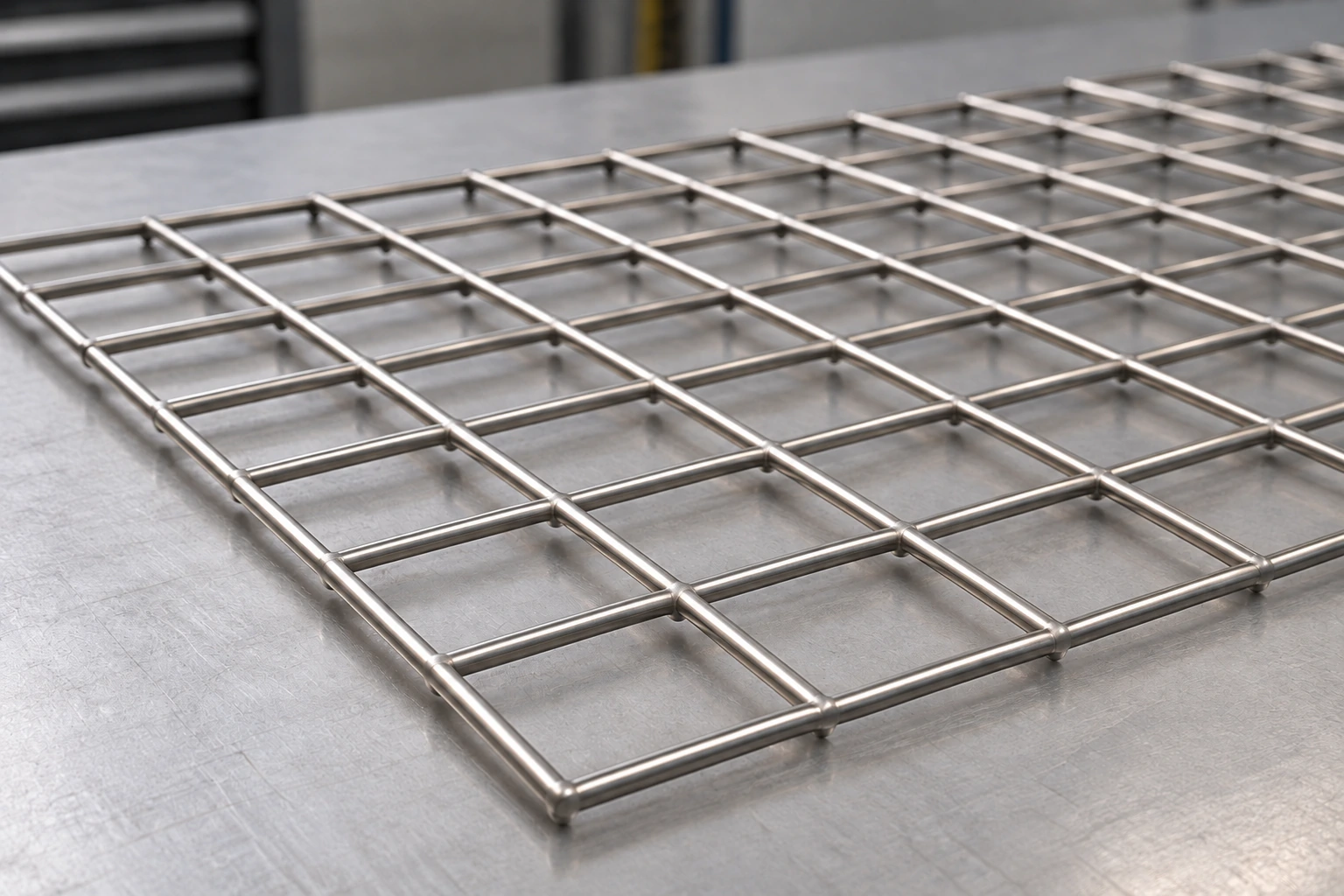
AI-generated illustration of welded mesh inspection details. It does not establish stainless grade, a delivered product, mounting compliance or load capacity. Use the approved drawing and agreed acceptance requirements for the actual assembly.
Check the Mesh Before Fitting It to the Assembly
Verify the delivery against the order
Match identification and material records to the ordered grade and quantity. Record any discrepancy before accepting the material for fabrication.
Check dimensions and intersections
Measure wire diameter, clear openings, finished dimensions and flatness against the agreed tolerances. Review the specified weld-junction checks and document damage or missing joints.
Review the frame and cut edges
Confirm that the cut pattern, projecting wires, edge treatment and mesh orientation match the assembly drawing. Resolve mismatches before mounting.
Follow the approved installation design
Use the specified frame, supports and fasteners. For loaded shelves, guards or architectural assemblies, the designer must define the support and acceptance requirements; mesh dimensions alone do not establish them.
Define Packing for Panels, Rolls and Finished Parts
Agree the packing method with the quotation. The following requirements are a checklist for review, not a statement that every shipment uses the same packing system.
Identify the material
Request labels linking grade, geometry, dimensions, quantity and order references to the relevant bundles or rolls.
Protect panel edges
Agree separators, corner protection and handling provisions appropriate to the wire ends and panel dimensions.
Secure rolls and parts
For a confirmed roll or fabricated-part order, define bundling and restraint so the packing protects the required shape during handling.
Control contamination
State cleanliness and surface-protection requirements, including separation from materials that could contaminate the stainless surface.
Match the transport route
Provide destination, handling constraints and documentation needs so packing dimensions, shipment arrangement and inspection records can be agreed.
Four Ways to Frame a Welded Mesh Requirement
These examples explain what to specify for a possible application. Images are AI-generated illustrations; the examples are not customer case studies, grade verification or evidence of delivered assemblies.
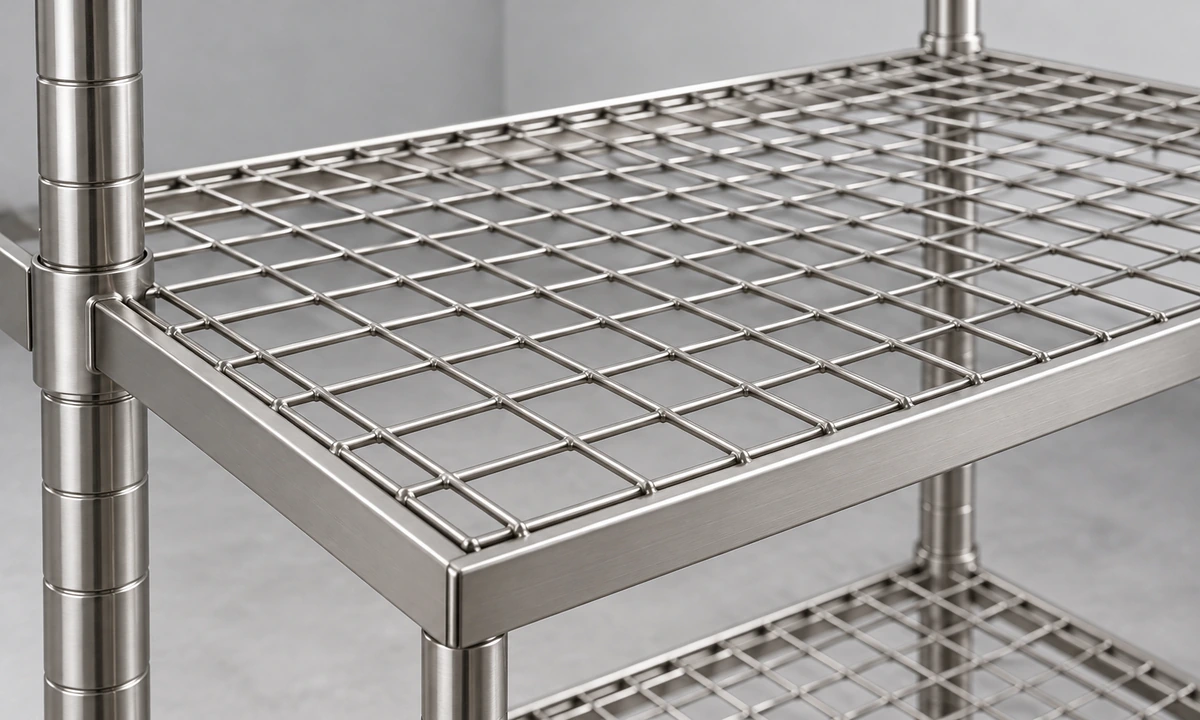
Shelf insert
Define the stored items, support spacing, required load, frame dimensions and cleaning conditions. Request review of the complete assembly before selecting the grid.
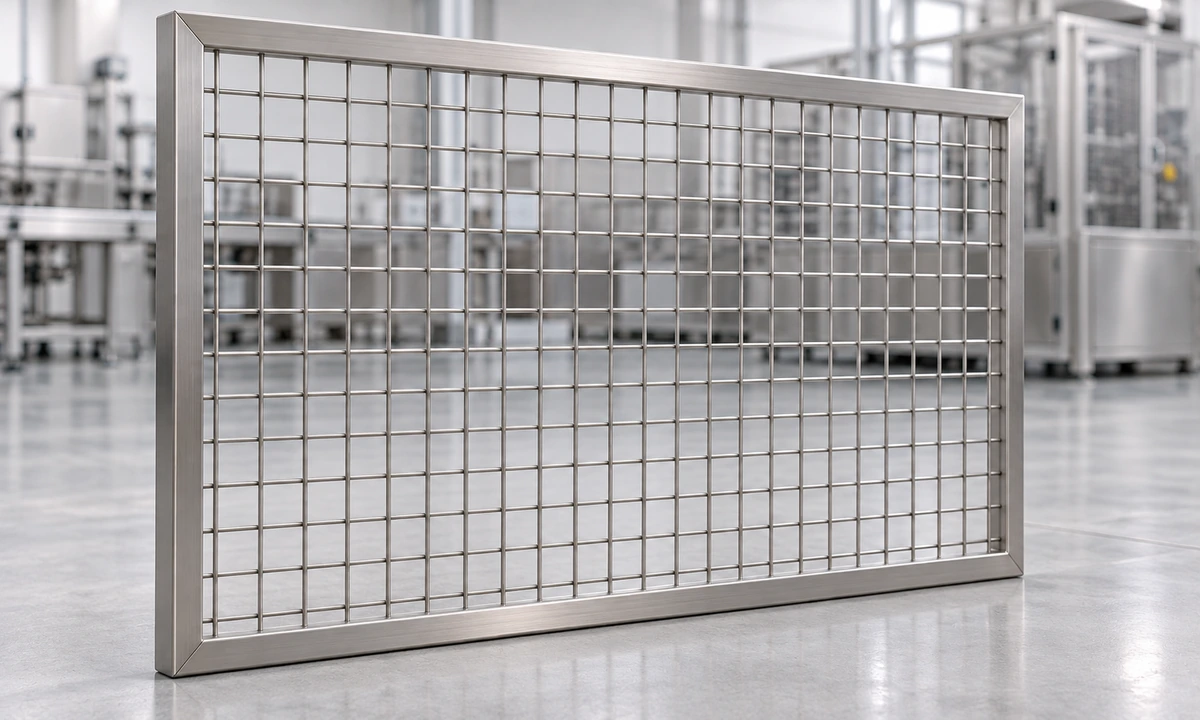
Equipment enclosure
Provide the approved opening requirement, ventilation needs, mounting drawing and inspection criteria. Confirm material exposure and the required finish.
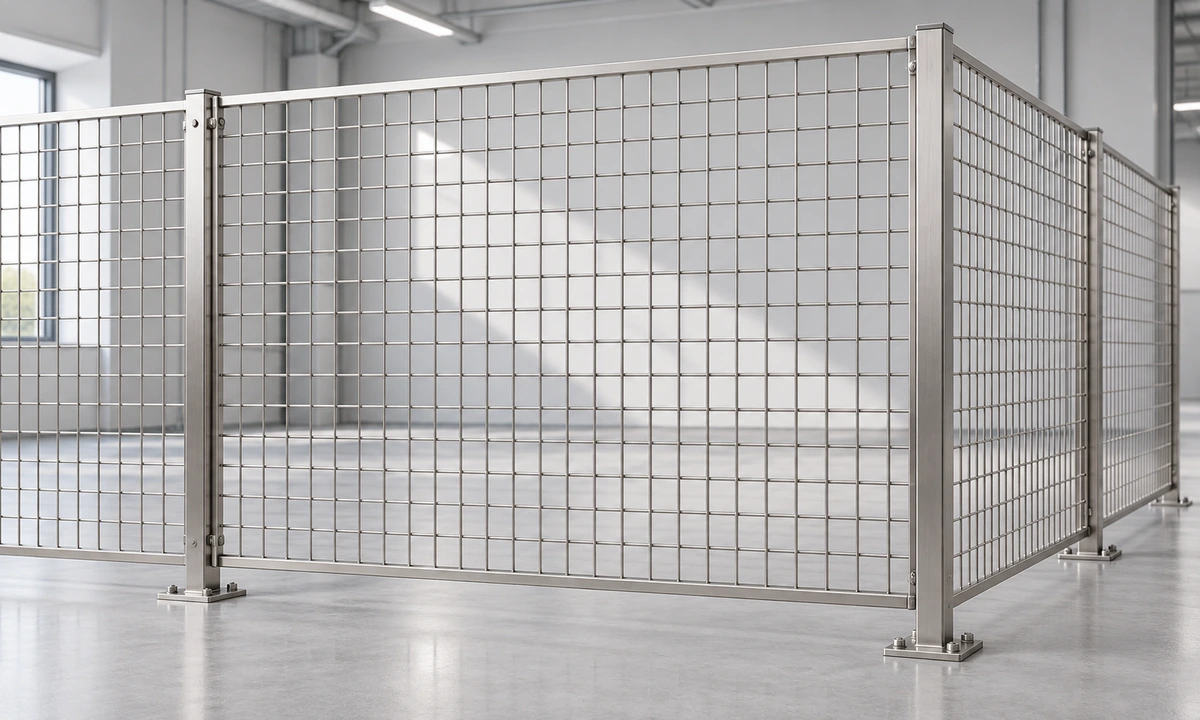
Industrial partition
State bay dimensions, panel orientation, perimeter-wire arrangement and attachment details. Include moisture or chemical exposure in the grade review.
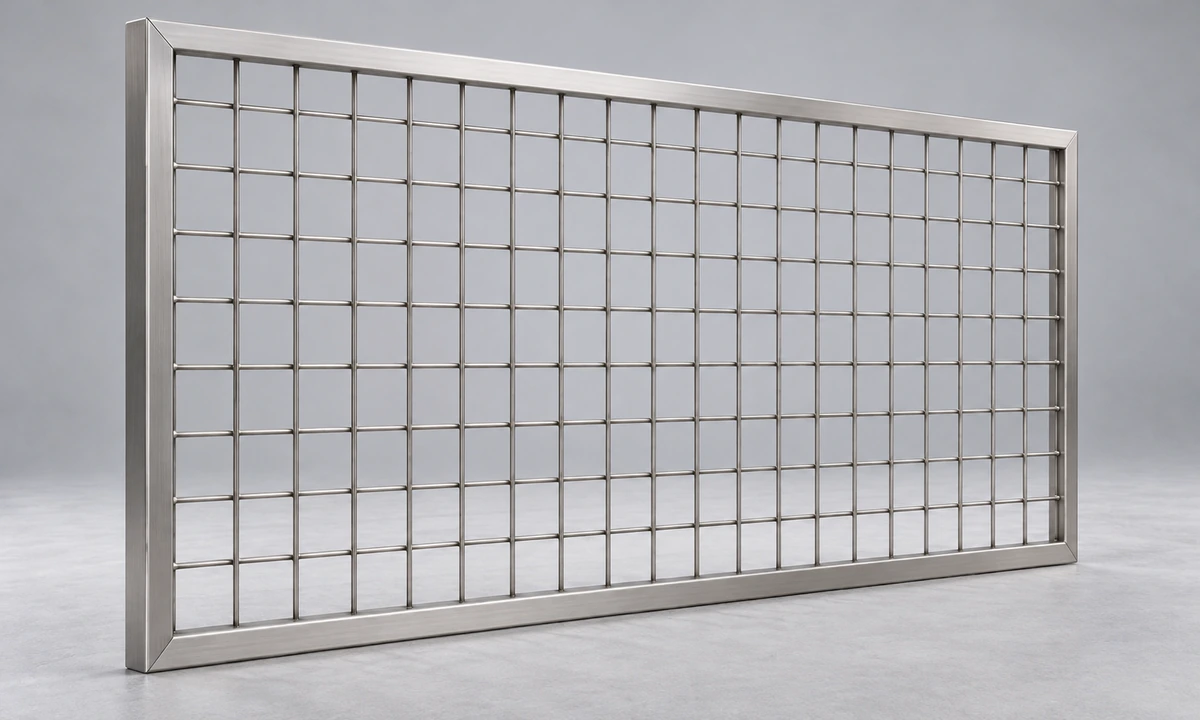
Framed infill panel
Supply the frame drawing, visible grid alignment, surface specification and edge treatment. Establish assembly requirements separately from the mesh quotation.
Stainless Welded Mesh References
ASTM defines the scope of the wire specification; Outokumpu provides alloy and corrosion guidance; Darby explains welded mesh construction. These references support selection terminology and do not certify our mesh or establish our available supply range.
Last updated: 2026-10-12
Related sourcing guides
Technical and construction references
Stainless Steel Welded Wire Mesh FAQ
Direct answers to the material, geometry and purchasing questions that shape a useful RFQ.
Request a Stainless Welded Wire Mesh Sourcing Quote
Send the grade, opening definition, wire diameter, finished form, dimensions, quantity and destination. Add your application, surface and acceptance requirements so we can review factory matching, inspection and export coordination against a clear brief.
Your details stay private. We reply with a matched factory quote — no spam.