Wire Mesh Filters: Precision Stainless Steel Filter Screens
Source wire mesh filters in plain, twill, dutch, and reverse dutch weaves. Compare mesh count, micron ratings, and roll or disc formats. Request a factory quote.
View SpecificationsWire Mesh Filter Specifications
Wire mesh filters are defined by five variables: weave structure, mesh count or micron rating, wire material, wire diameter, and format. State all five in millimeters and microns in every RFQ to avoid aperture ambiguity and re-quotes.
Plain, twill, plain dutch, reverse dutch, and knitted wire mesh filter constructions
4-500 mesh with apertures from 3 micron to 4760 micron, measured per ASTM E2016
304, 316, and 316L stainless steel as standard for wire mesh filters; brass, copper, monel, and hastelloy on request
0.025-2.5 mm warp and shute wires chosen for strength, open area, and filter life
Rolls, flat sheets, cut discs, or screens welded into frames and cartridges to drawing
Woven wire cloth per ASTM E2016, ISO 9044, and test sieves per ASTM E11
| Weave structure | Construction | Typical aperture range | Best for and RFQ note | |
|---|---|---|---|---|
| Plain weave | Equal warp and shute wire, over-one under-one | 30-500 mesh, 28-500 micron | General straining, sifting, and low-cost wire mesh filter screens. State mesh count, wire diameter, and open area in the RFQ. | |
| Twill weave | Warp passes over two and under two shute wires | 20-400 mesh, 38-850 micron | Twill weave wire mesh filters carry fine apertures on heavier wire for strength under pressure. Common in vibrating and high-flow filtration duty. | |
| Plain dutch weave | Fine shute wires packed close, wedge-shaped pores | 1-100 micron | Precision liquid filtration where a surface filter is needed. Give the micron rating, not mesh count, in the RFQ. | |
| Reverse dutch weave | Fine warp wires with heavy shute wires | 10-125 micron | Back-flushable wire mesh filter elements for water, oil, and gas service. Specify the wire diameters for a true reverse dutch construction. | |
| Twill dutch weave | Warp over-two under-two with fine shute wires | 2-60 micron | Fine filtration with higher strength than plain dutch; specify both wire diameters in the RFQ. |
Common Stock Sizes: Wire Mesh Filters
Typical stock wire mesh filters in plain and twill weaves. Custom mesh counts, wire diameters, and cut shapes are available at MOQ; confirm aperture tolerance and alloy grade at RFQ.
| Mesh count | Aperture (micron) | Wire diameter (mm) | Open area (%) | Common format | |
|---|---|---|---|---|---|
| 4 mesh | 4760 | 1.6 | 67 | Roll or welded frame | |
| 8 mesh | 2380 | 0.8 | 69 | Roll or sheet | |
| 20 mesh | 850 | 0.4 | 67 | Roll or cut disc | |
| 40 mesh | 425 | 0.28 | 59 | Roll or cut disc | |
| 60 mesh | 250 | 0.19 | 55 | Roll or cut disc | |
| 100 mesh | 150 | 0.10 | 52 | Roll or cut disc | |
| 200 mesh | 74 | 0.05 | 49 | Cut disc or pleated element | |
| 325 mesh | 44 | 0.03 | 44 | Cut disc or pleated element |
Choosing Wire Mesh Filters by Material
Match the alloy to the fluid, temperature, and cleaning regime. Stainless wire mesh filters dominate industry; brass and specialty alloys serve niche duties.
| Material | Grade | Corrosion profile | Typical filter duty | |
|---|---|---|---|---|
| 304 stainless steel | 1.4301 | Good general and food-service corrosion resistance | Food, beverage, water, and general industrial wire mesh filters | |
| 316 / 316L stainless steel | 1.4401 / 1.4404 | Superior chloride and acid resistance; L-grade for welding | Chemical, pharmaceutical, marine, and hygiene-critical filtration | |
| Brass | CuZn alloys | Good in clean water and air; avoid acids and ammonia | Fuel, oil, and air filter screens where spark safety matters | |
| Monel or hastelloy | Ni-Cu / Ni-based | Excellent in aggressive acids, seawater, and high temperatures | Oil and gas, pulp, and high-temperature process filters |
Micron Rating by Industry
A practical starting point for specifying wire mesh filters by process. Confirm the actual particle size distribution and flow target before finalizing the weave.
| Industry | Typical aperture | Recommended weave | Why | |
|---|---|---|---|---|
| Food and beverage | 100-500 micron | Plain or twill weave | Hygienic straining of juices, syrups, and edible oils with easy cleaning | |
| Chemical and pharmaceutical | 10-150 micron | Dutch or twill weave | Fine, consistent retention with low product hold-up and cleanability | |
| Water and wastewater | 50-300 micron | Reverse dutch weave | Back-flushable screens that survive repeated cleaning cycles | |
| Oil and gas | 1-100 micron | Dutch weave | High-pressure elements where strength and precise retention matter |
Multi-Stage Wire Mesh Filter Combinations
A staged wire mesh filter train protects fine stages, spreads pressure drop, and extends cleaning intervals. Adjust apertures to the actual particle size distribution.
| Stage | Typical aperture | Recommended weave | Purpose | |
|---|---|---|---|---|
| Pre-filter | 500-4760 micron | Plain weave, 4-40 mesh | Catch large debris before it reaches finer wire mesh filters | |
| Primary stage | 100-300 micron | Plain or twill weave, 50-150 mesh | Carry the main separation load at low cost | |
| Polishing stage | 10-74 micron | Twill or dutch weave, 200-400 mesh | Deliver final precision where the process demands it | |
| Back-flush stage | 50-125 micron | Reverse dutch weave | Protect membranes and nozzles with cleanable screens |
Mesh Count to Micron Quick Reference
Convert mesh count to aperture in microns for common wire mesh filters. Open area varies with the wire diameter chosen, so confirm the exact weave before ordering.
| Mesh count | Aperture (micron) | Open area (%) | Typical duty | |
|---|---|---|---|---|
| 4 mesh | 4760 | 67 | Coarse straining and pump protection | |
| 10 mesh | 2000 | 64 | General screening and debris removal | |
| 20 mesh | 850 | 67 | Straining syrups, oils, and process water | |
| 60 mesh | 250 | 55 | Fine straining and filter pre-screens | |
| 100 mesh | 150 | 52 | Precision filtration of process streams | |
| 200 mesh | 74 | 49 | Fine filtration in cartridges and discs | |
| 325 mesh | 44 | 44 | Polishing filtration for clean products |
Wire Mesh Filter Edge Styles
Edge treatment decides how a wire mesh filter screen mounts, seals, and survives handling. Match the style to the housing and duty in the RFQ.
| Edge style | Method | Best for | RFQ note | |
|---|---|---|---|---|
| Raw cut | Sheared or guillotined straight | Low-cost screens fitted inside frames | Deburr before use; confirm acceptable edge fray | |
| Welded edge | TIG seam fused along the cut edges | High-integrity discs and frames | Specify weld finish and leak test level | |
| Folded hem | Edge doubled over and crimped | Screens seated in channels or grooves | State hem width and fold direction | |
| Epoxy-sealed | Resin bead locked over edge wires | Hygiene-critical food and pharma duty | Confirm resin food-contact rating | |
| Gasket-ready | Edge bonded with a sealing gasket | Drop-in housing elements | State gasket material and durometer |
Wire Mesh Filter Types We Source
Four woven structures and one knitted family cover almost every filtration duty. Compare construction, retention, and cleanability before you specify wire mesh filters.
Plain and twill weave screens
The workhorses of straining and sifting: equal-wire constructions in 4-500 mesh with predictable apertures and easy cleaning.
Dutch and reverse dutch weave
Precision filters with wedge-shaped pores down to 1 micron for liquids, gases, and back-flushable element service.
Knitted and intertwined mesh
Flexible knitted wire mesh filters for coalescing, mist elimination, and depth filtration, often combined with PP or PTFE filaments.
How to Select the Right Wire Mesh Filters
Start from the particle you must remove, then fix weave, micron rating, alloy, format, and verification. A complete wire mesh filter RFQ avoids assumptions and re-quotes.
By particle size
For coarse debris choose 4-60 mesh plain weave wire mesh filters; fine process solids need 100-500 mesh or dutch weave in the 1-100 micron band.
By weave structure
Plain weave wire mesh filters for general straining, twill for fine apertures on strong wire, dutch for precision liquid filtration, reverse dutch for back-flushing.
Mesh count or micron?
Mesh count alone does not define retention because wire diameter changes the aperture. Always state the micron rating or both values together.
304 or 316 stainless?
304 serves food, water, and general duty. 316/316L resists chlorides, acids, and marine environments, and welds without sensitization.
Roll, sheet, disc, or frame
Rolls and sheets feed cutting lines; discs drop into housings; welded frames and cartridges arrive ready to install. Match the format to your assembly.
Open area and pressure drop
Finer apertures and heavier wire cut open area and raise pressure drop. State flow rate, viscosity, and allowable drop in the RFQ.
Edge and seam treatment
Cut edges fray unless welded, epoxied, or folded. Specify edge style for discs and the seam method for pleated wire mesh filter elements.
Cleanable or disposable
Woven metal screens clean by back-flush, ultrasonic, or soak methods and last for years. Confirm the cleaning regime that matches your process.
Multi-stage filtration design
Combine a coarse pre-filter, a primary screen, and a polishing stage with apertures stepping down 5-10 times per stage, so pressure drop stays manageable and each wire mesh filter stage lasts longer.
Sample and batch consistency
Confirm aperture, open area, and edge finish on a sample, then lock wire tolerance and inspection standards before mass production so bulk wire mesh filters match the approved sample.
Pressure drop estimation
Differential pressure rises with flow rate and viscosity and falls with open area. Give flow, viscosity, and allowable drop so we can size the weave before you commit to a wire mesh filter.
Edge style selection
Raw cut edges suit low-cost screens inside frames; welded or epoxy-sealed edges serve hygiene and pressure duty; gasket-ready edges simplify drop-in mounting. Match the style to the housing.
Why Buyers Choose Wire Mesh Filters
Wire mesh filters remain the default separation media in process industry for honest reasons: precise retention, long service life, and full cleanability.
Precise, repeatable filtration
Woven apertures hold a tight tolerance, so every wire mesh filter batch delivers the same micron rating shift after shift.
Cleanable and reusable
Back-flush, ultrasonic, or chemical cleaning restores stainless wire mesh filters for years of service; no consumable media.
High strength, low weight
Metal wire carries pressure and vibration that paper and polymer media cannot, so wire mesh filters keep working in light, compact screens.
Temperature and chemical resistance
Stainless screens survive 400+ C process heat, aggressive chemicals, and steam sterilization without degradation.
Any format, any size
Rolls, sheets, discs, and welded frames are cut and finished to drawing for OEM housings and retrofits.
Verified, traceable supply
Every wire mesh filter lot ships with aperture verification, material certificates, and labels stating weave, micron, and alloy.
Batch-to-batch consistency
Aperture verification reports per lot and locked wire tolerances keep every wire mesh filter batch performing like the last.
Custom fabrication
Cutting, pleating, welding, and edge sealing to drawing turn wire mesh filters into ready-to-install components.
Global export coordination
Palletized packing, certificates, and pre-shipment inspection support seamless delivery to any destination port.
Where Wire Mesh Filters Are Used
Choose wire mesh filters when you need a cleanable, repeatable barrier that separates solids from liquids or gases without consumable media.
Food and beverage processing
Wire mesh filter screens strain juices, syrups, edible oils, and process water in hygienic, food-grade stainless lines.
Chemical and pharmaceutical
Precision dutch and twill weave wire mesh filters hold catalyst fines, crystals, and actives in reactors and polishing lines.
Water and wastewater
Back-flushable wire mesh filters protect membranes, nozzles, and pumps in municipal and industrial water systems.
Oil and gas separation
High-strength dutch weave wire mesh filters separate solids from fuels, lubricants, and process streams under pressure.
Air and gas filtration
Fine wire mesh filter elements trap particulates in compressors, intakes, and vent lines with low pressure drop.
OEM filter components
Cut discs, pleated media, and framed wire mesh filter screens become drop-in elements for cartridges, strainers, and housings.
Wire Mesh Filter Buying Mistakes to Avoid
Seven errors that cause premature blinding, bypass, or specification disputes. Every one is avoidable at the RFQ stage.
Confusing mesh count with micron rating
100 mesh can mean 150 micron on light wire or 74 micron on heavy wire. State aperture in microns as well as mesh count.
Choosing the wrong weave for fine solids
Plain weave wire mesh filters gap particles on fine wire; dutch weave traps them with wedge-shaped pores. Specify the structure, not just a mesh count.
Ignoring wire diameter tolerance
Wire tolerance shifts the aperture and open area of every screen. Confirm the ASTM E2016 tolerance class in the wire mesh filter RFQ.
Using 304 where 316 is required
Chlorides, acids, and welding call for 316L. A 304 wire mesh filter may pit and fail mid-campaign, costing far more than the alloy upgrade.
Ordering by US mesh without the standard
US, Tyler, and metric mesh series differ. Name the standard edition and the aperture in microns, and the ambiguity disappears.
Overlooking edge finishing
Raw cut edges fray and shed wire strands into the process. Specify welded, folded, or epoxy-sealed edges on discs and elements.
Not verifying open area and pressure drop
A too-dense wire mesh filter blinds fast and starves the pump. Confirm open area against flow rate before committing to a weave.
Skipping batch verification
Wire diameter tolerance drifts between production lots and shifts the aperture of every screen. Require an aperture verification report per lot and spot-check samples on arrival.
Specifying one ultra-fine stage
A single very fine wire mesh filter blinds fast when upstream debris is heavy. Stage coarse and fine screens so each stage handles its share of the load.
Ignoring flow velocity and erosion
High-velocity particles erode wire strands, enlarging apertures and eventually breaking the weave. Control face velocity or add a protective coarse stage upstream.
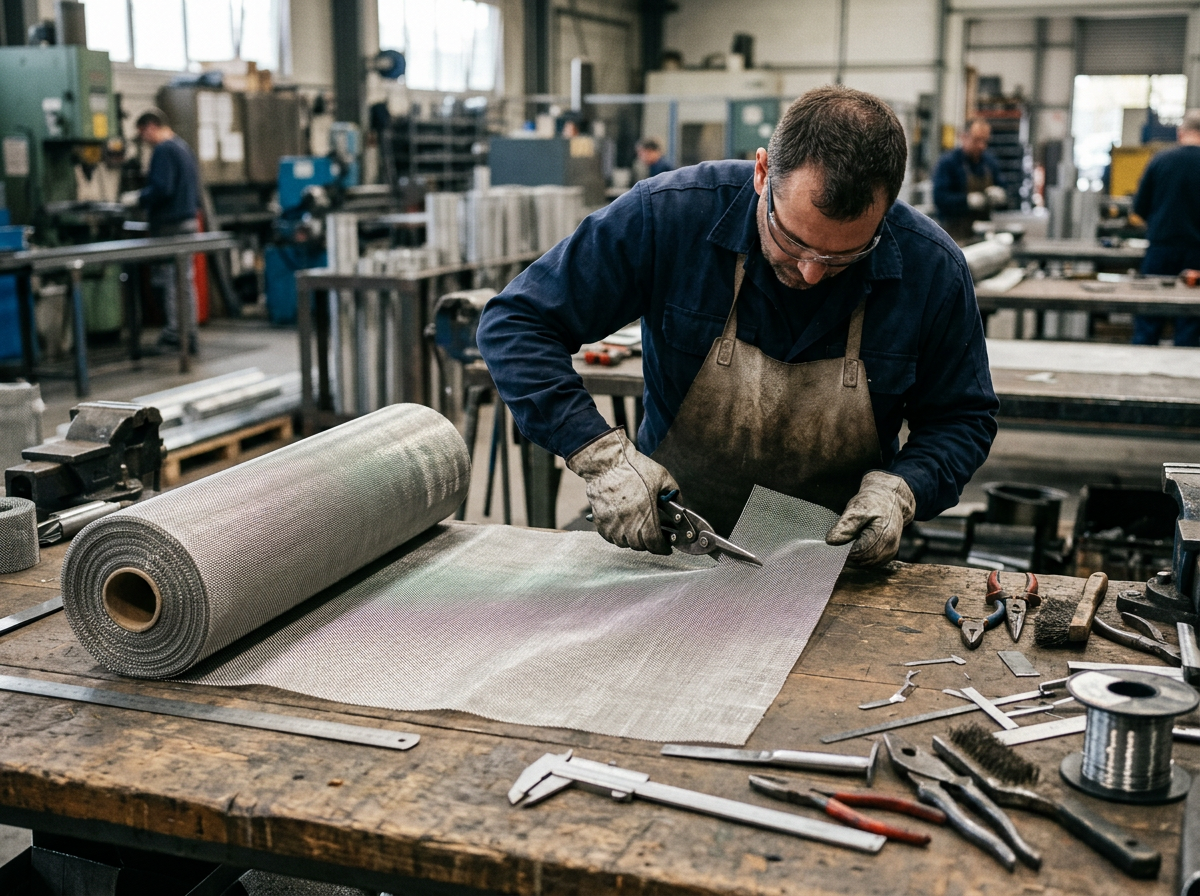
Cut, fit, seal, and clean wire mesh filters correctly to protect apertures and extend service life.
Working with Wire Mesh Filters
Cut cleanly to size
Cut on a straight grid line with clean shears or a guillotine. Deburr and seal edges; never tear woven wire mesh filter cloth.
Fit and support the screen
Seat the wire mesh filter screen against a flat flange or support grid with gaskets both sides, so pressure cannot push the weave out of shape.
Seal edges and seams
Weld, fold, or epoxy every cut edge and joint. A loose edge strand can migrate downstream and blind the next stage.
Clean or replace on schedule
Back-flush before pressure drop doubles, and inspect for pinholes at every service. Replace worn wire mesh filters before they bypass.
Wire Mesh Filter Packing for Export
Packing keeps rolls flat, discs protected, and apertures true through transit and receiving inspection.
Rolls and sheets protected
Woven wire mesh filter rolls are wound on cores, wrapped in waterproof paper, and edge-protected against crushing.
Discs interleaved and boxed
Cut discs are stacked with interleaving paper in rigid cartons, so edges and apertures survive handling.
Palletized for container loading
Cartons and rolls pack to the container plan on pallets with corner guards and steel strapping.
Label by specification
Every package carries weave, mesh count, micron rating, alloy, dimensions, quantity, and production lot.
Certificates on request
Material certificates and aperture verification reports accompany every wire mesh filter shipment when ordered; SGS, BV, or TUV inspection is available.
Wire Mesh Filters in Service
Use scenarios show how weave, micron rating, and alloy change by duty; they are not customer claims.
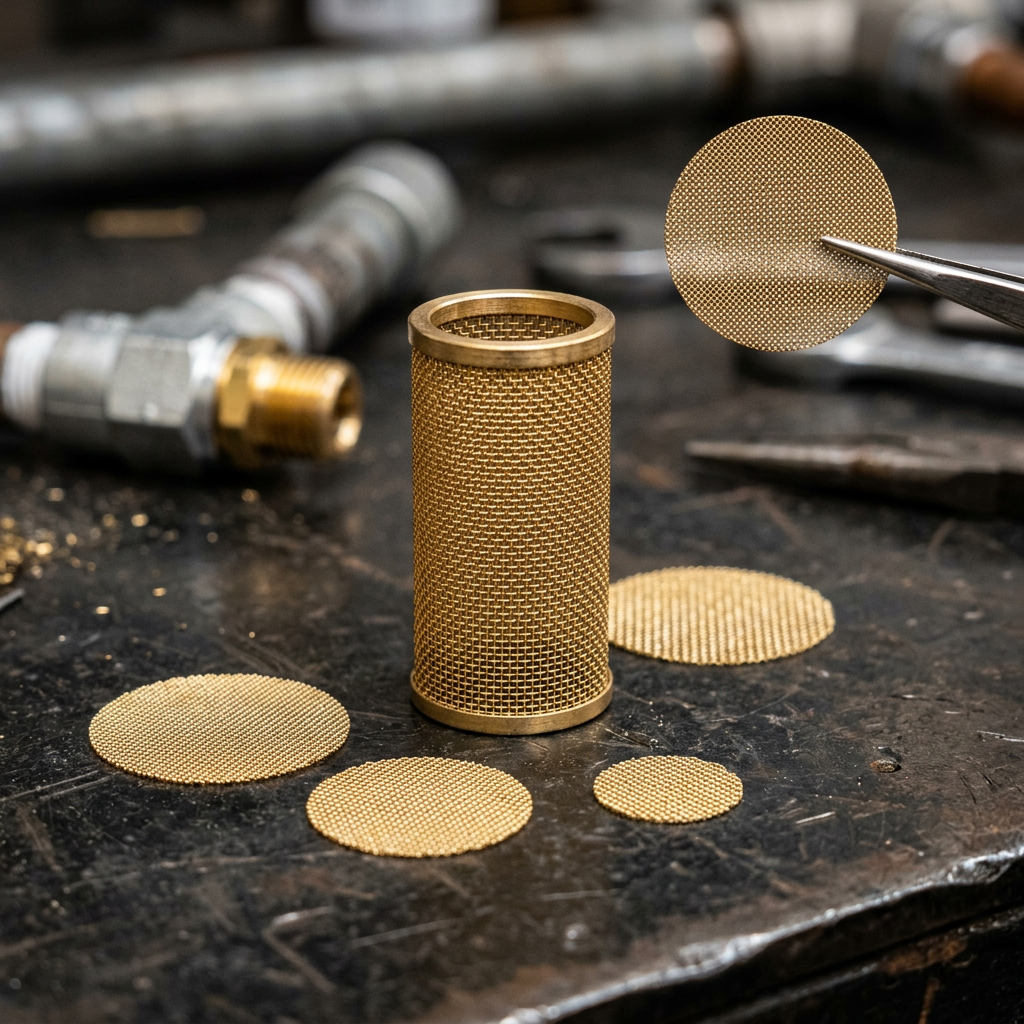
Edible oil straining line
Twill weave 316L stainless wire mesh filter screens at 200 mesh, welded into frames, polished for food contact and steam-cleaned daily.
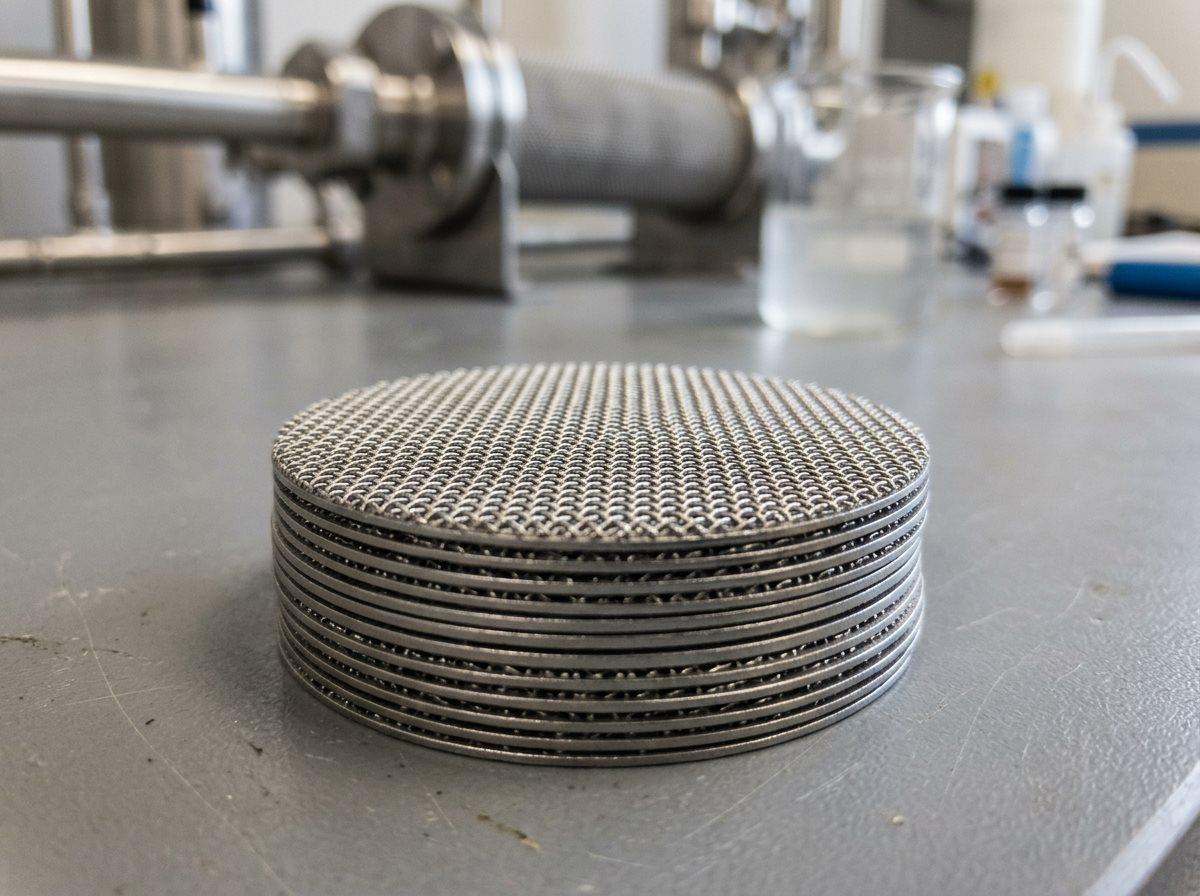
Membrane protection in water plant
Reverse dutch weave wire mesh filters at 50 micron before membranes, back-flushed automatically as differential pressure rises.
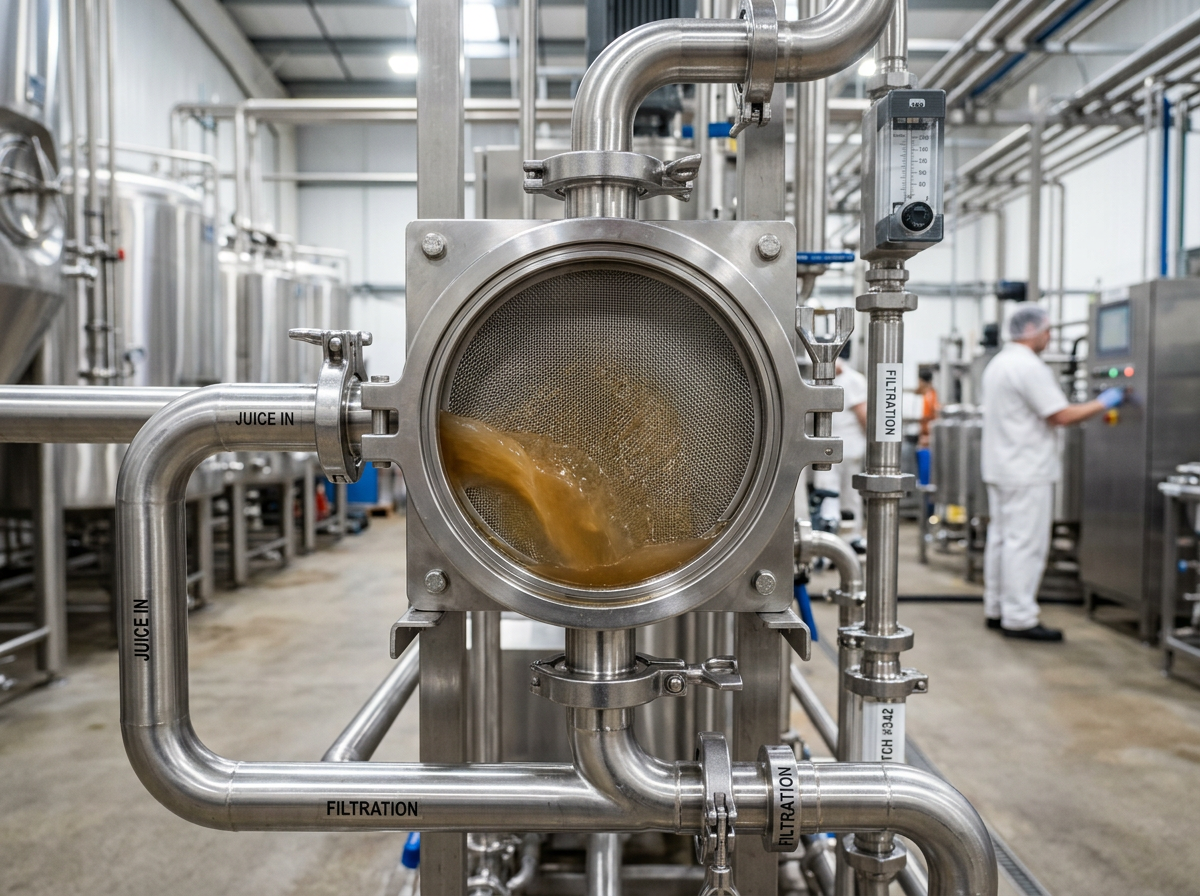
OEM cartridge discs
Pleated plain weave wire mesh filter discs at 100 mesh, epoxy-sealed into disposable cartridge heads, replacing nonwoven media in a retrofit program.
Chemical reactor polishing
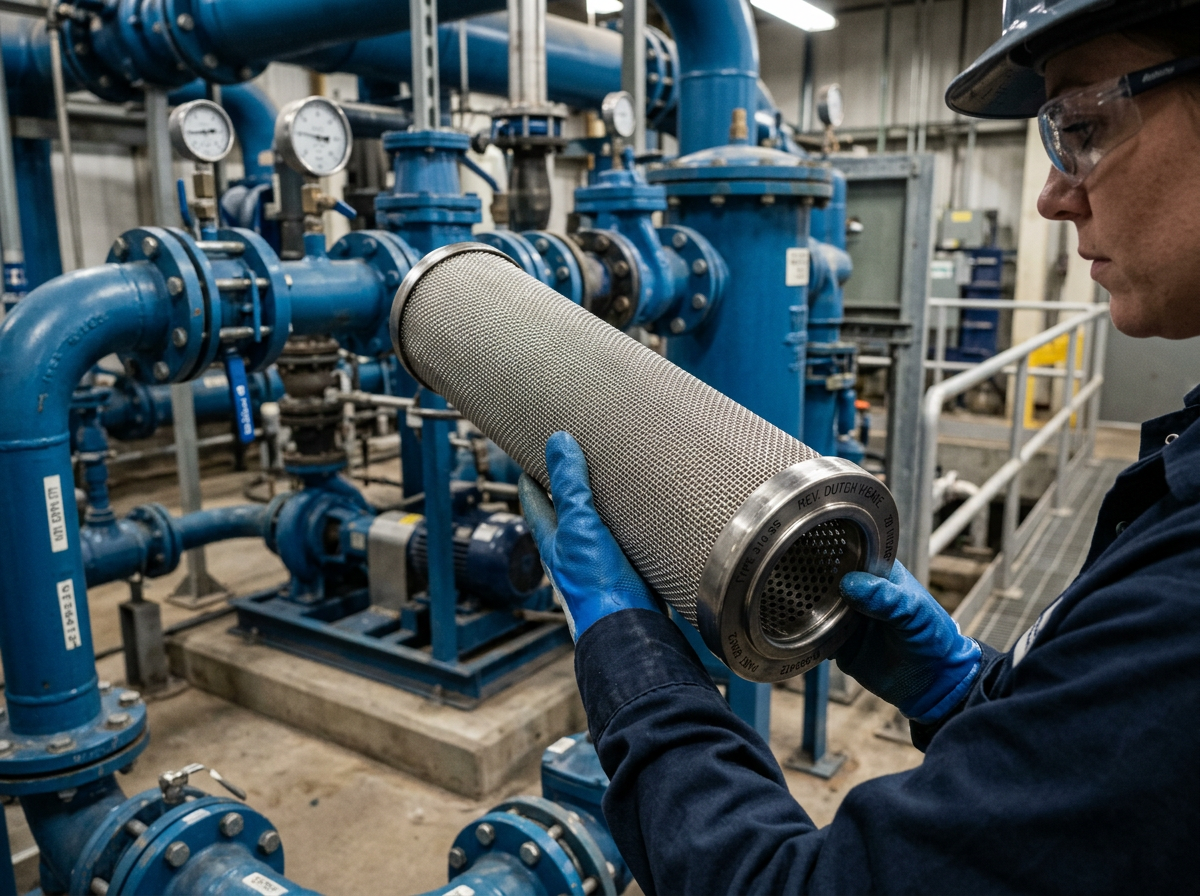
Dutch weave 316L wire mesh filter elements at 20 micron in a polishing housing, removing catalyst fines from a finished pharmaceutical intermediate.
Wire Mesh Filter Sourcing Resources
Compare woven filter media, alloys, and related categories. Confirm the standard edition and project requirements before ordering.
Last updated: 2026-08-07
Related pages
Reference standards
Wire Mesh Filters FAQ
Common procurement questions about weaves, micron ratings, alloys, and ordering wire mesh filters.
Still have questions about wire mesh filters?
Send your weave, micron rating, alloy, dimensions, quantity, and operating conditions. Our sourcing team replies with a specification-led review.
Request a QuoteRequest Wire Mesh Filter Pricing
Send weave structure, mesh count and micron rating, wire material, dimensions or drawing, quantity, application, and destination for a specification-led sourcing review. Our team replies with matched wire mesh filter options and a factory quote.
Your details stay private. We reply with a matched factory quote — no spam.