Galvanized Steel Filter Mesh for Screening & Filtration
Specify galvanized steel filter mesh for coarse screening. Compare openings, check material suitability and prepare an RFQ to reduce ordering and fitting errors.
Compare Purchasing SpecificationsSpecify the Mesh Before Requesting a Price
Specify galvanized steel filter mesh by its construction and clear opening, then add wire diameter, coating route, dimensions and quantity. The table is an RFQ checklist: it defines information to agree, rather than stock sizes or a guaranteed filtration rating.
Woven square openings; pre-crimped cloth for coarser screening
State clear aperture in mm and mesh count per inch where applicable
Specify diameter in mm, tolerance and whether measured over zinc
Agree zinc coating route, coating requirement and inspection basis
Specify roll width and length, or cut-piece dimensions and edges
Select one or more specifications. Your choices will be included in the quote request.
0 specs selected
| Purchasing field | Information to supply | Why it matters | |
|---|---|---|---|
| Filtering or support duty | Screening cloth, coarse filter screen or backing mesh | A backing grid does not define the filter medium's particle retention | |
| Clear aperture | Required opening in mm and permitted tolerance | Sets the geometric gap between adjacent wires | |
| Wire and mesh count | Wire diameter in mm; openings per linear inch | The same mesh count can have different apertures and open areas | |
| Zinc coating | Coating route, required coating mass or class, and acceptance method | Keeps surface requirements separate from mesh geometry | |
| Dimensions and edges | Roll or cut-piece dimensions, edge finish and drawing | Defines the blank size and fit within the supporting frame | |
| Operating conditions | Material being screened, moisture, cleaning method and support span | Allows a suitability review before choosing galvanized or stainless steel | |
| Order and inspection | Quantity, destination, required date and approval checks | Provides a common basis for quotation and incoming acceptance |
Which Layer Does the Filtering?
Galvanized steel filter mesh can describe different constructions. Start with the layer's job: woven cloth presents repeated openings, while welded grids and expanded sheet may serve as backing or protection. Confirm the function in the assembly drawing.
Woven filtering and screening cloth
Interlaced wires form square openings. Select clear aperture and wire diameter together. Pre-crimped woven cloth, shown above, is a coarser screening structure; it is not evidence of fine filtration performance.
Welded support grid
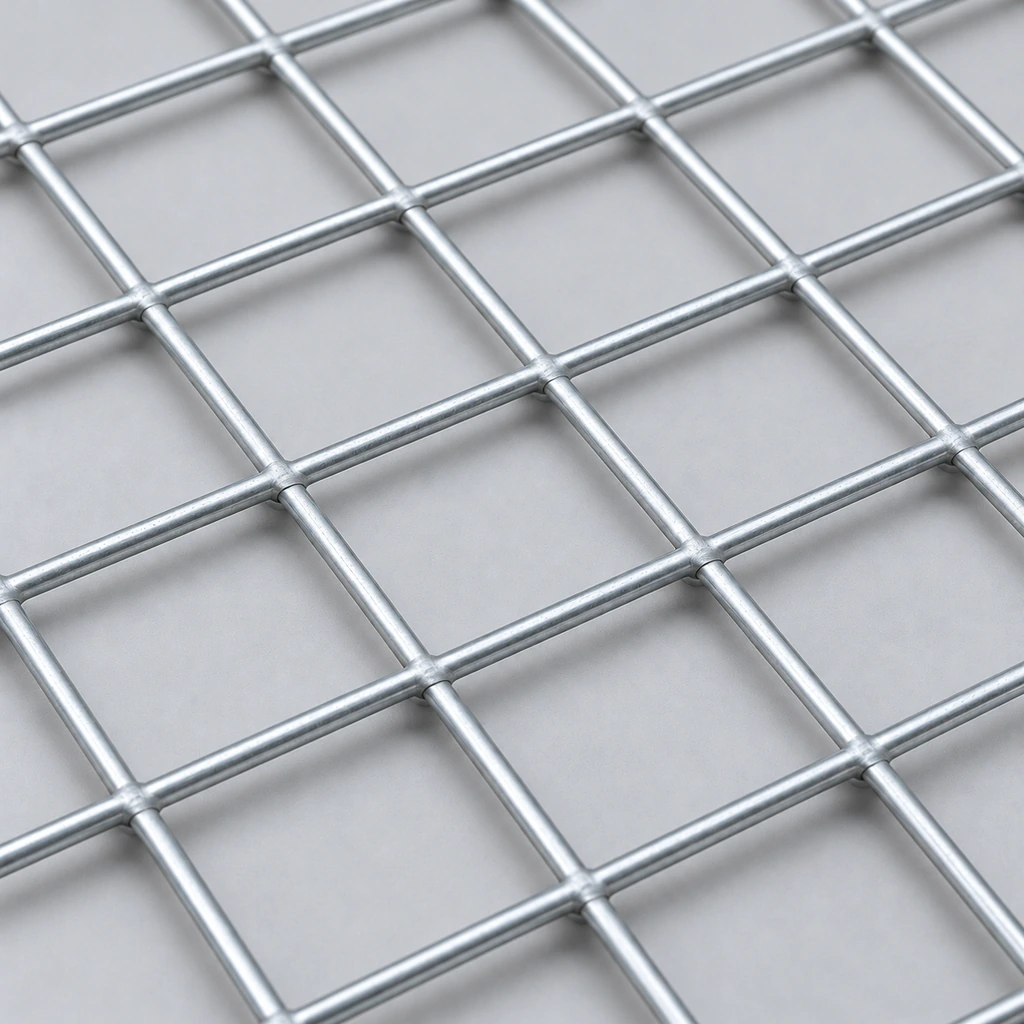
Wires are joined at intersections. Use the drawing to specify spacing, support span and attachment to the filter assembly. Describe it as backing when a separate medium performs the filtration.
Expanded support mesh
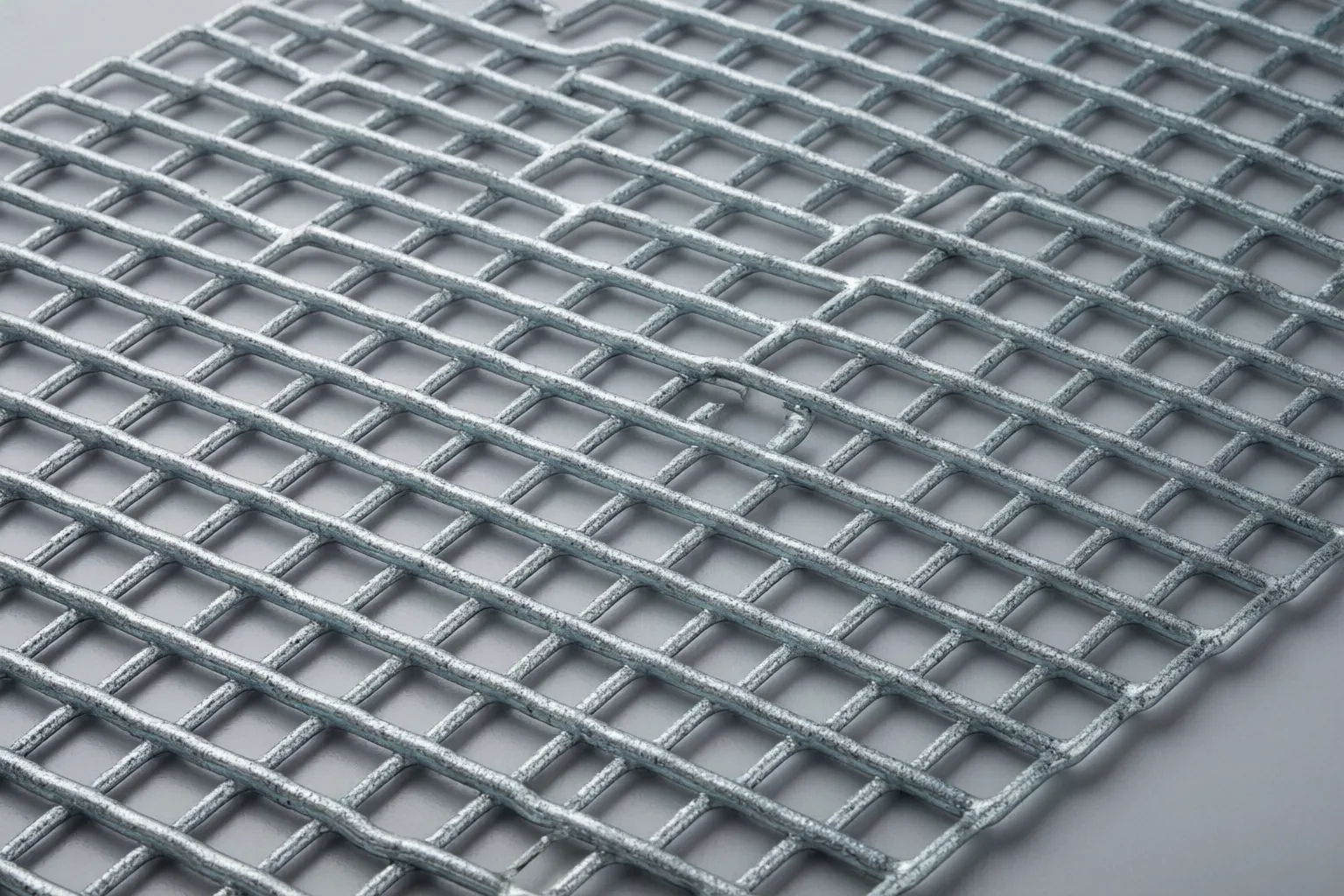
Slit and stretched sheet forms diamond openings. Specify long and short opening dimensions, strand dimensions and raised or flattened form. Filter backing requires its own geometry, not a fencing or walkway specification.
Choose Aperture, Wire and Coating Together
Select galvanized steel filter mesh around the separation task, contact conditions and frame. Use the worked examples and purchasing guide below to turn those requirements into an RFQ.
Define the separation task
State the material, particle size of interest and whether the task is dry screening, coarse straining or support for another medium. Include the required retention test if filtration performance matters.
Compare openings and wire diameter
Read mesh count with wire diameter; use the examples below to compare aperture and open area. Include finished-opening tolerances in the order.
Check fit and support
Provide the frame dimensions, unsupported span, edge capture and fixing arrangement. Review these with the wire construction before approving the cut size.
Review contact and cleaning conditions
Identify liquids, moisture, contaminants and cleaning chemicals. Use the material decision table below to identify what needs confirmation before ordering.
Turn Your Screening Requirements into a Clear RFQ
Use this galvanized steel filter mesh guide to compare openings, review the material choice and agree arrival checks.
Same Mesh Count, Different Clear Openings
These galvanized steel filter mesh examples use regular square weave geometry. Clear aperture in mm equals 25.4 divided by mesh count per inch, minus wire diameter in mm. Open area equals [aperture / (aperture + wire diameter)] squared, multiplied by 100%.
| Mesh count (per inch) | Wire diameter (mm) | Calculated aperture (mm) | Geometric open area (%) |
|---|---|---|---|
| 20 | 0.35 | 0.92 | 52.5 |
| 20 | 0.5 | 0.77 | 36.8 |
At the same 20 mesh count, thicker wire leaves a smaller opening and less open area. These are calculated examples, not offered stock specifications or filtration ratings. Confirm the finished opening and measurement basis when coating and tolerances matter; geometry alone does not establish pressure drop or particle retention.
Galvanized Steel or Stainless Steel?
Review galvanized steel filter mesh against the actual contact and exposure conditions. Use this table to identify the evidence to request, rather than choosing a material from its name alone.
| Operating condition | What to confirm | Next selection step |
|---|---|---|
| Dry screening | Material being screened, abrasion and contamination limits | Compare galvanized woven cloth against the required aperture and surface condition; check a representative sample where agreed. |
| Humidity or repeated wetting | Exposure pattern, drying conditions and zinc coating requirement | Review the coating against the environment; compare a suitable stainless grade if the maintenance or corrosion requirements cannot be met. |
| Liquid contact | Liquid composition, temperature, contaminants and contact duration | Request a compatibility review before accepting galvanized steel; evaluate the proposed stainless grade against the same conditions. |
| Chemical cleaning | Cleaning agent, concentration, temperature and frequency | Confirm the material and coating tolerate the cleaning process; agree a sample assessment if the evidence is incomplete. |
| Sensitive surfaces or regulated contact | Allowed surface condition, contamination limits and required documentation | Confirm the applicable material and finished-assembly requirements. A stainless substitution alone does not establish contact approval. |
Zinc coating performance depends on coating type and exposure. Compare purchase cost with the agreed maintenance and replacement needs; no universal saving or service life follows from the material name.
American Galvanizers Association: Zinc Coatings for Steel Corrosion ProtectionAgree Incoming Inspection Checks
For galvanized steel filter mesh, agree the checks and acceptance basis before ordering. Use the purchase specification and approved drawing to resolve differences on receipt.
| Check | Method to agree | Acceptance basis |
|---|---|---|
| Clear aperture | Measure finished openings using the agreed calibrated optical or dimensional method and sampling locations | Ordered aperture, tolerance and sampling plan |
| Wire diameter | Measure with an appropriate calibrated micrometer; record whether the dimension includes zinc | Ordered wire diameter and agreed measurement basis |
| Dimensions and edges | Check roll or cut-piece dimensions, edge condition and fit against the drawing | Approved dimensions, edge finish and frame requirements |
| Coating identity and evidence | Review coating-route information and the coating test records required by the order; inspect surface damage separately | Specified coating mass or class, evidence requirements and agreed surface criteria |
| Batch identification | Match roll or bundle labels to the purchase line and approval sample reference where applicable | Order identification and agreed traceability requirements |
Set numerical tolerances, sampling and acceptance limits in the order. Visual appearance alone cannot establish coating mass, and a geometry check does not replace a required filtration performance test.
Reduce Specification Errors and Fitting Rework
A complete galvanized steel filter mesh specification gives the buyer and supplier a shared basis for quoting, fitting and acceptance. Confirm these points before comparing offers.
Compare like-for-like openings
Give suppliers the same aperture, wire diameter and tolerance so nominal mesh counts do not hide different products.
Resolve coating questions early
Name the coating route and evidence required with the quote, reducing ambiguity about what will be supplied and inspected.
Check the fit before cutting
Confirm frame dimensions and edge restraint before approving a blank. Capture the edges without creating an unfiltered bypass path.
Send a complete purchasing request
Collect dimensions, contact conditions and approval checks in one purchasing request. Agree the final specification and schedule in the quotation.
Match the Mesh to Its Actual Duty
Consider galvanized steel filter mesh for the following duties only after reviewing the contact conditions, required separation and supporting structure.
Dry screening and sizing
Define the particle-size separation and check the woven opening against representative material. Confirm abrasion, contamination limits and screen support before selecting the wire construction.
Industrial coarse screens
For equipment screens that intercept larger debris, specify the opening and frame fit. If the screen contacts a liquid, assess zinc compatibility with that liquid and the cleaning process first.
Filter-medium backing
Use a separately specified woven, welded or expanded layer to support a filter mat. ALNOR's ventilation-mesh technical sheet describes this support role separately from the filter medium; see the resource below.
Ventilation inlet screening
Select the opening for the objects to be excluded and agree the fixing arrangement. An inlet guard or debris screen does not replace a rated fine-particle air filter.
Avoid Three Specification Gaps
Resolve these points before comparing quotations or approving a sample.
Ordering by mesh count alone
Include wire diameter and clear opening. Different wire diameters at the same count produce different gaps and open areas.
Treating support mesh as the filtering medium
Identify each layer on the drawing and state which one provides particle retention. A rigid backing grid cannot establish the assembly's filtration efficiency.
Leaving coating and contact conditions unspecified
Name the zinc requirement and disclose the process environment. Do not infer chemical compatibility, cleanability or contact approval from the word galvanized.
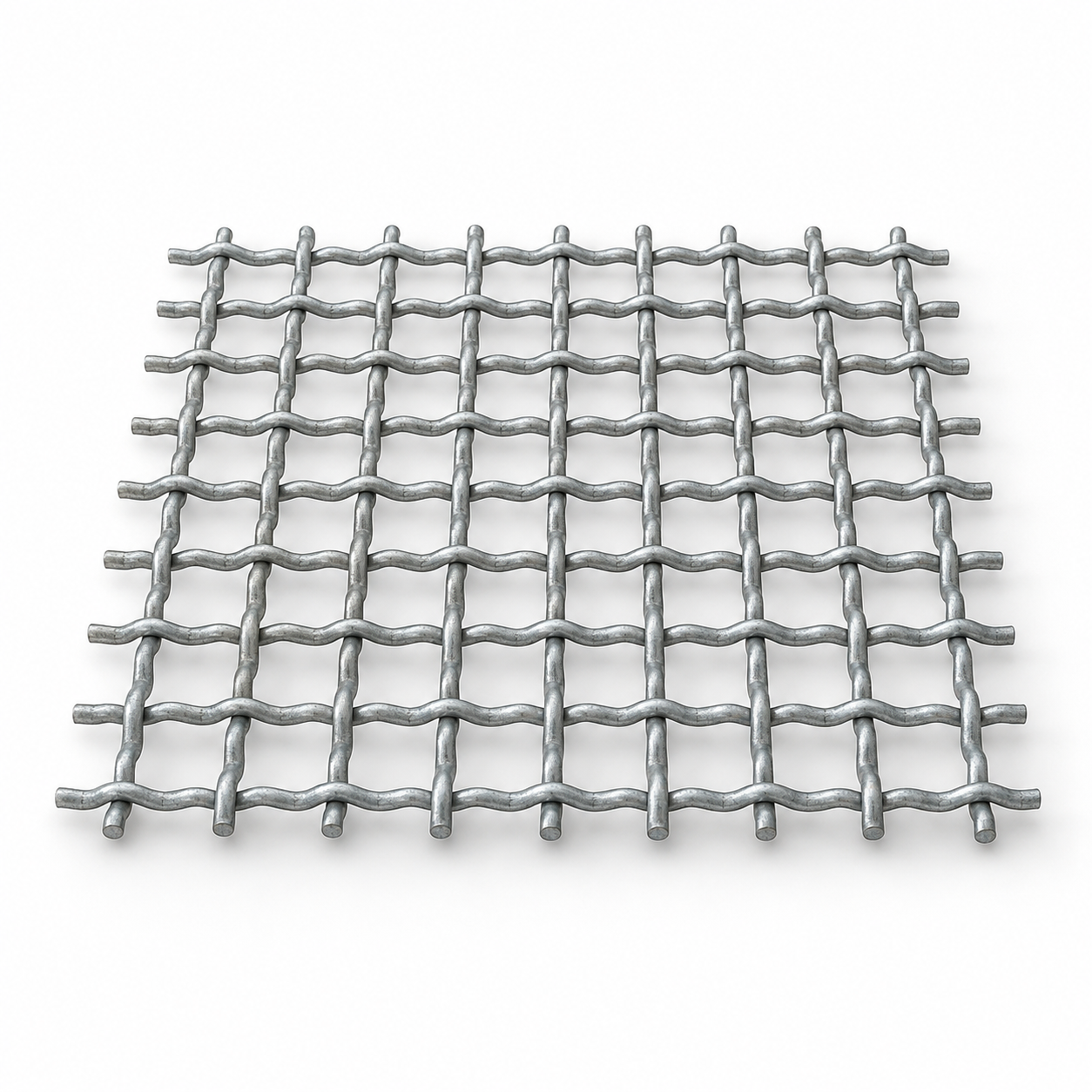
Pre-crimped galvanized woven mesh: inspect the clear openings, wire intersections and cut edges for the specified screening duty.
Check the Cloth Before Fitting It
Complete the agreed arrival checks
Use the inspection checklist above and record discrepancies before fitting. Keep identification linked to the roll or cut pieces.
Prepare the frame and edges
Check the frame for fit and identify the required edge protection. Resolve damaged wires or coating before installation.
Confirm restraint and bypass control
Fit the cloth to the approved frame design, checking edge capture, unsupported span and gaps. Verify the finished assembly under its intended operating conditions.
Protect Shape, Edges and Identification
Agree packaging for galvanized steel filter mesh in the purchase order, including handling protection and the information needed to identify each delivered batch.
Identify the specification
Request labels linking each roll or bundle to the ordered construction, opening, wire diameter, dimensions and coating requirement.
Protect the delivered form
Specify roll restraint or flat support for cut pieces, plus protection for exposed edges. Choose packing that avoids distortion and contact damage in transit.
Agree moisture protection
Discuss storage and transport conditions, wrapping and unpacking instructions. Inspect for trapped moisture or surface damage on receipt rather than assuming wrapping eliminates corrosion risk.
Compare Construction Examples
These product families help distinguish woven screening cloth, support structures and an alternative material. Select by the actual duty and drawing.
Galvanized pre-crimped cloth
A woven construction to review for coarse screening. Compare its clear aperture and wire rigidity with the material being separated.
Galvanized welded grid
A different construction to review for backing or protection. Confirm the required support geometry rather than substituting a general-purpose roll.
Galvanized expanded mesh
A slit-sheet structure with diamond openings. Ask for filter-support dimensions separately from the general-purpose expanded-metal range.
Stainless woven alternative
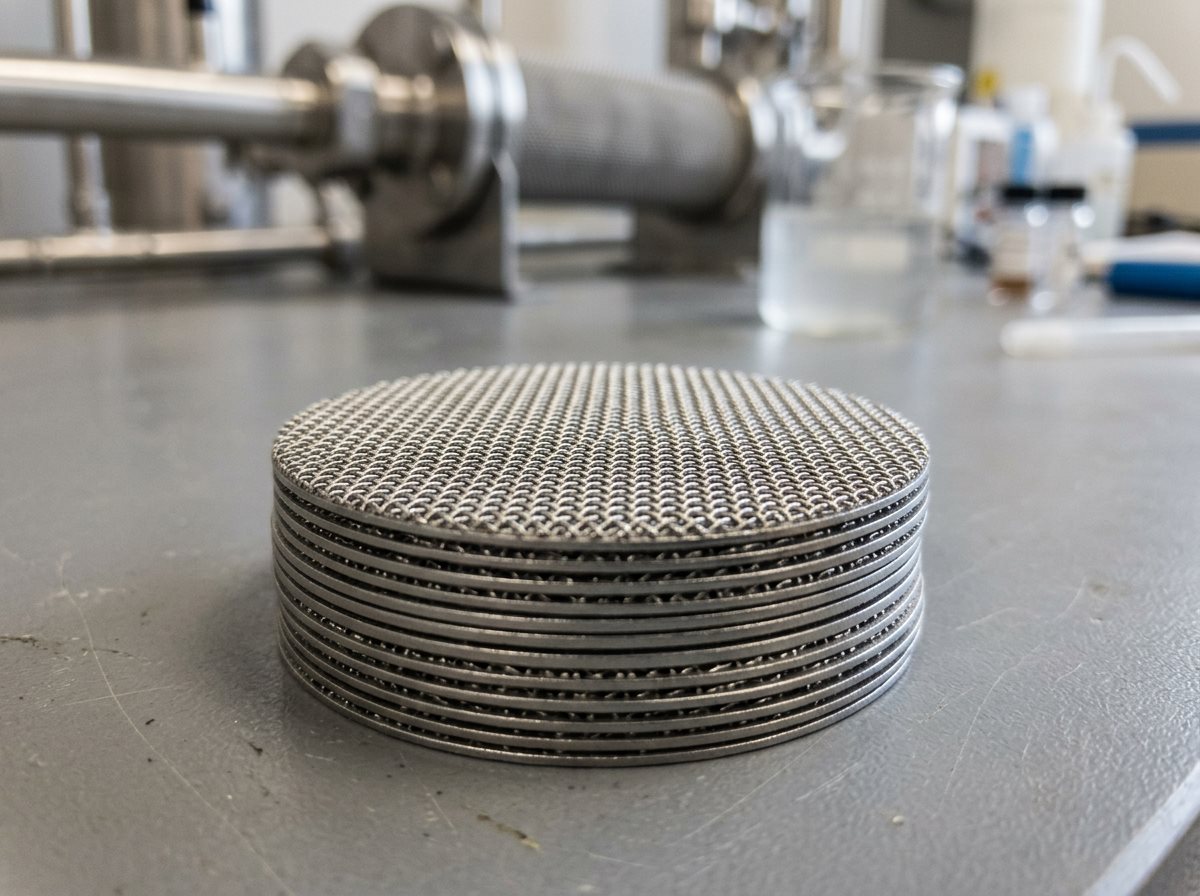
Compare a stainless woven family when the process requires a review of zinc compatibility. Match geometry and confirm the selected grade's suitability.
Related Mesh Guides and Technical References
Use the site guides to compare materials and constructions. External references explain industry product terminology and support functions; agree the supplied specification in your quotation.
Related products and guides
Industry references
Galvanized Steel Filter Mesh FAQ
Answers to the construction, measurement and ordering questions that affect a useful quotation.
Need Help Defining the Screening Duty?
Send the material being separated, required opening, process conditions and a drawing. Include the role of any backing layers so the quotation addresses the correct construction.
Request a QuoteRequest Galvanized Steel Filter Mesh Pricing
Choose galvanized steel filter mesh by its actual screening duty, clear aperture, wire diameter and zinc requirement. Send those details with dimensions, quantity, destination and inspection needs. Request a quote to review the construction and agree the supply specification.