Aluminum Expanded Metal Mesh: 3003, 5052 & 6061 Alloy Supplier
Not sure which expanded metal alloy or form fits your job? Aluminum expanded metal mesh in 3003, 5052, and 6061 alloys looks identical but behaves very differently in service - specifying the wrong one costs time and money. Compare standard (raised) vs flattened forms, check diamond opening sizes, strand dimensions, and sheet weights, then request a specification-led factory quote.
View SpecificationsAluminum Expanded Metal Mesh Specifications
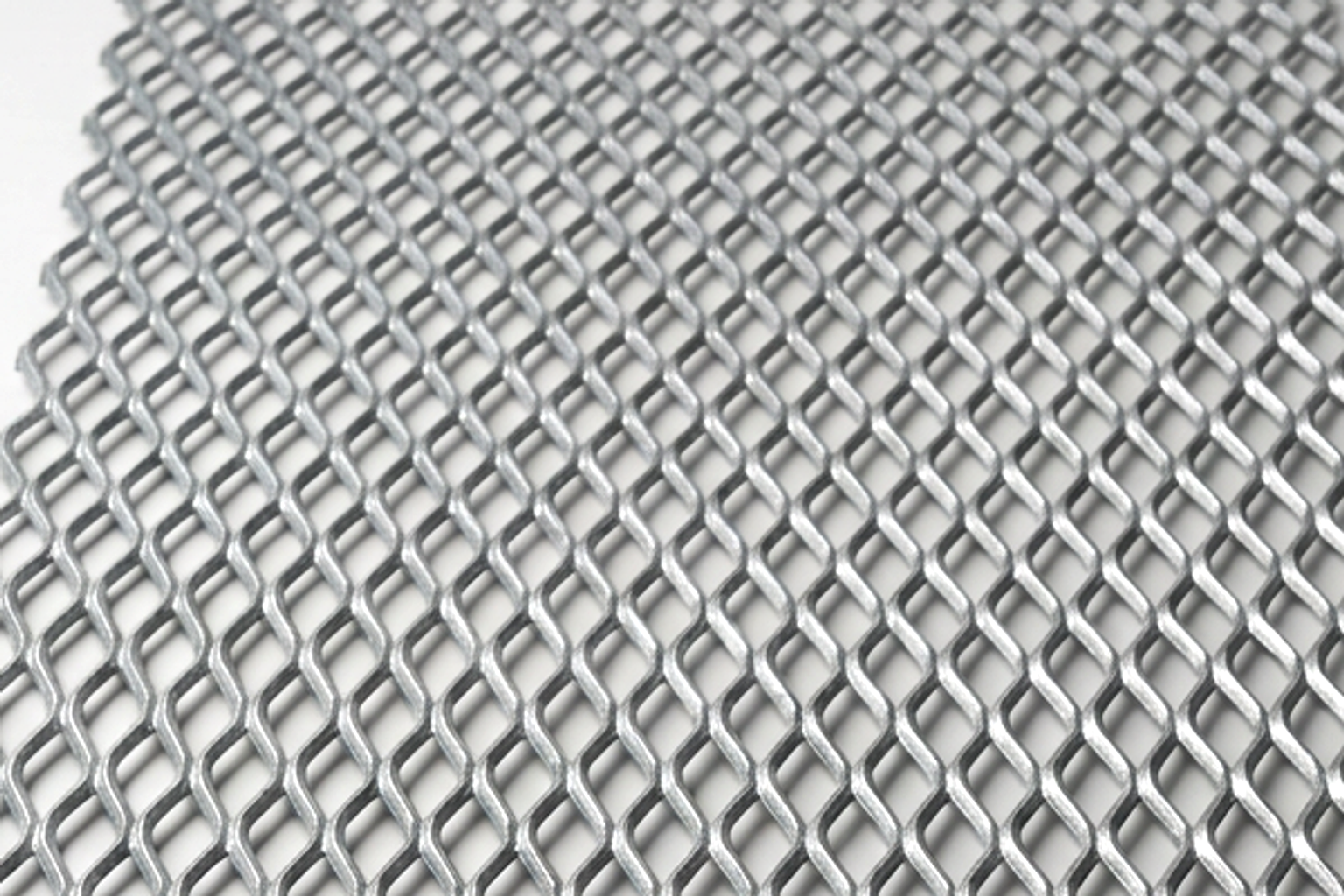
Aluminum expanded metal starts with a solid sheet of 3003, 5052, or 6061 alloy that is simultaneously slit and stretched in a single pass to form diamond openings with continuous strand junctions. The sheet thickness, strand width, LWD (long way of diamond), and SWD (short way of diamond) together define the mesh. No weaving, welding, or scrap waste. State alloy, temper, form, LWD x SWD, strand width, sheet thickness, panel dimensions, quantity, and finish in every RFQ.
3003 H14 (standard industrial), 5052 H32 (marine and coastal), or 6061 T6 (structural and high-strength); confirm temper per ASTM B209
Standard (raised) expanded metal with angled strands for rigidity; flattened expanded metal passed through a cold-rolling mill for a smooth sheet-like surface
LWD (long way of diamond) from 8 mm to 100 mm; SWD (short way) from 4 mm to 50 mm; state both dimensions in mm
Strand width 0.8 mm to 6.0 mm; starting sheet thickness 0.5 mm to 4.0 mm; flattened form reduces apparent thickness by approximately 10-15%
Common stock panels: 1220 x 2440 mm (4 x 8 ft) and 1200 x 3000 mm; custom lengths, widths, and cut-to-size pieces on request
Bright mill finish standard; Type II anodizing in clear, bronze, black, or custom colors for architectural duty; powder coating available on request
Cut-to-size panels, curved or formed pieces, pre-drilled mounting holes, edge trimming, and welded frames for ready-to-install assemblies
Select one or more specifications. Your choices will be included in the quote request.
0 specs selected
| Alloy | Key traits | Typical temper | Sheet thickness range | Best for | |
|---|---|---|---|---|---|
| 3003 | Manganese alloyed; about 20% stronger than 1100; excellent formability and corrosion resistance; the default expanded-mesh alloy | H14 | 0.5 - 3.0 mm | General industrial screens, machine guards, sunshades, and indoor architectural panels | |
| 5052 | Magnesium alloyed; highest common expanded-mesh strength; good marine and salt-spray resistance | H32, H34 | 0.8 - 4.0 mm | Coastal and marine facades, outdoor sunscreens, walkway flooring, and salt-air environments | |
| 6061 | Magnesium-silicon alloyed; highest strength here; good machinability and weldability | T6 | 1.5 - 4.0 mm | Structural platforms, load-bearing walkways, heavy-duty guards, and formed assemblies |
Common Aluminum Expanded Metal Opening and Weight Table
Typical stock specifications for standard (raised) expanded aluminum mesh in 3003 H14 alloy. Values are approximate; confirm exact strand dimensions, weight, and sheet size at RFQ. Weights calculated with aluminum density 2.70 g/cm3.
| LWD x SWD (mm) | Strand width (mm) | Sheet thickness (mm) | Open area (approx.) | Weight (kg/m2, approx.) | Typical use | |
|---|---|---|---|---|---|---|
| 8 x 4 | 1.0 | 0.5 | 65% | 0.8 | Ventilation panels, light filters, insect screening | |
| 12 x 6 | 1.5 | 0.8 | 68% | 1.6 | Cabinet screens, equipment guards, decorative infill | |
| 16 x 8 | 2.0 | 1.0 | 68% | 2.5 | Machine guards, sunscreens, partition panels | |
| 25 x 12 | 3.0 | 1.5 | 72% | 4.5 | Facade cladding, balustrade infill, security screens | |
| 40 x 20 | 4.0 | 2.0 | 72% | 7.5 | Heavy-duty facades, gratings, loading bay doors | |
| 50 x 25 | 5.0 | 3.0 | 74% | 12.0 | Walkway treads, platform flooring, industrial mezzanines | |
| 75 x 40 | 6.0 | 4.0 | 74% | 16.0 | Heavy walkways, vehicle ramps, structural catwalks |
Standard (Raised) vs Flattened Aluminum Expanded Metal
The form choice changes the surface profile, thickness, and rigidity. Standard form is the default for structural and screening duty; flattened is chosen when a smooth surface is required for architectural appearance or safe foot traffic.
| Attribute | Standard (raised) expanded metal | Flattened expanded metal | |
|---|---|---|---|
| Surface profile | Angled, textured diamond strands create a raised pattern | Cold-rolled flat; smooth, sheet-like surface | |
| Effective thickness | Same as starting sheet thickness | Reduced by 10-15% of starting thickness after flattening | |
| Rigidity | Higher; raised strands add stiffness | Moderate; suitable for flat panels and formed parts | |
| Open area | Slightly larger than flattened | Slightly reduced by flattening roll pressure | |
| Weight per m2 | Standard value as specified | Approximately equal to standard (same starting sheet) | |
| Safety for walkways | Limited; raised strands can trip or snag | Preferred for walkways and platforms | |
| Best for | Screens, filters, guards, facades where texture is acceptable or desired | Walkways, flooring, architectural panels, and applications needing a flush surface |
Aluminum vs Steel vs Stainless Steel Expanded Metal
Three expanded metal weight classes compared from the application inward. Weight comparison assumes the same opening and strand dimensions.
| Factor | Aluminum (3003 / 5052) | Hot-dip galvanized steel | Stainless steel (304 / 316) | |
|---|---|---|---|---|
| Weight at equal opening | Lightest; about one third of steel | Heavy | Heavy | |
| First cost | Medium | Lowest | 3-5x galvanized | |
| Corrosion mechanism | Self-healing oxide film; no coating to fail | Sacrificial zinc coating wears over time | Passive chromium film; best in chlorides | |
| Strength and impact resistance | Moderate; avoid high-impact duty | High | Highest | |
| Surface finish options | Mill, anodized, powder coated | Bright spangle or matte gray | Mill, brushed, or electropolished | |
| Cutting and fabrication | Easy; standard tools suffice | Easy; touch up cut edges | Harder; requires carbide or abrasive tools | |
| Best for | Facades, guards, sunscreens, walkways, and non-magnetic duty | Fences, construction, heavy guards, and low-cost structures | Food, marine, chemical, and high-temperature environments |
Environment Compatibility for Aluminum Expanded Metal
Aluminum expanded metal performs well in most atmospheric environments but has limits. Use this guide to select alloy and finish; escalate to galvanized or stainless steel where aluminum is rated poor.
| Environment | Aluminum behavior | Recommended alloy and finish | |
|---|---|---|---|
| Dry and rural atmosphere | Excellent; oxide film stable for decades | 3003 H14, mill finish | |
| Urban and industrial atmosphere | Very good; mild surface weathering | 3003 H14 or 5052 H32, mill finish | |
| Marine and coastal salt splash | Good with 5052; pitting risk on 3003 | 5052 H32, mill finish or anodized | |
| Food and dry process areas | Very good; easy to clean | 3003 H14, anodized for easier cleaning | |
| Alkaline and caustic environments (pH > 9) | Poor; dissolves the oxide film | Choose galvanized or stainless steel instead | |
| Cement and lime contact | Poor; sustained alkaline attack | Isolate fully or choose galvanized steel | |
| Sustained heat above 150 C | Temper softens and strength drops | Use stainless steel for hot duty | |
| Walkway flooring | Good with 5052 or 6061 T6; check load rating | Flattened, 6061 T6 or 5052 H32 |
Aluminum Expanded Metal Pricing Factors Reference
Approximate relative cost rankings for budgeting. Final pricing depends on current aluminum market, exact specification, quantity, and destination. Request an itemized quote for a firm price.
| Factor | How it affects price | RFQ impact | |
|---|---|---|---|
| Alloy grade | 6061 T6 costs roughly 20-40% more than 3003 H14; 5052 H32 sits between them. Alloy price moves with the LME aluminum market. | State the exact alloy and temper. Request a separate line for the alloy surcharge if the price is indexed. | |
| Form: standard vs flattened | Flattening adds a cold-rolling pass. The cost adder is modest but grows for large panels where a flattening mill of sufficient width is limited. | Specify the form explicitly. Flattened always costs slightly more than standard (raised) at the same starting gauge. | |
| Strand width and sheet thickness | Wider strands and thicker starting sheet use more metal per square meter. Price scales roughly linearly with weight per m2. | Provide both strand width and starting thickness. A price comparison is meaningless without these two numbers together. | |
| Opening size (LWD x SWD) | Very small openings require more precise tooling and slower press speeds. Very large openings use heavier starting gauges that cost more per sheet. | State LWD x SWD. Wider openings at the same thickness give more coverage per kg. | |
| Finish type | Mill finish is the baseline. Clear anodizing adds roughly 10-20%. Color anodizing or powder coating costs more depending on color, film thickness, and batch size. | State the finish in the RFQ. A mill-finish quote cannot be compared to an anodized-finish quote. | |
| Quantity and panel size | Standard 1220 x 2440 mm panels in common openings carry the lowest per-unit cost. Custom sizes, small quantities under 50 panels, and mixed specs cost more per panel. | Consolidate into repeating standard sizes where possible. Request volume price breaks at 100, 500, and 1,000 panels. |
Forms and Grades We Source in Expanded Aluminum
Aluminum expanded metal comes in two primary forms and three duty grades. Compare standard, flattened, heavy, and micro-expanded before you specify.
Standard (raised) aluminum expanded metal
The as-expanded form with angled diamond strands, maximum rigidity, and textured surface. Standard form is the default choice for screens, guards, and architectural use where surface profile is acceptable.
Flattened aluminum expanded metal
Standard expanded mesh passed through a cold-rolling mill to flatten the strand junctions into a smooth, sheet-like surface. Flattened form is chosen for walkways, flooring, and applications where a flush surface is required.
Heavy-duty aluminum expanded metal
Starting from 3.0 mm to 4.0 mm sheet in 5052 H32 or 6061 T6 with LWD up to 100 mm. Heavy-duty panels serve walkways, vehicle barriers, and structural platforms where load capacity drives the specification.
Micro and decorative aluminum expanded metal
Fine-opening expanded mesh from 0.5 mm starting sheet with LWD as small as 4 mm. Micro-expanded is specified for filter support layers, fine screens, speaker grilles, and decorative applications where a tight diamond pattern is needed.
Aluminum Expanded Metal Products
View all products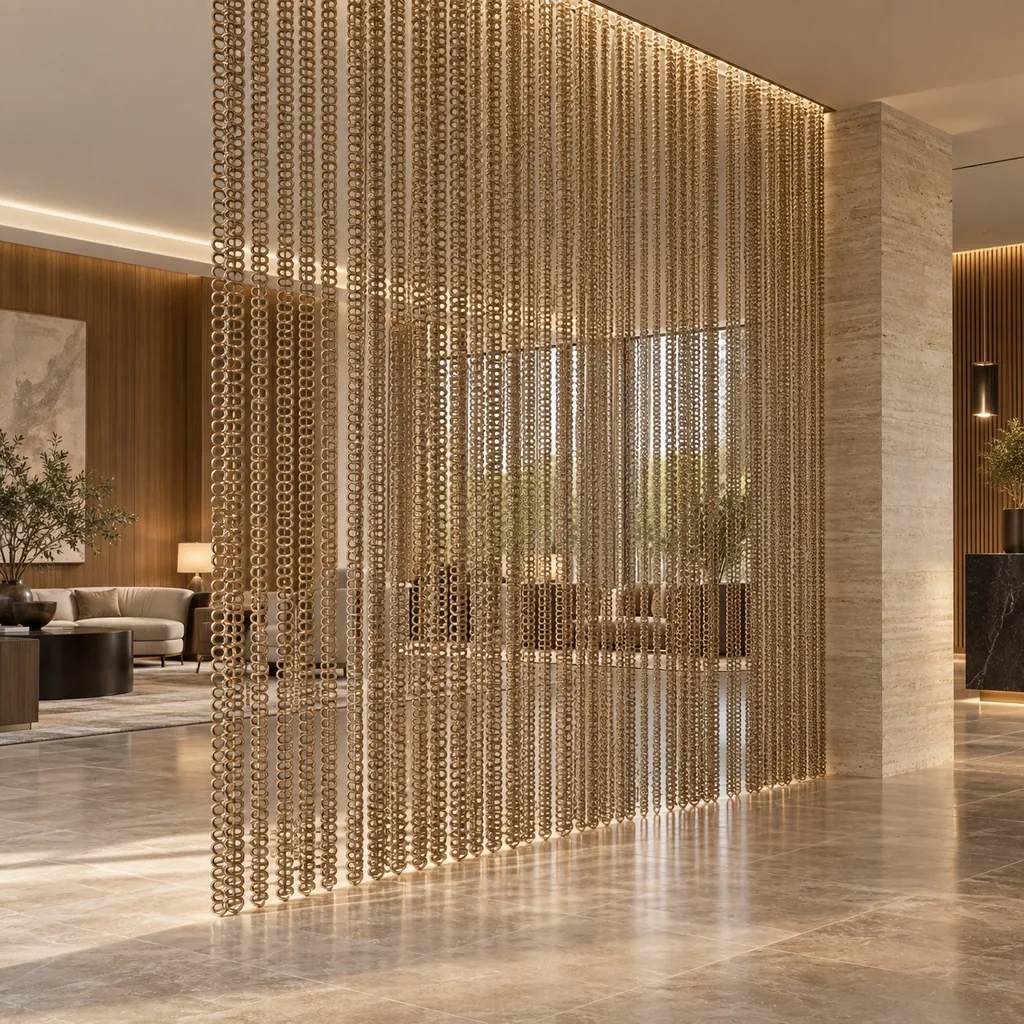
Where Aluminum Expanded Metal Mesh Is Used
Aluminum expanded metal is chosen where weight, corrosion resistance, and rigidity must be combined without the scrap and edge-waste of perforated sheet.
Architectural facades and sunshades
Aluminum expanded metal clads building facades and solar shading screens with a modern metallic mesh texture. Anodized 5052 is the standard choice for coastal and high-exposure installations where salt air and UV resistance matter.
Machine guards and safety enclosures
Standard (raised) 3003 expanded metal forms rigid machine guards and perimeter safety enclosures. The diamond openings provide visibility and ventilation while meeting guard spacing requirements, and aluminum's non-sparking behavior suits flammable environments.
Walkway and platform flooring
Flattened 5052 or 6061 T6 expanded metal forms lightweight walkway treads and platform flooring. The flattened surface provides safe footing while the rigid one-piece diamond structure supports pedestrian and light industrial loads without welding or separate support bars.
HVAC vents, filter screens, and EMI shielding
Aluminum expanded metal serves as HVAC vent grilles, intake filter screens, and EMI shielding panels in enclosures and cabinets. The conductive 3003 or 5052 sheet provides electrical continuity for grounding, and the diamond openings allow airflow while blocking electromagnetic radiation.
Decorative screens and ceiling panels
Anodized aluminum expanded metal in custom colors creates decorative partition screens, ceiling infill, and retail display panels. The diamond pattern and metallic finish deliver a uniform, modern look at lower weight than steel or wood alternatives.
Security fence infill and barriers
Heavy-gauge 5052 expanded metal serves as security fence infill, anti-climb barriers, and access-control gates. The diamond pattern is difficult to cut or climb, and aluminum's lightweight saves on post and foundation costs compared to steel.
How to Select the Right Aluminum Expanded Metal Mesh
Start from the load, environment, and surface requirements, then fix alloy, form, opening size, strand dimensions, finish, and final dimensions. A complete RFQ avoids re-quotes and delays.
By form: standard or flattened
Choose standard (raised) for screens, guards, facades, and applications where rigidity matters. Choose flattened for walkways, platforms, and surfaces that must be flush.
By alloy: 3003, 5052, or 6061
Indoor and general industrial duty: 3003 H14. Marine, coastal, or outdoor: 5052 H32. Structural, load-bearing, or high-strength: 6061 T6.
By opening (LWD x SWD)
Define what the mesh must pass or retain. LWD is the long diagonal, SWD the short diagonal. State both in millimeters to match the diamond geometry to the screening or visual requirement.
By strand and sheet thickness
Strand width and starting sheet thickness together set the strength and weight. Heavier strand and thicker sheet resist impact; lighter material suits decorative duty.
By surface finish
Bright mill finish suits most industrial and screening duty. Specify anodizing for architectural color, surface hardness, or long coastal exposure. Powder coating is available for color-matched interior panels.
By panel size and form
Standard 1220 x 2440 mm panels fit most jobs. Custom lengths, widths, and cut-to-size pieces avoid on-site cutting and edge finishing. Curved and formed panels are available for architectural profiles.
Confirm alloy and temper on paper
Visual checks cannot separate 3003 from 5052 from 6061. State the alloy and temper in the RFQ and request a mill certificate with the shipment.
Understand what you are paying for
Price reflects alloy (6061 costs more than 3003), form (flattening adds a rolling pass), strand width, opening size, finish type, and quantity. A complete itemized quote lets you compare suppliers on the same specification instead of guessing who cut corners.
Aluminum Expanded Metal Mesh Buying Mistakes to Avoid
Seven specification errors that lead to wrong panels, delayed projects, and disputed shipments. Each one is avoidable at the RFQ stage.
Confusing expanded with perforated or woven
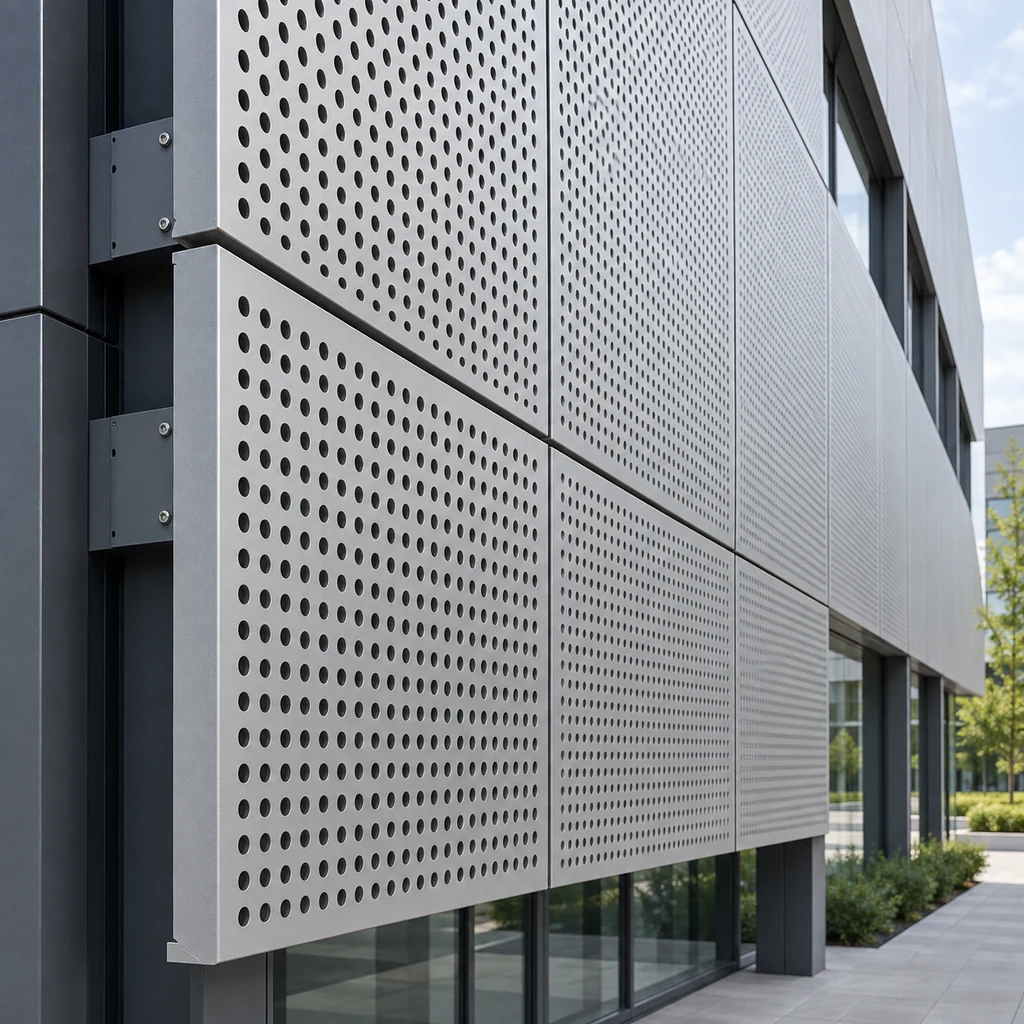
Expanded metal is slit-and-stretched from a single sheet; perforated is punched; woven is made from separate wires. Each has different strength, open area, and edge behavior. Do not treat them as interchangeable.
Choosing the wrong alloy for the environment
3003 is fine indoors but pits in marine air. 5052 resists salt. 6061 carries the highest structural strength. Match the alloy to the actual service environment, not the price.
Specifying only the sheet dimensions without LWD and SWD
Sheet size alone does not define the opening. State LWD x SWD, strand width, and starting thickness together. Two panels at the same sheet size can have completely different opening patterns.
Assuming standard and flattened have the same thickness and strength
After flattening, the apparent thickness is 10-15% less and the surface texture changes. If a smooth surface is needed, specify flattened form explicitly.
Ignoring galvanic contact with steel or copper
Aluminum expanded metal in direct wet contact with steel or copper corrodes rapidly at the junction. Specify isolating gaskets, plastic shims, or aluminum-compatible fasteners.
Using raised (standard) form for walkways
Standard form has raised strands that create trip hazards on walkways. Specify flattened form for any surface that will be walked on.
Overlooking strand orientation when cutting panels
Standard expanded metal has a grain direction; cutting against the grain creates loose strands. Specify factory-finished edges when appearance and safety matter.
Assuming mill finish is enough for outdoor exposure
Bright mill finish aluminum expanded metal weathers acceptably in dry inland atmospheres but develops surface bloom and uneven patina in coastal, industrial, and wet climates. If the panel is visible or serves an architectural function, specify anodized or powder-coated finish. Mill finish is the starting point, not the finish line.
Accepting the lowest quote without an itemized breakdown
Two suppliers can quote very different prices for aluminum expanded metal because one assumed 3003 mill finish and the other quoted 5052 anodized. Without an itemized breakdown by alloy, form, strand dimensions, opening size, finish, and quantity, you cannot compare quotes. Demand the full specification on every line.
Why Buyers Choose Aluminum Expanded Metal Mesh
Aluminum expanded metal earns its place where weight, corrosion resistance, and a one-piece rigid structure matter more than raw steel strength.
Steel is 3x heavier - aluminum cuts freight and frame cost
Steel expanded metal weighs roughly three times more than aluminum at the same opening size. Every ton of steel costs more to ship, requires heavier support structures, and takes longer to install. Aluminum expanded metal at one third the weight changes all of that.
Galvanized coating chips - aluminum self-heals
Hot-dip galvanized steel expanded metal relies on a zinc coating that scratches, chips, and eventually wears away, especially at cut edges. Aluminum expanded metal forms its own oxide film that repairs itself when scratched. No coating schedule, no repair budget, no surprise corrosion.
Steel sparks and attracts magnets - aluminum does not
Steel expanded metal generates sparks under impact and attracts magnets, two problems that exclude it from electronics plants, explosive dust areas, and MRI rooms. Aluminum expanded metal is non-magnetic and non-sparking, so it works safely where steel cannot go.
Perforated metal wastes 30-60% - expanded metal wastes zero
Every sheet of perforated metal produces punched-out scrap that you pay for but cannot use. Expanded metal is slit-and-stretched from a solid sheet with zero waste. The entire starting sheet becomes usable mesh. Lower material cost per square meter of coverage.
Woven mesh unravels at edges - expanded metal cannot
Woven wire mesh relies on individual wires crossing. Cut it at the wrong place and the weave unravels. Expanded metal is a single stretched sheet with continuous strand junctions. Cut it anywhere and the panel stays intact. No loose wires, no edge unraveling, no rework.
Mill finish weathers - anodized aluminum keeps its color
Bright mill finish aluminum looks good when new but weathers unevenly in outdoor and coastal service. Anodizing adds a hard, UV-stable oxide film in clear, bronze, black, or custom colors. The color will not peel or fade like paint. Specify anodized for exterior architectural duty and the panel stays presentable for decades.
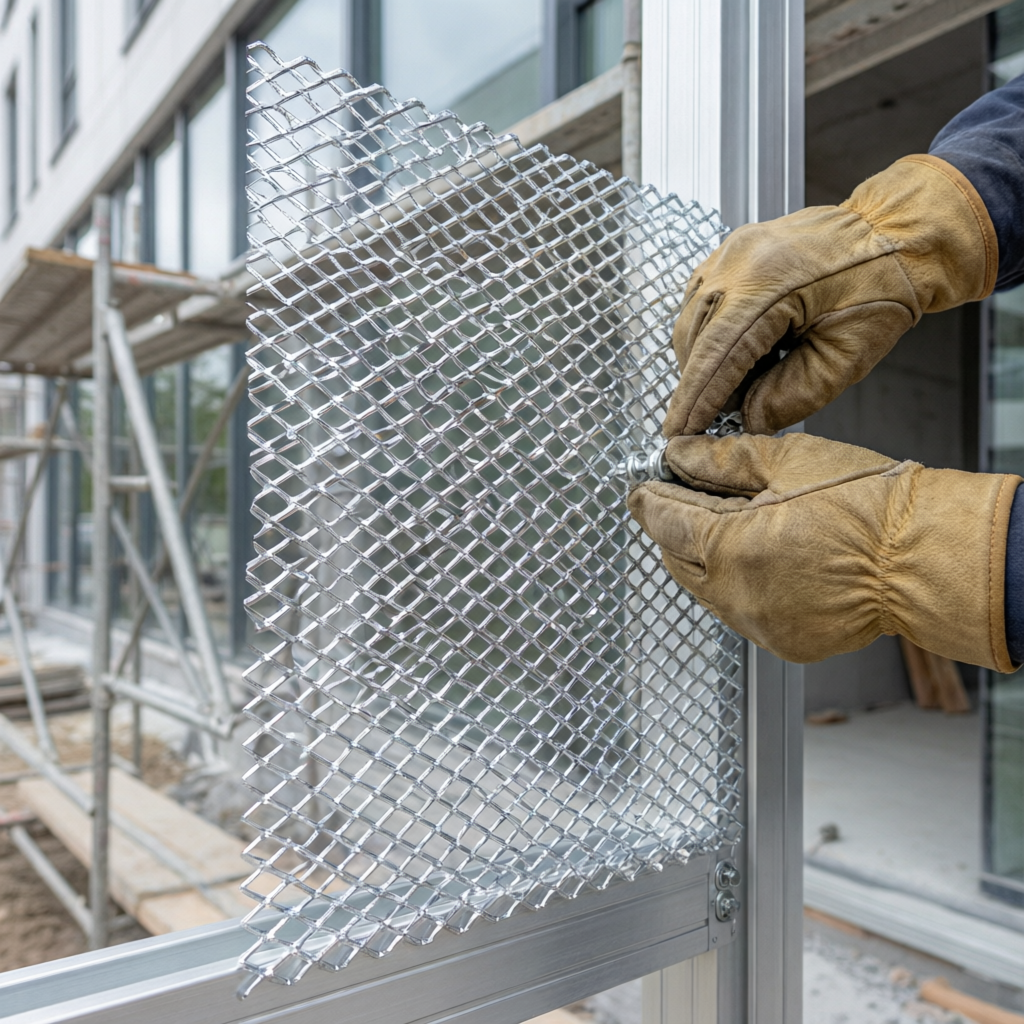
Aluminum expanded metal is easy to cut and install when the form, grain direction, and galvanic isolation are respected.
Working with Aluminum Expanded Metal Mesh
Cut with the grain
Standard expanded metal has a grain direction parallel to the LWD. Cut along the grain with an abrasive saw, shears, or angle grinder. Cutting against the grain leaves loose strand ends that may cause snags.
Deburr cut edges
Aluminum expanded metal edges can be sharp, especially on standard (raised) form. Deburr with a file, abrasive pad, or deburring tool. Specify factory edge finishing for panels in accessible or traffic areas.
Fasten with compatible hardware
Use stainless steel or aluminum clips, brackets, and fasteners. Do not use plain or zinc-plated steel fasteners in wet or outdoor service; galvanic corrosion will pit the mesh around every fastener.
Support flattened panels for walkways
Flattened expanded metal used as walkway flooring must be supported at both ends and at intermediate intervals per the load rating. The diamond structure is rigid but not self-spanning over wide gaps.
Aluminum Expanded Metal Mesh Packing for Export
Packing protects bright aluminum surfaces from marking, keeps panels flat, and preserves traceability through transit and site inspection.
Flat-packed on pallets
Expanded metal sheets and panels ship flat-packed on timber pallets with protective corner boards and multiple straps to prevent shifting in transit.
Interleaved protection
Where panels are stacked face-to-face, interleave paper or foam sheeting is placed between them to prevent surface marking and abrasion during transit.
Labeled by alloy, form, and opening
Each bundle carries a label stating alloy, temper, form (standard or flattened), LWD x SWD, strand width, sheet thickness, panel size, and quantity.
Mill certificates on request
Alloy and temper certificates per ASTM B209 accompany the shipment when requested at RFQ stage. Third-party inspection by SGS, BV, or TÜV is available on request.
Container loading plan
Share your container plan, port of destination, and trade term with the factory to optimize loading, reduce freight cost, and ensure safe arrival.
Aluminum Expanded Metal Mesh in Service
Use scenarios show how alloy, form, and finish change by duty; they are not customer claims.
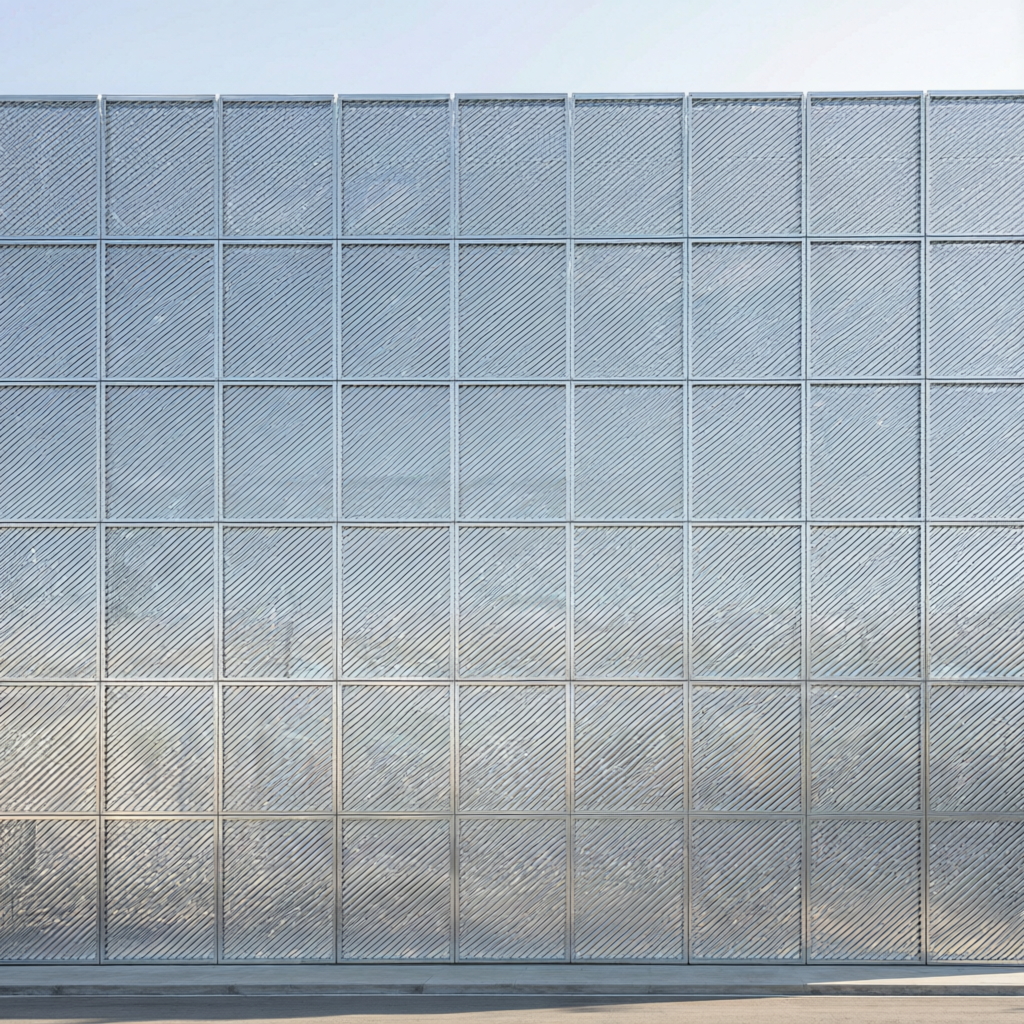
Coastal building facade cladding
Anodized 5052 H32 expanded metal specified for a multi-story facade on a coastal site where salt air, UV exposure, and a consistent metallic finish ruled out 3003 and galvanized steel.
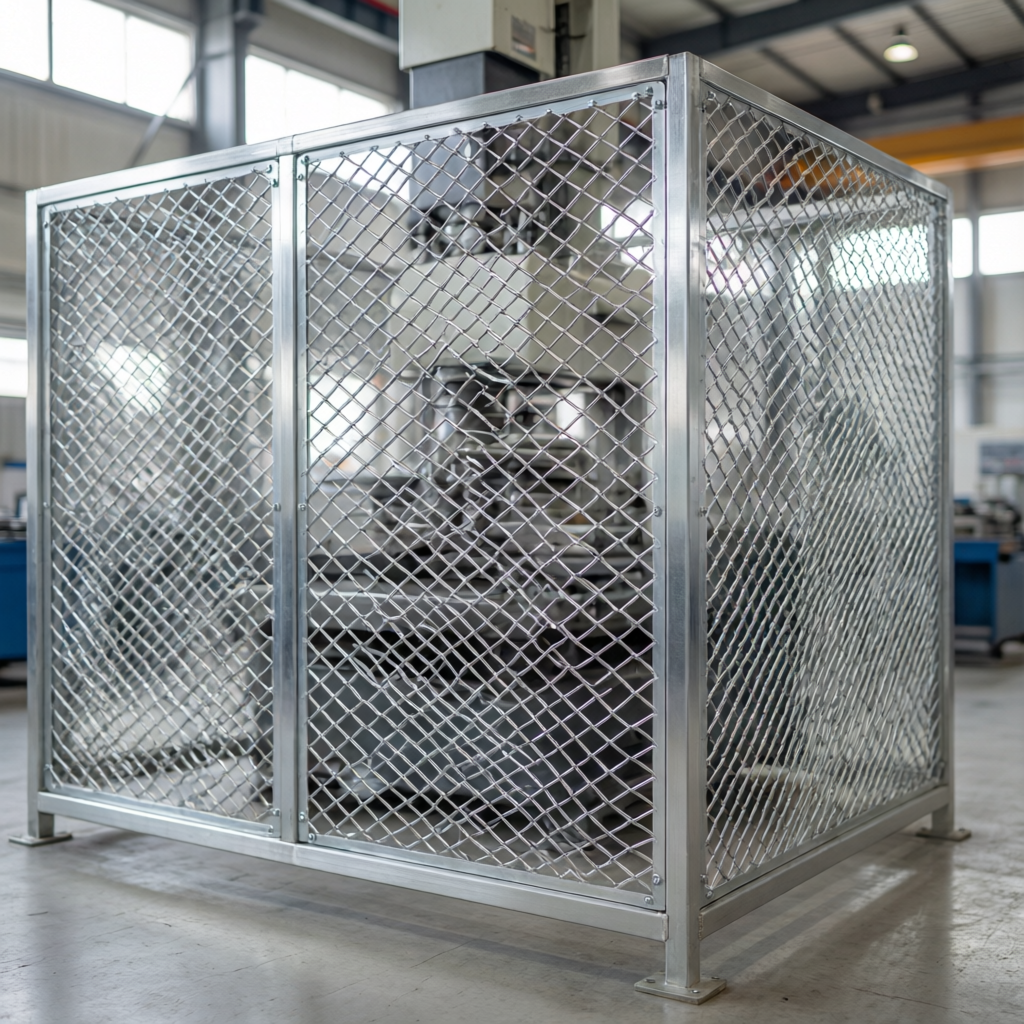
Food plant machine guard infill
Standard 3003 H14 expanded metal panels fitted to machine safety guards in a cereal processing plant where non-sparking material was required and routine washdown did not exceed pH 9.
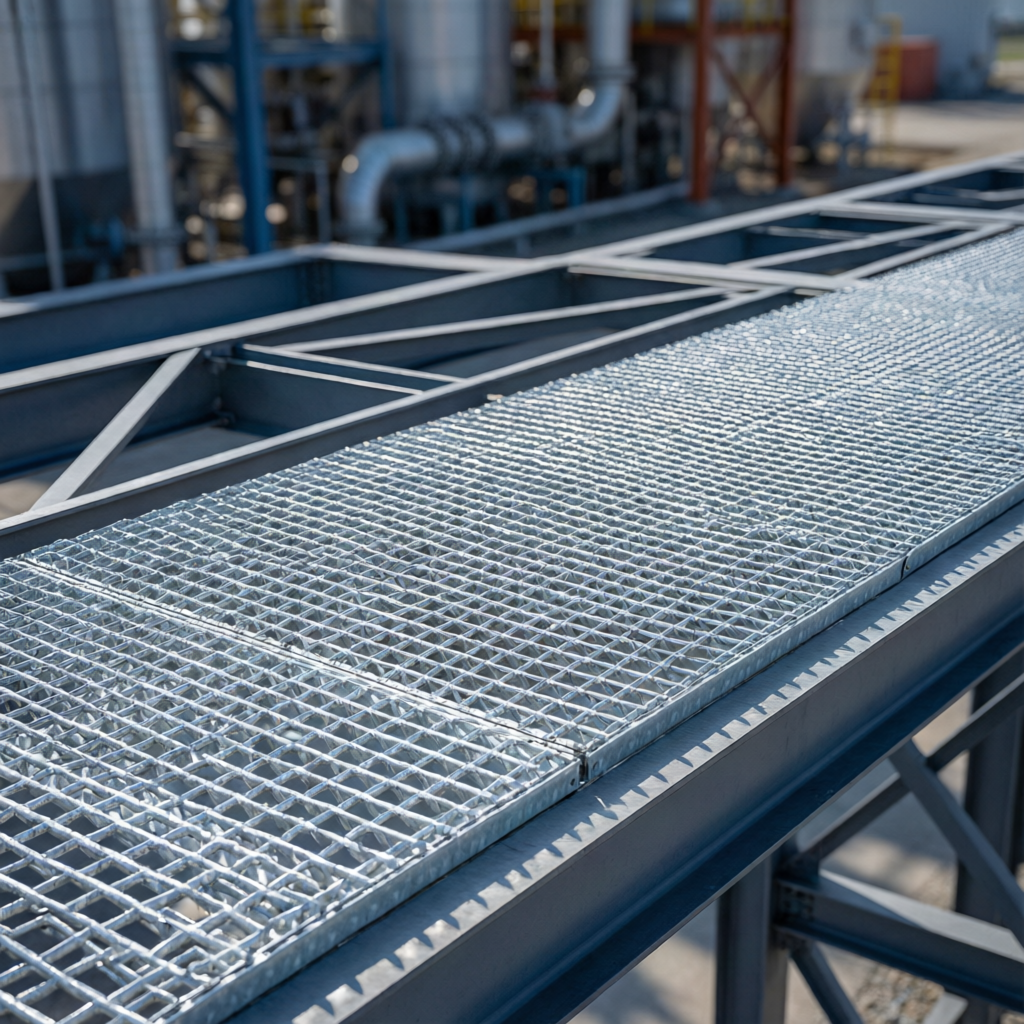
Industrial mezzanine walkway flooring
Flattened 6061 T6 expanded metal treads installed on a warehouse mezzanine walkway, chosen for their lightweight, slip-resistant diamond surface, and the owner's preference for an all-aluminum structure.
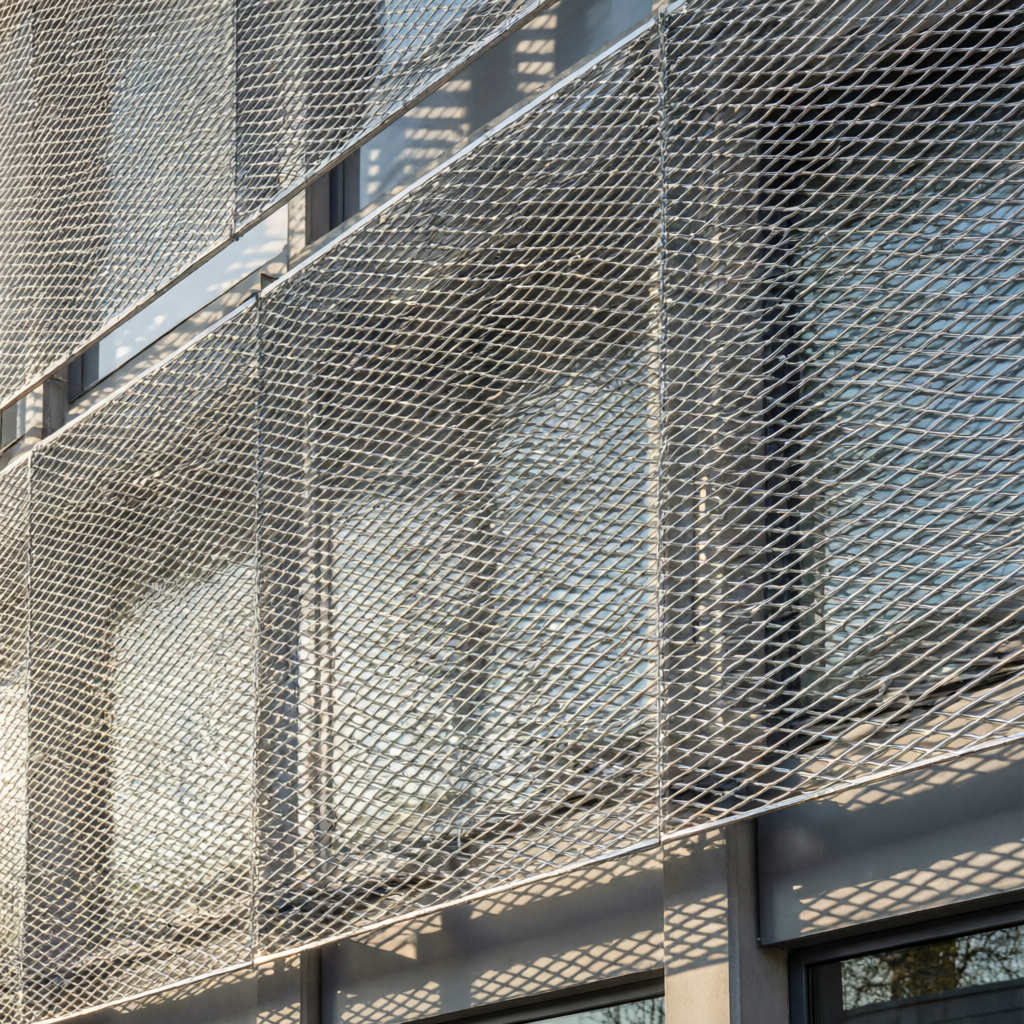
Office tower sunshade screen
Clear-anodized 3003 expanded metal panels mounted on a south-facing office facade as fixed sunshades, reducing solar heat gain while maintaining outward visibility through the diamond openings.
Aluminum Expanded Metal Mesh Sourcing Resources
Compare forms, alloys, and industry standards. Confirm the edition and project requirements before ordering.
Last updated: 2026-08-26
Related pages
Reference standards
Aluminum Expanded Metal Mesh FAQ
Twenty common procurement questions about alloys, forms, specifications, and ordering aluminum expanded metal mesh.
Still have questions about aluminum expanded metal mesh?
Send your alloy, form, opening size, strand thickness, panel dimensions, and quantity. Our sourcing team replies with a specification-led review and available options.
Request a QuoteRequest Aluminum Expanded Metal Mesh Pricing
Send alloy, temper, form (standard or flattened), opening size (LWD x SWD), strand width or sheet thickness, panel dimensions, quantity, application, and destination for a specification-led sourcing review. Our team replies with matched options and a factory quote.
Your details stay private. We reply with a matched factory quote — no spam.