Heavy Duty Screen Mesh for Mining, Quarry & Aggregate Screening
Source heavy duty screen mesh for vibrating screens, crusher circuits, and aggregate plants. Compare crimped, woven, and welded constructions in 65Mn, high-carbon, galvanized, and stainless steel wire, then request a factory quote.
View SpecificationsHeavy Duty Screen Mesh Specifications
Heavy duty screen mesh is defined by six variables: aperture, wire diameter, construction, material, panel format and edges, and open area. State all six in millimeters in every RFQ so the factory can match the deck, the load, and the screen life you need.
Clear square or rectangular openings, typically 2-100 mm, with tolerance; set by the cut point you need to pass or retain
Heavy screen wire, commonly from about 2.0 mm up; the defining feature of heavy duty screen mesh, driving strength, weight, and life
Crimped, woven, or welded screen mesh, matched to vibration, load, and the deck or frame it must fit
65Mn spring steel, high-carbon steel, galvanized steel, or 304/316 stainless steel, matched to abrasion and corrosion
Screen panels, rolls, or cut decks with hook, reinforced, or plain edges and the tensioning they support
The pass-through area set by aperture and wire diameter; predicts flow rate and screening efficiency
Select one or more specifications. Your choices will be included in the quote request.
0 specs selected
| Spec item | What to state | Why it matters | RFQ note | |
|---|---|---|---|---|
| Aperture and opening | Clear opening in millimeters with tolerance | Controls particle sizing and flow rate | State both opening and mesh type. | |
| Wire diameter | Nominal diameter and tolerance | Drives strength, weight, and screen life | Use millimeters. | |
| Construction | Crimped, woven, or welded | Matches vibration, load, and cut-point precision | Describe the screening duty. | |
| Material and finish | 65Mn, high-carbon, galvanized, or stainless | Matches abrasion and corrosion exposure | Describe the service environment. | |
| Panel, edges, and tension | Panel size, hook or reinforced edges, fixing centres | Determines whether the screen fits and tensions | Share the screen make and model. | |
| Open area | Aperture and wire diameter | Predicts flow and screening efficiency | State your target open area. |
Typical Heavy Duty Screen Mesh Aperture and Wire Combinations
Indicative combinations of heavy screen wire based on common quarry and aggregate screening practice. Open area is theoretical for square openings. Confirm the exact aperture, wire tolerance, and open area with the factory before production.
| Aperture (mm) | Wire diameter (mm) | Approx. open area | Typical duty | |
|---|---|---|---|---|
| 3.15 | 2.50 | ~31% | Fine aggregate and sand classification | |
| 4.0 | 3.05 | ~32% | Crushed stone sizing and dewatering | |
| 5.6 | 4.00 | ~34% | Gravel and aggregate grading | |
| 8.0 | 5.00 | ~38% | Coarse aggregate and base material | |
| 11.2 | 5.60 | ~44% | Heavy run-of-crusher screening |
Choosing Heavy Duty Screen Mesh by Duty
Match the construction and material to the screening duty. The table is a selection guide; confirm the final specification against your equipment and feed before production.
| Duty | Recommended construction | Recommended material | Why | |
|---|---|---|---|---|
| Vibrating screen deck, abrasive aggregate | Double or lock crimped | 65Mn or high-carbon steel | Crimps lock intersections so openings stay square under vibration | |
| Run-of-crusher and heavy impact | Heavy welded panel or lock crimped | High-carbon or 45Mn steel | Rigid joints and heavy wire absorb impact | |
| Wet, corrosive, or food-grade screening | Crimped or woven in stainless | 304/316 stainless steel | Corrosion resistance with clean, accurate apertures | |
| Fine and precise classification | Heavy woven wire cloth | High-carbon or stainless steel | Woven cloth holds tight tolerances for finer cut points | |
| Dewatering and drain screens | Crimped with larger openings | Galvanized or stainless steel | High open area passes water while retaining solids |
Heavy Duty Screen Mesh Types We Source
Each construction changes how the screen holds its openings under load. Compare crimped, woven, and welded heavy duty screen mesh before you specify.
Lock and double crimped heavy duty screen
Pre-crimped wires lock at every intersection, the standard for vibrating screen decks that must hold aperture under vibration.
Heavy woven wire screen cloth
Plain or twill weave in heavy wire for finer, accurate classification where crimps would close the opening.
Welded heavy duty screen panels
Rigid resistance-welded panels for crusher circuits, guards, and duties that need fused, non-shifting joints.
Flat-top and hook-edge screen decks
Flattened surface and hook-strip edges for fast tensioning, reduced pegging, and quick changeover.
How to Select Heavy Duty Screen Mesh
Start from the particle size to pass or retain, then fix aperture, wire diameter, construction, material, panel format, and edges. A complete heavy duty screen mesh RFQ avoids assumptions and re-quotes.
By cut point and aperture
Start from the particle size you need to pass or retain. State the aperture in millimeters and the wire diameter, because the same opening can ride on different wires.
By construction and duty
Vibrating decks want crimped or woven screen mesh; crusher and impact circuits can use rigid welded panels. Match the construction to vibration and load.
By material and exposure
65Mn or high-carbon steel for abrasive ore and stone, galvanized steel for general outdoor duty, and stainless steel for wet, chemical, or coastal service.
By open area
Higher open area means more throughput but lighter wire. Balance flow against the strength the deck needs.
By panel format and edges
Hook edges tension fast on vibrating screens; reinforced or plain edges suit frames. Panels beat rolls where tensioning is critical.
By equipment model
Share the screen make and model, deck size, and fixing centres so the panel matches the machine before production.
Match wire to feed
Heavy, sharp feed demands heavier wire. Describe feed size, tonnage, and abrasion for a life-oriented specification.
State millimeters, not mesh count alone
The same mesh count can describe different apertures depending on wire diameter. Give the clear opening in millimeters in every RFQ.
Why Buyers Choose Heavy Duty Screen Mesh
Heavy duty screen mesh is built to hold its openings under vibration and abrasion, so it keeps a plant sized, classified, and productive for longer between changeouts.
Locked, stable openings
Crimped and welded constructions hold apertures square under continuous vibration and heavy load.
Longer screen life
Heavy wire and the right material extend changeout intervals and cut downtime on high-tonnage decks.
Higher throughput
Open area matched to the duty passes material efficiently while keeping the required cut point.
Reliable sizing
Accurate apertures support consistent classification, grading, and end-product quality.
Custom decks and edges
Cut-to-size panels, hook or reinforced edges, and tensioning matched to your screen make and model.
Verified sourcing and QC
PMI alloy checks, aperture gauging, and material certificates coordinated before export.
Where Heavy Duty Screen Mesh Is Used
Choose heavy duty screen mesh when the job demands openings that stay stable under vibration, abrasion, and heavy load.
Vibrating screen decks
Heavy duty screen mesh decks that keep openings square under continuous vibration and tonnage.
Quarry and aggregate screening
Heavy screen cloth for gravel, crushed stone, and base material sizing on high-tonnage decks.
Mining and mineral processing
Abrasion-resistant heavy duty screen mesh for ore grading, classification, and dewatering.
Crusher circuits and replacement screens
Screens behind crushers that separate oversize from specification product under impact and heavy feed.
Coal, sand, and gravel classification
Accurate apertures that separate fractions and protect downstream equipment.
Recycling and demolition screening
Tough heavy duty screen mesh that handles contaminated, abrasive, and heavy feed.
Heavy Duty Screen Mesh Buying Mistakes to Avoid
Seven errors that shorten screen life, throttle throughput, or trigger disputes. Every one is avoidable at the RFQ stage.
Ordering mesh count without aperture
Mesh count alone is ambiguous because aperture depends on wire diameter. Give the clear opening in millimeters.
Ignoring panel and edge dimensions
A panel that does not match the deck size or fixing centres cannot be tensioned. State dimensions and the screen make and model.
Choosing light wire on abrasive feed
Light wire wears through quickly and the opening grows. Match wire diameter to feed size and abrasion.
Overlooking open area
Low open area throttles throughput even when the aperture is right. Balance open area against the strength the deck needs.
Using a light coating in wet duty
Electro-galvanized or light coating fails early in wet or corrosive screening. Match material to the service environment.
Assuming crimped suits every job
Welded and woven constructions each suit different duties. Choose by vibration, load, and cut-point precision.
Not stating tolerances and standards
State wire tolerance, aperture tolerance, and the standard you will inspect against so disputes are avoided.
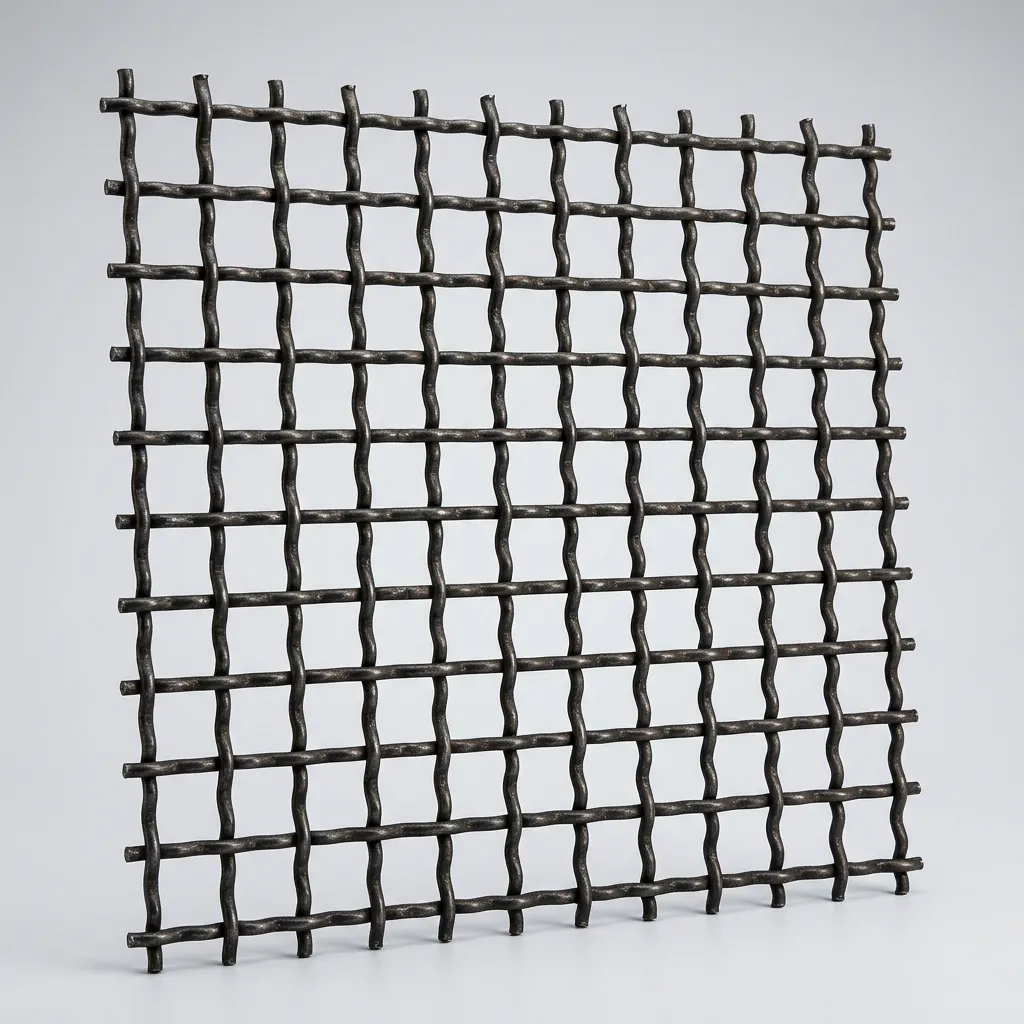
Plan for panel weight, tension, cut edges, and frame support. Follow project safety requirements when fitting heavy duty screen mesh.
Heavy Duty Screen Mesh Handling and Installation
Check the delivered specification
Compare aperture, wire diameter, construction, material, dimensions, edges, and quantity against the order.
Tension evenly on the deck
Fit hook or reinforced edges and tension evenly so openings stay square and the panel stays flat in service.
Replace and deburr safely
Cut along the wire line, deburr exposed edges, and follow the site's lifting and safety requirements for heavy panels.
Match fixing to the duty
Use clamping, hooks, or welded fixing that suits vibration, load, and corrosion exposure.
Heavy Duty Screen Mesh Packing for Export
Packing protects openings, edges, and finishes during transit and inspection, so heavy duty screen panels arrive flat and ready to fit.
Flat panels with edge protection
Stack panels flat with corner protection and wrapping so apertures and edges arrive undamaged.
Rolls on sturdy cores
Ship rolls on stable cores with waterproof wrapping for long runs and fabricators.
Bundle by specification
Separate and label apertures, wire diameters, materials, constructions, and panel sizes.
Provide shipping marks
Include order, item, quantity, weight, destination, and inspection marks.
Share destination details
State destination port, trade term, container plan, and delivery constraints.
Heavy Duty Screen Mesh That Solves Screening Problems
Each scenario starts from a screening or sourcing problem and shows how the heavy duty screen mesh specification solves it. Scenarios are illustrative, not customer claims.
Quarry decks that wear out too fast
Abrasive crushed stone wears through light screen cloth, forcing repeated changeouts and lost tonnage. Heavy duty double crimped screen mesh in heavy high-carbon wire, sized to feed and tonnage, locks the openings and stretches the interval between changeouts.
Crusher circuit screens that sag and blind
Oversize and wet fines sag and peg light mesh behind a crusher. A lock crimped or welded heavy duty panel with a matched open area holds the cut point and sheds material, so the circuit keeps producing specification product.
Wet ore openings drifting out of square
Vibration and wet, heavy feed distort loosely woven cloth, so gradation drifts off specification. Lock crimped stainless panels hold accurate apertures, resist corrosion, and keep classification consistent shift after shift.
Dewatering screens passing too much solids
Too much open area lets fines through the drain screen. A heavy duty crimped screen with a finer, accurate aperture and the right wire holds product while passing water.
Heavy Duty Screen Mesh Sourcing Resources
Compare heavy duty screen mesh with other screen constructions and confirm the applicable standard before ordering.
Last updated: 2026-09-07
Related pages
Heavy Duty Screen Mesh FAQ
Common procurement questions about heavy duty screen mesh specifications, constructions, and ordering details.
Still have questions about heavy duty screen mesh?
Send your aperture, wire diameter, construction, material, panel size, and equipment model. Our sourcing team replies with a specification-led review.
Request a QuoteRequest Heavy Duty Screen Mesh Pricing
Send your aperture, wire diameter, construction, material, panel dimensions and edges, equipment model, quantity, application, and destination for a specification-led sourcing review and factory-direct pricing.
Your details stay private. We reply with a matched factory quote — no spam.