Chicken Wire Mesh: Galvanized Hexagonal Netting Supplier
Source chicken wire mesh in galvanized, PVC-coated and stainless hexagonal netting. Compare mesh sizes, wire gauges and rolls. Request a factory quote.
View SpecificationsChicken Wire Mesh Specifications
Chicken wire mesh is defined by five variables: coating route, hexagonal opening, wire diameter, roll dimensions, and twist construction. State all five in millimeters in every RFQ to avoid gauge-table ambiguity and re-quotes.
Electro galvanized, hot-dip galvanized, PVC-coated, or 304/316 stainless chicken wire mesh
Hexagonal apertures 1/2, 3/4, 1, 1-1/2, and 2 inch measured across flats
0.4-1.2 mm (about 27-19 gauge) chosen by animal duty and predator pressure
Widths 0.5-2 m (common 1 m and 48 in) in 25 m, 30 m, and 50 m lengths
Double-twist hexagonal wire netting as standard; triple-twist for heavy duty
Galvanized wire per ASTM A641 and EN 10244-2; coating verification per ASTM A90
| Coating route | Typical coating | Expected service | Typical use and RFQ note | |
|---|---|---|---|---|
| Electro galvanized | 8-20 g/m2 bright zinc | Indoor and short outdoor duty; about 1-3 years outside | Economical chicken wire mesh for garden fencing, crafts, and temporary pens. Lowest cost; state the ASTM A641 class in the RFQ. | |
| Hot-dip galvanized | 40-80+ g/m2 zinc on the woven netting | Long outdoor service; 5-15 years by environment | The default outdoor chicken wire mesh for poultry runs and rabbit hutches. Specify galvanized-after-weaving so every twist joint is sealed. | |
| PVC-coated over galvanized core | Zinc core plus 0.4-0.8 mm PVC jacket | Extended outdoor life with color; 10-20 years | Green or black chicken wire mesh blends into gardens and aviaries. Name the core coating class and jacket thickness. | |
| 304 / 316 stainless steel | Bare corrosion-resistant alloy wire | Decades; no coating to wear away | Premium chicken wire mesh for coastal, aviary, and food-adjacent duty. Highest cost, longest life, zero rust stains. |
Common Stock Sizes: Chicken Wire Mesh Rolls
Typical stock specifications of chicken wire mesh in electro and hot-dip finishes. Custom widths, lengths, and wire diameters are available at MOQ; confirm wire tolerance and coating mass at RFQ.
| Opening (across flats) | Wire diameter (mm) | Gauge (approx.) | Roll size | Common finish | |
|---|---|---|---|---|---|
| 1/2 in (13 mm) | 0.4-0.6 | 27-23 ga | 1 m x 25 m | Electro or hot-dip galvanized | |
| 3/4 in (19 mm) | 0.6-0.8 | 23-21 ga | 1 m x 25/50 m | Hot-dip galvanized | |
| 1 in (25 mm) | 0.7-1.0 | 22-19 ga | 1 m or 48 in x 50 m | Hot-dip or PVC-coated | |
| 1-1/2 in (38 mm) | 0.8-1.1 | 21-19 ga | 1.2 m x 50 m | Hot-dip galvanized | |
| 2 in (51 mm) | 0.9-1.2 | 20-19 ga | 1.5-2 m x 50 m | Hot-dip or PVC-coated |
Choosing Chicken Wire Mesh by Animal and Duty
Match the opening and wire diameter to what the mesh must hold in or keep out. When predator pressure is serious, step up to heavier wire or welded mesh rather than relying on light netting.
| Animal or duty | Recommended opening | Recommended wire | Why | |
|---|---|---|---|---|
| Chicks and bantams | 1/2 in | 0.6-0.8 mm | Small apertures stop heads, snakes, and rats | |
| Laying hens and ducks | 3/4-1 in | 0.7-0.9 mm | Balanced cost and strength for everyday runs | |
| Rabbits and guinea fowl | 1 in | 0.8-1.0 mm | Heavier wire resists chewing and kicking | |
| Fox and raccoon pressure | 1 in maximum | 0.9-1.2 mm | Step up to heavy wire or choose welded mesh instead | |
| Stucco and plaster lath | 1 in | 0.7-0.9 mm | Self-furring twists key the render coat |
Chicken Wire Mesh Roll Weight Reference
Theoretical weight for freight and handling estimates. Actual weight varies by coating mass and wire tolerance; confirm exact weight on the packing list.
| Opening | Wire diameter (mm) | Approx. weight (kg/m2) | 1 m x 30 m roll (kg) | |
|---|---|---|---|---|
| 1/2 in (13 mm) | 0.5 | 0.35 | 10.5 | |
| 3/4 in (19 mm) | 0.7 | 0.55 | 16.5 | |
| 1 in (25 mm) | 0.8 | 0.65 | 19.5 | |
| 1 in (25 mm) | 1.0 | 1.00 | 30.0 | |
| 1-1/2 in (38 mm) | 0.9 | 0.80 | 24.0 | |
| 2 in (51 mm) | 1.1 | 1.10 | 33.0 |
Chicken Wire Mesh Types We Source
One hexagonal weave, four corrosion-protection routes. Compare coating life against your environment before you specify chicken wire mesh.
Galvanized chicken wire mesh
Electro or hot-dip zinc on low-carbon steel wire; the standard choice for poultry, garden, and stucco duty.
PVC-coated chicken wire mesh
Green or black PVC jacket over a galvanized core; extra life and color for gardens, aviaries, and coastal sites.
Stainless steel chicken wire mesh
304 or 316 alloy hexagonal netting for marine, food-adjacent, and premium aviary service with no coating to fail.
How to Select the Right Chicken Wire Mesh
Start from the animal or duty, then fix opening, wire diameter, coating, roll size, and verification. A complete chicken wire mesh RFQ avoids assumptions and re-quotes.
By animal and duty
Chicks need 1/2 inch apertures; laying hens run well behind 3/4-1 inch; stucco lath uses 1 inch self-furring netting.
By predator pressure
Light 0.4-0.6 mm wire holds poultry in but not foxes out. Where predators work the fence, choose 0.9 mm and heavier.
Electro or hot-dip?
Electro galvanized suits indoor and short-term outdoor use. Hot-dip chicken wire mesh carries far more zinc for years outside.
When to choose PVC or stainless
PVC adds color and jacket protection over the zinc core; stainless suits coastal, aviary, and hygiene-sensitive duty.
Double-twist or triple-twist
Double-twist netting is the flexible standard. Triple-twist locks heavier wire for high-tension runs and stucco lath.
Roll width and length
Match roll width to fence height or lath coverage to minimize seams. Common widths are 1 m, 1.2 m, 48 in, and 2 m.
State millimeters, not gauge
Gauge tables vary by standard and country. State opening and wire diameter in millimeters in every chicken wire mesh RFQ.
When to upgrade to welded mesh
For permanent predator-proof coops and dig-proof skirts, welded wire mesh outperforms any hexagonal netting.
Why Buyers Choose Chicken Wire Mesh
Chicken wire mesh remains the world's default poultry and garden barrier for honest reasons: low cost, easy handling, and huge availability.
Lowest cost per meter
Hexagonal weaving uses less steel than welded grids, so chicken wire mesh covers long runs on a tight budget.
Flexible and forgiving
The double-twist weave conforms to slopes, curves, and rough posts without cutting every panel to shape.
Light and easy to install
One person can carry and tension a 50 m roll with staples, ties, and basic tools; no welding or framing needed.
Four coating routes
Electro, hot-dip, PVC-coated, and stainless options let you buy exactly the service life the site demands.
Ready stock, fast lead time
Standard openings and gauges ship from stock programs in days, keeping farm and building schedules on track.
Verified, traceable supply
Rolls carry labels with opening, wire diameter, coating class, and quantity; coating mass is verifiable per ASTM A90.
Where Chicken Wire Mesh Is Used
Choose chicken wire mesh when you need a flexible, light, low-cost barrier that conforms to posts, frames, and uneven ground.
Poultry runs and coops
Chicken wire mesh walls and roofs keep hens, ducks, and bantams in their run while holding everyday predators out.
Garden and plant protection
Low chicken wire fence rings and cloches stop rabbits, dogs, and deer from reaching beds, seedlings, and young trees.
Rabbit and small animal hutches
Heavier-gauge chicken wire mesh panels form hutch fronts, floors, and exercise pens for rabbits and guinea pigs.
Stucco and plaster lath
Hexagonal stucco netting keys render and plaster coats on walls, ceilings, and curved surfaces without slipping.
Crafts and DIY projects
Light electro chicken wire mesh shapes easily for floral work, sculpture armatures, cabinet inserts, and decorations.
Light fencing and trellis
Temporary poultry netting and climbing-plant trellis for allotments, orchards, and seasonal enclosures.
Chicken Wire Mesh Buying Mistakes to Avoid
Seven errors that lose birds, shorten service life, or trigger disputes. Every one is avoidable at the RFQ stage.
Buying wire that is too light
27-23 gauge netting holds chickens in but tears under a determined fox or dog. Match wire diameter to real predator pressure.
Using electro galvanized outdoors
Thin bright zinc fails within a couple of seasons outside. Outdoor runs need hot-dip galvanized chicken wire mesh.
Mixing gauge standards in the RFQ
BWG, SWG, and AWG tables differ. State wire diameter and opening in millimeters only, and the dispute disappears.
Ignoring cut ends and seams
Every cut exposes bare steel that rusts first. Touch up cut ends with zinc-rich paint and overlap seams by two full meshes.
Choosing openings too large for chicks
Chicks slip through 1 inch netting and snakes follow them back in. Brooders and bantam runs need 1/2 inch apertures.
Expecting hex netting to stop diggers
Flexible chicken wire mesh lifts at the bottom edge. Bury a 30 cm skirt or upgrade the perimeter to rigid welded mesh.
Fastening posts too far apart
Posts spaced over 2.5 m allow the netting to sag, and predators push through the slack. Space poultry run posts 1.5-2 m apart and check tension every season.
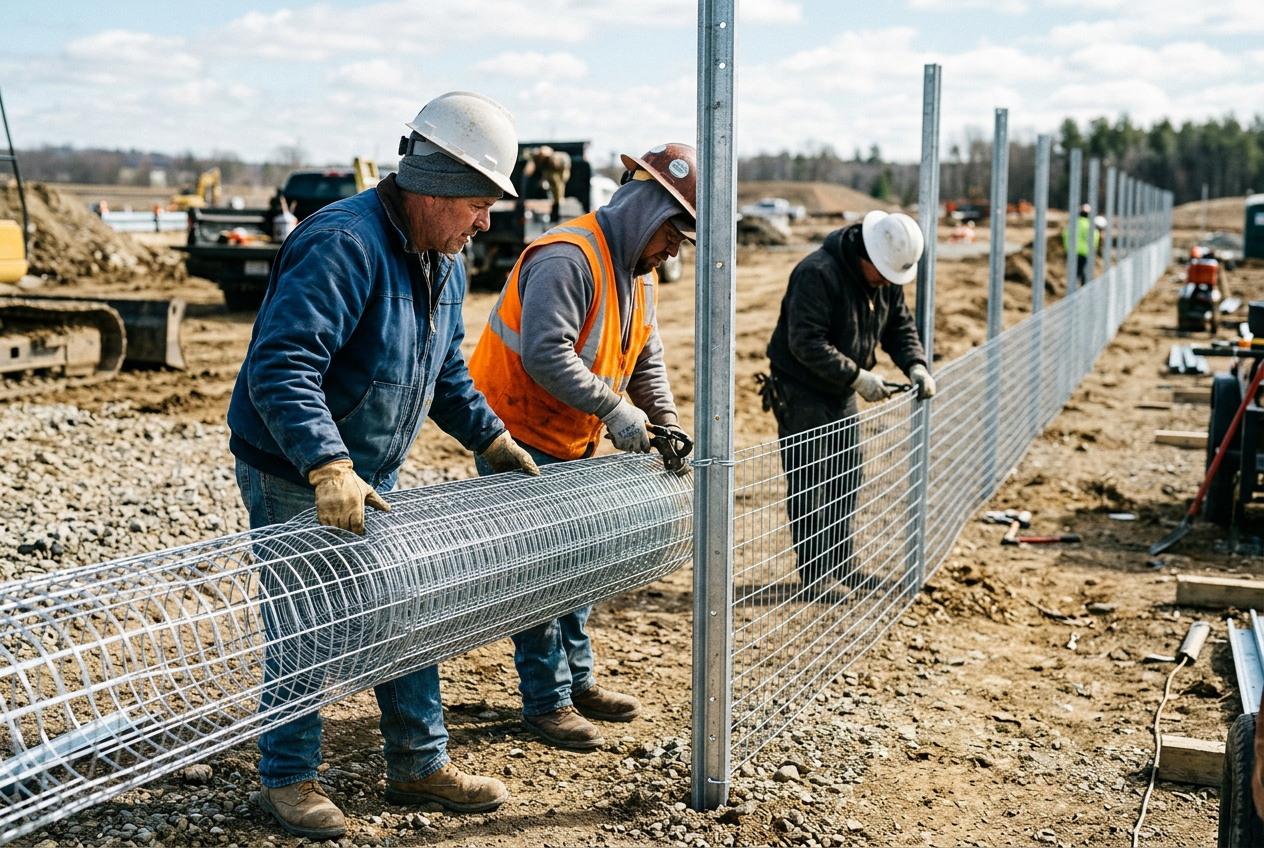
Unroll, tension, and fasten chicken wire mesh correctly, and protect every cut end for a long service life.
Working with Chicken Wire Mesh
Unroll along the fence line
Stand the roll upright and walk it along the posts. Let the netting relax flat before fastening to avoid spring-back tangles.
Tension and fasten to posts
Pull the mesh hand-tight between posts and staple or tie every 150-300 mm. Fix the top line first, then the bottom.
Cut cleanly and seal the ends
Cut along a wire line with aviation snips. Every cut bares steel, so brush zinc-rich paint on the ends of galvanized chicken wire mesh.
Stop digging at the bottom
Bury the bottom 20-30 cm outward as a skirt, or pin it under a ground board, so dogs and foxes cannot nose under the fence.
Chicken Wire Mesh Packing for Export
Packing keeps rolls round, protects zinc and PVC finishes, and preserves traceability through transit and receiving inspection.
Rolls wrapped and strapped
Each chicken wire mesh roll is compressed, wrapped in waterproof paper and woven bag, and strapped to hold its shape.
Palletized for container loading
Rolls stand on pallets or pack in bundles sized to the container plan, with edge protection against forklift damage.
Label by specification
Every bundle carries opening, wire diameter, coating class, roll dimensions, quantity, and production lot.
Certificates on request
Coating mass certificates per the RFQ standard and mill certificates for the steel wire accompany the shipment when ordered.
Share destination details
State destination port, trade term, and inspection requirements. Pre-shipment inspection by SGS, BV, or TÜV is available on request.
Chicken Wire Mesh in Service
Use scenarios show how coating, opening, and wire diameter change by duty; they are not customer claims.

Free-range poultry run
Hot-dip galvanized chicken wire mesh in 1 inch aperture on 0.9 mm wire, tensioned between posts with a buried anti-dig skirt.
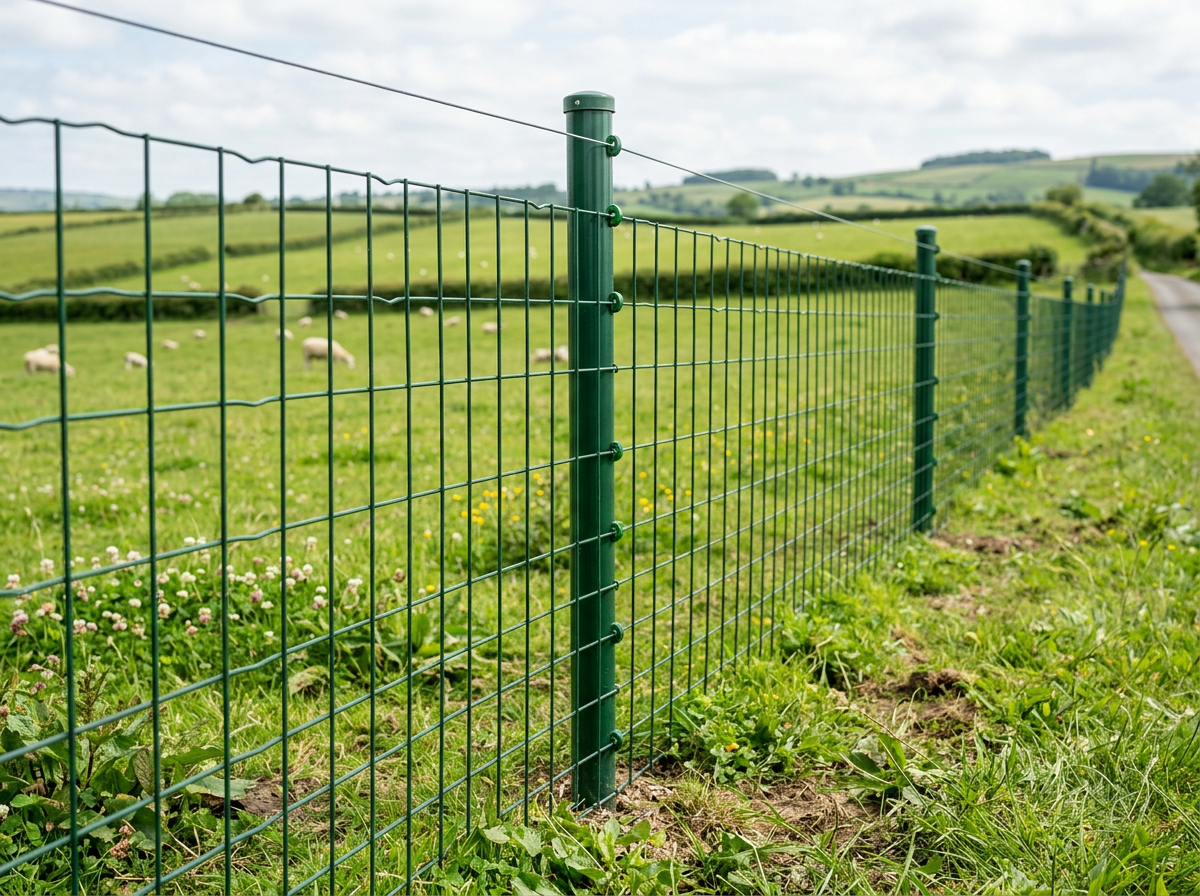
Vegetable garden protection
Green PVC-coated chicken wire fence rings keep rabbits and dogs off raised beds while blending into the planting.
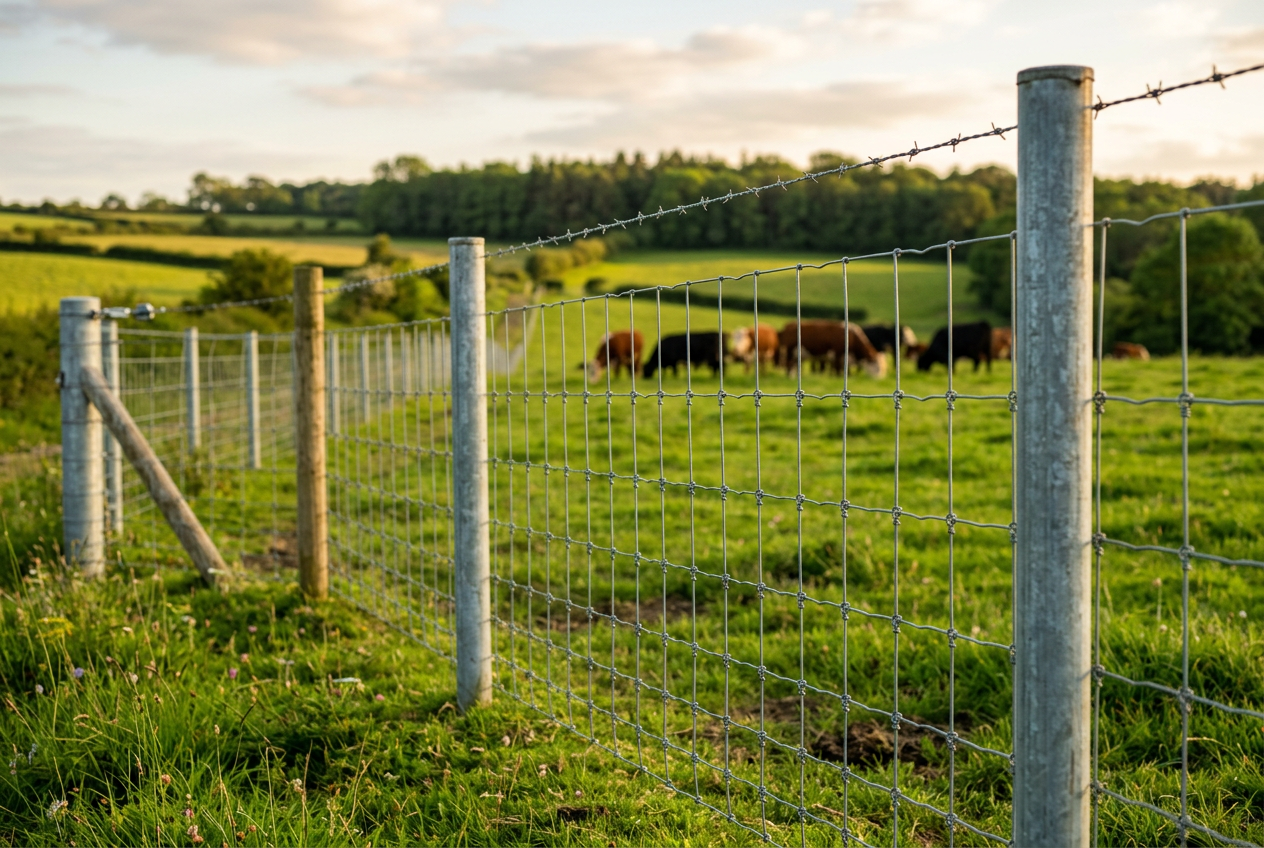
Rabbit hutch and exercise pen
Heavier 1.0 mm hot-dip chicken wire mesh framed into hutch fronts and a folding run that resists chewing.
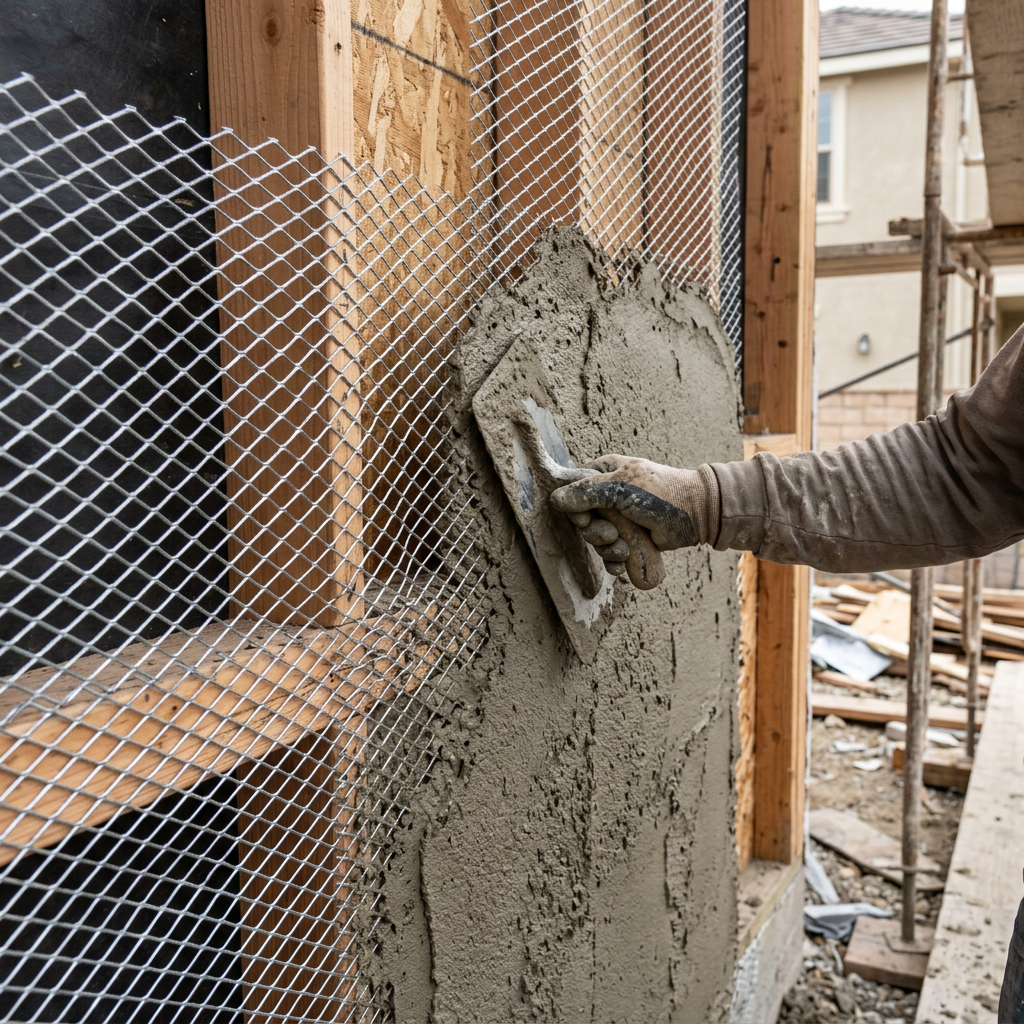
Stucco ceiling and wall lath
Self-furring hexagonal netting stapled to battens, keying a three-coat render on a curved garden wall.
Chicken Wire Mesh Sourcing Resources
Compare hexagonal netting products, coating standards, and related categories. Confirm the standard edition and project requirements before ordering.
Last updated: 2026-08-06
Related pages
Reference standards
Chicken Wire Mesh FAQ
Common procurement questions about openings, wire gauges, coatings, and ordering chicken wire mesh.
Still have questions about chicken wire mesh?
Send your opening, wire diameter, coating route, roll size, and quantity. Our sourcing team replies with a specification-led review.
Request a QuoteRequest Chicken Wire Mesh Pricing
Send opening, wire diameter, coating type and class, roll dimensions, quantity, application, and destination for a specification-led sourcing review. Our team replies with matched chicken wire mesh options and a factory quote.
Your details stay private. We reply with a matched factory quote — no spam.