Aluminum Wire Mesh: 1050, 1100, 3003 & 5052 Alloy Supplier
Source aluminum wire mesh in 1050, 1100, 3003, and 5052 alloys. Compare woven, expanded, crimped, and welded constructions, check alloy tempers, and request a factory quote.
View SpecificationsAluminum Wire Mesh Alloys and Specifications
ASTM B211 governs aluminum alloy wire, while ASTM B209 covers sheet used for expanded aluminum mesh. Alloy temper designations follow the Aluminum Association system. State the alloy, temper, construction, mesh opening, wire diameter, dimensions, and quantity in every aluminum wire mesh RFQ.
1050, 1100, 3003, or 5052 in O (annealed), H14, H18, or H32 temper per ASTM B211 and ASTM B209
Woven wire cloth, expanded mesh, crimped screen, or welded aluminum wire mesh
Woven cloth from 2 to 200 mesh; expanded openings from 3 mm upward; welded mesh from 1/4 inch upward
0.10 mm fine screening wire through 4 mm heavy crimped and welded wire
Rolls 1 m or 48 in wide by 30 m long, flat sheets, panels, and cut-to-size pieces
Bright mill finish standard; anodizing available for color, extra hardness, and architectural duty
| Alloy | Key traits | Typical temper | Best for | |
|---|---|---|---|---|
| 1050 / 1060 | 99.5%+ pure aluminum; best corrosion resistance and electrical conductivity; soft | O, H14, H18 | Fine screening, EMI shielding, decorative aluminum wire mesh, and electrical duty | |
| 1100 | Commercially pure; excellent formability and corrosion resistance | O, H14 | General woven aluminum wire mesh, insect screens, and filter cloth | |
| 3003 | Manganese alloyed; about 20% stronger than 1100 with similar corrosion resistance | O, H14, H18 | The default alloy for crimped, welded, and expanded aluminum wire mesh in industrial screening | |
| 5052 | Magnesium alloyed; highest strength here and good marine corrosion resistance | H32, H34 | Marine screens, architectural facade mesh, and panels exposed to salt air |
Common Stock Sizes: Aluminum Woven Wire Cloth
Typical stock specifications in 1100 and 3003 alloys, bright mill finish. Rolls are commonly 1 m or 48 in wide by 30 m long; widths up to 2 m are available on request. Confirm wire diameter and opening tolerance at RFQ.
| Mesh count | Wire diameter (mm) | Opening (mm) | Open area (approx.) | Common use | |
|---|---|---|---|---|---|
| 2 mesh | 1.20 | 11.50 | 75% | Coarse guarding and grating | |
| 4 mesh | 1.00 | 5.35 | 72% | Crushing plant pre-screens | |
| 10 mesh | 0.55 | 1.99 | 62% | Aggregate sizing and debris screens | |
| 20 mesh | 0.40 | 0.87 | 48% | Granule and pellet screening | |
| 40 mesh | 0.25 | 0.385 | 37% | Fine filtration and sieving | |
| 100 mesh | 0.10 | 0.154 | 37% | Powder sieving and filter cloth |
Aluminum Alloy Property Comparison for Wire Mesh Duty
Approximate mechanical values for wire and sheet stock used to weave and expand aluminum wire mesh. Use them to screen candidates, then confirm the certified temper in the purchase order.
| Property | 1050 / 1100 | 3003 | 5052 | |
|---|---|---|---|---|
| Tensile strength (H14/H32) | 110-145 MPa | 150-195 MPa | 215-260 MPa | |
| Density | 2.70 g/cm3 | 2.73 g/cm3 | 2.68 g/cm3 | |
| Atmospheric corrosion resistance | Excellent | Excellent | Very good to excellent | |
| Marine and salt-spray resistance | Good | Good | Best of the three | |
| Formability | Excellent | Very good | Good | |
| Anodizing response | Bright, uniform | Uniform, slightly warm tone | Slightly darker film |
Aluminum vs Stainless vs Galvanized Steel Wire Mesh
Three mainstream wire mesh families compared from the environment inward. Start with corrosion and weight demands, then let cost and strength settle the choice.
| Factor | Aluminum (3003 / 5052) | Stainless 304 / 316 | Galvanized steel | |
|---|---|---|---|---|
| Weight | Lightest; about one third of steel | Heaviest of the three | Heavy | |
| First cost | Low to medium | 3-5x galvanized | Lowest | |
| Corrosion mechanism | Self-healing oxide film; no coating to fail | Passive chromium film; best in chlorides | Sacrificial zinc coating wears away | |
| Strength and abrasion | Lowest; avoid heavy impact duty | Highest | High | |
| Magnetic and sparking behavior | Non-magnetic and non-sparking | Essentially non-magnetic; may spark | Magnetic; sparks | |
| Cutting and fabrication | Easiest; hand tools suffice | Hardest to cut and weld | Easy to cut; touch up cut ends | |
| Best for | Screens, filters, facades, light enclosures, EMI duty | Marine, food, chemical, and high-temperature duty | Fences, farms, construction, and gabions |
Aluminum Wire Mesh Weight Chart
Theoretical weight for freight and handling estimates: kg/m2 = d(mm)^2 x 0.00206 x (1000/pitch1 + 1000/pitch2), with aluminum density 2.70 g/cm3. Confirm exact roll weight on the packing list.
| Opening | Wire diameter (mm) | Weight (kg/m2) | 1 m x 30 m roll (kg) | |
|---|---|---|---|---|
| 1/4 in x 1/4 in | 0.63 | 0.26 | 8 | |
| 1/2 in x 1/2 in | 0.80 | 0.21 | 6 | |
| 1/2 in x 1/2 in | 1.02 | 0.34 | 10 | |
| 1 in x 1 in | 1.65 | 0.44 | 13 | |
| 1 in x 2 in | 2.11 | 0.54 | 16 | |
| 2 in x 2 in | 2.50 | 0.51 | 15 | |
| 2 in x 2 in | 3.05 | 0.76 | 23 |
Mesh-to-Micron Conversion Chart for Aluminum Wire Cloth
Approximate opening sizes for plain weave aluminum wire mesh: micron rating refers to the aperture between wires. Values assume standard wire diameters; confirm the exact opening for your wire diameter at RFQ.
| Mesh count | Opening (microns) | Opening (mm) | Typical wire diameter (mm) | Typical duty | |
|---|---|---|---|---|---|
| 10 mesh | 2000 | 2.00 | 0.54 | Coarse granule and chip screening | |
| 20 mesh | 850 | 0.85 | 0.42 | Pellet and seed sizing | |
| 40 mesh | 425 | 0.425 | 0.21 | Sugar, salt, and coarse powder sieving | |
| 60 mesh | 250 | 0.250 | 0.17 | Fine powder and spice sieving | |
| 100 mesh | 150 | 0.150 | 0.10 | Pharmaceutical and fine chemical screening | |
| 150 mesh | 106 | 0.106 | 0.063 | Fine filtration pre-stage | |
| 200 mesh | 75 | 0.075 | 0.052 | Fine filtration and polishing duty |
Aluminum Alloy Grade Cross-Reference: AA, GB, EN, and JIS
Match the aluminum wire mesh alloy on your drawing to its international equivalents. GB designations follow GB/T 3190; EN and JIS names are the common wrought-alloy designations. Confirm the exact temper separately.
| AA (USA) | GB/T (China) | EN (Europe) | JIS (Japan) | RFQ note | |
|---|---|---|---|---|---|
| 1050 | 1050A | AW-1050A | A1050 | Pure aluminum; interchangeable across systems | |
| 1100 | 1100 | No direct equivalent; AW-1200 nearest | A1100 | State AA 1100 explicitly on European orders | |
| 3003 | 3003 | AW-3003 (AlMn1) | A3003 | The default screening alloy in all markets | |
| 5052 | 5052 | AW-5052 (AlMg2.5) | A5052 | Marine and facade duty; widely stocked |
Aluminum Expanded Mesh: Common Specifications
Expanded aluminum mesh is specified by long way of diamond (LWD), short way of diamond (SWD), strand width, and sheet thickness, in 3003 or 5052. Open area is approximate; confirm strand tolerance for facade duty.
| LWD x SWD (mm) | Strand width (mm) | Sheet thickness (mm) | Open area (approx.) | Typical use | |
|---|---|---|---|---|---|
| 8 x 4 | 1.0 | 0.5 | 65% | Ventilation panels and light filters | |
| 12 x 6 | 1.5 | 0.8 | 70% | Guard infill and equipment screens | |
| 16 x 8 | 2.0 | 1.0 | 70% | Machine guards and partitions | |
| 25 x 12 | 3.0 | 1.5 | 75% | Facade skins and balustrades | |
| 40 x 20 | 4.0 | 2.0 | 75% | Heavy facade and sunshade panels | |
| 50 x 25 | 5.0 | 3.0 | 75% | Walkway infill and platform screens |
Weave Patterns for Aluminum Wire Cloth
The weave sets how fine an opening aluminum wire mesh can hold and how well it withstands pressure and flexing. Plain weave covers most stock; twill and Dutch weaves serve finer and heavier filtration.
| Weave | Structure | Practical aperture range | Best for | |
|---|---|---|---|---|
| Plain weave | One wire over, one wire under | 2 to 200 mesh | General screening, sieving, and insect screens; the default stock weave | |
| Twill weave | Two wires over, two wires under | Finer openings in heavier wire | Heavier wire where plain weave cannot hold fine apertures | |
| Plain Dutch weave | Coarse warp wires packed with fine weft | Down to about 25 microns | Micron-rated filtration discs and tubes under pressure | |
| Reverse Dutch weave | Fine warp wires packed with coarse weft | Down to about 50 microns | High-flow filtration with strong lateral support |
Environment Compatibility Quick Reference for Aluminum Wire Mesh
Aluminum's oxide film is durable but not universal. Use this table to match alloy and finish to real exposure, and escalate to stainless steel wire mesh where aluminum is rated poor.
| Environment | Aluminum behavior | Guidance | |
|---|---|---|---|
| Dry and rural atmosphere | Excellent; oxide film stable for decades | 1100 or 3003, mill finish | |
| Urban and industrial atmosphere | Very good; mild surface weathering | 3003; rinse where soiling is heavy | |
| Marine and salt-splash | Good with 5052; pitting risk on pure alloys | 5052 preferred; rinse salt deposits where practical | |
| Fresh water | Very good below about 65 degrees C | Avoid stagnant, high-chloride water pockets | |
| Food acids (vinegar, citrus) | Limited; acids attack the film over time | Short-contact sieving only; choose stainless for wet lines | |
| Detergents and alkalis, pH above 9 | Poor; alkalis dissolve the oxide film | Do not specify aluminum for caustic washdown | |
| Cement and lime slurry | Poor; sustained alkaline attack | Isolate fully or choose galvanized or stainless | |
| Sustained heat above 150 degrees C | Temper softens and strength drops | Use stainless wire mesh for hot duty |
Constructions We Source in Aluminum
One metal family, many constructions. Compare woven, expanded, crimped, and welded aluminum wire mesh before you specify.
Aluminum woven wire mesh
Plain and twill weave cloth from 2 to 200 mesh for screening, filtration, and shielding.
Aluminum expanded mesh
Slit-and-stretched 3003 or 5052 sheet with diamond openings; rigid, waste-free, and economical.
Aluminum crimped wire mesh
Pre-crimped wires lock openings for vibrating screens and sizing decks that need stable apertures.
Aluminum welded wire mesh
Light welded grids for guards, cages, and panels where weight savings beat raw strength.
Aluminum Wire Mesh Products
View all products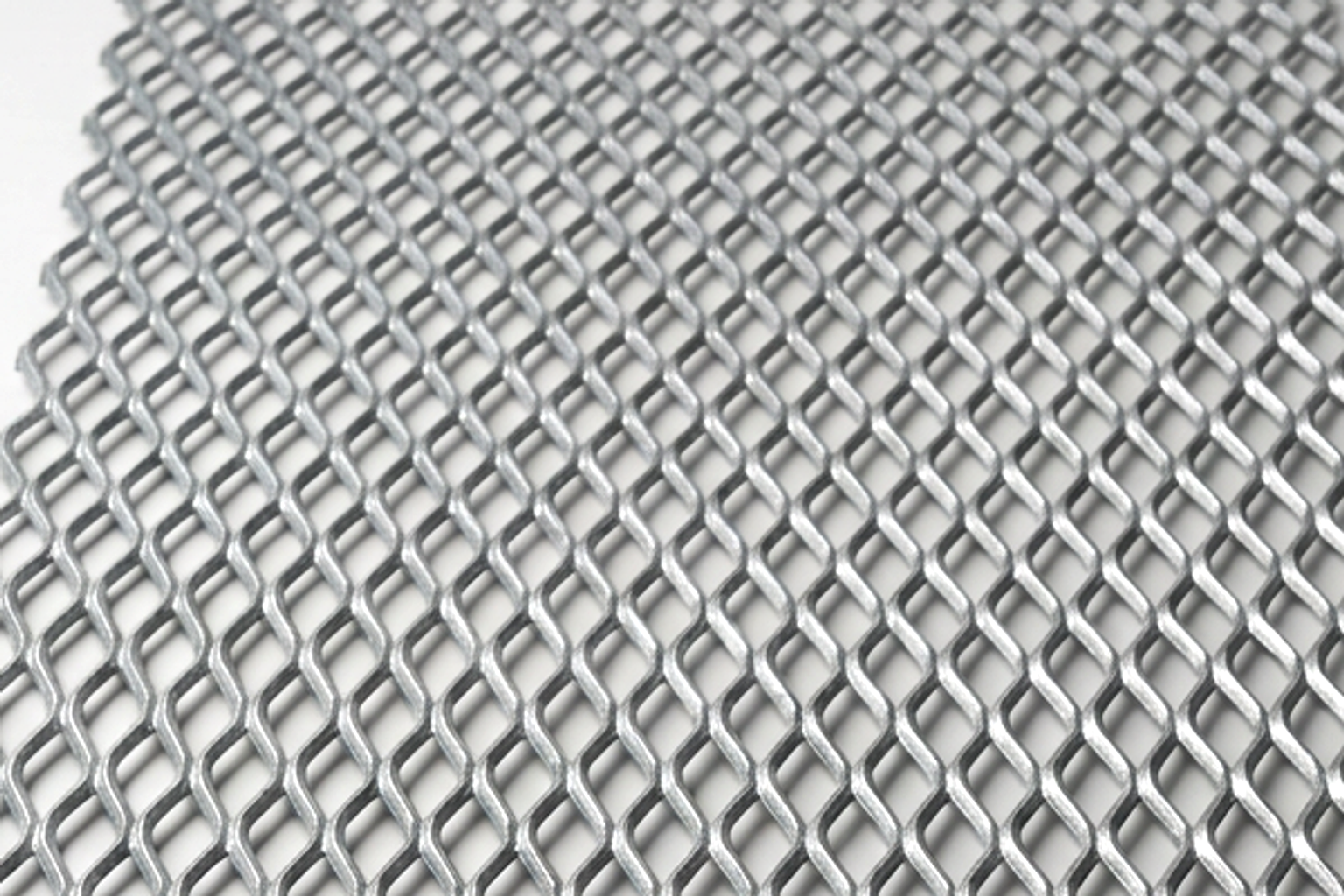

Where Aluminum Wire Mesh Is Used
Choose aluminum wire mesh when weight, corrosion without coatings, or non-magnetic behavior rules out steel.
Screening and sieving
Aluminum wire cloth sizes aggregates, granules, and food or pharmaceutical powders without shedding rust or introducing iron ions into the product stream, a failure mode that rules out plain and galvanized steel screens.
Filtration and process
Woven aluminum wire mesh filter discs and tubes serve air, oil, and chemical filtration where lightweight, non-rusting media matters.
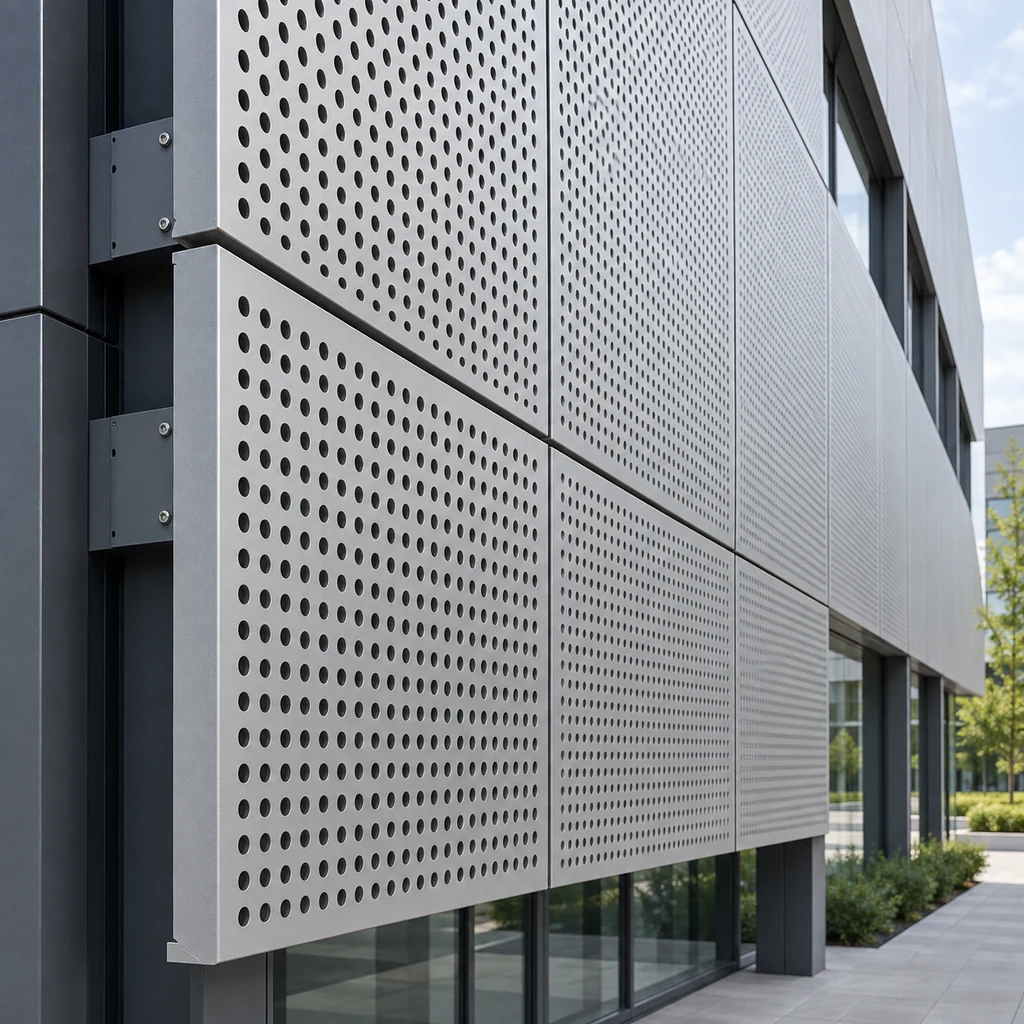
Architectural facades and sunshades
Expanded and woven aluminum wire mesh in 5052 clads facades, balustrades, and solar shading with a modern metallic look.
Insect and ventilation screens
Fine aluminum screening mesh for windows, HVAC intakes, and louvers that resist rust in humid service.
EMI and RFI shielding
Conductive pure-aluminum woven mesh grounds enclosures and vents against electromagnetic interference.
Spark-free guards and enclosures
Non-sparking aluminum wire mesh guards grain elevators, flour mills, and chemical dust areas where steel is excluded, and still builds lightweight cages and display fixtures that ship and handle easily.
How to Select the Right Aluminum Wire Mesh
Start from the environment and load, then fix alloy, construction, opening, form, and finish. A complete RFQ avoids assumptions and re-quotes.
By service environment
Indoor and atmospheric exposure suits 1100 or 3003. Marine, coastal, or salt-splash duty calls for 5052 with its magnesium alloy strength.
By strength demand
Light screening and decorative duty accepts soft pure alloys. Impact, tension, or vibration loads need 3003 H14 or 5052 H32.
By construction
Woven aluminum wire mesh gives fine openings and flexible cloth. Expanded mesh is rigid and economical. Crimped mesh locks openings. Welded mesh forms light grids.
By opening and wire diameter
Define what the mesh must pass or retain, then set opening and wire diameter together. State both in millimeters to avoid mesh-count ambiguity.
By finish
Bright mill finish suits most industrial duty. Specify anodizing for architectural color, extra surface hardness, or long coastal exposure.
Rolls, sheets, or cut pieces
Rolls suit long screening runs and fabricators. Sheets suit expanded mesh panels. Cut-to-size pieces suit retrofit and repair work.
Confirm alloy and temper on paper
Visual checks cannot separate 1100 from 3003. State the alloy and temper in the RFQ and request a mill certificate with the shipment.
When to switch metals
For heavy abrasion, high strength, or chloride-heavy washdown, step up to stainless steel wire mesh; for the cheapest outdoor fence duty, galvanized mesh wins.
Aluminum Wire Mesh Buying Mistakes to Avoid
Six errors that weaken screens or trigger disputes. Each one is avoidable at the RFQ stage.
Specifying alloy by looks alone
All bright aluminum mesh looks alike. 1100 and 3003 differ in strength by a fifth. Name the alloy and temper in the RFQ and request the mill certificate.
Using soft alloy under load
Annealed 1100 deforms in vibrating screens and tensioned panels. Mechanical duty needs 3003 H14 or 5052 H32 minimum.
Ignoring galvanic contact
Aluminum in direct contact with steel or copper in a wet environment corrodes fast at the junction. Specify isolating gaskets or fasteners at design stage.
Mixing mesh count and millimeters
Mesh-count tables vary by wire diameter and standard. State opening and wire diameter in millimeters only.
Assuming aluminum never corrodes
The oxide film is tough but not universal: strong alkalis, cement slurry, and trapped chlorides attack it. Match alloy and finish to real exposure.
Choosing aluminum for heavy abrasion
Quarry impact decks and high-wear chutes chew through aluminum wire mesh. That duty belongs to steel or stainless crimped screens.
Why Buyers Choose Aluminum Wire Mesh
Aluminum wire mesh earns its place where coatings would fail, weight costs money, or steel simply cannot be used.
Lightweight, lower freight cost
At roughly one third the weight of steel, aluminum wire mesh slashes freight, simplifies handling, and lightens supporting structures.
Corrosion resistance without coatings
The natural oxide film self-heals when scratched. There is no zinc or paint layer to chip, peel, or schedule for repair.
Non-magnetic and non-sparking
Aluminum wire mesh is safe around electronics, magnets, and explosive or combustible dust environments where steel is excluded.
Easy fabrication on site
Cut aluminum wire mesh with hand snips or standard shears; bend and form it without special tooling, keeping install time short.
Alloy and temper verified
Every bundle is traceable with alloy and temper stated on the label, and mill certificates per ASTM B211 are available before dispatch.
Clean appearance that lasts
Bright mill finish stays presentable for years; anodizing adds color and hardness for architectural aluminum wire mesh.
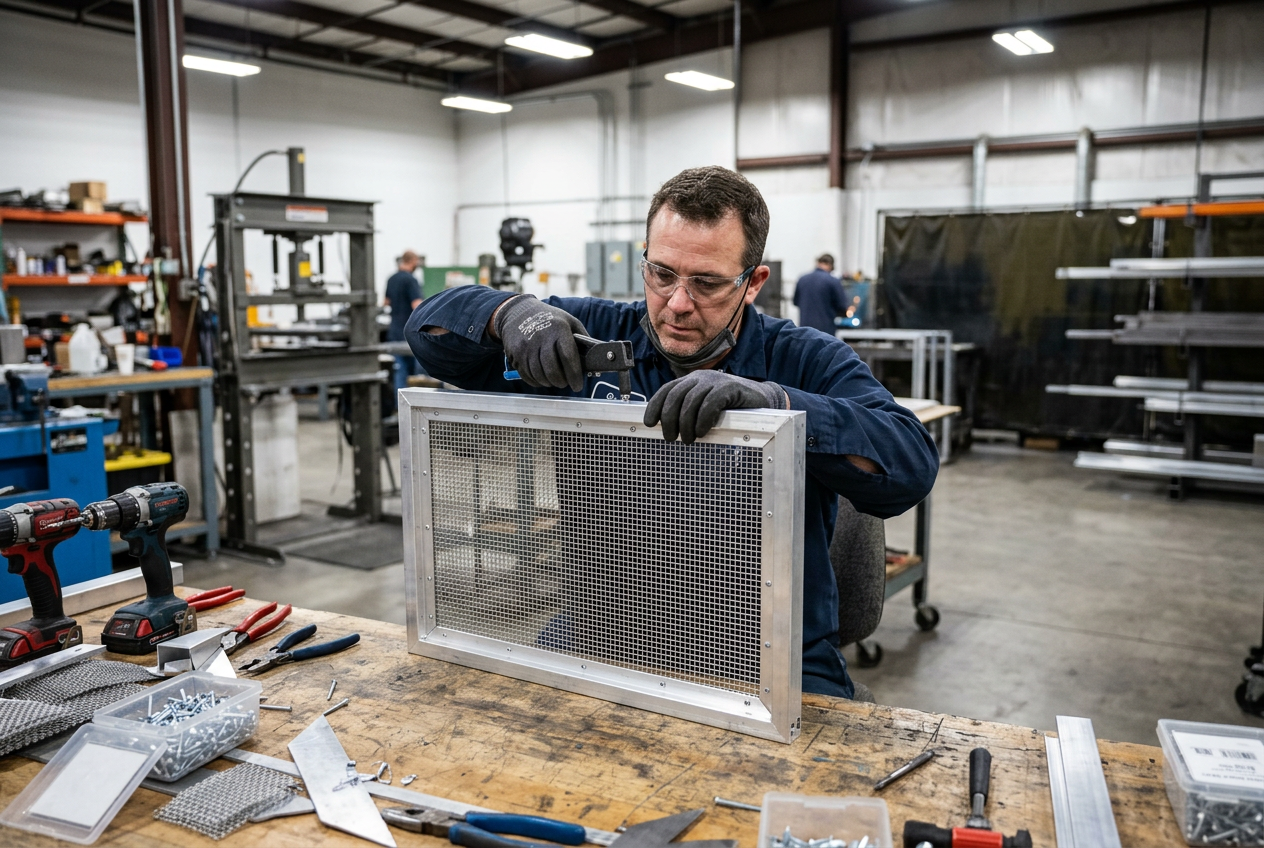
Aluminum is soft and galvanically active. Cut cleanly, isolate dissimilar metals, and tension gently.
Working with Aluminum Wire Mesh
Cut with sharp, dedicated tools
Cut woven cloth along a wire line and expanded mesh along the strand with aviation snips or shears. Aluminum gums up blades, so keep cutters sharp and dedicated.
Isolate dissimilar metals
Separate aluminum wire mesh from steel, copper, and cementitious surfaces with plastic or rubber gaskets. Wet galvanic contact corrodes aluminum at the junction.
Fasten with compatible hardware
Use aluminum or stainless clips, staples, and fasteners. Galvanized or plain steel fixings stain and pit the mesh around every fastener.
Tension evenly and gently
Aluminum stretches more easily than steel. Tension screening cloth evenly across the frame to avoid bagging, and do not over-stretch fine meshes.
Aluminum Wire Mesh Packing for Export
Packing protects bright aluminum surfaces, keeps rolls round, and preserves traceability through transit and receiving inspection.
Rolls wrapped and interleaved
Rolls ship wrapped in waterproof paper or film with interleave paper between bright surfaces to prevent marking.
Flat packs for sheets and panels
Expanded sheets and welded panels pack flat on pallets or in plywood cases with corner protection and strapping.
Label by alloy and temper
Each bundle carries construction, opening, wire diameter, dimensions, quantity, and the alloy plus temper designation.
Mill certificates on request
Alloy and temper certificates per ASTM B211 or ASTM B209 accompany the shipment when requested in the RFQ.
Share destination details
State destination port, trade term, container plan, and inspection requirements. Pre-shipment inspection by SGS, BV, or TÜV is available on request.
Aluminum Wire Mesh in Service
Use scenarios show how alloy and construction change by duty; they are not customer claims.
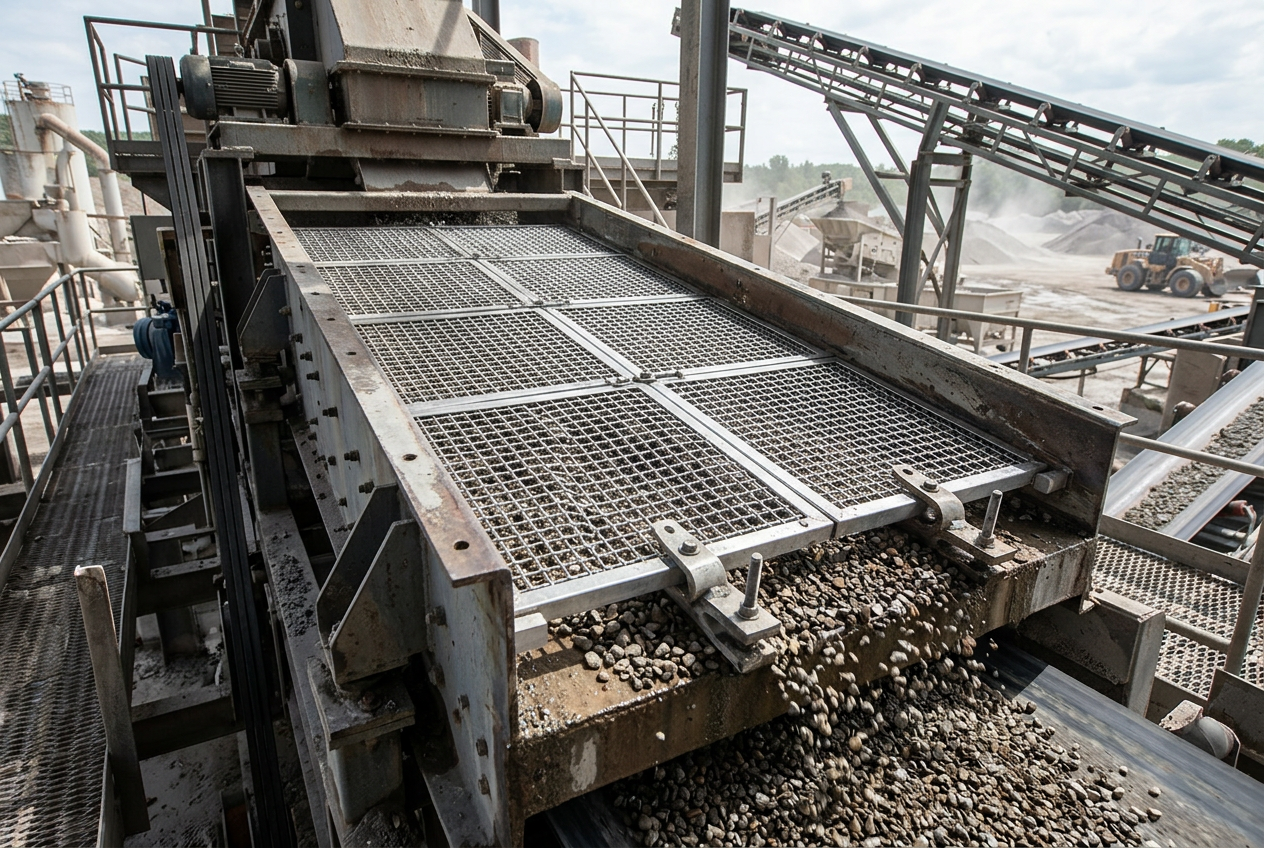
Aggregate screening deck
3003 H14 crimped aluminum wire mesh specified for a lightweight vibrating screen where steel panels overloaded the frame.

Architectural facade skin
Anodized 5052 expanded aluminum mesh chosen for a coastal building facade for its salt-air durability and metallic look.
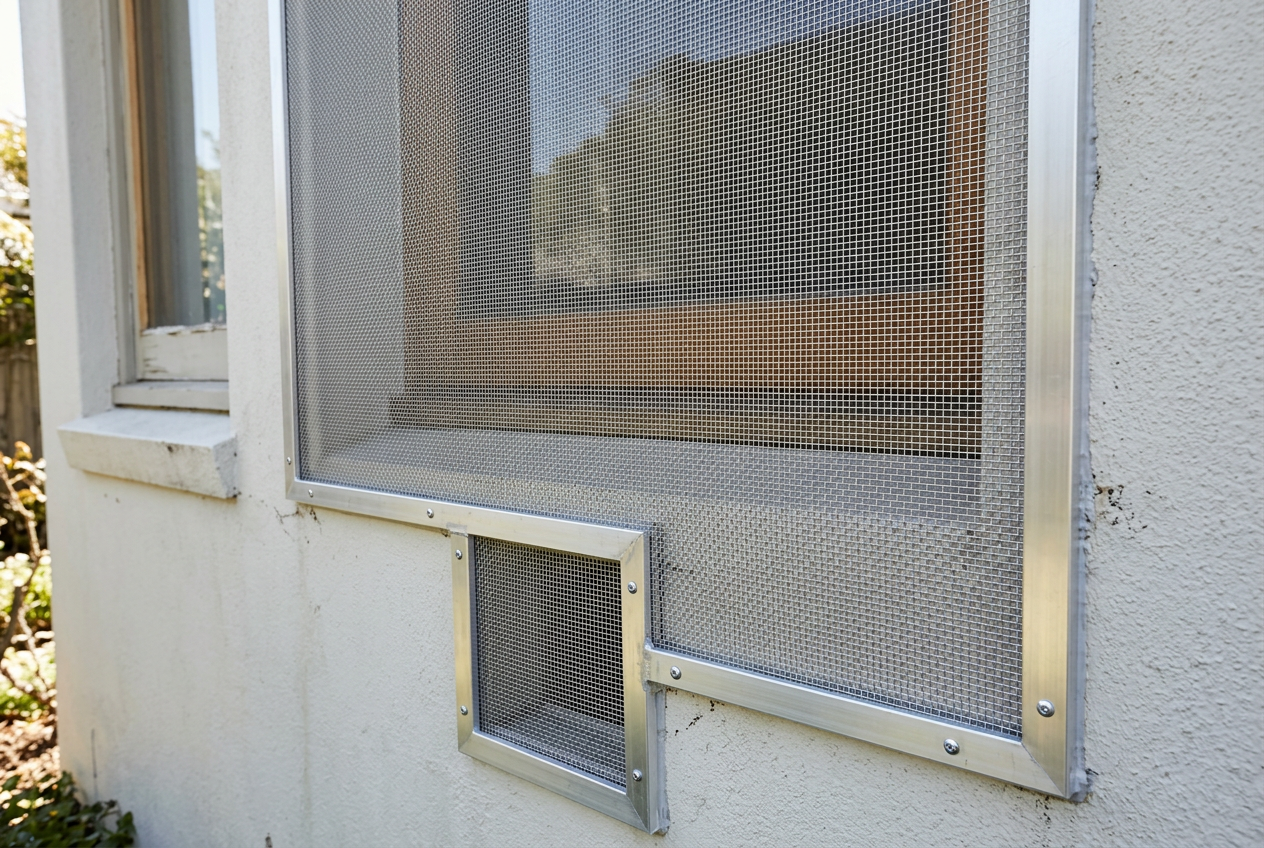
HVAC intake screening
Fine 1100 woven aluminum wire mesh fitted to rooftop air intakes, resisting rust from condensation and wash cycles.
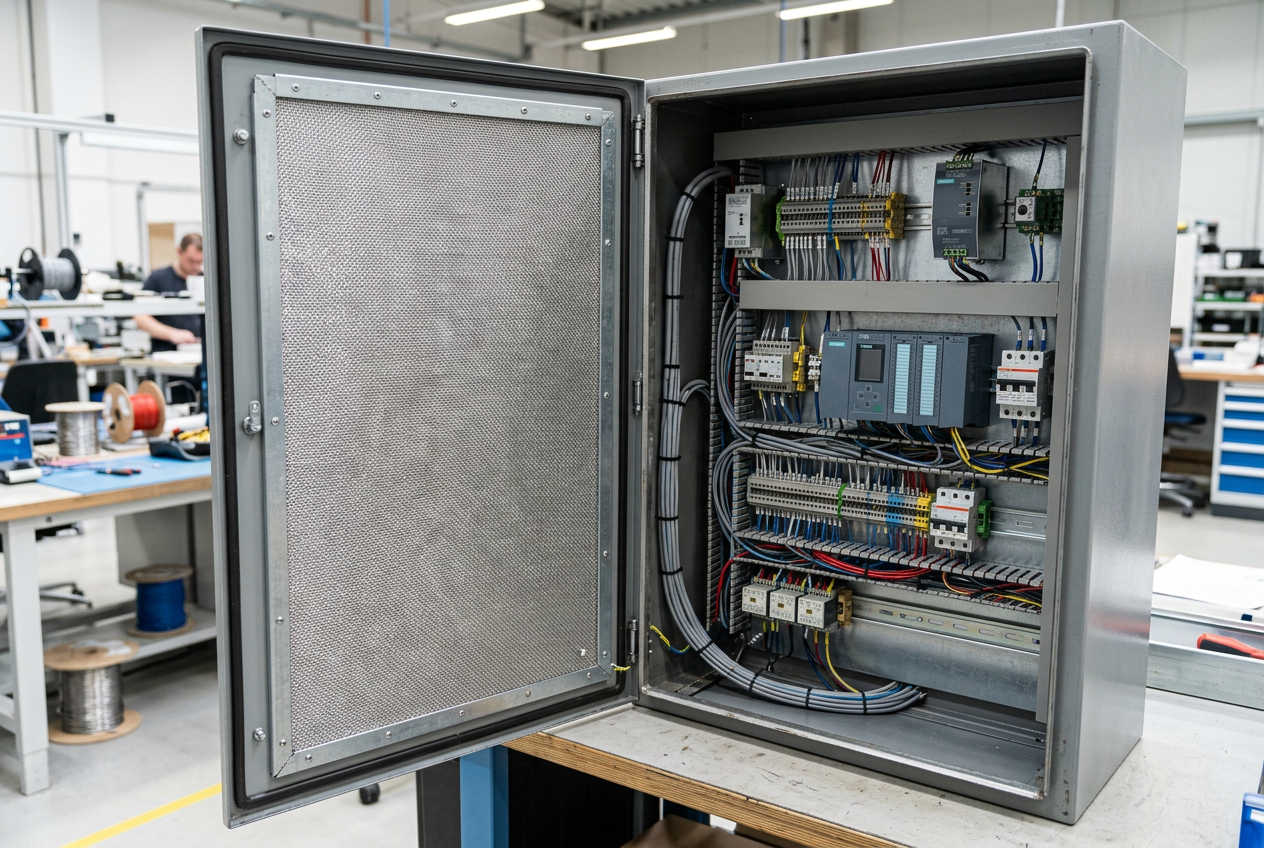
EMI shielding enclosure
Pure-aluminum woven mesh laminated into an electronics enclosure panel to ground radio-frequency interference.
Aluminum Wire Mesh Sourcing Resources
Compare constructions and alloy standards. Confirm the edition and project requirements before ordering.
Last updated: 2026-08-05
Related pages
Aluminum Wire Mesh FAQ
Twenty-five common procurement questions about alloys, constructions, specifications, and ordering aluminum wire mesh.
Still have questions about aluminum wire mesh?
Send your alloy, construction, opening, wire diameter, and quantity. Our sourcing team replies with a specification-led review.
Request a QuoteRequest Aluminum Wire Mesh Pricing
Send alloy, temper, construction, opening, wire diameter, dimensions, quantity, application, and destination for a specification-led sourcing review. Our team replies with matched aluminum wire mesh options and a factory quote.
Your details stay private. We reply with a matched factory quote — no spam.