Wire Mesh Deck Railing Panels | Custom Infill Sourcing
Source wire mesh deck railing panels as custom welded, crimped, expanded, or woven infill. Send your opening, wire, material, finish, edge, frame interface, quantity, and destination for a specification-led factory quote.
View SpecificationsWire Mesh Deck Railing Specifications to Confirm
Wire mesh deck railing is a railing assembly that uses mesh as the infill between its posts and rails. This page sources the mesh infill, not a pre-engineered complete railing system. Confirm the project design, loading, fixing method, and applicable local requirements with the responsible project professional before ordering.
Welded square mesh for rigid grids; crimped mesh for architectural texture; expanded metal for a continuous sheet; woven mesh where a framed, finer pattern is required
State both the clear opening between wires and the centre-to-centre pitch. They are different dimensions and cannot be inferred from each other.
Provide wire diameter for welded, crimped, or woven mesh; provide sheet thickness and strand data for expanded metal.
Identify the base material, exposure, and requested finish or coating. The material and finish are confirmed against the project environment at quotation.
Provide finished width and height, permitted tolerance, cut-edge requirement, and whether the panel is to be raw cut, hemmed, framed, or fitted into a channel.
Show the rail, post, channel, clip, or weld interface on a drawing. The mesh quotation must match how the project fabricator will retain the infill.
| RFQ field | What to provide | Why it matters | Example wording | |
|---|---|---|---|---|
| Mesh construction | Welded, crimped, expanded, or woven | Sets rigidity, appearance, and fabrication route | Welded square mesh infill | |
| Opening and pitch | Clear opening plus centre-to-centre pitch | Avoids an ambiguous grid size | Clear opening 38 mm; pitch 42 mm | |
| Wire or sheet | Wire diameter or expanded-metal sheet/strand data | Controls the material route and panel weight | 3.0 mm wire | |
| Material and finish | Base material, exposure, and requested finish | Allows the supplier to quote the required corrosion-protection route | Stainless steel; exterior sheltered exposure | |
| Finished panel | Width, height, quantity, tolerance, and edge | Determines cutting, packing, and how the panel fits the frame | 1200 x 900 mm, trimmed edges, 80 panels | |
| Frame interface | Section drawing, fixing points, channel dimensions, or fabrication notes | Confirms the infill can be retained by the project frame | Captured in top and bottom channels | |
| Destination and timing | Delivery location, requested date, and packing needs | Supports export packing and schedule confirmation | Port of Melbourne; flat-panel packing required |
Mesh Terms Used in Railing Infill RFQs
Use the terms below consistently in drawings and enquiries. The final project specification, including safety and regulatory requirements, remains the responsibility of the project designer or contractor.
| Term | Meaning | RFQ note | |
|---|---|---|---|
| Clear opening | The unobstructed space between adjacent wires or strands | State in mm and show the measuring direction. | |
| Centre-to-centre pitch | The distance from the centre of one wire to the centre of the next | State separately from clear opening. | |
| Wire diameter | The diameter of one mesh wire before coating unless stated otherwise | Say whether the figure includes the coating. | |
| Finished panel size | The delivered width and height after cutting and edge treatment | Do not use the nominal railing bay size without clearance details. | |
| Frame interface | The channel, clips, welds, or surround that retains the mesh | Attach a section detail or fabrication drawing. | |
| Exposure | The indoor, sheltered exterior, outdoor, or other operating environment | Use this with the requested material and finish. |
Wire Mesh Railing Infill Options
Choose the mesh construction from the required appearance, openness, frame design, and project specification. Confirm final suitability with the project team before release to production.
Welded wire mesh panels
A rigid square or rectangular grid made from wires welded at intersections. Used where the railing frame calls for a flat mesh infill panel with a clear geometric pattern.
Crimped architectural mesh
Pre-crimped wires lock together to create a textured, rigid screen. A suitable route where the project calls for a more decorative mesh surface within a fabricated frame.
Expanded metal infill
A continuous metal sheet slit and stretched into openings. This route has no welded intersections and can suit projects that require a sheet-style infill appearance.
Woven wire mesh
Interlaced wire cloth that is typically captured in a frame or edge detail. It provides finer patterns when the specified frame and fixing arrangement support it.
How to Select Wire Mesh for Deck Railing Infill
Start from the approved railing drawing, then specify the mesh and the interface that retains it. A finished panel is not interchangeable with a complete guardrail system.
Start with the project drawing
Use the approved elevation and section to identify panel dimensions, rail spacing, fixing points, and the mesh area that must be filled.
Define the opening correctly
Record clear opening and centre-to-centre pitch independently. If the drawing gives only one dimension, ask the project designer which dimension controls.
Choose the construction
Use welded mesh for a rigid grid, crimped mesh for an architectural texture, expanded metal for a continuous sheet, or woven mesh for a finer framed pattern.
Match material and finish to exposure
Describe the exposure and requested finish. Material grade, coating, and any cut-edge treatment are quotation items, not assumptions.
Specify the delivered edge
State whether edges are trimmed, framed, hemmed, or intended for a channel. Edge details affect the delivered panel size and packing.
Provide the retaining interface
Include the channel profile, clips, perimeter frame, or welding detail so the mesh panel is made for the fabrication method.
Confirm a sample or first article
For a new appearance, finish, or panel interface, use a sample or first-article approval process before bulk production.
Why Source Mesh Infill by Specification
A clear RFQ makes the mesh panel easier to compare, fabricate, inspect, and receive against the project drawing.
A comparable quotation
Construction, opening, wire, material, finish, edge, and quantity give suppliers a common basis for quoting.
A panel sized for the frame
Finished dimensions and interface details help align the supplied mesh with the fabricator's channel, surround, or fixing method.
Exposure-led material review
Stating the environment lets the buyer review material and finish options against the intended use before ordering.
Less site trimming
Defined finished sizes and edges reduce avoidable cutting and handling work at the project site.
Clear receiving checks
The RFQ supplies a checklist for panel count, dimensions, opening, wire, finish, and packing on receipt.
Export-ready planning
Quantity, destination, stacking limits, and finish-protection needs can be considered before panels are packed.
Where Wire Mesh Railing Infill Is Specified
The mesh can be specified for deck, stair, balcony, and guard applications when it is integrated into a project-designed railing assembly.
Deck and porch railing infill
Mesh panels captured between wood or metal rails where an open grid appearance is called for in the project design.
Stair and landing infill
Mesh fitted into stair or landing frames where the drawing defines the panel shape, edge, and retaining method.
Balcony and balustrade panels
Architectural mesh supplied for a balcony or balustrade fabricator to integrate into the approved perimeter system.
Walkway and platform guards
Mesh infill panels for industrial or commercial guard assemblies, supplied against the relevant project drawing.
Interior stair screens
Crimped, woven, or expanded mesh used within interior handrail or partition details where appearance is a main selection factor.
Landscape and viewing barriers
Rigid mesh panels in frames for open, view-conscious exterior barrier designs where the project team specifies the system.
Avoid These Wire Mesh Deck Railing Sourcing Errors
Incomplete information causes mismatched panels, re-quoting, and delays. Resolve these items before placing a mesh infill order.
Treating mesh infill as a complete railing system
A mesh panel does not define the posts, handrail, connections, or project safety performance. State the mesh scope and provide the frame interface.
Using one dimension for opening and pitch
Clear opening and centre-to-centre pitch are different. Include both dimensions and their units in the drawing and RFQ.
Quoting only a nominal bay size
The railing bay size is not necessarily the finished mesh size. Provide the finished panel dimensions, permitted tolerance, and edge detail.
Leaving exposure undefined
A finish cannot be selected responsibly without the operating environment. Describe indoor or outdoor exposure and any project-specific requirements.
Omitting the retaining detail
A mesh panel may be captured, clipped, framed, or welded. The supplier needs the actual interface to quote an appropriate edge and final size.
Assuming a standard meets every project rule
Local requirements vary by project and location. Have the responsible project professional verify the final railing design and mesh specification.
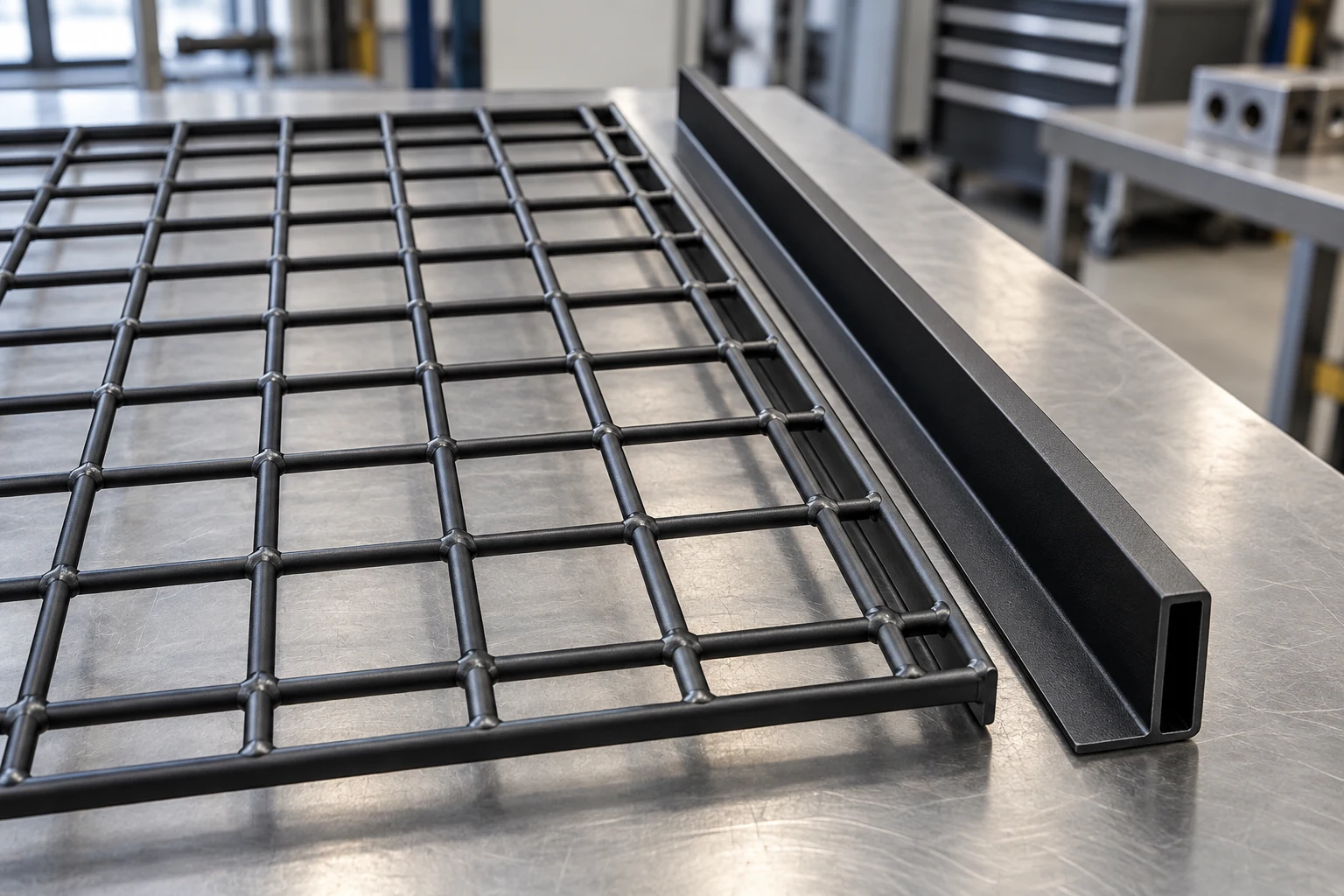
Confirm the finished panel size, edge, and retaining interface against the approved railing detail before fabrication or site fitting.
Before Fitting Wire Mesh Railing Panels
Verify the approved drawing
Confirm the railing elevation, section, panel dimensions, and intended mesh construction with the responsible project team.
Measure the finished opening
Measure the actual frame or channel opening and record allowances for edge treatment, thermal movement, and the specified retaining method.
Confirm the mesh edge
Agree whether the delivered edges are trimmed, hemmed, framed, or prepared for the fabricator's channel, clips, or welds.
Review the first panel
Compare a sample or first panel with the drawing before bulk fabrication, then inspect delivered panels before installation.
Packing Wire Mesh Railing Infill for Export
Packing is defined around panel format, finish protection, handling limits, and destination requirements. Confirm the final plan with the quotation.
Separate finished faces
Use protective separation between panel faces where the mesh finish or surface can be marked during transport.
Protect cut and framed edges
Add edge and corner protection where the specified panel treatment could be damaged by handling or stacking.
Label by panel specification
Identify bundles by project reference, panel size, mesh construction, material, finish, quantity, and packing sequence.
Plan lifting and stacking
State maximum bundle weight, lifting constraints, and whether panels must remain flat or be packed in a specific order.
Confirm destination requirements
Provide destination, requested shipping terms, and any receiving or inspection instructions during quotation.
Mesh Constructions to Compare for Railing Infill
These are mesh construction options for specification review, not customer project case studies. Select the final construction only after confirming the project frame and requirements.
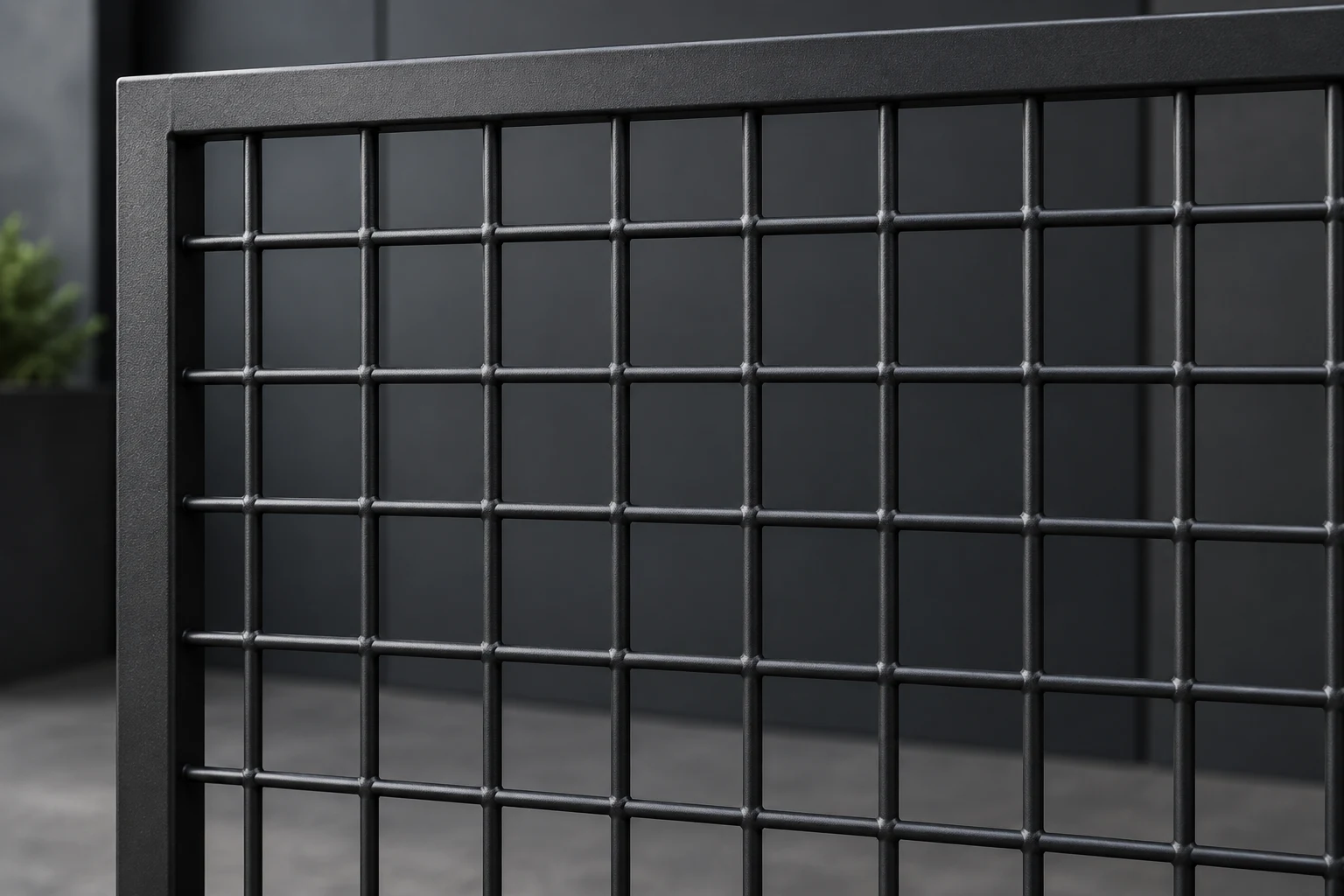
Welded wire mesh
Rigid square and rectangular grids for framed railing infill where the drawing calls for a clear, regular opening.
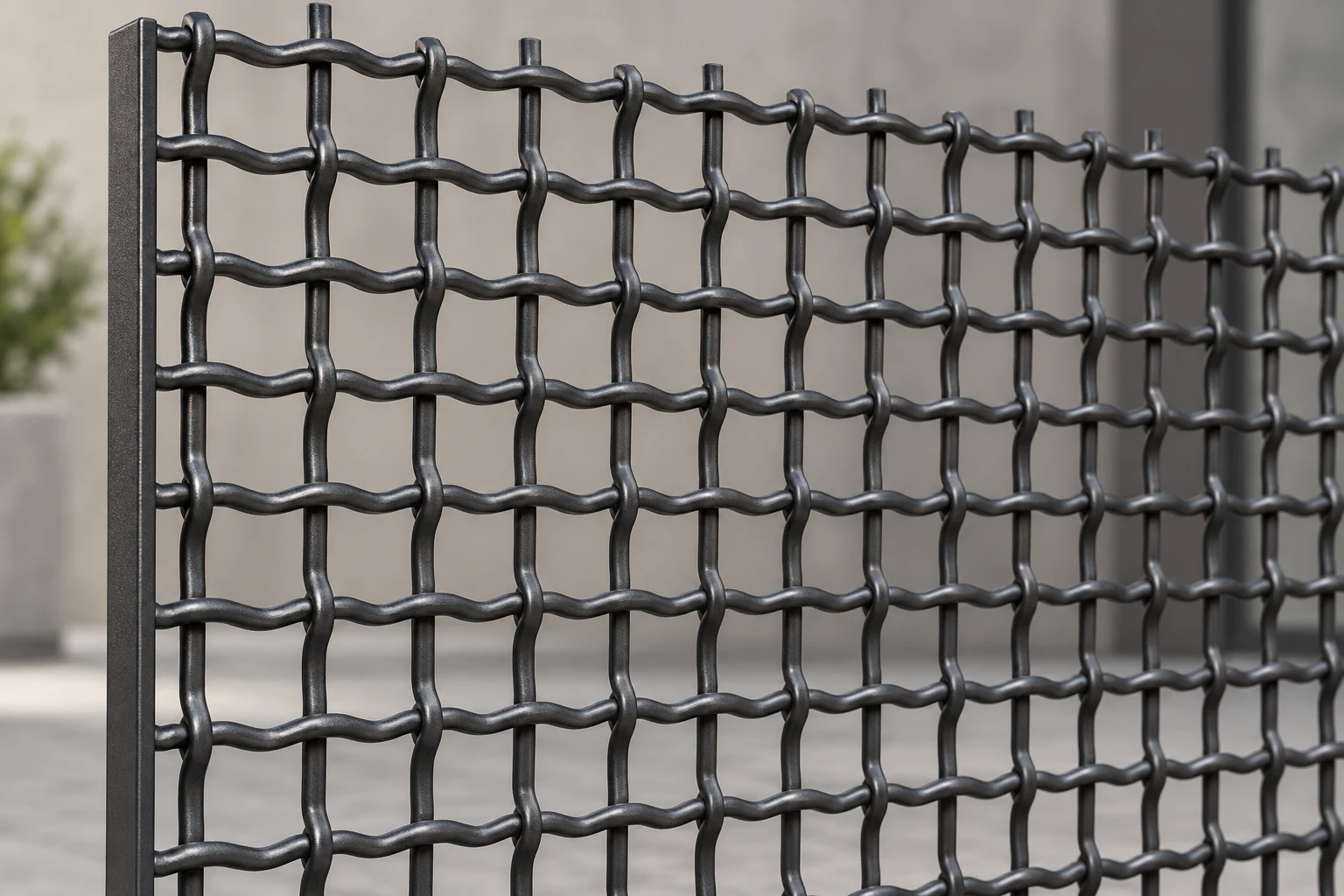
Crimped wire mesh
Textured, pre-crimped architectural panels for fabricated screens and railing details that require a more decorative mesh pattern.
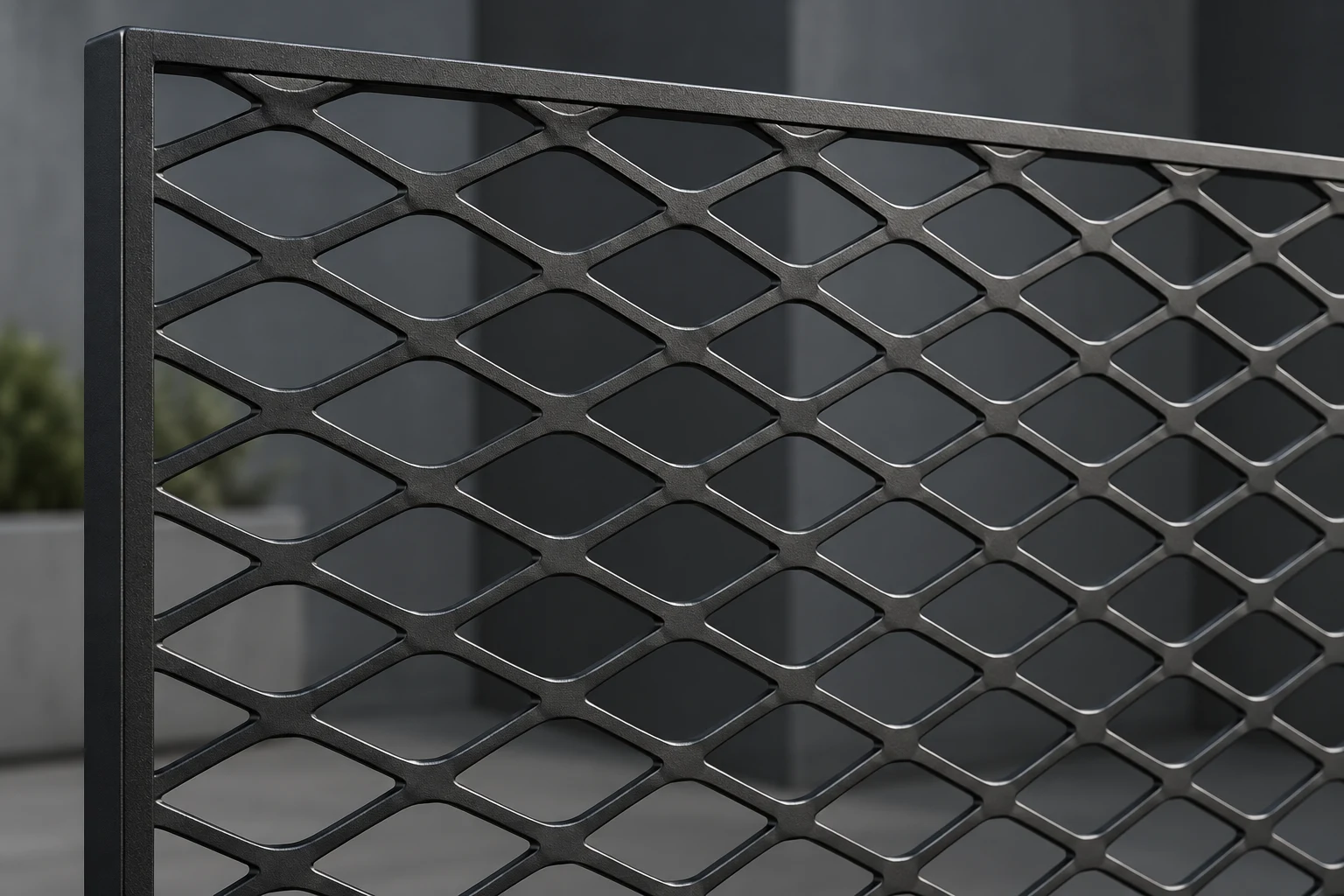
Expanded metal mesh
Continuous sheet-style mesh with stretched openings for architectural infill and guard details.
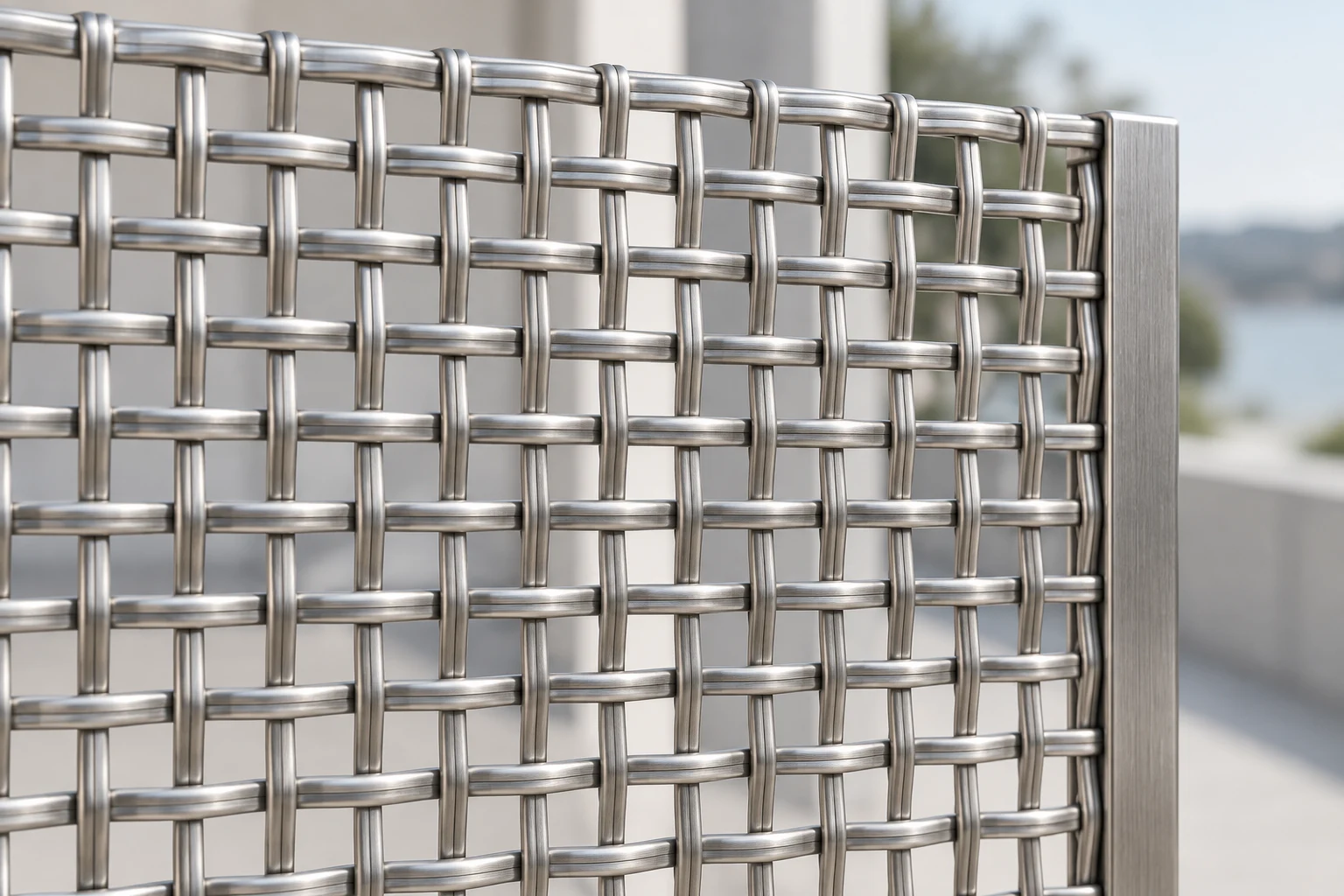
Stainless steel wire mesh
Wire mesh material routes to review when the project specifies stainless steel construction and exposure-led selection.
Wire Mesh Railing Infill Resources
Use these pages to compare mesh constructions and review project requirements. Confirm the edition and applicability of external standards with the responsible project professional.
Last updated: 2026-09-14
Related pages
Wire Mesh Deck Railing Panels FAQ
Common procurement questions about wire mesh railing infill panels, specifications, sampling, and project handoff.
Need a wire mesh railing infill quotation?
Send the approved drawing, mesh dimensions, material and finish request, edge detail, quantity, destination, and delivery target. We will review the mesh procurement requirements for a factory quote.
Request a QuoteRequest a Wire Mesh Deck Railing Infill Quote
Send your approved railing drawing plus mesh construction, clear opening, pitch, wire or sheet data, material, finish, finished panel size, edge, frame interface, quantity, and destination. We will return a specification-led mesh sourcing quotation.
Your details stay private. We reply with a matched factory quote — no spam.