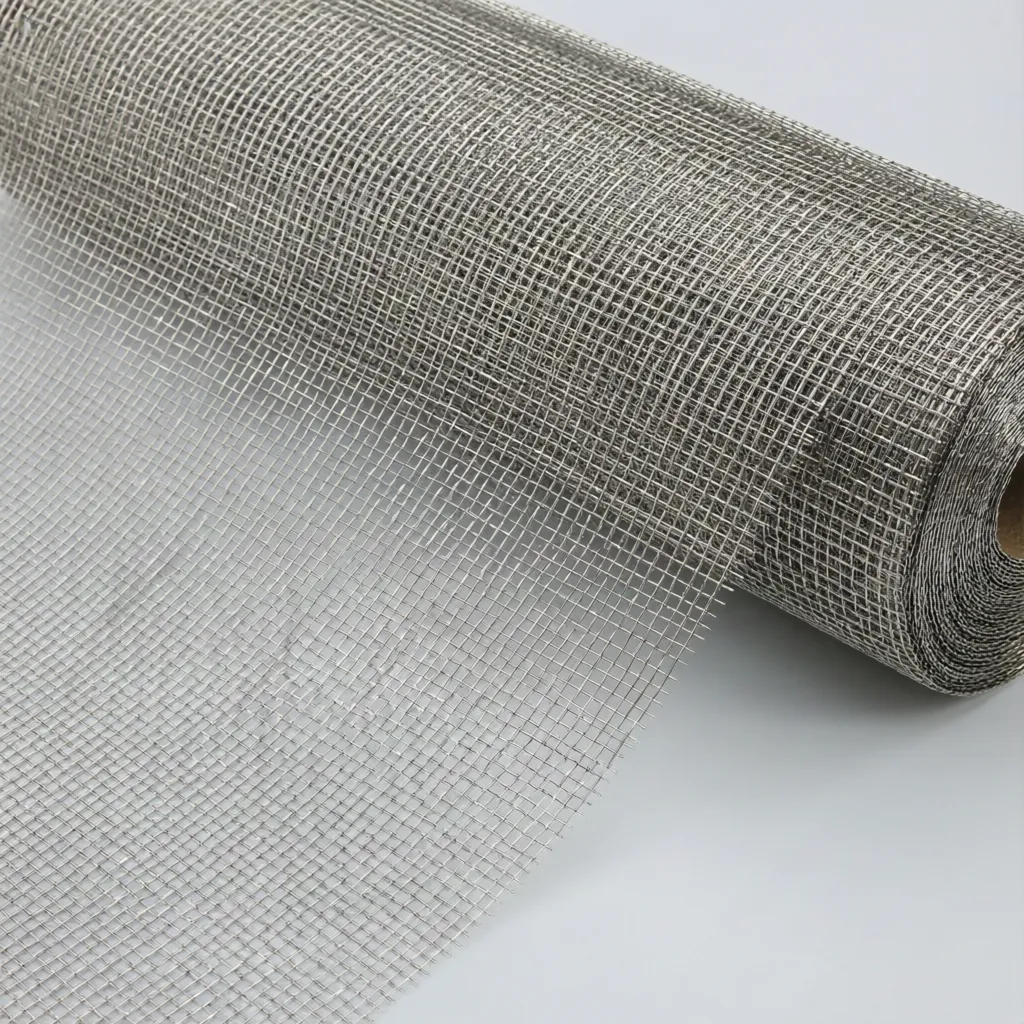
316 Stainless Steel Twill Weave Mesh
316 stainless steel twill woven wire mesh for demanding filtration applications.
FOB reference price from $20.00 / m². Varies by spec and quantity; final quote on inquiry.
Mesh Count
100–400
Wire Diameter
0.03–0.1 mm
Aperture
0.034–0.154 mm
Open Area
28.2–36.8%
Material
316 Stainless Steel
Standard Specs
4
Sample
Available
Official Standard Tolerance SKU Matrix
Select and lock exact sub-specifications (supports batch multi-spec consolidated inquiry)
Don't see the specification you need? Ask about other options.
Tell us the product, specification, or application. You can inquire even if the details are incomplete.
| Nominal Mesh Count | Std. Wire Dia. (mm)Std. Wire Dia. (inch / Gauge) | Aperture Size (mm)Aperture Size (inch) | Ref. Open Area | Est. Weight (kg/m²)Est. Weight (lb/ft²) | Micro Link | |
|---|---|---|---|---|---|---|
| 100 Mesh | 0.100 mm0.00390" | 0.154 mm0.00610" | 36.8% | 0.50 kg/m²0.1000 lb/sq.ft | ||
| 200 Mesh | 0.050 mm0.00200" | 0.077 mm0.00300" | 36.8% | 0.25 kg/m²0.0500 lb/sq.ft | ||
| 325 Mesh | 0.035 mm0.00140" | 0.043 mm0.00170" | 30.1% | 0.20 kg/m²0.0400 lb/sq.ft | ||
| 400 Mesh | 0.030 mm0.00120" | 0.034 mm0.00130" | 28.2% | 0.18 kg/m²0.0400 lb/sq.ft |
Download the Full Wire Mesh Catalog
Get the complete catalog with specifications, applications, and ASTM compliance — as a PDF.
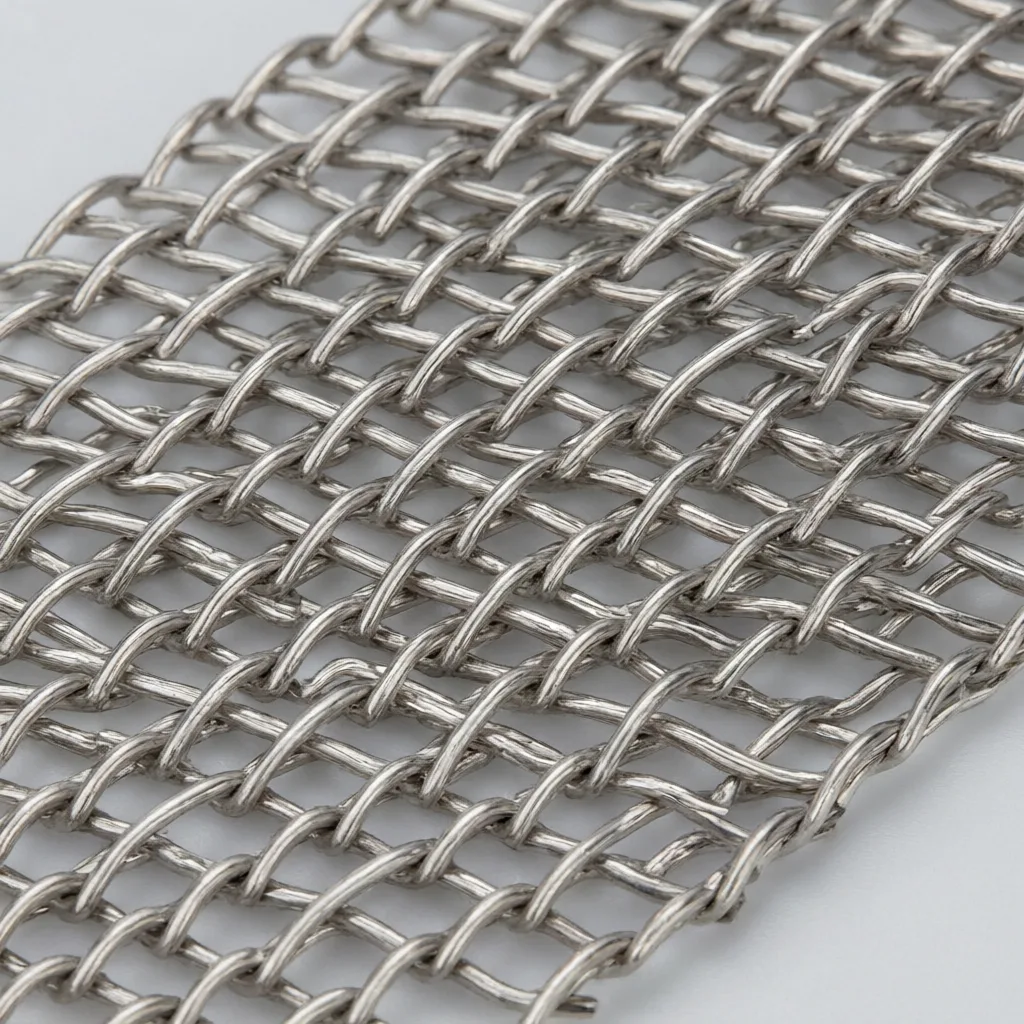
100X Simulated Microscope Lens View (Auxiliary Physical Design)
Typical Applications of 316 Twill Weave Mesh
Twill interlacing lets us weave a heavier wire at a given mesh count, and the 2-3% molybdenum in 316 resists chloride pitting. Buyers combine both when the screen must survive corrosive process media and hold stable apertures: pharmaceutical and food processing filtration, petrochemical and polymer melt filtration, seawater and brine screening, and fine powder separation in aggressive environments.
- Pharmaceutical
- petrochemical
- food processing filtration
Metallurgical Composition & Alloy Ratio Analysis
316 Twill Weave Wire Purity & Heat Traceability
The warp and shute wires for this twill weave family are cold-drawn from spectrometer-tested 316 rod with the Cr 16-18% / Ni 10-14% / Mo 2-3% balance shown below. Cold drawing raises the wire's yield strength so the heavier twill strands keep their interlacing locked under tension and vibration, and each shipment includes an EN 10204 3.1 mill certificate tied to the wire heat number.
- C: ≤0.08
- Cr: 16-18
- Ni: 10-14
- Mo: 2-3
- Fe: Balance
316 Twill Weave Physical & Service Limits
- Pitting Resistance (PREN):Molybdenum 2-3% raises the pitting resistance equivalent number to ~24-26, making this twill weave mesh the standard choice for seawater, brine and chloride-containing process streams where 304 twill would pit.
- Max Oxidation Temperature:The 316 wire resists scaling in continuous air service up to 870°C and in intermittent service up to 925°C, and molybdenum improves creep strength at elevated temperatures — relevant for hot polymer melt filtration duties.
- Yield Strength After Cold Drawing:The annealed minimum is 205 MPa, rising to about 310 MPa after the cold drawing used for weaving wire, which keeps the heavier twill strands and their apertures stable under load in fine 325-400 mesh specs.
- Welding Advisory:Holding 316 in the 425-860°C range precipitates chromium carbides at grain boundaries and can embrittle fine wires. For welded filter assemblies in corrosive service, ask about the low-carbon 316L version of this twill mesh.
ASTM E2016-22 Reference Tolerances for 316 Twill Weave
This family's 100-400 mesh range falls within the intermediate and fine tolerance bands referenced by ASTM E2016-22 for industrial woven wire cloth. Twill interlacing generally holds apertures more stable under handling than equivalent plain weave, but confirm the applicable band in your purchase order and request actual measured values in the pre-shipment report.
| Nominal Mesh Range | Max Wire Dia. Tolerance | Max Aperture Size Tolerance | Warp Tilt Deviation |
|---|---|---|---|
| 1 to 50 Mesh | ± 0.013 mm (0.0005 inch) | ± 3% of nominal aperture | Tilt deviation ≤ 2° |
| 51 to 200 Mesh | ± 0.008 mm (0.0003 inch) | ± 5% of nominal aperture | Tilt deviation ≤ 1.5° |
| 201 to 400 Mesh | ± 0.004 mm (0.00015 inch) | ± 8% of nominal aperture | Tilt deviation ≤ 1° |
Where Do These Specifications Come From?
- “This specification covers industrial woven wire fabric, referred to as wire cloth, for general use including the separation of particles.”ASTM E2016-22, Scope 1.1ASTM International - mesh count, wire diameter and aperture tolerance basis for this product family
- “This International Standard defines terms regarding industrial woven wire cloth for screening purposes and specifies maximum permissible error, requirements, and test methods.”ISO 9044:2016, ScopeInternational Organization for Standardization - terminology, permissible deviation and test basis for woven wire cloth
- “Twill weave creates a wire cloth in which each shute and warp wire passes over and under the two adjacent wires successively.”Newark Wire Cloth, Guide to Different Types of Wire Mesh WeavesNewark Wire - structural definition of twill weave interlacing used in this page's weave comparison
Custom Processing for Woven Mesh · Quality Assurance for Woven Mesh · Packaging & Logistics
Custom Processing for Woven Mesh
Deep-processing services available on woven mesh rolls before shipment.
Precision Slitting
Woven rolls slit down to 5.0 mm width on high-precision slitting lines, with clean, burr-controlled edges ready for filter element production.
Disc Stamping & Spot Welding
Single or multi-layer woven mesh filter discs stamped and spot-welded per your CAD drawings, including rimmed and bound-edge versions.
Cutting & Edging
Custom sheet cutting, edge folding and framing so the mesh drops directly into your production line without secondary trimming.
Quality Assurance for Woven Mesh
Every exported batch of woven mesh is verified against documented inspection standards.
EN 10204 3.1 MTC
Mill test certificates covering heat number, wire composition and tensile data shipped with every order.
Spectrometer Verification
Handheld PMI spectrometer sampling on wire batches confirms alloy grade before weaving, eliminating mixed-grade risk.
Pre-shipment Inspection
Mesh count, wire diameter and aperture are re-measured batch by batch against ASTM E2016-15 tolerances before container loading.
Packaging & Logistics
Export-standard packing engineered for woven mesh rolls on long-distance sea freight.
Standard Rolls
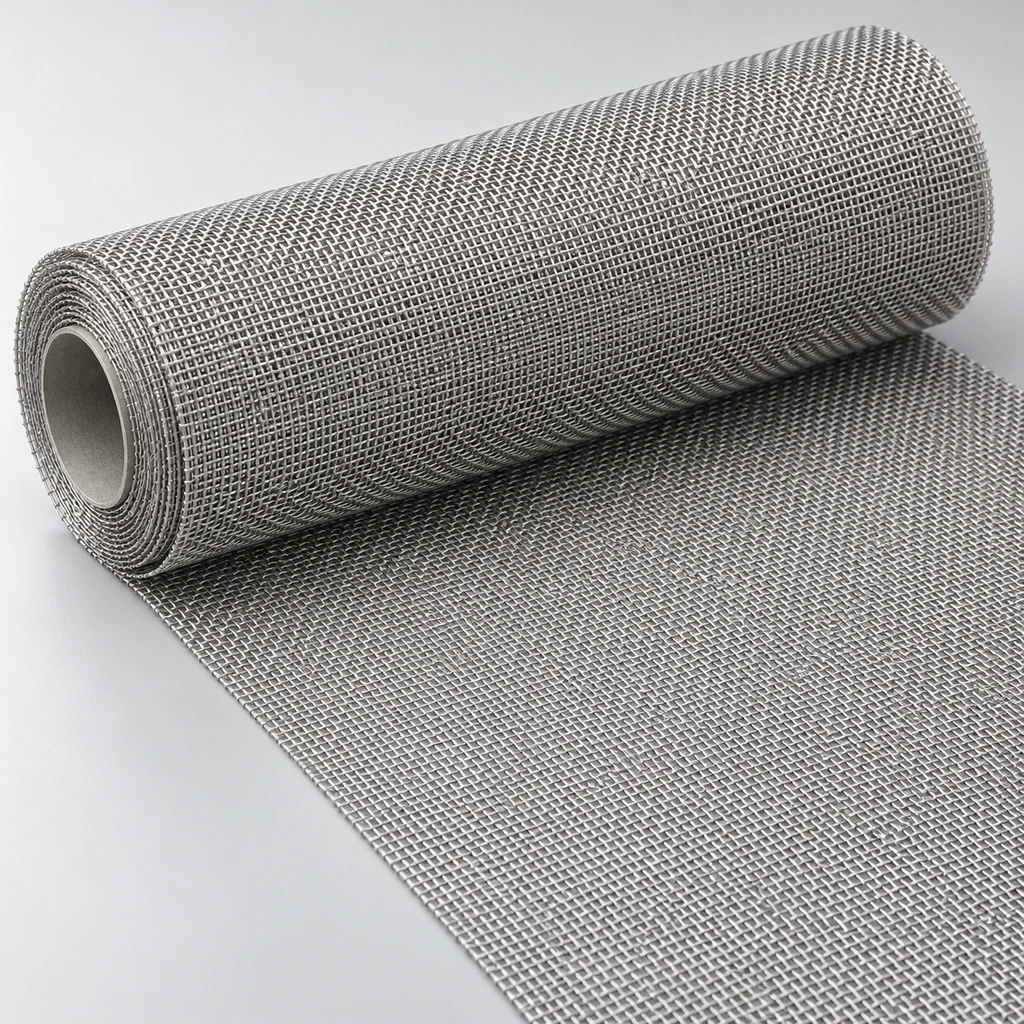
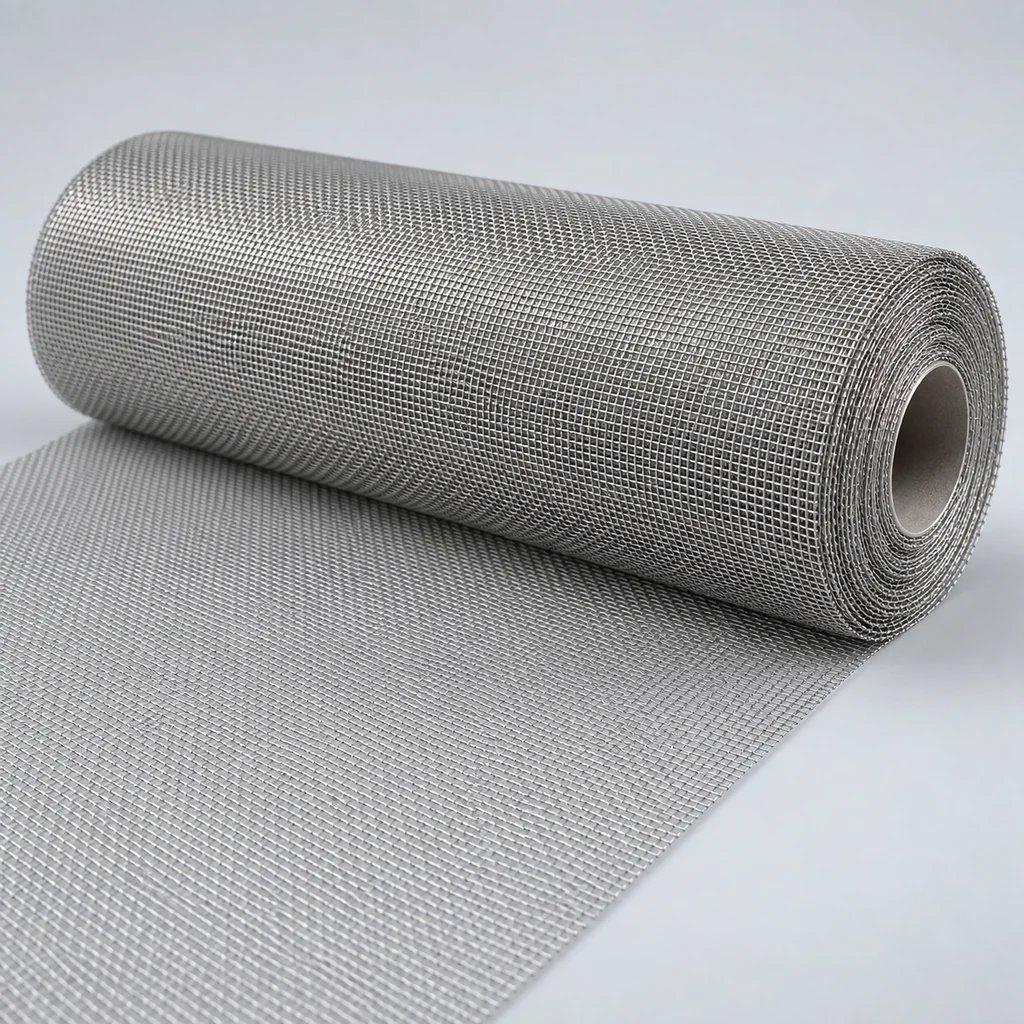
30 m or 100 ft roll lengths in standard widths from 0.5 m to 1.5 m; custom width and roll length available on request.
Moisture-proof Packing
Waterproof kraft paper inner wrap plus woven bag or palletized outer packing to prevent rust and edge deformation in transit.
Container Loading
Optimized 20GP / 40HQ loading plans with photos and loading reports shared before vessel departure.
Trade Terms
FOB Tianjin or CIF major ports; DHL, FedEx and SF Express available for sample shipments worldwide.
Technical Purchasing FAQ
Related Product Families
View full catalog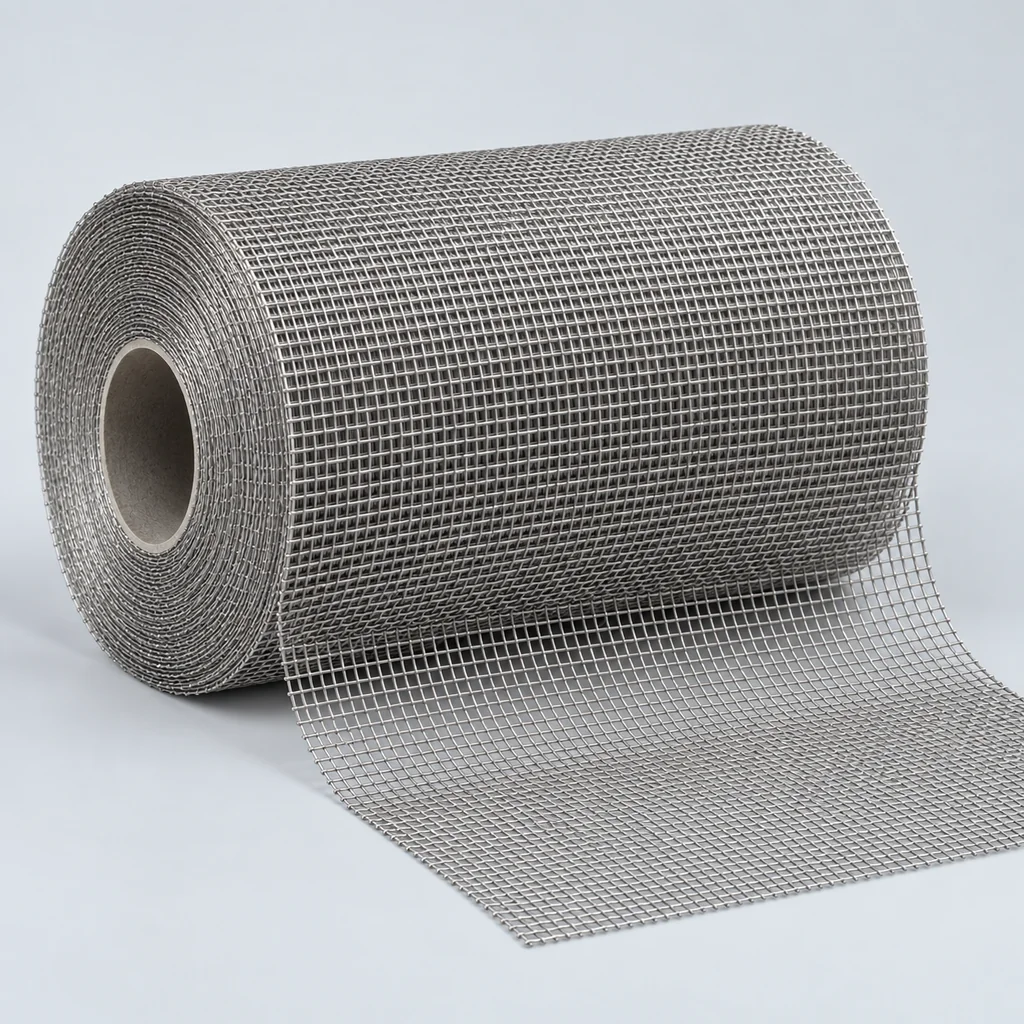
Ready to source 316 Stainless Steel Twill Weave Mesh?
Send your target mesh count, wire diameter and weave preference now. Our specialists respond within 2 hours with factory-direct pricing and can arrange free 316 twill weave mesh samples.