Wire Mesh Storage Containers | Factory-Direct Sourcing
Source welded wire mesh storage containers factory-direct: rigid and collapsible styles, 500-1,500 kg capacity, stackable with fork pockets. Request a quote.
View SpecificationsWire Mesh Storage Container Specifications
A wire mesh storage container is defined by five variables: mesh opening, wire diameter, base and corner construction, fork handling, and finish. State all five in every RFQ so the container matches your parts, load, stacking, and environment the first time.
Square welded mesh openings from 25x25 mm to 100x100 mm, so small parts stay inside a wire mesh storage container while contents stay visible
3.0-6.0 mm low-carbon steel wire, sized to the container capacity and stacking load; heavier wire adds capacity without changing the footprint
Flat or skid base with 4 welded corner posts sized to take stacking loads, with base frames matched to pallet-width fork entry
Fork pockets or a full skid base let a forklift move loaded wire mesh storage containers without pallets; four-way entry for aisle flexibility
Drop gate, swing gate, or two-position gate options for loading and low-level picking from the front, so pickers reach in without bending over or reaching over the wall
Electro or hot-dip galvanized wire mesh storage containers for dry and humid warehouses; powder-coated or stainless for hygiene and food duty
Select one or more specifications. Your choices will be included in the quote request.
0 specs selected
| Mesh opening | Wire diameter | Typical capacity | Best for and RFQ note | |
|---|---|---|---|---|
| 25x50 mm | 3.0-3.5 mm | Up to 500 kg | Small parts and precision components that must not fall through. State base size and stacking height in the RFQ. | |
| 50x50 mm | 3.5-4.0 mm | Up to 800 kg | General wire mesh storage containers for mixed parts and cartons. The most common opening. | |
| 50x100 mm | 4.0-4.5 mm | Up to 1,000 kg | Bulk parts and boxed goods with good airflow and visibility. | |
| 75x75 mm | 4.5-5.0 mm | Up to 1,200 kg | Heavy parts, castings, and dense bulk in rigid mesh containers. | |
| 100x100 mm | 5.0-6.0 mm | Up to 1,500 kg | Heavy-duty stacking containers for steel and bulk materials. Confirm corner post and skid design. |
Common Wire Mesh Storage Container Sizes
Standard wire mesh storage containers follow pallet-base dimensions so they slot into racks, mezzanines, and trailers. Custom sizes, gates, and finishes are available at MOQ; confirm dimensions and stacking at RFQ.
| Container L x W x H | Mesh opening | Construction | Capacity | Typical use | |
|---|---|---|---|---|---|
| 800 x 600 x 600 mm | 25x50 mm | Mesh with drop gate | 500 kg | Small parts and workstation bins | |
| 1200 x 800 x 980 mm | 50x50 mm | Welded mesh + 4 corner posts | 800 kg | Warehouse parts and WIP storage | |
| 1200 x 1000 x 1000 mm | 50x100 mm | Welded mesh + skid base | 1,000 kg | Bulk goods and boxed storage | |
| 1200 x 1000 x 750 mm | 75x75 mm | Heavy-duty welded mesh | 1,200 kg | Castings and dense bulk | |
| 1400 x 1000 x 1200 mm | 100x100 mm | Heavy-duty corner posts | 1,500 kg | Steel and heavy bulk |
Rigid vs. Collapsible Wire Mesh Storage Containers
The first sourcing decision is whether the container returns empty. Rigid containers maximize stacking strength; collapsible wire mesh containers fold flat and cut return freight and warehouse cube.
| Feature | Rigid container | Collapsible container | |
|---|---|---|---|
| Stacking strength | Full corner posts, stacks 3-4 high | Folds flat; stacks with fitted lids | |
| Return freight | Full volume each way | Folds to about one-third volume for return | |
| Loading access | Drop or swing gate | Drop gate or lift-off walls | |
| Best for | Permanent warehouse storage | Cross-dock and export loop logistics | |
| Cost profile | Lower unit cost | Higher unit cost, lower logistics cost |
Choosing the Finish for Wire Mesh Storage Containers
Finish decides rust resistance, appearance, and price. Match the coating to the warehouse environment before ordering mesh containers for storage.
| Finish | Coating | Environment fit | Typical duty | |
|---|---|---|---|---|
| Electro galvanized | Zinc plating, 5-10 micron | Dry, indoor warehouses | Low-cost wire mesh containers where the air is dry | |
| Hot-dip galvanized | Zinc, 40-85 micron | Humid, cold, wash-down | Cold stores and coastal warehouses | |
| Powder coated | Polyester powder over zinc | Indoor display and retail | Colored containers for clean rooms and retail | |
| Stainless steel | Alloy, no coating | Food and hygienic | Food plants and pharmaceutical storage |
Wire Mesh Storage Container Types We Source
Four construction routes cover almost every storage and logistics duty. Compare body, base, and gate before you specify wire mesh storage containers.
Rigid wire mesh storage container
A fixed welded mesh body with 4 corner posts and a skid base, engineered to stack 3-4 high under load. The workhorse for permanent warehouse storage.
Collapsible wire mesh container
A foldable wire mesh container with hinged walls that flattens to about one-third of its volume for empty return and storage, cutting freight and warehouse cube.
Drop-gate mesh container
A wire mesh container with a front drop gate for low-level picking and loading by hand or pallet jack without reaching over the walls.
Heavy-duty stacking container
A reinforced mesh container with thicker wire, stronger corner posts, and a full skid base for dense bulk, castings, and 1,200-1,500 kg loads.
How to Select the Right Wire Mesh Storage Containers
Start from the load, the stacking height, and whether the container returns empty, then fix mesh opening, wire diameter, base, gate, and finish. A complete wire mesh storage container RFQ avoids re-quotes and keeps parts from being lost.
By capacity and stacking
State the worst-case load per container and the number of stacked units; corner post and base skid design follow from that.
Rigid or collapsible
Choose rigid wire mesh containers for permanent warehouse storage and collapsible styles when containers must return empty to cut freight and warehouse cube.
By part and mesh opening
The smallest stored part must not fall through; 25x50 mm suits small parts, while 50-100 mm openings suit bulk and boxed goods.
By fork handling
Pick a base with fork pockets or a full skid and confirm four-way entry for your forklift and aisle width.
By gate access
Choose a drop gate or swing gate for hand picking; solid sides where contents are loaded top-down.
By finish and environment
Electro galvanized wire mesh storage containers suit dry stores; hot-dip or stainless handles cold, humid, and food environments.
By footprint and rack fit
Match base length and width to pallet racks, mezzanines, and trailer width so containers slot into your layout.
Stacking and safety certificates
Require stack test and load test reports for containers that will be stacked 3-4 high under load.
MOQ and lead time
Standard sizes start from low MOQs and often ship in 15-30 days; custom sizes and finishes carry higher minimums.
Packing and freight
Collapsible containers fold for the return trip; rigid containers pack with protective corners. Confirm the packing plan before dispatch.
By picking and ergonomics
Choose a drop gate and a container height matched to the picker's reach so line-side and warehouse picking stays low-strain and fast.
By security needs
Add lockable gates or fitted lids where high-value parts are stored, keeping open storage secure and counts reliable.
Why Buyers Choose Wire Mesh Storage Containers
Wire mesh storage containers remain the default reusable storage and transport unit in warehouses for honest reasons: visibility, stacking, and collapsibility.
Full stock visibility
Open welded mesh lets you read inventory levels at a glance, cutting cycle counts and helping pickers find parts faster.
High stacking density
Corner-post containers stack 3-4 high under load, multiplying floor-space utilization in the warehouse.
Collapsible return freight
Collapsible wire mesh containers fold flat for the empty return, cutting backhaul freight and warehouse cube.
Strength without weight
Welded mesh containers carry 500-1,500 kg while staying light enough to handle, load, and move with standard forklifts.
Airflow and hygiene
Open sides circulate air in cold stores and wash down fast in food facilities, with no surface for dust to collect.
Durability by finish
Hot-dip galvanized and stainless containers outlive electro-galvanized units in damp and cold environments.
Saves palletizing waste
Loose parts load and unload without cardboard, shrink wrap, or single-use pallets, cutting consumable cost.
Secure and countable
Gated, lockable containers keep high-value parts secure and make inventory counts accurate at a glance.
Export-ready supply
Flat-packed and corner-protected containers ship worldwide with coating and load certificates on request.
Ergonomic low-level picking
A drop gate opens the front of a wire mesh storage container at waist height, so pickers reach in without bending over tall walls, cutting pick time and strain.
Lockable security for high-value parts
Optional lockable gates and fitted lids keep high-value parts secure in open storage, reducing shrinkage and giving supervisors a closed, countable unit.
Certified stacking safety
Load and stack test reports back the rated stacking height, so containers stack 3-4 high in line with OSHA and MHI material handling guidance.
Where Wire Mesh Storage Containers Are Used
Choose wire mesh storage containers when you need visible, stackable, reusable storage for parts, bulk, and finished goods across the warehouse and the supply chain.
Warehouse bulk storage
Wire mesh storage containers hold loose parts, cartons, and bulk goods in full view, replacing palletized cardboard and damaged inventory.
Manufacturing WIP and line-side
Rigid wire mesh containers stage work-in-process at the line and move between cells with a forklift, keeping parts visible and counted.
Finished goods and distribution
Collapsible wire mesh containers ship finished goods and fold flat for the return trip, cutting empty-backhaul freight cost.
Cold storage and freezers
Hot-dip galvanized or stainless mesh containers survive frost and wash-down without coating failure.
Retail and e-commerce backrooms
Open-mesh containers keep backroom stock visible and ventilated, and gates speed picking.
Export and intermodal
Fork-friendly mesh containers load into trucks and shipping containers, stack in the trailer, and return collapsed to save cube.
Wire Mesh Storage Container Buying Mistakes to Avoid
Seven errors that cause stacking failures, lost parts, or freight waste. Every one is avoidable at the RFQ stage.
Underestimating stacking load
A container rated 800 kg singly can fail at 3-high if the base and corner posts are not built for stacking. State the stack height in the RFQ.
Mesh opening too large for the parts
Small parts fall through coarse mesh and are lost or mixed. Match the opening to the smallest stored part.
Choosing rigid when collapsible cuts cost
For return loops, a rigid wire mesh container ships air on the way back; collapsible containers fold to a fraction of the volume.
Ignoring fork pockets and base
A container without fork pockets or a proper skid is hard to move under load, slowing picking and risking damage.
Electro galvanizing in humid stores
Thin zinc fails under humidity and wash-down. Cold and wet environments need hot-dip galvanized or stainless mesh containers.
Skipping the stack test certificate
Require a load and stack test report for containers stacked under load before accepting shipment.
Forgetting gate access for picking
A solid-walled container forces reach-over loading; a drop gate speeds picking and keeps workers safer.
Ignoring worker ergonomics
Reaching into tall solid-walled containers all shift strains backs and slows picking; specify a drop gate and a container height matched to the picker's reach.
Stacking above the rated height
Exceeding the certified stack height bends corner posts and can collapse a tower, violating OSHA and MHI material handling guidance. Confirm ratings, floor levelness, and certificates before stacking.
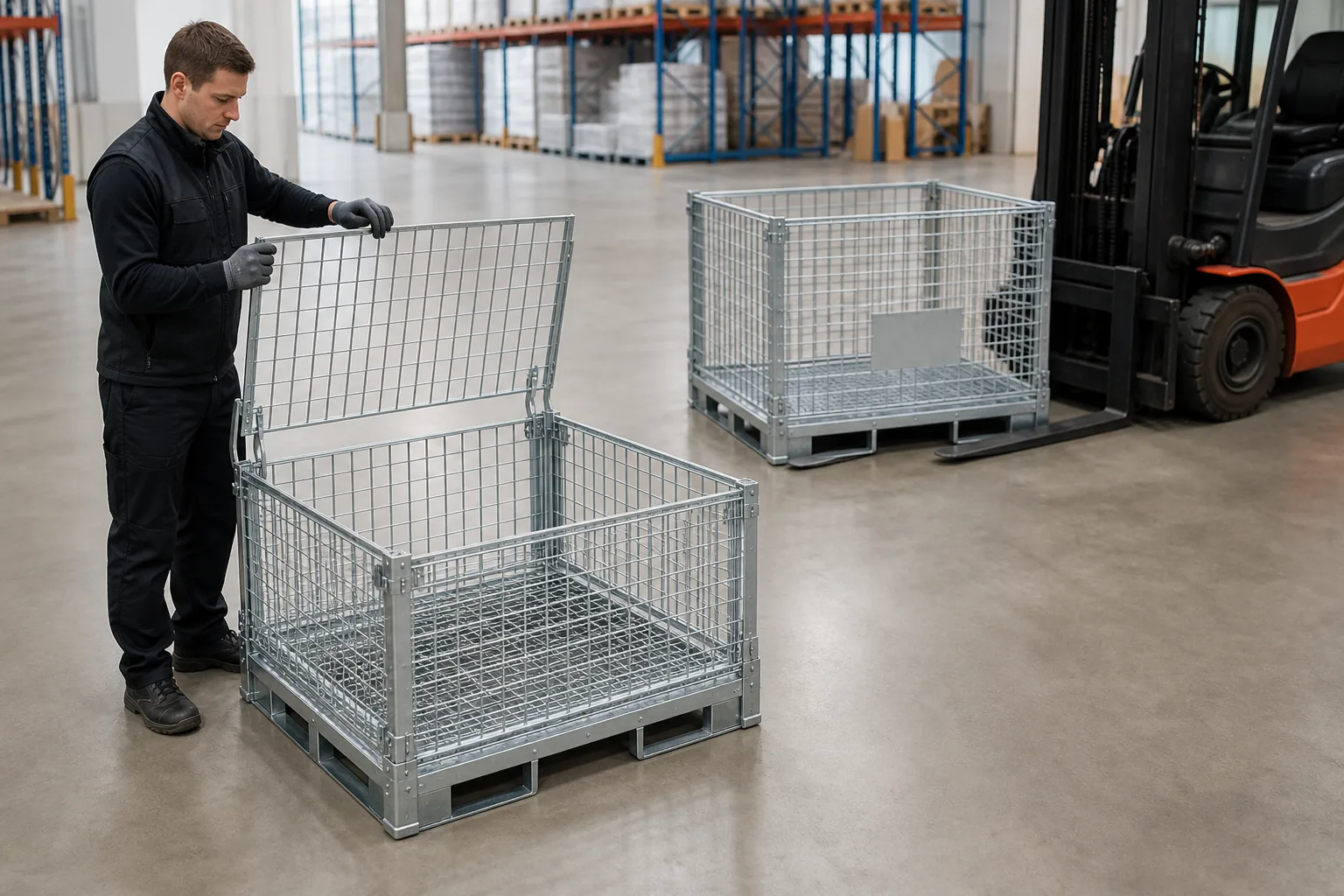
Unload, unfold, stack, and move wire mesh storage containers correctly to protect loads and workers.
Using Wire Mesh Storage Containers
Unload and inspect
Check each container for damaged welds, bent posts, or coating damage on arrival; log defects before dispatch to the floor.
Unfold or set up
For collapsible containers, raise each hinged wall and lock it into position; confirm the base is flat and the latches engage.
Stack on a level floor
Place containers only on level, dry floors with posts aligned; stack no higher than the rated stack height and keep loads centered.
Handle with forks
Enter fork pockets fully, lift level, and keep a visual check on balance; never drag a loaded container by its mesh.
Gate and label
Close and lock gates before moving; label the container with part, quantity, and destination for accurate flow.
Wire Mesh Storage Container Packing for Export
Packing keeps containers square, coatings protected, and foldable walls intact through transit and receiving inspection.
Collapsible folded flat
Collapsible wire mesh containers fold to about one-third of their volume and pack flat, cutting container freight per unit.
Rigid stacked on pallets
Rigid containers stack within height with protective corner boards and steel strapping per the loading plan.
Corner and coating protection
Corner guards and waterproof wrapping protect galvanized wire mesh containers from transit scratches and condensation.
Label by specification
Each package carries size, mesh opening, wire diameter, finish, quantity, and production lot for receiving checks.
Certificates on request
Material certificates, coating reports, and stack test reports accompany shipments; SGS, BV, or TUV inspection is available.
Wire Mesh Storage Containers in Service
Use scenarios show how capacity, mesh opening, and body style change by duty; they are not customer claims.
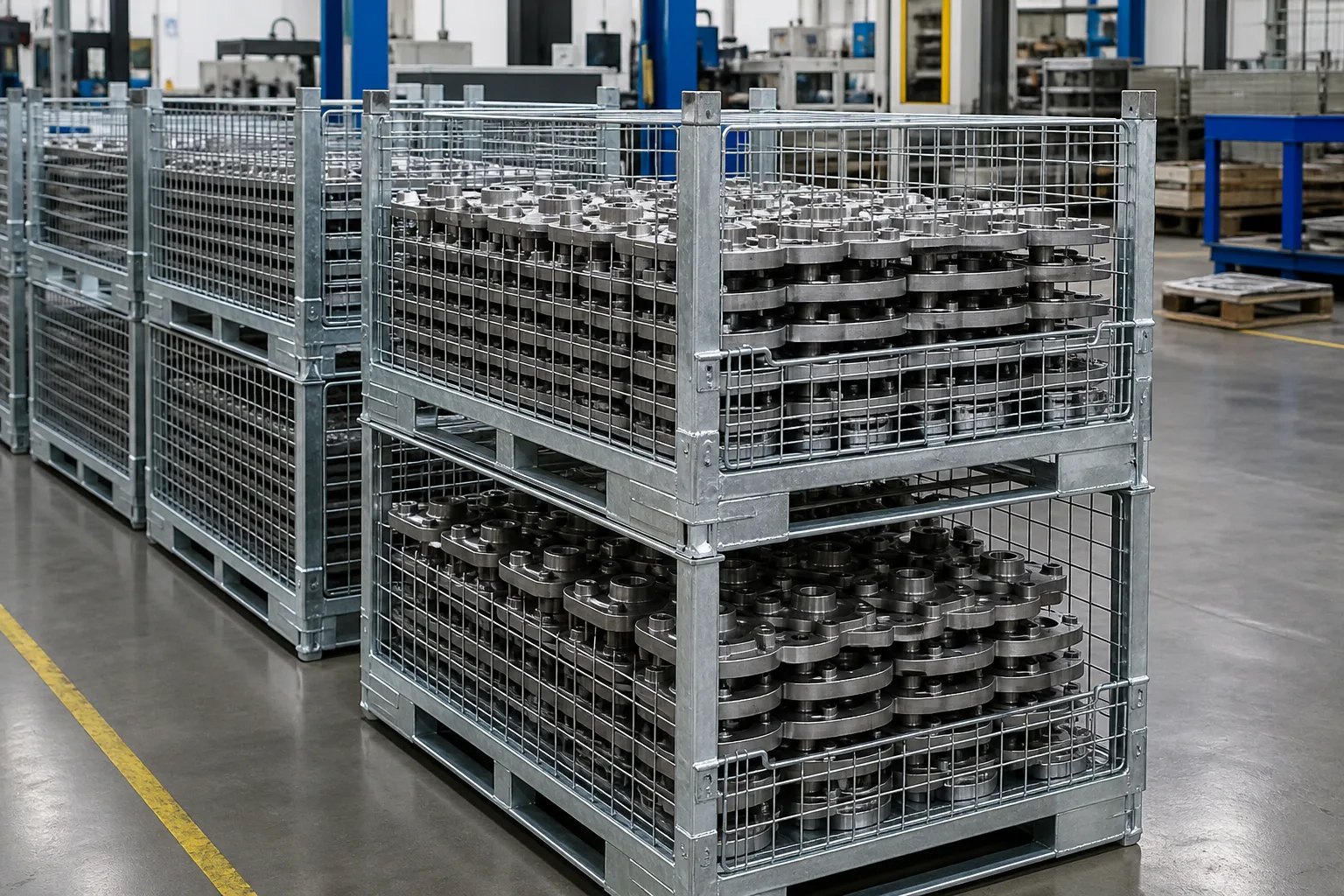
Automotive parts WIP
Rigid wire mesh storage containers at 1200 x 800 x 980 mm with 50x50 mm mesh carry 800 kg of machined parts between cells, stacked 3 high in WIP lanes with full line-side visibility.
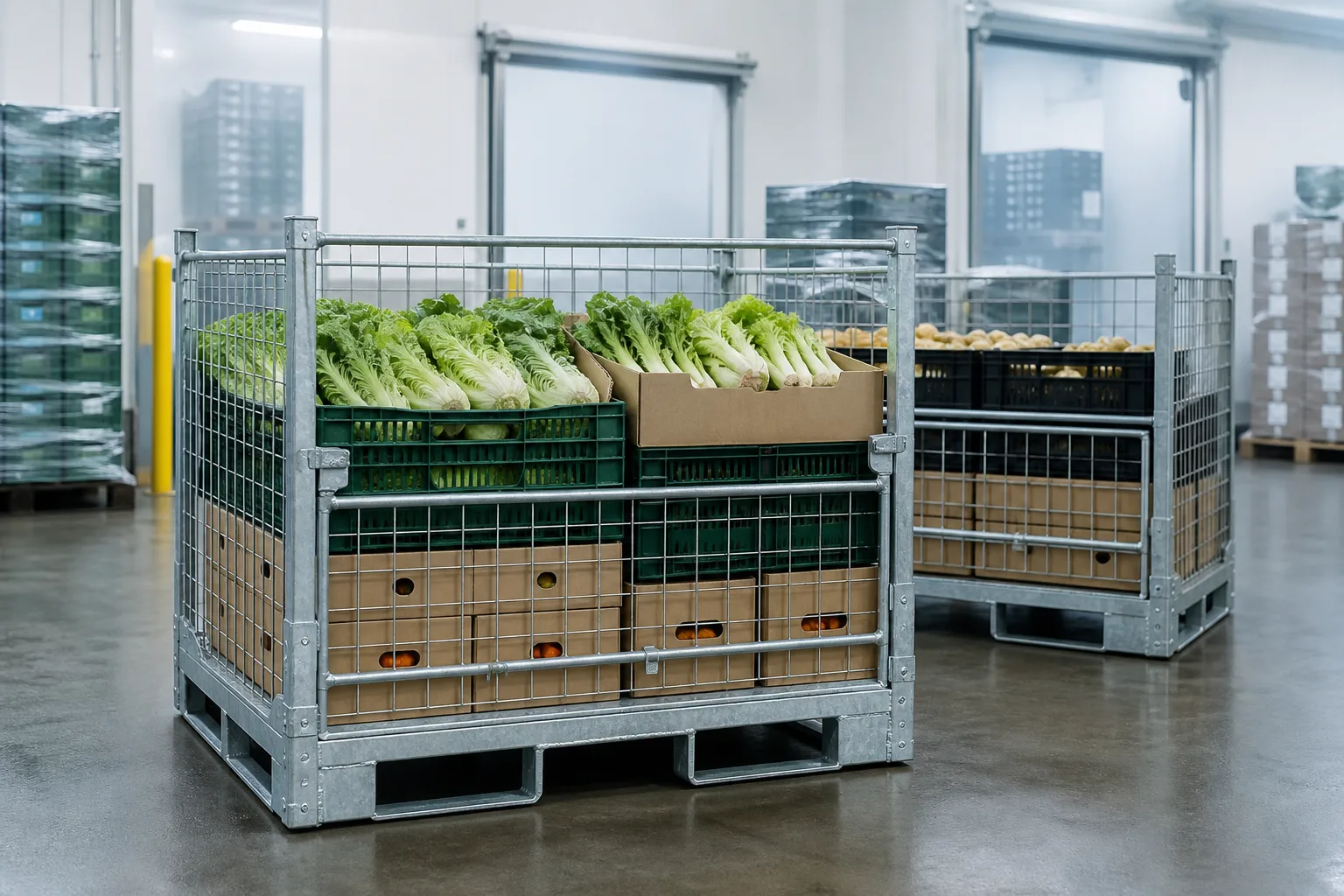
E-commerce distribution
Collapsible wire mesh containers ship picked cartons to the dock, return folded at one-third volume, and hold 1,000 kg each on 1200 x 1000 mm bases.
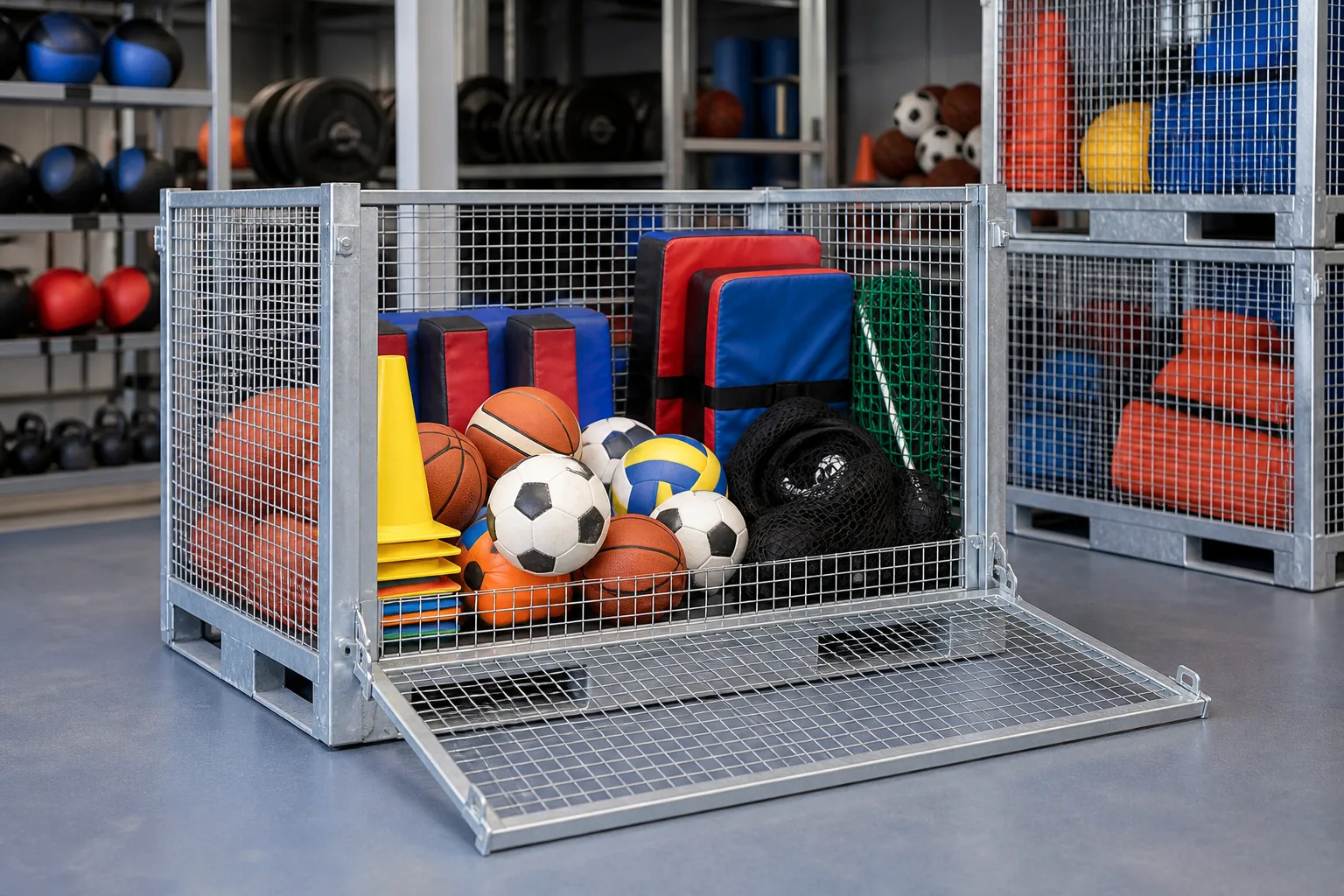
Cold storage grocery
Hot-dip galvanized containers with 50x100 mm mesh store 1,000 kg loads in a -25°C freezer, surviving frost and wash-down without coating failure.
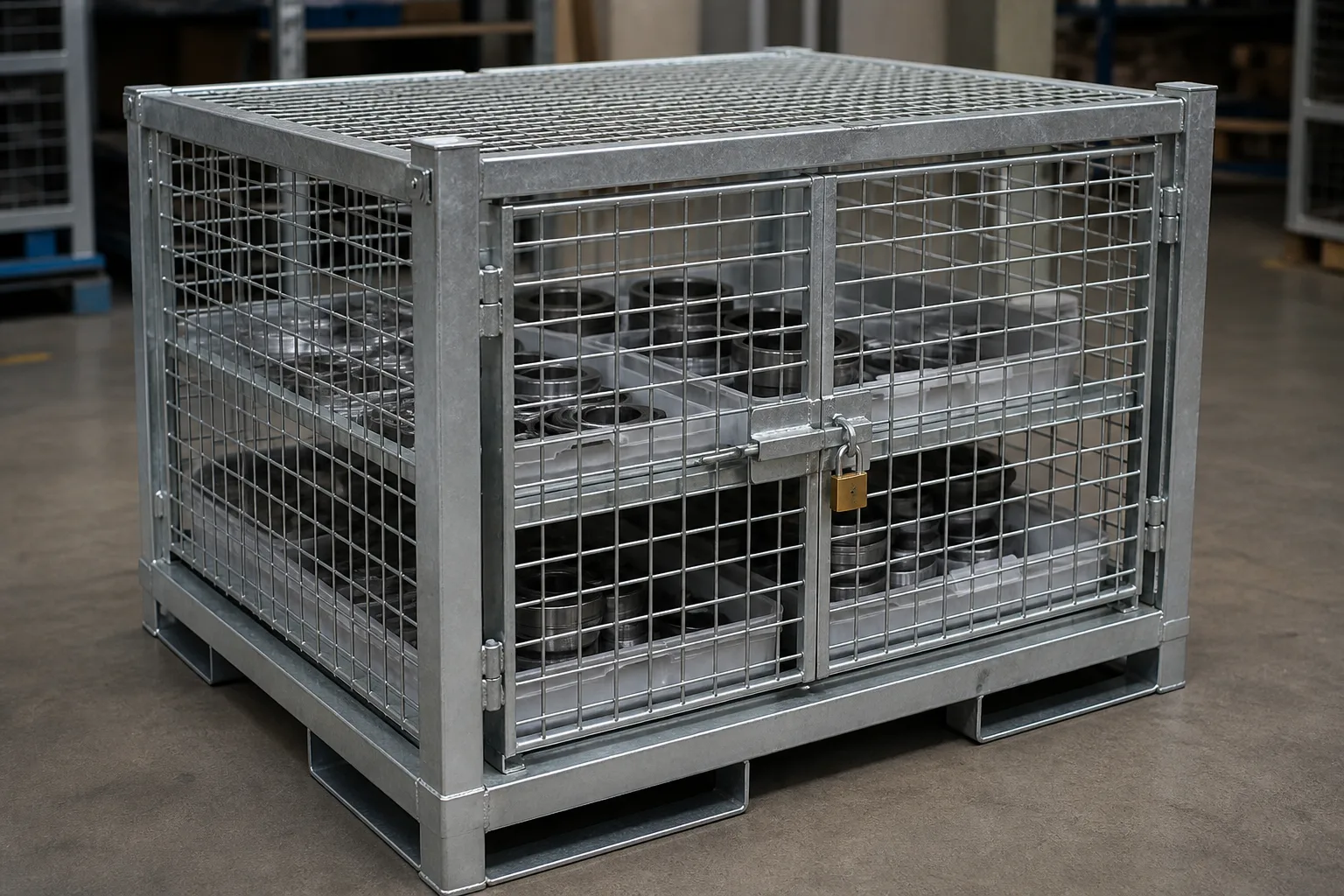
Export parts consolidation
Heavy-duty 1200 x 1000 mm containers with 75x75 mm mesh and fork pockets consolidate castings for export, stacked in the trailer and certified for the shipping loop.
Wire Mesh Storage Container Sourcing Resources
Compare welded mesh products, storage standards, and related storage solutions. Confirm dimensions, finish, and stacking requirements before ordering.
Last updated: 2026-08-12
Related pages
Reference standards
Wire Mesh Storage Container FAQ
Common procurement questions about capacity, openings, stacking, finishes, and ordering wire mesh storage containers.
Still have questions about wire mesh storage containers?
Send your base size, mesh opening, wire gauge, capacity, stacking height, finish, quantity, and destination. Our sourcing team replies with a specification-led review.
Request a QuoteRequest Wire Mesh Storage Container Pricing
Send base length and width, height, mesh opening, wire diameter, rigid or collapsible, gate type, finish, capacity, stacking height, quantity, and destination for a specification-led sourcing review. Our team replies with matched wire mesh storage containers that cut parts loss and freight cost, plus a factory quote for your warehouse project.
Your details stay private. We reply with a matched factory quote — no spam.