Titanium Wire Mesh
Titanium wire mesh is woven titanium wire cloth for industrial screening where material compatibility matters. If an existing screen is corroding or being replaced frequently, review the process conditions, opening geometry and support arrangement before choosing a replacement. Compare the listed specifications, investigate the failure and define a sample-validation plan before requesting a quote.
FOB reference price from $70.00 / m². Varies by spec and quantity; final quote on inquiry.
Review the Reason for Replacing Your Screen
Start a titanium wire mesh inquiry with the problem you need to address. Material selection is one part of the solution; opening geometry, installation and operating practice also need review.
Corrosion-Related Screen Failures
If the existing wires are thinning or developing pits, record the chemistry and exposure conditions. A compatible titanium grade may address a corrosion-driven failure; confirm the environment before selecting a replacement.
Frequent Replacement and Maintenance
Compare why screens are being removed and the cost of each change. Evaluate whether titanium wire mesh could address the documented failure mechanism, then verify the proposed screen instead of assuming a longer service life.
Incomplete Replacement Specifications
A matching mesh count alone does not identify an equivalent screen. Define the wire grade, diameter, clear opening, finished dimensions and support interfaces so the replacement can be inspected against an agreed specification.
Mesh Count
40–80
Wire Diameter
0.12–0.25 mm
Clear Aperture
0.198–0.385 mm
Open Area
36.8–38.8%
Material Family
Titanium
Catalog Specs
2
Sample
Available
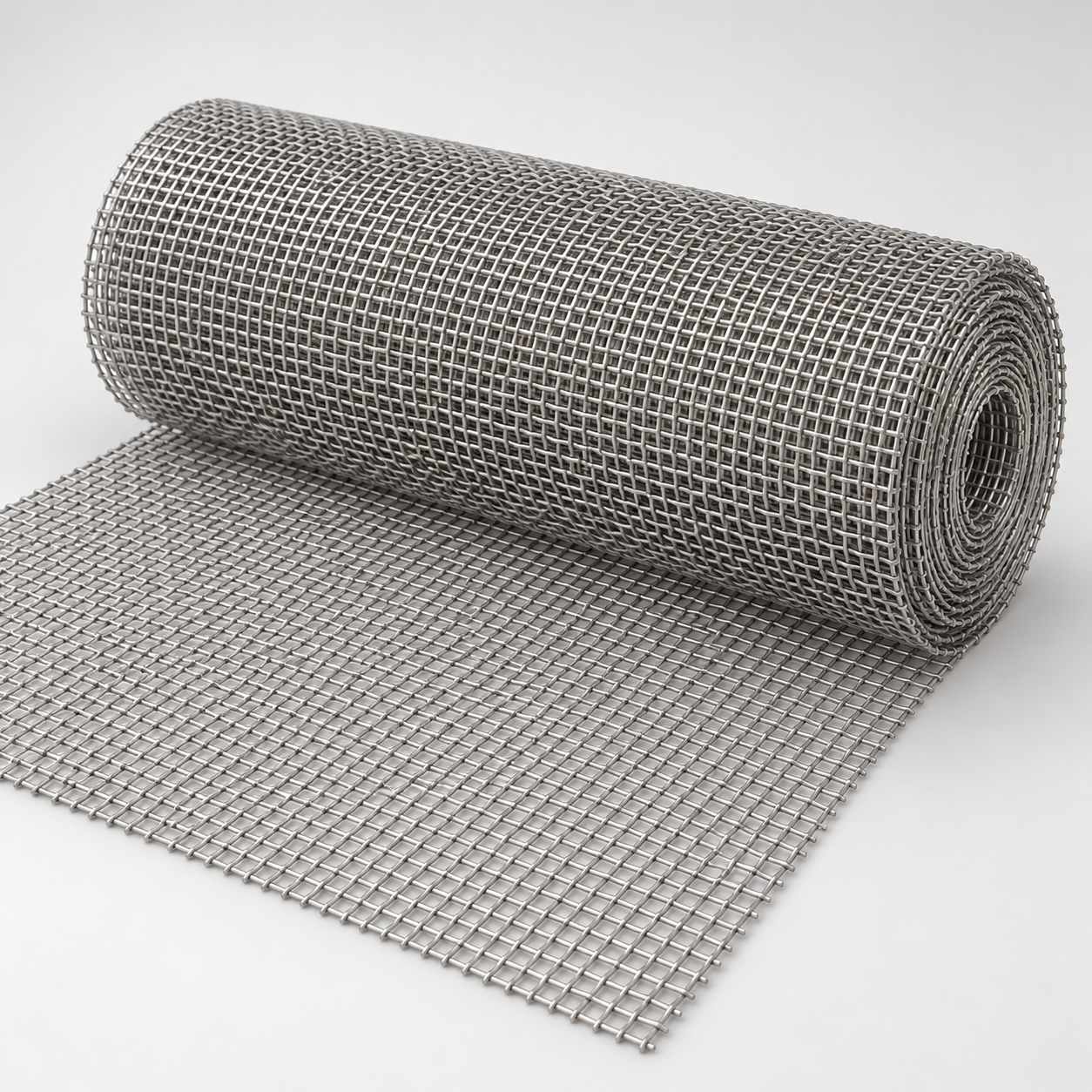
Compare the Listed Mesh Options
The ranges summarize individual catalog rows. They do not mean that every intermediate mesh count or wire combination is offered. Select a listed option or describe the opening you need, then confirm the weave, finished dimensions and tolerances with the quotation.
Official Standard Tolerance SKU Matrix
Select and lock exact sub-specifications (supports batch multi-spec consolidated inquiry)
Don't see the specification you need? Ask about other options.
Tell us the product, specification, or application. You can inquire even if the details are incomplete.
| Nominal Mesh Count | Std. Wire Dia. (mm)Std. Wire Dia. (inch / Gauge) | Aperture Size (mm)Aperture Size (inch) | Ref. Open Area | Est. Weight (kg/m²)Est. Weight (lb/ft²) | Micro Link | |
|---|---|---|---|---|---|---|
| 40 Mesh | 0.250 mm0.00980" | 0.385 mm0.01520" | 36.8% | 1.25 kg/m²0.2600 lb/sq.ft | ||
| 80 Mesh | 0.120 mm0.00470" | 0.198 mm0.00780" | 38.8% | 0.58 kg/m²0.1200 lb/sq.ft |
From Mesh Count to Clear Opening
These titanium wire mesh examples calculate nominal square-weave openings from the mesh count and wire diameter of each listed SKU. Mesh count describes spacing per linear inch; it is not a micron rating.
| Mesh per inch | Wire diameter (mm) | Calculated opening (mm) | Calculated opening (μm) |
|---|---|---|---|
| 40 | 0.25 | 25.4 ÷ 40 − 0.25 ≈ 0.3850 mm | 385.0 |
| 80 | 0.12 | 25.4 ÷ 80 − 0.12 ≈ 0.1975 mm | 197.5 |
Calculated openings use four decimal places in millimetres and one in micrometres. Catalog apertures are rounded separately. Wire diameter changes both the opening and open area at the same mesh count. Nominal geometry alone does not establish absolute particle retention, flow capacity or an allowable pressure difference.
Download the Full Wire Mesh Catalog
Get the complete catalog with specifications, applications, and ASTM compliance — as a PDF.
100X Simulated Microscope Lens View (Auxiliary Physical Design)
Choose and Specify Titanium Wire Mesh
Choose a replacement by connecting the observed failure with the material, mesh geometry and actual process conditions. Use the checks, material comparison and validation steps below to prepare a purchasing specification that can be reviewed and tested.
Prepare Your Screen Inquiry
Choose the starting point that matches your project. Send the information you have and identify any unknown requirements for review.
1.Repeat an Existing Specification
- Include with the inquiry
- Send the approved drawing, previous material designation, mesh count, wire diameter, quantity and destination. Identify any change in process conditions or cleaning practice.
- Agree before ordering
- Match the wire grade and condition, weave, opening, dimensions, edge treatment and inspection records to the approved order. Matching mesh count alone does not define an equivalent replacement.
2.Replace a Damaged Screen
- Include with the inquiry
- Include photographs, time in service, damage locations and the existing screen specification. Describe the process fluid, temperature, pressure difference, cleaning cycle and supporting assembly.
- Agree before ordering
- Review material compatibility, support spacing, clamping and loading together. A material change should address the stated service conditions rather than assume that a different metal resolves every failure.
3.Develop a New Screen
- Include with the inquiry
- Describe the separation task, target opening, process medium and installation space. Supply a drawing, required quantity, destination and any sample or inspection requirements.
- Agree before ordering
- Agree the proposed grade, mesh geometry, finished form and acceptance criteria. Identify any application testing needed to establish flow, retention or mechanical performance in the assembly.
Investigate a Failed or Blocked Screen
Use these checks to prepare a titanium wire mesh replacement inquiry. They are investigation prompts, not a diagnosis from appearance alone. The TIMET handbook supports the corrosion context; mechanical and flow questions require information about the actual screen assembly.
| Observed condition | Checks to discuss | Information to provide |
|---|---|---|
| Wire thinning, pits or new holes | Check material identity, process and cleaning chemistry, temperature and deposit-prone contacts. Distinguish corrosion observations from abrasion or local mechanical damage. | Send damage photos, the original material specification, fluid composition and concentration, normal and peak temperature, cleaning conditions and time in service. |
| Broken wires near edges or clamps | Review edge condition, clamping contacts, tension, movement and the installation sequence. A different metal alone does not correct an unsuitable attachment arrangement. | Mark the failure locations on the support drawing. Include edge treatment, fastening details, installation photos and any vibration or movement observed. |
| Distorted openings or local tearing | Review support spacing, pressure difference, impact, wire size and operating changes. Agree how the proposed titanium wire mesh will be supported and assessed under the stated duty. | Provide the mesh and wire dimensions, support arrangement, normal and peak pressure difference, loading events and the location of distortion. |
| Blockage or falling flow | Review feed particles, deposits, opening geometry, open area and cleaning practice. Separate fouling from material loss; changing the alloy does not establish a blockage remedy. | Record clean and fouled flow, pressure difference, feed or deposit information and the cleaning cycle. Include photos before and after cleaning where available. |
Compare Materials for the Stated Screen Duty
Evaluate titanium wire mesh alongside the exact alternatives on your drawing. These are material-review starting points, not a ranking or a declaration that each grade is suitable for your process. Producer data describe the alloys; finished wire cloth and its supporting assembly need separate acceptance criteria.
| Material family | When to evaluate it | Confirm before choosing |
|---|---|---|
| Titanium — specify the grade | Investigate titanium wire mesh when corrosion of the existing material is a documented concern and the process chemistry supports a titanium-grade review. Include operating, shutdown and cleaning exposure. | Identify the exact grade, medium, concentration and temperature. Review sheltered contacts and crevices, particularly in hot chloride service, and the materials touching the screen. Titanium is not universally compatible with acids or reducing media. |
| 316 stainless steel — confirm the designation | Use the existing stainless steel specification as a baseline for comparing mesh geometry and the stated chemical duty. The 316 family contains different designations; identify which one is proposed. | Check the exact grade, chloride exposure, temperature, cleaning and contact geometry against relevant corrosion data. A 316 family name does not establish resistance to localized corrosion in every environment. |
| Monel 400 — UNS N04400 | Review this nickel-copper grade when the duty calls for a marine or chemical-processing material assessment. Specify alloy 400 and its wire condition rather than relying on the Monel family name alone. | Include flow, shutdown immersion and deposits. The producer distinguishes flowing seawater from stagnant conditions, where crevice and pitting corrosion can occur. Compare the complete exposure cycle and finished cloth requirements. |
| Inconel 600 / 625 — distinguish the grades | Review a nickel-alloy alternative when heat and corrosion conditions drive the material question. Alloy 600 and alloy 625 are separate grades with different chemistry and property data. | Specify UNS N06600 or N06625, wire condition, temperature, atmosphere and fluid exposure. Do not use a bulk-alloy property or melting range as the service rating of a finished screen assembly. |
Match the Material to the Process
Mesh selection depends on the environment that maintains or disrupts titanium's protective oxide film. The linked TIMET handbook explains the material context; use your actual process and cleaning conditions for the grade review.
- Process Chemistry
- Identify every fluid, its concentration and relevant contaminants. Titanium's resistance in many oxidizing and neutral environments does not imply compatibility with strongly reducing or complexing media. Include fluoride-containing chemicals and cleaning agents in the review.
- Temperature and Exposure
- Send normal and peak temperatures, exposure duration and shutdown conditions. Changes in temperature or concentration can change corrosion behavior. Do not derive an operating-temperature limit for the mesh from titanium's melting point.
- Opening, Flow and Support
- Define the required opening, flow direction, normal and peak pressure difference, and support arrangement. Compare wire diameter and open area alongside the material; the grade name alone does not determine screen strength or flow resistance.
- Cleaning and Contact Areas
- List cleaning chemicals, temperature, frequency and rinsing conditions. Show clamps, supports and deposit-prone locations on the drawing so sheltered areas and the full exposure cycle can be considered when specifying titanium wire mesh.
- Replacement and Maintenance Cost
- Compare titanium wire mesh and the current screen over the same operating period and required duty. Record purchase cost, replacement labor, cleaning and maintenance, downtime and attributable quality losses without counting an item twice. Use actual records; a higher purchase price alone does not establish either lower or higher total operating cost.
Validate a Sample Before a Bulk Order
Agree a titanium wire mesh sample and validation plan with the supplier and the people responsible for your process. Establish the acceptance criteria and the customer-approved trial method before testing. The steps below do not assign a universal exposure time, pressure limit or pass threshold.
Define the Duty and Acceptance Criteria
Record what the screen must separate, the fluid and cleaning exposure, temperature, flow and pressure difference, supports and dimensions. Agree which material, dimensional and application results are needed for approval and who will review them.
Check the Material and Mesh Geometry
Compare the sample identity and agreed material documents with the quotation. Check mesh count, wire diameter, clear opening, finished dimensions and edges using the agreed measuring method and tolerances. Keep the sample reference with the inspection record.
Run the Agreed Application Trial
Use the customer-approved procedure and a representative assembly or test arrangement. Record the actual exposure, loading, flow and cleaning conditions so the trial can be compared with the intended duty. Changes to the procedure require review by the people responsible for the test.
Review the Results and Freeze the Specification
Record material condition, wire damage, opening changes, deposits and the agreed application measurements after the trial. Compare results with the pre-agreed criteria. Confirm the titanium wire mesh grade, geometry, documents and approval reference for the proposed bulk order; a short trial does not prove a universal service life.
Titanium Mesh for Chemical-Processing Screens
Use a titanium wire mesh inquiry to define a screen for chemical-process equipment, fluid separation or replacement of an existing industrial screen. Specify what the mesh must do, the medium it contacts and how it is supported. Confirm material compatibility and assembly performance for that duty before ordering.
- Chemical-process equipment screens
- Process-fluid screening and separation
- Industrial replacement screens
Specify the Titanium Grade and Wire Condition
Commercially Pure Titanium and Grade Identification
Grade 1 (UNS R50250) and Grade 2 (UNS R50400) are commercially pure, unalloyed titanium designations. They are useful starting points for a material discussion, but the offered wire grade and condition must be confirmed with the quotation. The element values displayed below are product-family catalog data, not a heat-specific analysis or a complete grade acceptance specification. State the required designation and material documents when ordering titanium wire mesh.
- Ti: ≥99.5
- Fe: ≤0.20
- O: ≤0.20
Material and Geometry Selection Points
- Grade identification:Specify Grade 1 or Grade 2 when required by your drawing. Agree the applicable material specification and wire condition; the product-family name does not establish that either grade is held in stock.
- Corrosion behavior:Titanium relies on a protective oxide film. Compare the exact medium, concentration, temperature and cleaning exposure with grade-specific corrosion data instead of assuming universal acid or alkali resistance.
- Open area:For a regular square weave, open area expresses the fraction of the surface occupied by openings. It depends on mesh spacing and wire diameter and is separate from a tested flow or filtration rating.
- Finished screen requirements:Specify width, length, edge condition, quantity and the supporting or clamping arrangement. Include any forming, joining or surface requirements for review with the proposed screen configuration.
Titanium Wire Mesh Purchasing and Inspection Checklist
Define the wire material and the finished woven cloth separately. ASTM B863 addresses titanium and titanium alloy wire; agree its applicable edition and scope for the proposed wire. ASTM E2016 is a reference for general industrial woven wire cloth, with exclusions including Dutch weave and testing sieve cloth. Agree the relevant construction, tolerances and inspection method rather than treating either standard name as certification of this product.
| Check item | Specification basis | Include in your RFQ | Agree for acceptance |
|---|---|---|---|
| Titanium grade and wire condition | Required material designation and applicable wire specification | Grade, condition, specification edition and document requirements | Approved material identity and required chemistry or property records |
| Weave, mesh count and aperture | Construction and nominal opening in each direction | Mesh count per inch, clear opening, units and required tolerances | Agreed measuring method and permitted opening variation |
| Wire diameter | Specified wire size in the warp and weft | Nominal diameters, units and dimensional tolerances | Measured wire dimensions against the approved specification |
| Finished dimensions and edges | Width, length, form and attachment interfaces | Drawing, quantity, edge treatment and support details | Finished dimensions and edge condition on the agreed basis |
| Service and inspection requirements | Process duty and order-specific acceptance criteria | Chemistry, temperature, loading, cleaning and requested records | Proposed specification reviewed against the duty and document package |
Titanium Material Data and Woven Cloth Standards
- “Titanium metal’s corrosion resistance is due to a stable, protective, strongly adherent oxide film.”TIMET: Corrosion Resistance of TitaniumTitanium producer guidance on grade designations and environment-dependent corrosion behavior. Review the complete service conditions; the handbook does not certify the supplied mesh or establish an assembly service rating.
- “Standard Specification for Industrial Woven Wire Cloth”ASTM E2016-22Scope and terminology for general industrial woven wire cloth. Confirm applicability, exclusions, measuring methods and acceptance criteria for the ordered construction.
- “Standard Specification for Titanium and Titanium Alloy Wire”ASTM B863Wire-material specification reference. Agree the edition, dimensional scope and grade for the proposed wire; specify finished cloth geometry and inspection separately.
Custom Processing for Alloy Mesh · Quality Assurance for Alloy Mesh · Packaging & Logistics
Custom Processing for Alloy Mesh
Clean handling and precision fabrication for special alloy meshes.
Fine Mesh Slitting
Brass, nickel and titanium rolls slit to narrow widths on dedicated lines isolated from carbon steel contact.
Disc & Gasket Cutting
Alloy mesh discs, gaskets and EMI shielding shapes stamped per drawing with deburred edges.
Edge Finishing & Framing
Cut edges trimmed and frames spot-welded with matching alloy wire to preserve corrosion resistance.
Quality Assurance for Alloy Mesh
Every alloy mesh batch ships with verified chemistry and cleanliness.
PMI Grade Confirmation
Positive material identification by spectrometer on each alloy wire lot, confirming grade before weaving.
EN 10204 3.1 MTC
Mill certificates trace alloy composition and heat number for every coil used in your order.
Cleanliness & Surface Check
Mesh inspected for oil residue, scratches and iron contamination before sealed packing.
Packaging & Logistics
Protective packing engineered for high-value alloy meshes.
Sealed Roll Packing
Small rolls sealed in plastic film with desiccant; copper and brass meshes wrapped in VCI anti-tarnish paper.
Rigid Core Support
Fine meshes wound on rigid cores and boxed to prevent telescoping or crushing in transit.
Container Loading
Consolidated loading plans with photos and loading reports shared before vessel departure.
Trade Terms
FOB Tianjin or CIF major ports; DHL, FedEx and SF Express available for sample shipments worldwide.
Titanium Wire Mesh Questions
Compare Materials and Woven Mesh Specifications
Browse Available Products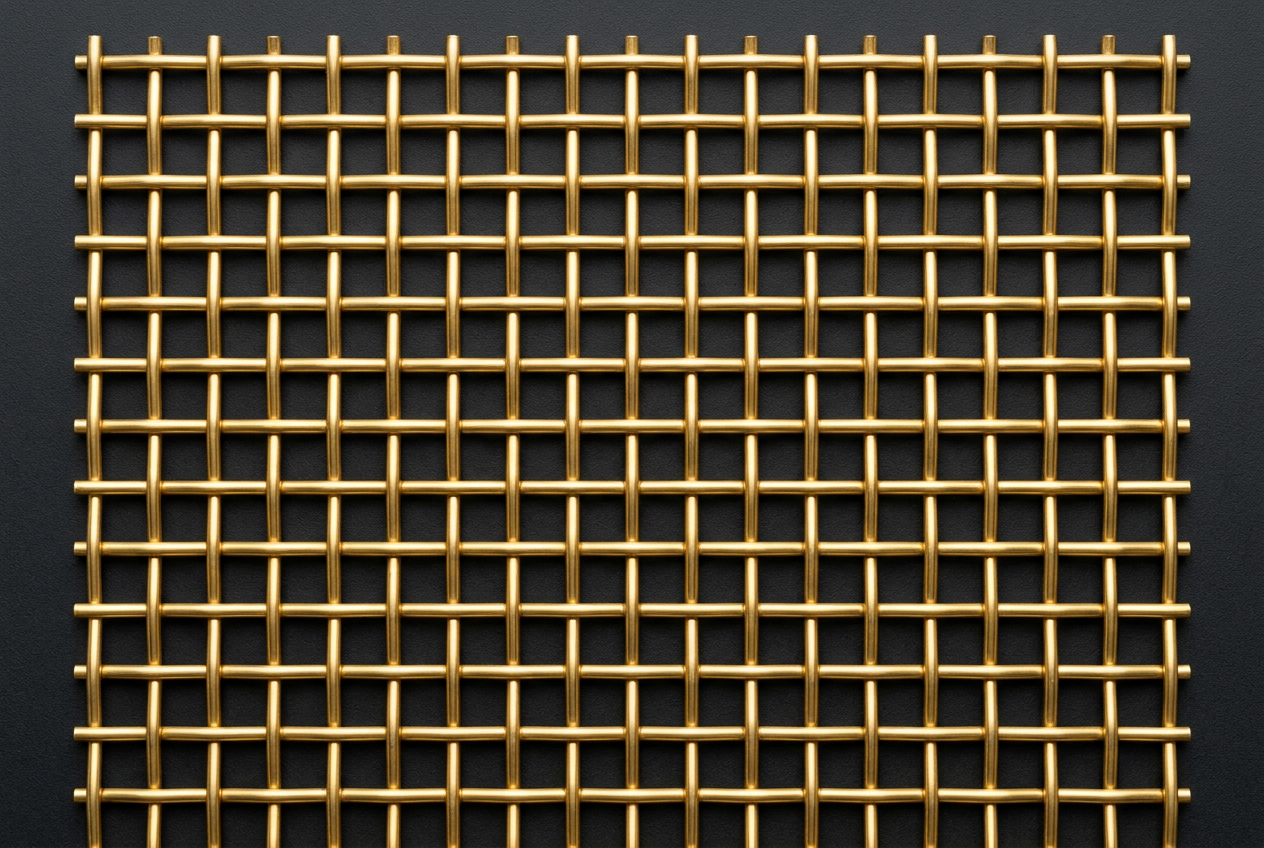
Brass Woven Wire Mesh
Brass · 40–80 mesh
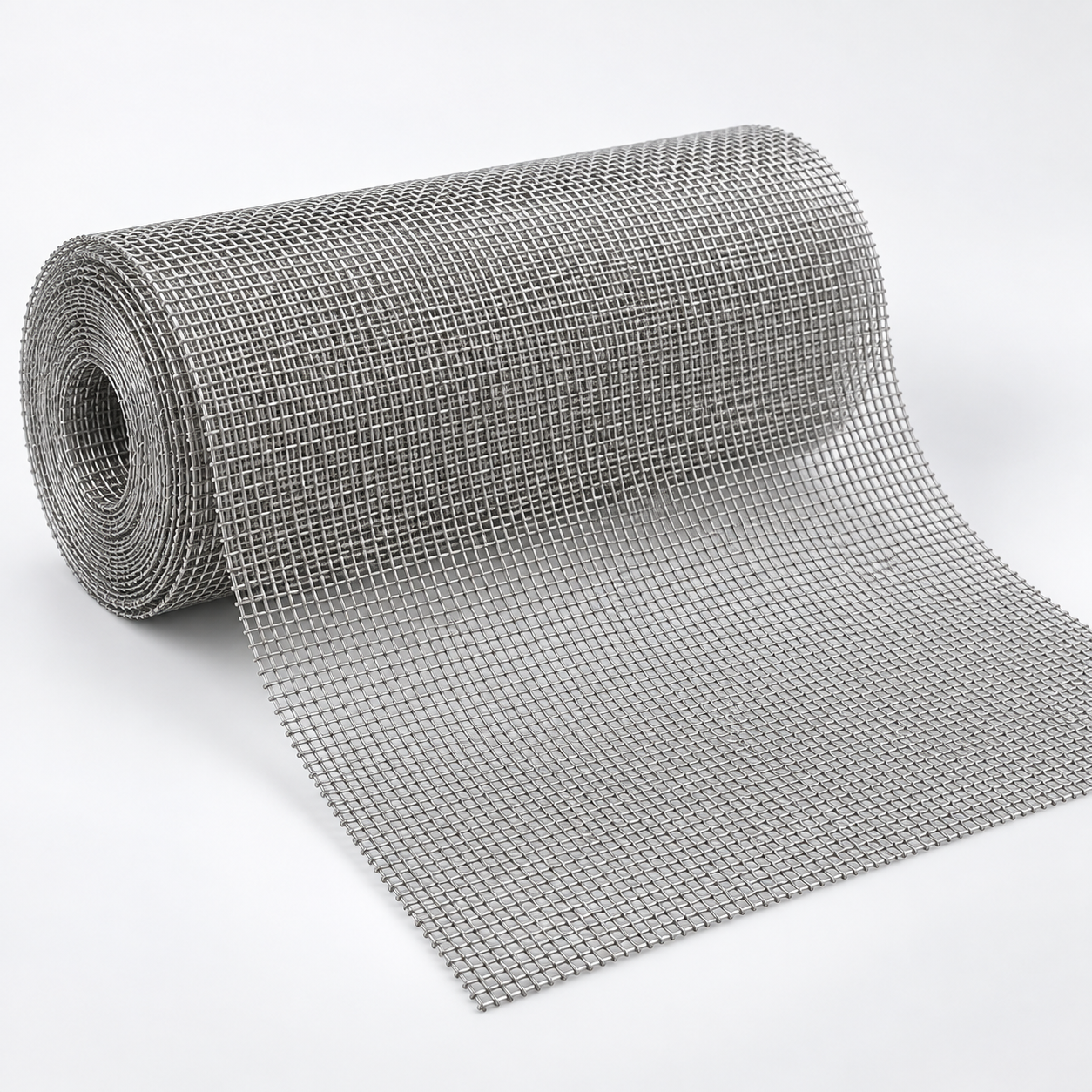
Inconel Wire Mesh
Inconel Alloy · 40–80 mesh
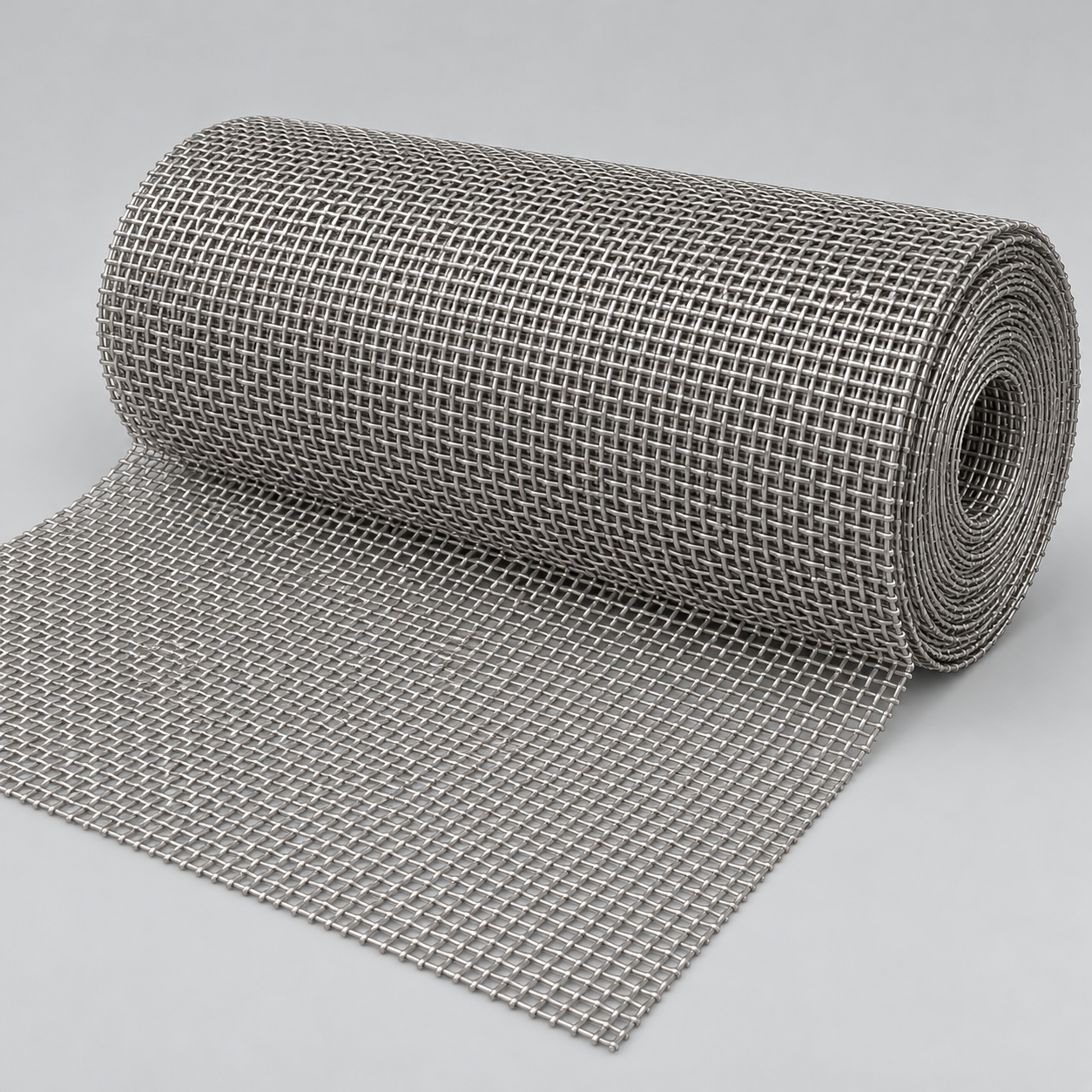
Monel Wire Mesh
Monel Alloy · 40–80 mesh
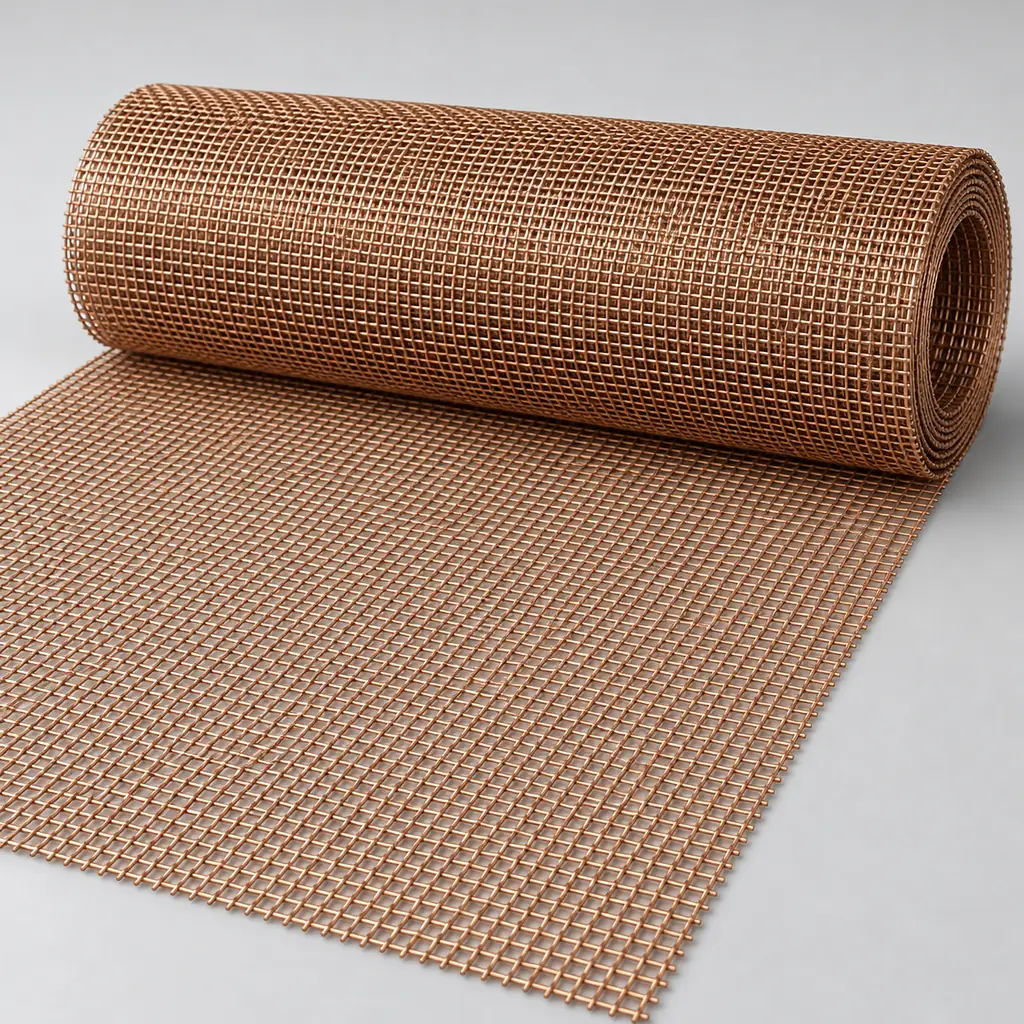
Phosphor Bronze Wire Mesh
Phosphor Bronze · 40–80 mesh
Request a Quote for Titanium Wire Mesh
Prepare your titanium wire mesh inquiry with the existing failure or new screening task, required grade, opening geometry, dimensions and quantity. Include the process conditions, damage photos or support drawing, and sample-validation and acceptance requirements so the proposed replacement can be reviewed against a clear specification.