Galvanized Welded Wire Mesh
Source galvanized welded wire mesh rolls or panels for fencing, enclosures, partitions and fabricated guards. Understand opening versus pitch, compare quotations on the same specification and define the evidence needed for incoming inspection.
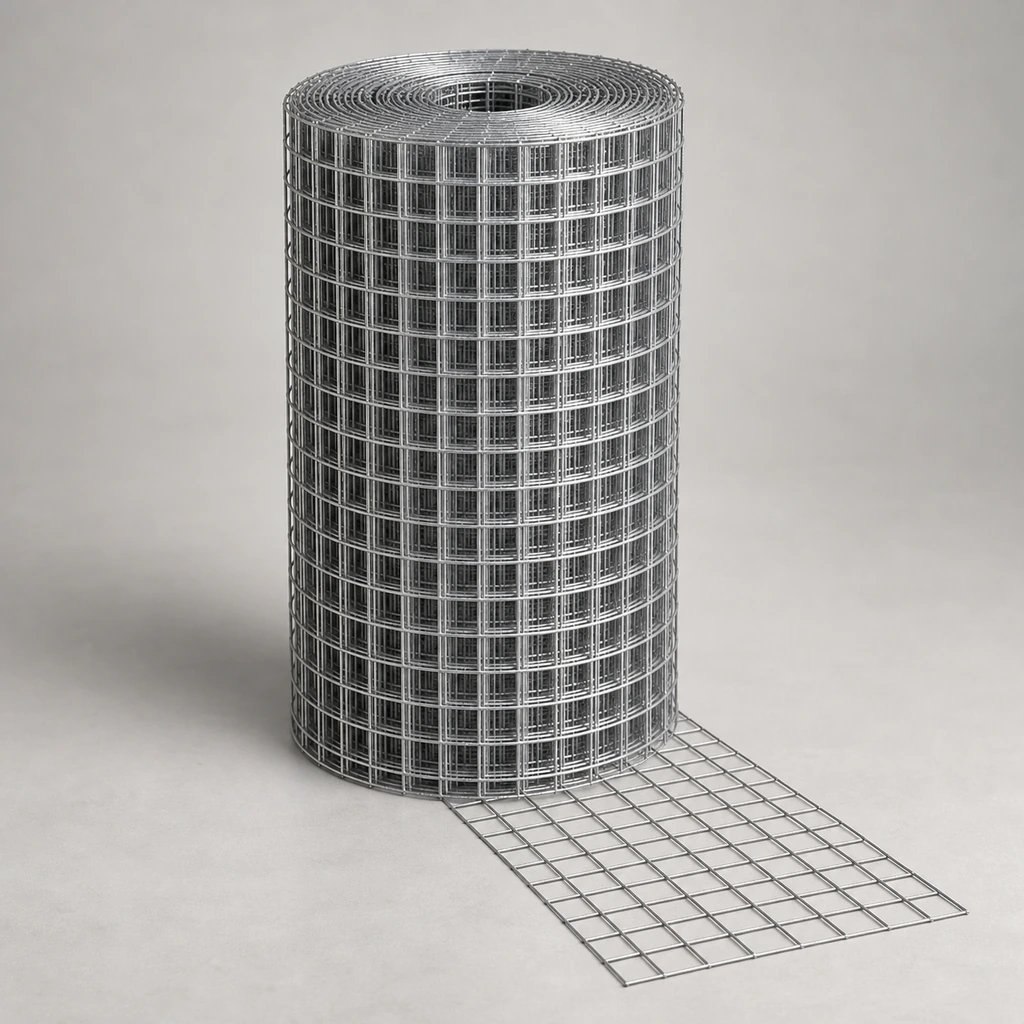
Define Your Mesh Specification
Galvanized welded wire mesh is a product family, not one fixed specification. Send clear opening or centre-to-centre pitch, finished wire diameter, roll or panel dimensions, quantity and destination. State GBW or GAW and the zinc-coating requirement; acceptance limits and availability are confirmed with the quotation.
Don't see the specification you need? Ask about other options.
Tell us the product, specification, or application. You can inquire even if the details are incomplete.
Download the Full Wire Mesh Catalog
Get the complete catalog with specifications, applications, and ASTM compliance — as a PDF.
Choose the Construction Before Comparing Quotes
Compare galvanized welded wire mesh by dimensions, coating route and supply format before comparing price. The worked examples explain common specification differences; the arrival checks show what to record when delivered material needs further review.
Rolls or Panels: Which Format Fits the Job?
Choose the supply format around handling, fabrication and the finished assembly. Roll form alone does not establish flexibility, and a flat panel alone does not establish a load rating; wire size, spacing and supports still matter.
1.Rolls for continuous runs and cutting on site
- Include in your enquiry
- State roll width and length, opening in both directions, wire diameter, coating route and the length of the installation. Identify any limits on roll weight or handling equipment.
- Confirm before ordering
- Agree roll dimensions, winding and packing, cut-edge requirements and whether the mesh needs flattening before fabrication. Confirm the supporting frame or posts separately.
2.Panels for framed or repeated assemblies
- Include in your enquiry
- State panel width and length, mesh orientation, opening, wire diameter and required edge condition. Send a drawing when hole alignment or attachment positions affect the assembly.
- Confirm before ordering
- Agree flatness, squareness, dimensional tolerances and flush-trimmed or projecting wire ends. A panel intended for a guard or railing still needs an application-specific design review.
3.Cut pieces for fabrication
- Include in your enquiry
- Send finished dimensions, quantities, edge details and a drawing showing bends, frames or attachment points. State whether cutting and welding occur before or after the final zinc coating.
- Confirm before ordering
- Agree the fabrication sequence and treatment of areas affected by later cutting or welding. Identify which work belongs in the supply scope and which will be carried out after delivery.
Arrival Checks: Record the Evidence Before Deciding
When galvanized welded wire mesh arrives with an unexpected appearance or dimension, record the condition against the order and agreed sampling plan. These checks identify the next verification step; appearance alone does not establish the cause, responsibility or acceptance decision.
| Observed issue | Evidence to record | What to verify next |
|---|---|---|
| White or grey powder on the surface | Photograph affected areas and adjacent surfaces; identify roll or bundle labels and record moisture, packing and storage conditions. | Wet storage stain can form when moisture is trapped around newly galvanized surfaces with restricted airflow. Review storage history and the coating condition against the agreed requirements; do not infer acceptance from colour alone. |
| Red-coloured rust marks | Record the location and extent, including whether marks occur on intersections, cut edges or straight wire; retain batch identification and delivery photos. | Ask for review of the affected surface, coating records and handling history. Agree any further inspection or test before deciding the cause or remedy. |
| Separated or loose welded intersections | Mark affected intersections, photograph the surrounding grid and record the sampled area, quantity and any visible handling damage. | Compare the findings with the agreed weld-acceptance and sampling requirements. Request the specified weld inspection or test record; do not assign a load rating from appearance. |
| Dimensions or flatness differ from the order | Record measuring tools, support conditions, measurement direction and the opening, wire, panel or roll dimensions being checked. | First align clear opening versus pitch and base-wire versus finished diameter. Then compare results with the drawing, agreed tolerances and measurement method, including any flatness requirement. |
GBW vs GAW: Specify When the Zinc Is Applied
For galvanized welded wire mesh, before or after welding describes the manufacturing sequence. Hot-dip or electro galvanizing describes the coating process. These are different specification fields: the word galvanized by itself does not settle either one.
| Coating route | What the route means | What to confirm |
|---|---|---|
| GBW — galvanized before welding | The wire is zinc coated before the intersections are welded. Welding can affect coating around the joints, so review the weld areas as well as the straight wire when comparing the finish. | State the wire-coating process and required coating class or mass. Ask how weld-area condition is assessed and whether any subsequent treatment is part of the quotation. |
| GAW — galvanized after welding | The welded grid is formed first and then galvanized. In a hot-dip route, the fabricated mesh passes through a zinc bath, coating the grid after its welds have been made. | State the required coating process, acceptance method and finished dimensions. Inspect intersections and openings; do not assume a coating thickness or service life from the GAW designation alone. |
Opening, Pitch and Area: Worked Purchasing Examples
These assumed dimensions explain how to read a galvanized welded wire mesh quotation. They are not catalogue specifications. Use the same units and wire-measurement basis throughout each calculation.
- 1. Distinguish the gap from the centre-to-centre distance
- Clear opening is the gap between adjacent wires; pitch is their centre-to-centre distance. For the ideal grid geometry, pitch = clear opening + wire diameter. State both grid directions and whether wire diameter includes the zinc coating.
- 2. If 25.4 mm means pitch
- Assume a square grid with 25.4 mm pitch and 2.0 mm finished wire diameter. Clear opening = 25.4 - 2.0 = 23.4 mm. This describes a smaller gap than a requirement for 25.4 mm clear opening.
- 3. If 25.4 mm means clear opening
- Assume 25.4 mm clear opening and the same 2.0 mm finished wire diameter. Pitch = 25.4 + 2.0 = 27.4 mm. Both enquiries may be called one-inch mesh, but they describe different grids.
- 4. Calculate theoretical open area on the same basis
- For an ideal square grid, open area (%) = (clear opening / pitch)^2 x 100. The pitch-based example gives (23.4 / 25.4)^2 x 100 = 84.9%; the clear-opening example gives (25.4 / 27.4)^2 x 100 = 85.9%, rounded to one decimal place. These geometric values do not measure weld build-up, local coating irregularities, edges or frames.
- 5. Convert quoted quantities to a common area
- Area (m²) = width (m) x length (m); include the piece or roll count for a batch. Price per m² = quoted amount / corresponding area. Before comparing, align the mesh specification and the packaging and transport costs included. Do not substitute a per-kilogram price without a confirmed mass-to-area basis.
Keep Sample Approval and Delivery Checks Traceable
Agree sample terms and acceptance criteria before shipment. Keep the approved drawing, sampling plan and inspection records together so a sample and a delivery are evaluated on the same written basis.
Measure opening and wire independently
Name clear opening or pitch in both directions and the finished or base-wire diameter. Record units, tolerances, sample locations and the measuring method in the dimensional inspection record. A gauge name alone does not define these requirements.
Review joints, edges and coating
Specify coating route and measurement method, weld acceptance, sample locations and the report format. Request the agreed process declaration and test results, then compare representative intersections and trimmed edges with the approved criteria.
Check fit and delivery condition
Check dimensions and any flatness requirement against the drawing, supports and attachment method. Match roll or bundle labels and the packing list to the order and inspection records; retain delivery photos and arrange drained, ventilated storage.
Applications and Selection Limits
Galvanized welded wire mesh can be specified for fences, animal enclosures, partitions, screens and fabricated guards. Suitability depends on opening, wire, supports, exposure and the finished assembly. General-purpose mesh is not automatically structural reinforcement, a compliant safety barrier or approved stucco lath.
- Fencing and boundary enclosures
- Animal and garden enclosures
- Partitions and fabricated screens
- Equipment guard fabrication
Steel Wire, Zinc Protection and Exposure
Specify the Base Wire and the Coating Separately
Galvanized welded wire mesh combines a welded steel grid with zinc corrosion protection. State the required base-wire grade when it matters to forming or strength, then specify the coating process and acceptance criteria. A bright or dull appearance does not, by itself, establish coating mass or expected performance.
Base-wire grade and coating acceptance are confirmed against the agreed order and supporting records.
Conditions to Review Before Purchase
- Outdoor and aggressive exposure:Identify rain exposure, persistent moisture, coastal salts or process chemicals in the enquiry. Select the coating and maintenance approach for that environment; no single service-life figure applies to every galvanized mesh installation.
- Later fabrication:Cutting or welding after coating can affect protected surfaces. Agree the fabrication sequence and any required coating repair with the responsible fabricator before work begins.
- Dry, ventilated storage:Moisture trapped between newly galvanized surfaces with restricted airflow can produce white or grey wet storage stain. Keep delivered mesh drained and ventilated, and avoid packing arrangements that retain water.
Compare Quotations Before Comparing the Price
The A/B descriptions below are teaching examples for galvanized welded wire mesh, not actual supplier quotations or an offer ranking. They show which missing or different terms must be resolved first. Inspection requirements and applicable standards remain part of the purchase agreement.
| Comparison item | Quotation A describes | Quotation B describes | Check before comparing |
|---|---|---|---|
| Clear opening versus pitch | 25.4 mm pitch; 2.0 mm finished wire | 25.4 mm clear opening; 2.0 mm finished wire | The clear openings are 23.4 mm and 25.4 mm respectively. These grids are not dimensionally equivalent. |
| Wire diameter basis | Wire diameter stated without a measurement basis | Diameter explicitly measured after coating | Align base-wire or finished diameter, units and tolerance. Do not assume identical numbers mean identical wire. |
| Welding sequence and coating process | Galvanized, with no process sequence | GAW with a stated hot-dip process | Confirm GBW or GAW separately from hot-dip or electro galvanizing. Resolve the unspecified route before assessing equivalence. |
| Coating acceptance | Zinc coated, with no acceptance requirement | A written coating requirement and test method | Align the coating class or mass requirement, sampling, applicable standard and evidence requested. Neither appearance nor a process label supplies a missing acceptance limit. |
| Supply dimensions, quantity and edges | Roll dimensions and a roll count | Panel dimensions, a piece count and an edge detail | Convert quantities to area, then compare format, dimensions, edges and handling needs. Equal area does not make rolls and panels interchangeable. |
| Price unit and included costs | A per-roll amount without a stated transport scope | A per-m² amount with packaging and transport scope stated | Normalize the quantity, currency and included costs on the same specification. State exclusions before judging which quotation costs less. |
Manufacturing, Dimension and Storage References
- “Plain strands of wire are passed through a bath of zinc, before the wires are spot welded together to form a mesh.”Brown-Campbell — Galvanized Welded WireExplains the before-weld and after-weld manufacturing routes; it does not certify the specification or performance of an individual order.
- “Wire Spacing = Wire Diameter + Opening Size”Brown-Campbell — Spacing/Opening/DiameterGeometry for the worked dimension and theoretical square-grid open-area examples; not evidence of a stocked product or a measured shipment.
- “Wet storage stain is a white or gray powdery deposit that can develop on newly galvanized articles.”American Galvanizers Association — Wet Storage StainStorage guidance on trapped moisture and restricted airflow around newly galvanized surfaces.
Purchasing Questions
Related Mesh Formats and Buying Guides
Browse available products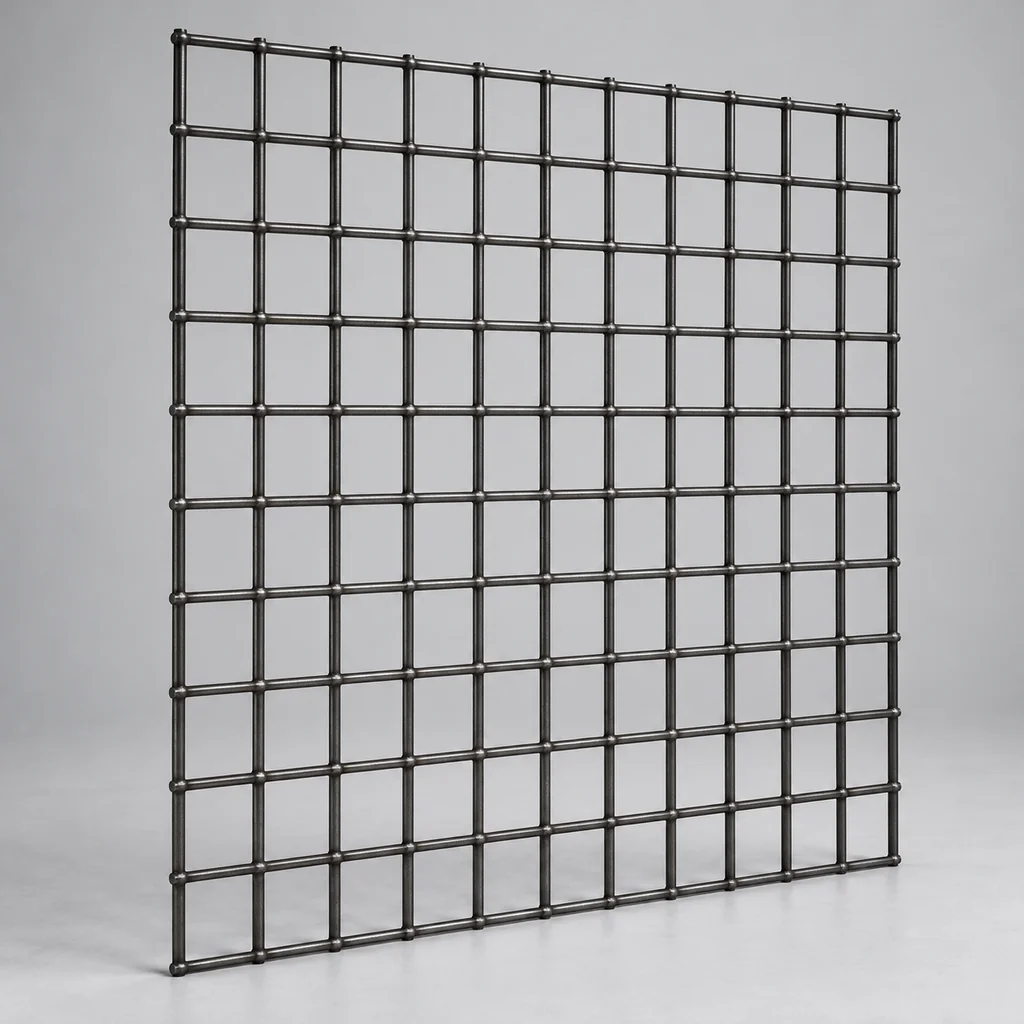
Black Wire Welded Mesh Panel
Carbon Steel · 1 mesh
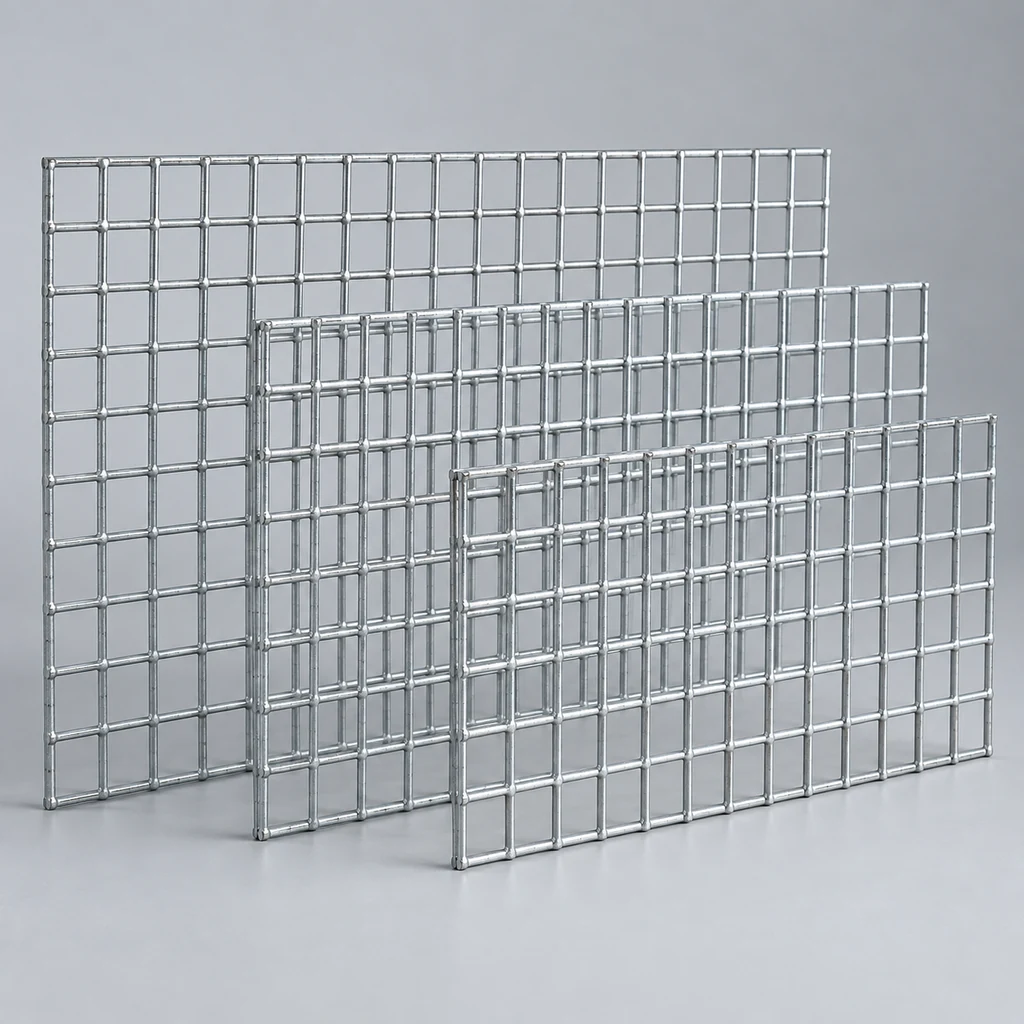
Galvanized Before Welded Mesh Panel
Electro Galvanized Steel · 2–8 mesh
Hot Dipped Galvanized Welded Wire Mesh Roll
Hot-Dip Galvanized Steel · 2–8 mesh
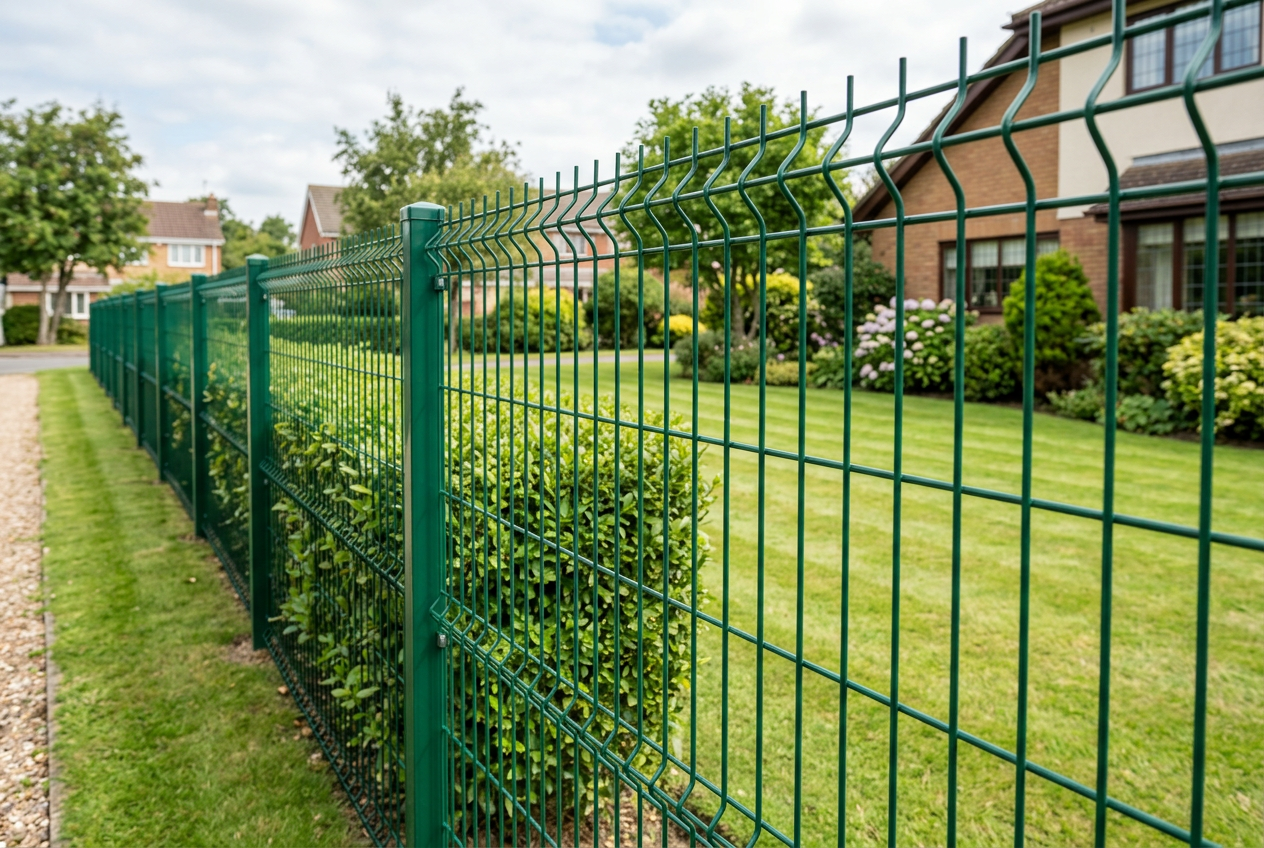
PVC Coated Welded Wire Mesh Panel
PVC Coated Steel · 1 mesh
Request a Galvanized Welded Wire Mesh Quote
Use the dimension examples and comparison checklist to describe the mesh and compare the same scope of supply. Send your drawing or specification, quantity and destination for a galvanized welded wire mesh quotation, including the acceptance criteria and inspection records you need.
Browse Available Products