Manganese Steel Vibrating Screen Mesh
Manganese steel vibrating screen mesh is a pre-crimped woven wire screen for mining, quarry screening and aggregate classification. For a new installation or a replacement screen, match the wire specification to the wear conditions, the aperture to your target separation, and the panel to the screen deck. Use the guide below to prepare a quotation request that addresses all three.
FOB reference price from $9.50 / m². Varies by spec and quantity; final quote on inquiry.
Three Checks for a Better-Matched Screen
Choose manganese steel vibrating screen mesh by the job it must do: withstand the stated operating conditions, separate the required size fraction and fit the equipment.
Match the Wire to the Wear Conditions
Compare feed abrasiveness, impact, wire requirements and support conditions. For replacements, include the wear pattern and change interval to investigate avoidable repeat failures.
Match the Aperture to the Product Size
Specify the target separation, clear opening and wire diameter together. Review open area alongside grading requirements so a change intended to address wear does not overlook material passage.
Check the Screen-Deck Fit
Agree panel dimensions, edge profiles and the mounting drawing before ordering. Checking these details helps avoid replacements that cannot be fitted as intended.
Mesh Count
20–80
Wire Diameter
0.12–0.4 mm
Clear Aperture
0.198–0.87 mm
Open Area
36.8–46.9%
Material Family
Manganese Steel
Catalog Specs
3
Sample
Available
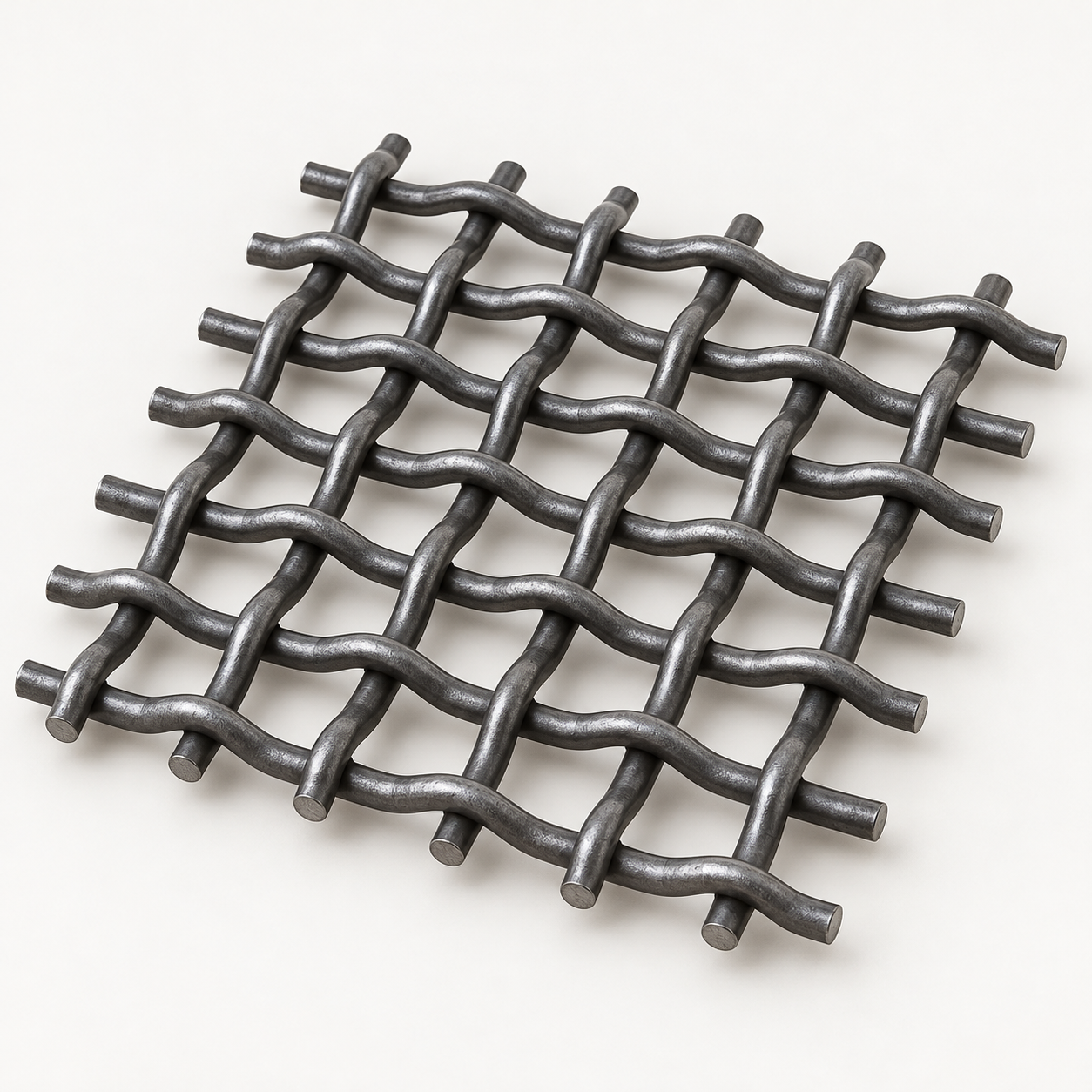
Select Individual Catalog Options Against Your Duty
The ranges summarize the individual SKU rows below; they do not establish availability of every intermediate aperture and wire combination. Confirm the selected option against your feed, target separation and equipment. A listed fine-aperture option is not evidence of suitability for every heavy-duty mining or coarse-rock application.
Official Standard Tolerance SKU Matrix
Select and lock exact sub-specifications (supports batch multi-spec consolidated inquiry)
Don't see the specification you need? Ask about other options.
Tell us the product, specification, or application. You can inquire even if the details are incomplete.
| Nominal Mesh Count | Std. Wire Dia. (mm)Std. Wire Dia. (inch / Gauge) | Aperture Size (mm)Aperture Size (inch) | Ref. Open Area | Est. Weight (kg/m²)Est. Weight (lb/ft²) | Micro Link | |
|---|---|---|---|---|---|---|
| 20 Mesh | 0.400 mm0.01570" | 0.870 mm0.03430" | 46.9% | 1.60 kg/m²0.3300 lb/sq.ft | ||
| 40 Mesh | 0.250 mm0.00980" | 0.385 mm0.01520" | 36.8% | 1.25 kg/m²0.2600 lb/sq.ft | ||
| 80 Mesh | 0.120 mm0.00470" | 0.198 mm0.00780" | 38.8% | 0.58 kg/m²0.1200 lb/sq.ft |
Download the Full Wire Mesh Catalog
Get the complete catalog with specifications, applications, and ASTM compliance — as a PDF.
100X Simulated Microscope Lens View (Auxiliary Physical Design)
Choose a Screen for Your Process
Use this manganese steel vibrating screen mesh guide to turn a new separation requirement or an existing screen problem into a clear purchasing specification. Start with the information you have, then confirm the material, opening and installation details before ordering.
New Installation or Replacement Screen?
Both purchasing paths lead to a manganese steel vibrating screen mesh quotation based on your process. Provide the available information in your inquiry; discuss drawings through the existing WhatsApp or email contact.
1.Specify a New Installation
- Provide with your inquiry
- Describe the feed material, size distribution, moisture, target separation and planned throughput. Give the screen equipment reference, deck position, support arrangement and required panel dimensions, plus quantity and destination.
- Confirm before ordering
- Agree the proposed wire designation, aperture, diameter, weave, opening orientation and mounting drawing. Confirm inspection requirements with the quotation; the equipment supplier should review the screening arrangement for the intended duty.
2.Replace or Review an Existing Screen
- Provide with your inquiry
- Give the old screen's aperture, wire diameter, panel size and edge details, together with the equipment reference. Describe wear, breakage, grading or blockage problems and any process changes; include the drawing reference and observed replacement interval.
- Confirm before ordering
- Match the installation dimensions and measuring basis to the existing deck. Identify whether the order repeats the approved specification or proposes a change, and agree the material records and acceptance criteria for that choice.
Screen Problems: What to Check Before Reordering
Use these observations when reviewing manganese steel vibrating screen mesh with the supplier and equipment team. The checks identify information needed for selection; a symptom alone does not establish its cause or justify changing the wire grade.
| Observed problem | Factors to review | Include in your inquiry |
|---|---|---|
| Rapid wear and frequent screen changes | Review abrasion, feed impact, the wear location and the existing wire specification. Compare like-for-like operating conditions when assessing service intervals. | Feed description, deck position, wear pattern, aperture, wire diameter and observed operating time between changes. |
| Wire breaks before the expected change interval | Review tensioning and support contact against the equipment instructions, as well as edge fit and impact loading. Material substitution alone may leave an installation problem unresolved. | Break location, installation and support drawing, edge profile, wire designation and changes in feed or operation. |
| Oversize particles appear in the product | Review measured openings, worn or broken areas and installation gaps. Check the product grading results against the intended separation. | Target size fraction, sieve-analysis results, aperture measurements, damaged-area observations and mounting details. |
| Throughput is below the process requirement | Review clear aperture, wire diameter and open area together with loading, moisture and screen settings. A thicker wire at a fixed opening reduces geometric open area. | Required and observed throughput, feed size distribution, moisture, screen-deck details and current wire geometry. |
| Particles peg openings or moist fines blind the surface | Distinguish lodged particles from surface buildup. Review particle shape, near-size material, moisture and aperture geometry; ordinary woven mesh is not a guaranteed self-cleaning solution. | Blockage description, feed condition, opening shape and size, wet-process details and existing cleaning arrangement. |
Compare Cost Beyond the Screen Purchase Price
Compare manganese steel vibrating screen mesh offers using your own operating records and the same separation requirement. For a new installation, record assumptions separately from measured results; a lower unit price alone cannot establish a lower operating cost.
- Screen Purchase and Delivery
- Compare the same material designation, wire geometry, finished dimensions, quantity and delivery basis. Include the inspection documents and packing required for the order.
- Replacement Labor
- Record the crew time used to remove, install and check a screen. Include fitting work and support-component checks when comparing repeat orders with a proposed alternative.
- Screen-Related Downtime
- Track change frequency and production time lost to screen replacement or cleaning. Distinguish these events from other plant stoppages so the comparison uses attributable operating records.
- Accepted Product Output
- Compare output meeting the required grading over a consistent operating period. Consider rejected or reprocessed material alongside throughput; more material passing the deck is not automatically more saleable product.
Mining, Quarry Screening and Aggregate Classification
In mining, review the ore feed and separation required by the next process. In a quarry, define the stone fractions to be produced; in an aggregate plant, identify the grading needed for the finished product. Each application needs a screen selected against its material, loading and equipment rather than the industry label alone.
- Heavy-duty mining screens
- Quarry screening
- Aggregate classification
Material Identification and Screen Geometry
Confirm the Wire Grade Before Comparing Screens
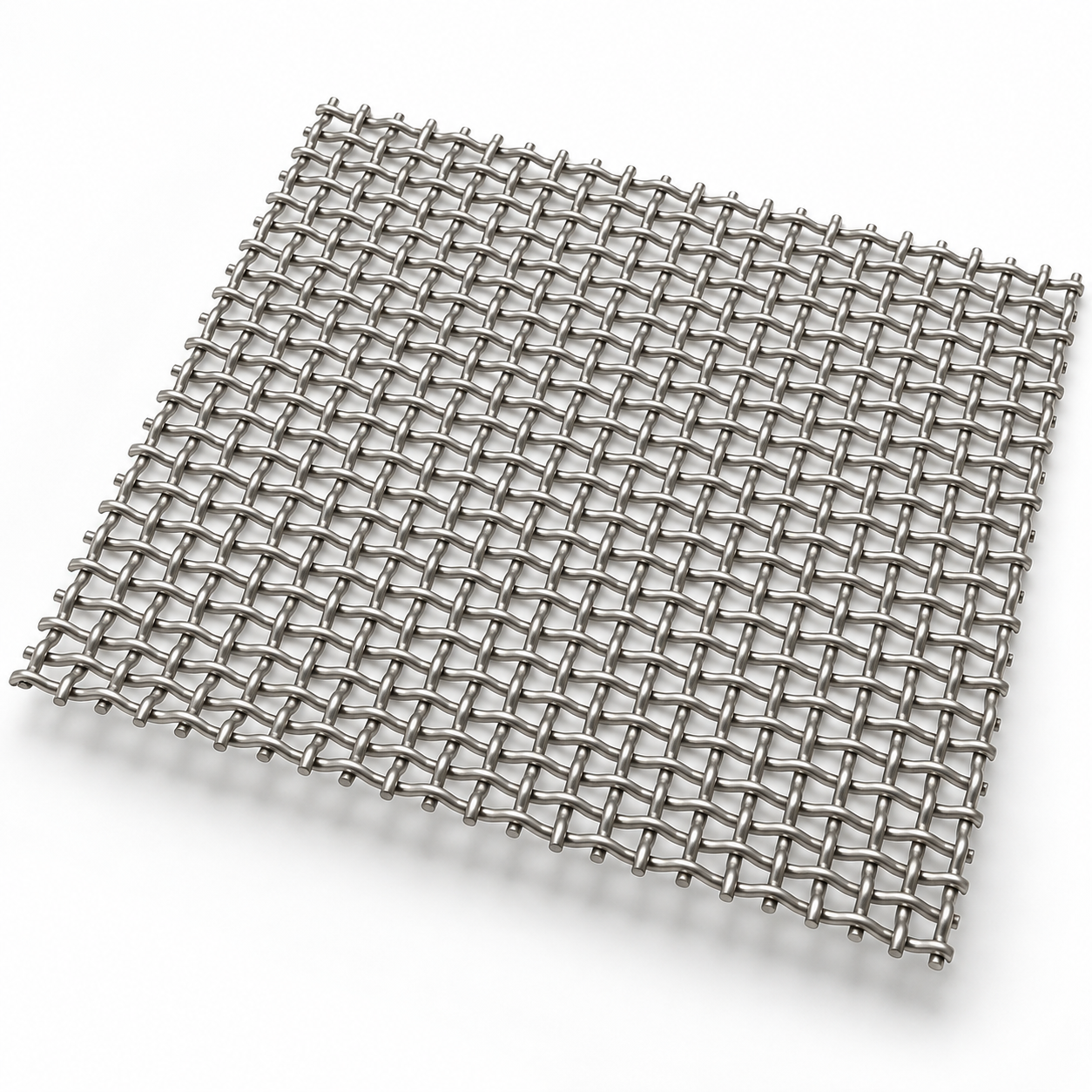
Manganese steel vibrating screen mesh is woven from wires crimped before weaving, with interlaced crossings rather than a welded grid. The material family name does not identify a specific grade. Define the required wire designation and supply condition so quotations and incoming material can be assessed on the same basis.
Confirm the required grade and material records with the quotation. No chemical composition is declared for this product.
Material Requirements to Agree
- Steel designation:State the required grade and applicable material specification. Do not infer 65Mn or a manganese percentage from the product name.
- Wire properties and supply condition:Specify any required mechanical properties, supply condition and supporting tests. Agree the evidence needed rather than assuming hardness or tensile strength.
- Material records:Agree which records must accompany the order and how they relate to the supplied material. State any batch-identification requirement before purchase.
- Exposure conditions:Declare wash water, moisture and chemical exposure for material review. No corrosion-resistance rating or approval for a particular wet process is established here.
Screen Mesh RFQ and Acceptance Checklist
Use this checklist to turn the selected screen into an inspectable order. ISO 14315 is a reference for industrial wire screen requirements and testing, including pre-crimped constructions. Agree its applicability, edition and inspection evidence; the citation is not a product certification.
| Check item | Specification basis | Provide for quotation | Agree for acceptance |
|---|---|---|---|
| Wire material | Required steel designation and wire properties | Grade requirement and material documentation | Approved designation and supporting records |
| Clear aperture | Opening size, shape and orientation | Nominal dimensions with units and tolerances | Opening measurements using the agreed method |
| Wire diameter and weave | Wire size and pre-crimped construction | Diameter, crimp pattern and drawing reference | Wire measurements and approved weave geometry |
| Finished panel dimensions | Width and length on a defined measuring basis | Dimensioned drawing and required tolerances | Dimensions checked in the specified condition |
| Edges and screen-deck fit | Existing mounting and support arrangement | Edge profile, hook details if needed and supports | Approved edge drawing and installation dimensions |
| Inspection and delivery | Order-specific inspection and packing requirements | Standard, edition, inspection records and packing instructions | Written acceptance criteria and document package |
Industrial Screening and Standards References
- “the crimping of the wire before weaving is decisive for the screening performance.”Haver & Boecker: Screen ClothExplains the role of pre-crimping in industrial screening. Use this construction guidance alongside the operating conditions and agreed specification for your screen.
- “Industrial wire screens — Technical requirements and testing”ISO 14315:1997Standard-title reference for specifying and inspecting industrial wire screens. Confirm contractual applicability and the required inspection evidence for the order.
- “the screening media is likely to break prematurely”Sandvik: Maintenance and Replacement AdviceExplains the importance of support contact when using cambered screening media. The guide also discusses wear, product contamination and installation checks; its equipment-specific instructions are not specifications for this mesh.
Custom Processing for Crimped Screen · Quality Assurance for Crimped Screen · Packaging & Logistics
Custom Processing for Crimped Screen
Heavy-duty fabrication for crimped vibrating screen and quarry mesh.
Hooked Edge Forming
Screen edges bent into tensioning hooks, open or reinforced, matched to your vibrating screen deck clamping bars.
Cut-to-Deck-Size
Crimped screens sheared to exact deck dimensions with tolerance-controlled squareness for fast replacement.
Punching & Bending
Bolt holes punched and side plates bent per drawing for trommel and crusher screen assemblies.
Quality Assurance for Crimped Screen
Crimped mining screens are inspected for wear resistance and dimensional stability.
Wire Tensile Verification
High-carbon and manganese wire lots tested for tensile strength and hardness before crimping, with MTC supplied.
Aperture Under Tension
Aperture measured under simulated tension so screening accuracy holds after installation on the deck.
Pre-shipment Inspection
Hook angles, panel dimensions and crimp consistency re-checked batch by batch before loading.
Packaging & Logistics
Reinforced packing for heavy crimped screens on long-distance freight.
Steel Pallet Bundles
Heavy panels strapped onto steel or fumigated wooden pallets with edge protectors against bending.
Rust Prevention
VCI paper and plastic film wrapping protect carbon and manganese steel screens from sea-freight corrosion.
Container Loading
Weight-balanced 20GP loading plans with photos and loading reports shared before vessel departure.
Trade Terms
FOB Tianjin or CIF major ports; courier available for hooked-edge sample sections.
Vibrating Screen Mesh: Buyer Questions
Related Screens and Selection Guides
Browse Available Products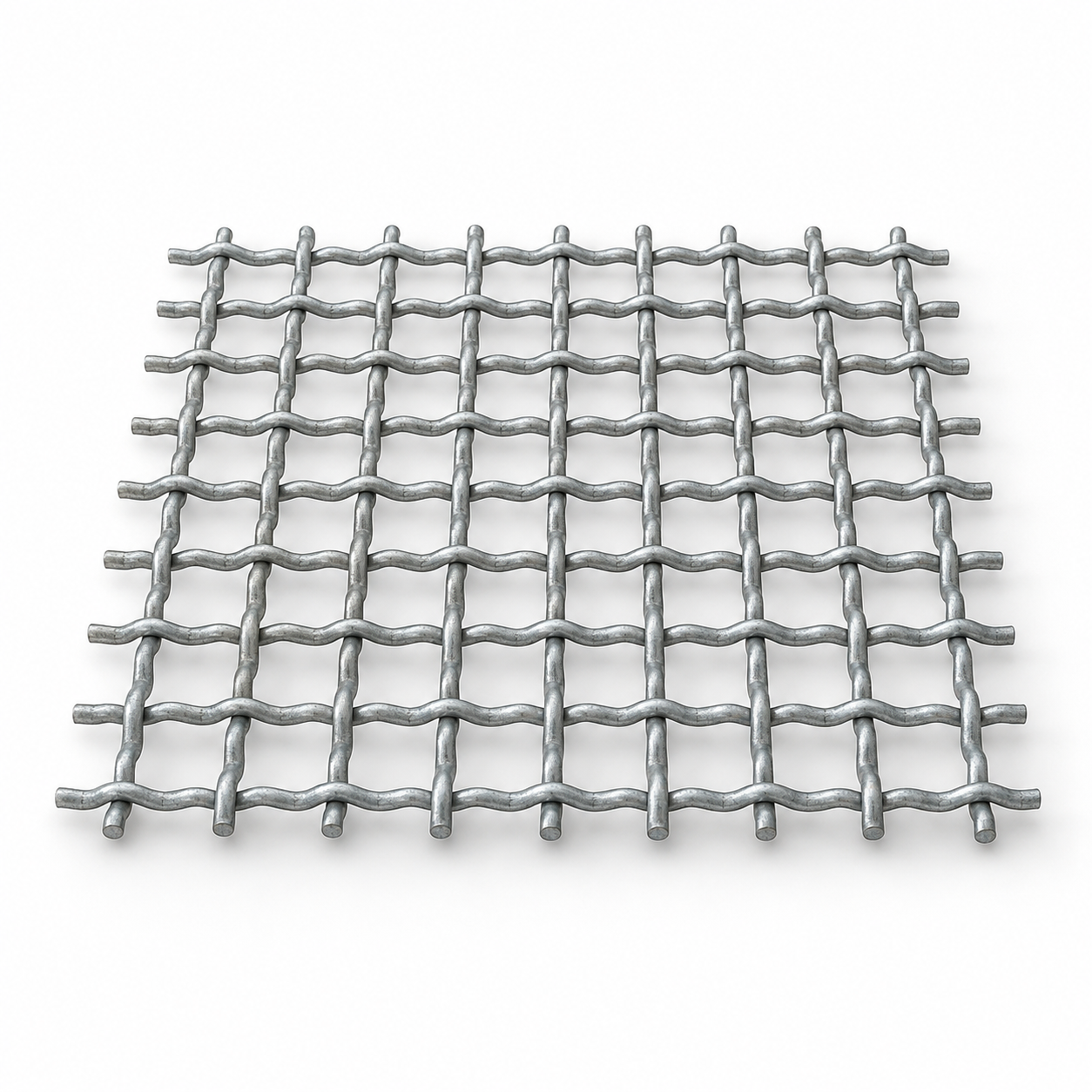
Galvanized Crimped Wire Mesh
Hot-Dip Galvanized Steel · 20–80 mesh
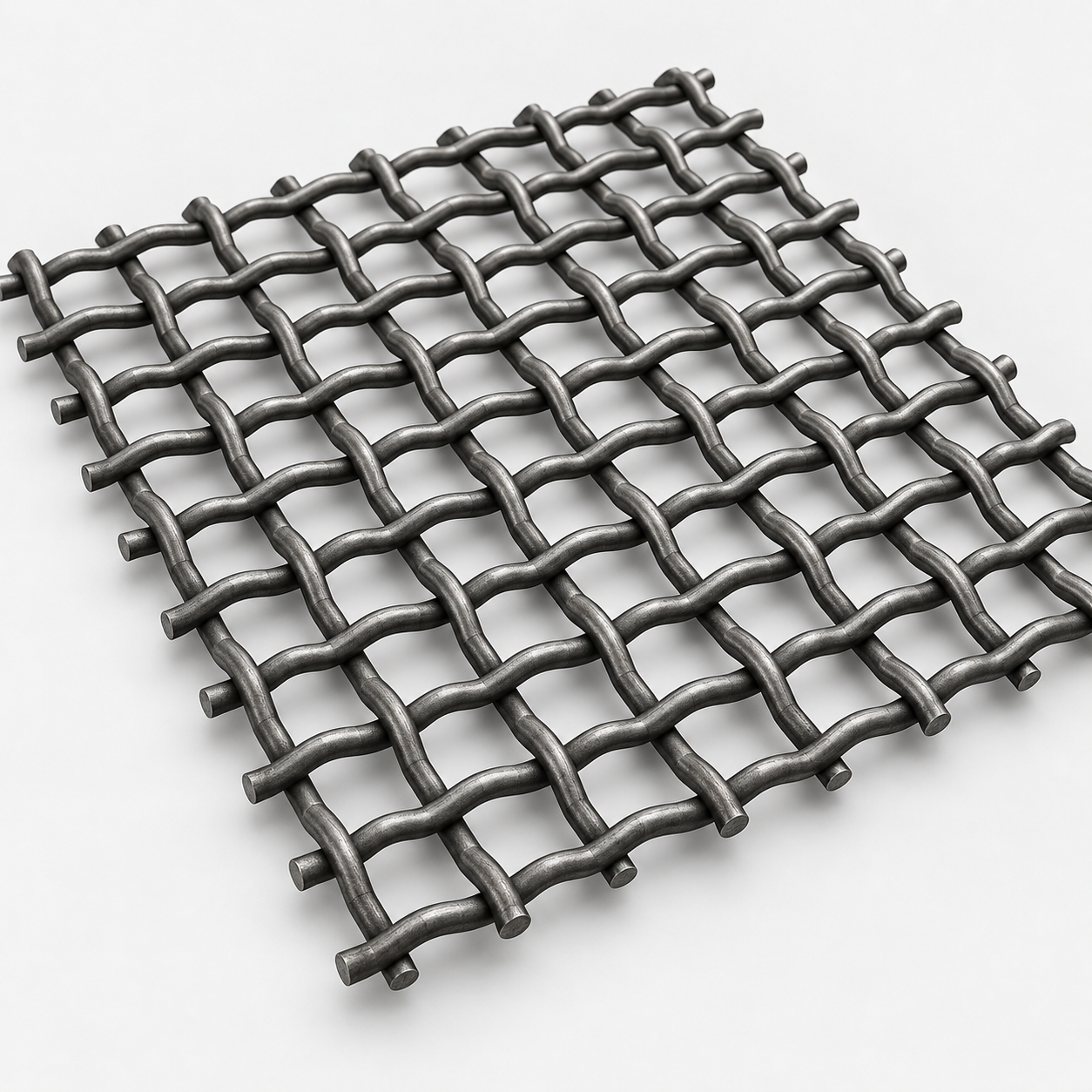
High Carbon Steel Crimped Wire Mesh
High Carbon Steel · 20–80 mesh
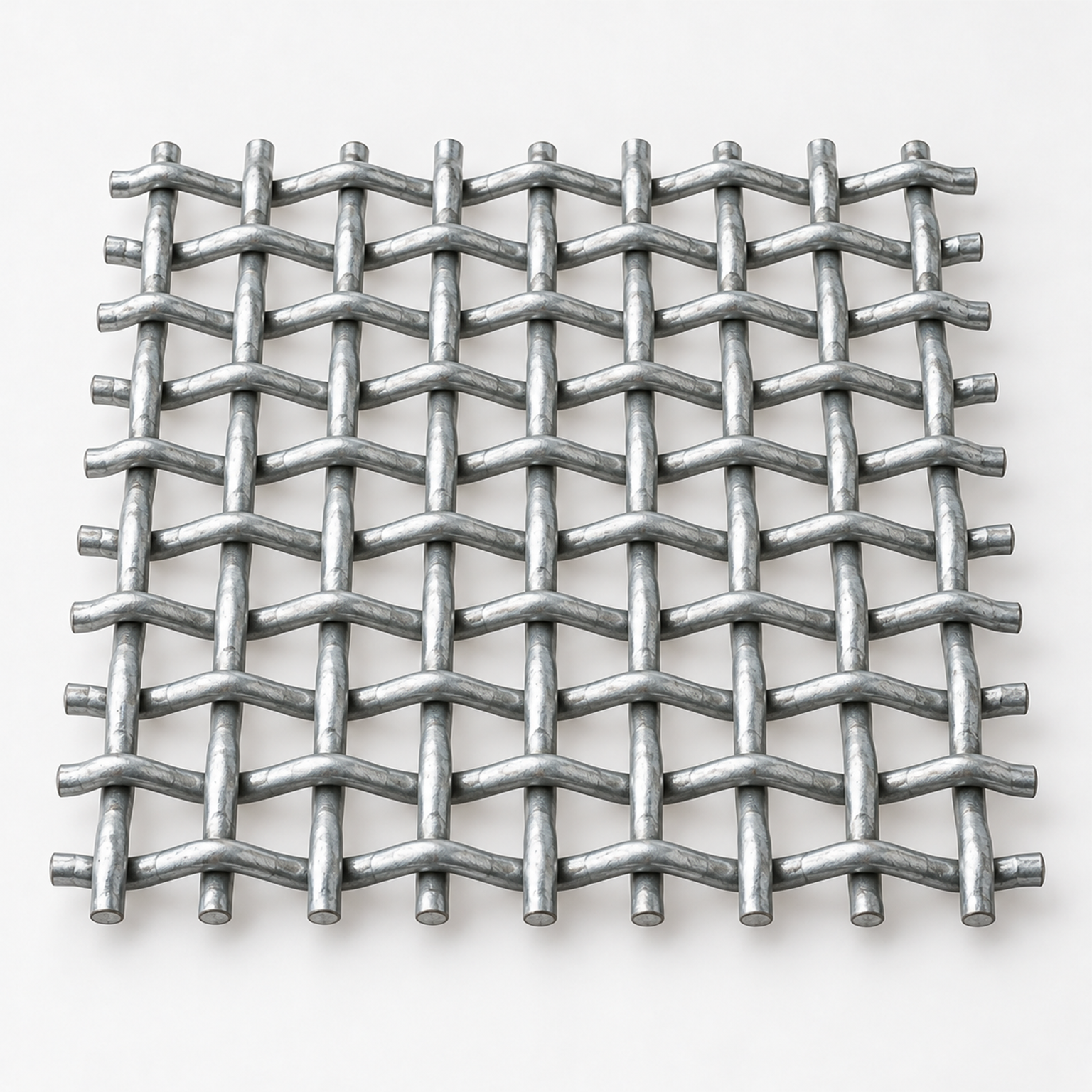
Pig Breeding Crimped Wire Mesh
Galvanized Steel · 20–80 mesh
Stainless Steel Crimped Wire Mesh
304 Stainless Steel · 20–80 mesh
Request a Quote for Manganese Steel Vibrating Screen Mesh
Request manganese steel vibrating screen mesh matched to your separation, operating conditions and screen-deck fit. For a new project, describe the feed and equipment; for a replacement, add the old specification and observed problem. Include quantity and destination in your inquiry and discuss drawings through WhatsApp or email.